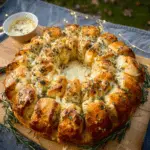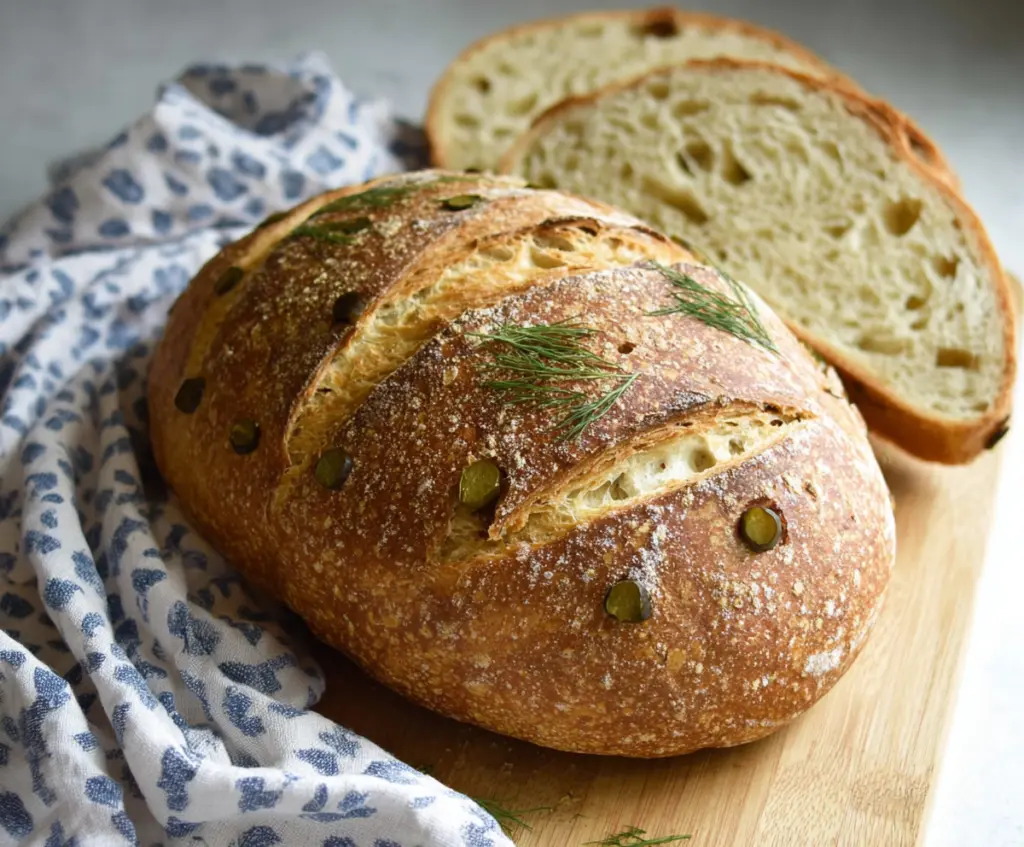
This Dill Pickle Sourdough Bread is super tasty and unique! It blends the tangy flavor of dill pickles with the soft goodness of sourdough, making each bite a fun surprise.
Who knew bread could be this zesty? I love slicing off a piece and enjoying it with a pat of butter. Trust me, you’ll want to share this bread at every meal!
Key Ingredients & Substitutions
Bread Flour: This gives the bread structure and chewiness. If you’re in a pinch, you can use all-purpose flour, but the texture might be slightly different.
Sourdough Starter: Make sure your starter is active for the best results! If you’re new to sourdough, you can buy one or even substitute with store-bought yeast (about 2 ¼ teaspoons for this recipe).
Dill Pickles: Use your favorite dill pickles for that tangy kick. If you’re not a fan, try chopped green olives or even jalapeños for a different flavor.
Fresh Dill: Fresh dill adds a nice pop! If you can’t find it, replace it with dried dill (use about 1 teaspoon) but remember, fresh is always best for flavor.
Pickle Juice: This adds depth and moisture. Feel free to leave it out if you want a milder taste, or substitute it with lemon juice for brightness.
How Do I Achieve the Perfect Rise in Sourdough Bread?
Getting that perfect rise can be challenging, but it’s all about time and temperature. Here are a few tips to help you out:
- Be patient during bulk fermentation and final proofing. This is when the yeast develops, giving your bread its airy structure.
- Keep your dough covered with a damp cloth to prevent it from drying out.
- If your kitchen is cold, consider placing the dough in a slightly warm spot or even using an oven with the light on to create a cozy environment.
- Don’t skip the stretch and folds during bulk fermentation. This helps develop gluten, which is essential for structure.
With these tips in mind, you’ll be on your way to delicious, high-rising sourdough bread that everyone will love!
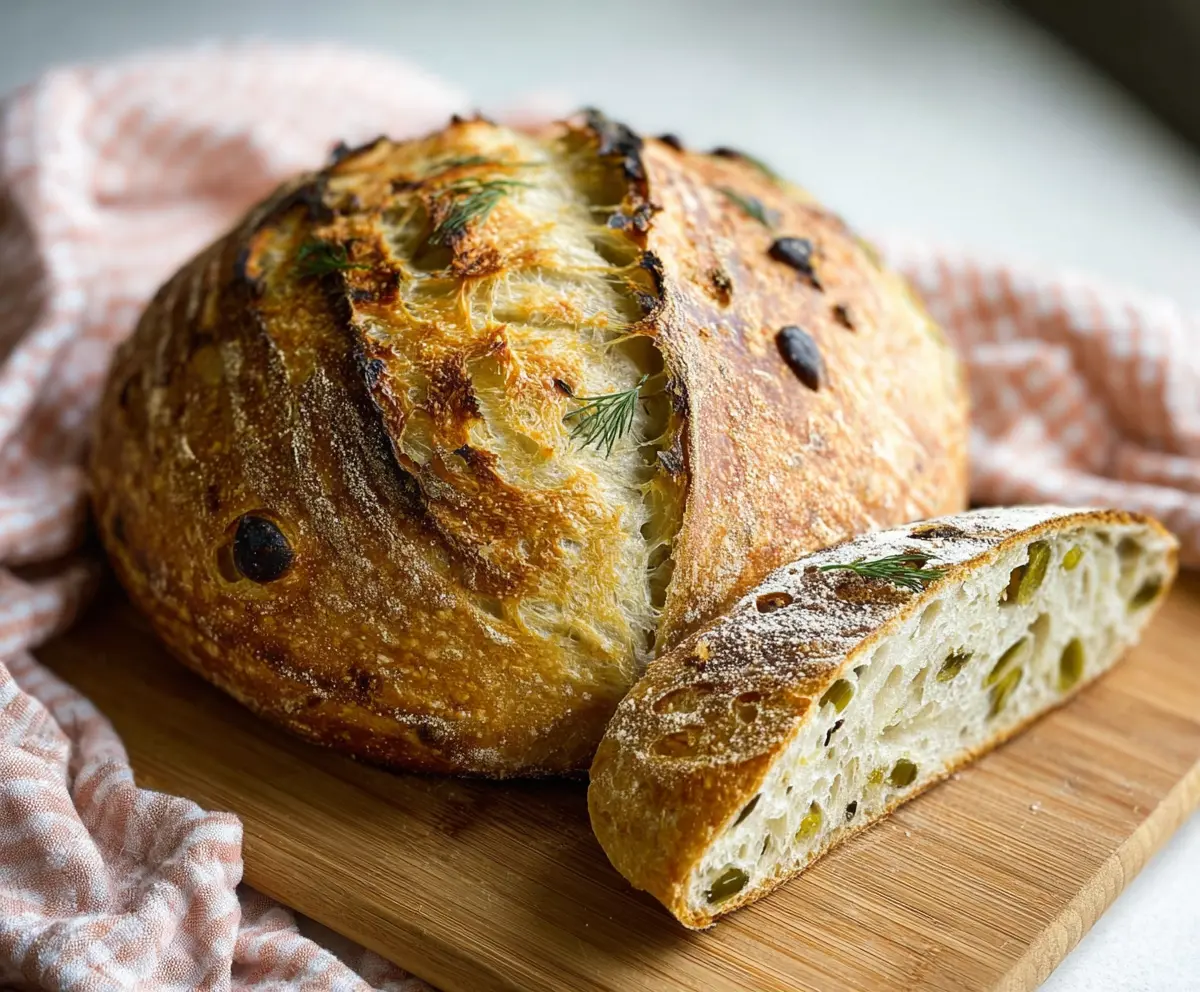
Flavorful Dill Pickle Sourdough Bread
Ingredients You’ll Need:
- 500g bread flour (about 4 cups)
- 350g water (about 1 ½ cups), at room temperature
- 100g active sourdough starter (100% hydration)
- 10g salt (about 1 ¾ tsp)
- 100g chopped dill pickles (well drained)
- 1 tbsp pickle juice (from dill pickles)
- 1 tbsp fresh dill, chopped (plus some sprigs for decoration)
- Optional: 1 tsp sugar or honey to enhance fermentation
How Much Time Will You Need?
This delicious bread will take about 4 to 6 hours for the bulk fermentation plus an additional 2 to 3 hours for the final proof. Don’t worry, most of this time is hands-off. It’ll take about 30 minutes of actual mixing and shaping time, but the wait will be worth it for that zesty flavor!
Step-by-Step Instructions:
1. Prepare the Dough:
In a large mixing bowl, combine the bread flour and water. Mix until everything is just combined. No need to overmix! Cover the bowl and let it rest for 30 minutes to 1 hour—this is called the autolyse phase, and it helps the dough develop flavor and texture.
2. Add Starter and Salt:
Once the autolyse is done, add the active sourdough starter and salt to the dough. Mix well until everything is fully combined. You can do this by hand or use a dough hook if you have a stand mixer.
3. Add Pickle Flavor:
Time to mix in the fun! Stir in the chopped dill pickles, pickle juice, and chopped fresh dill so that they’re evenly distributed throughout the dough.
4. Bulk Fermentation:
Cover the dough and let it ferment at room temperature for 4 to 6 hours. During the first 2 hours, perform a series of stretch and folds every 30 minutes. This helps develop gluten, making your bread nice and airy!
5. Shape the Dough:
Once the bulk fermentation is complete, gently shape the dough into a round or oval loaf. Don’t be too rough—preserve those air bubbles! Place it seam-side up in a well-floured banneton or a bowl lined with a floured kitchen towel.
6. Final Proof:
Cover the shaped loaf and let it proof for 2 to 3 hours at room temperature. You can also refrigerate it overnight for a slow proof, which enhances the flavor even more!
7. Preheat Oven:
About 30 minutes before baking, place a Dutch oven or baking stone in the oven and preheat to 500°F (260°C). This will give your bread a fantastic crust!
8. Score and Bake:
Once preheated, gently transfer the dough onto parchment paper or directly into the hot Dutch oven. Score the top with a sharp knife or razor blade to allow for expansion during baking. Optionally, add some fresh dill sprigs for decoration.
9. Bake with Steam:
Cover the Dutch oven with its lid and bake for 20 minutes. After that, remove the lid, reduce the oven temperature to 450°F (230°C), and bake for another 20-25 minutes, until the crust is golden and crisp.
10. Cool and Serve:
Carefully take the bread out of the oven and let it cool completely on a wire rack. This step is important to allow the crumb to set properly before slicing. Once cooled, slice and enjoy your flavorful dill pickle sourdough bread—it’s great for sandwiches, snacking, or just with butter!
Happy baking!
Can I Use Store-Bought Pickles Instead of Homemade?
Absolutely! Store-bought dill pickles work perfectly for this recipe. Just make sure to drain them well before chopping to avoid excess moisture in your dough.
What Should I Do If My Dough Isn’t Rising?
If your dough isn’t rising, it may be due to a cold kitchen or an inactive starter. Make sure your starter is bubbly and active before using it. If the kitchen is cold, try placing the dough in a warmer spot or using the oven’s light to create a cozy environment.
Can I Freeze Leftover Bread?
Yes, you can freeze your dill pickle sourdough bread! Once completely cooled, wrap it tightly in plastic wrap and then place it in a freezer bag. It will keep well for up to 3 months. To thaw, just leave it at room temperature or toast slices directly from the freezer.
How Can I Adjust the Flavor If I Don’t Like Pickles?
If you’re not a fan of pickles, you can experiment with other flavors! Try substituting the pickles with chopped olives or roasted garlic for a different twist, or add herbs like rosemary or thyme for earthy flavors.