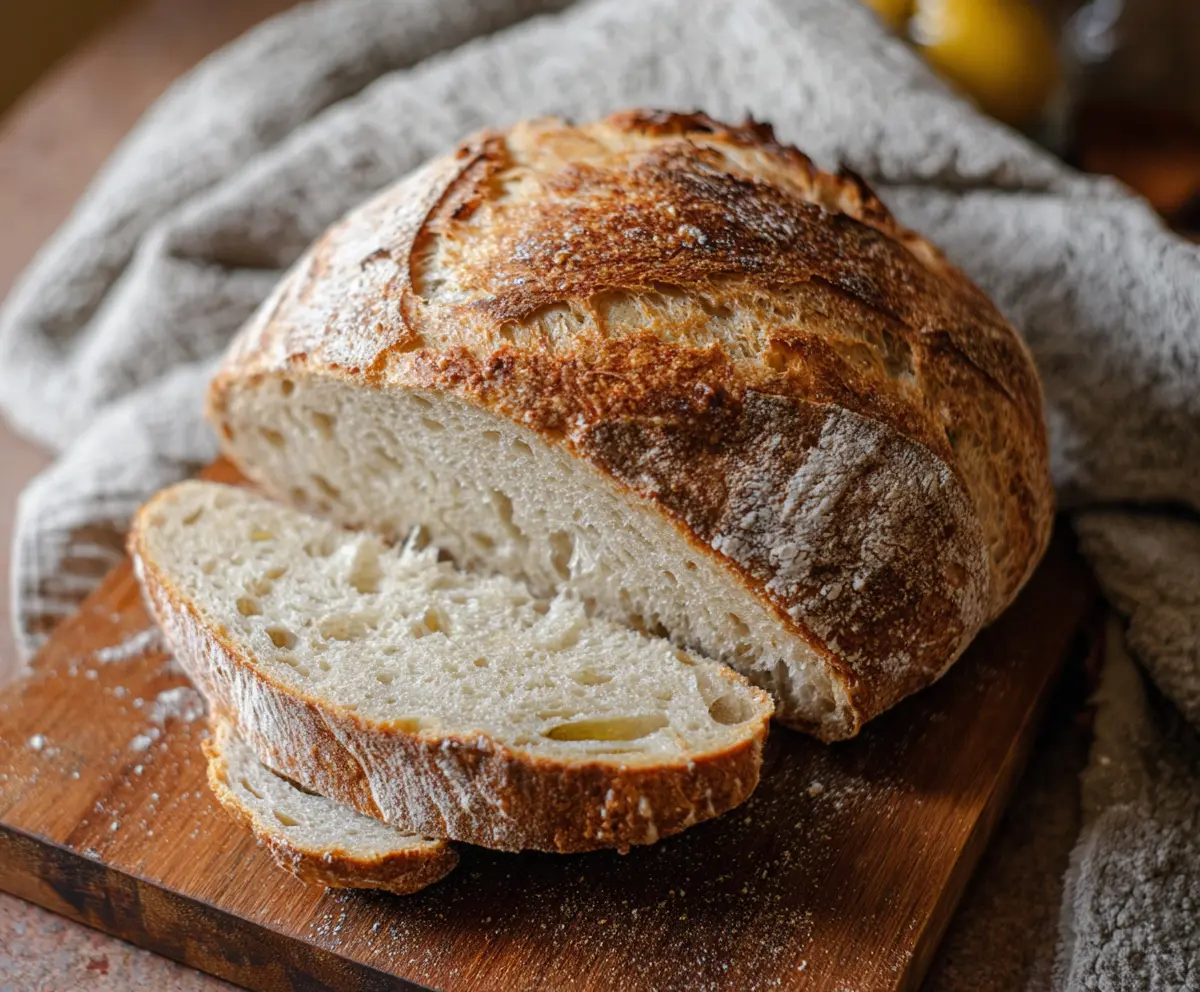
This Artisan Sourdough Bread has a crunchy crust and a soft, chewy center that makes every bite a treat! It uses simple ingredients like flour, water, and a special sourdough starter.
Baking this bread fills the kitchen with the best smell ever! I love to enjoy a warm slice with butter or jam. It’s a cozy way to impress friends—who doesn’t love fresh bread? 🥖
Key Ingredients & Substitutions
Bread Flour: This flour has higher protein content, which is great for gluten formation. If you can’t find bread flour, all-purpose flour works in a pinch, but the texture may be slightly less chewy.
Sourdough Starter: An active and bubbly starter is key for good rise and flavor. If you’re starting fresh, consider using a commercial sourdough starter or finding a friend to share some of theirs. You can also try a mix of 2 tsp of yeast and 1 tsp of sugar as a quick alternative, though the flavor might differ.
Water: Ensure the water is lukewarm to help activate the yeast in your sourdough starter. If your water is too hot, it can kill the yeast. Room temperature water is perfectly fine if you prefer to play it safe.
Salt: I recommend using kosher or sea salt for flavor. Avoid table salt if possible, as it can change the texture of the dough. You can use garlic powder for a twist in flavor if you want something special.
How Do You Get the Best Rise and Flavor in Sourdough?
To achieve that perfect rise and unique sour flavor, managing fermentation is key. During the bulk fermentation stage, the dough should be left to rise at room temperature where it thrives. Here are a few tips:
- Keep your dough covered to maintain moisture but allow air exchange to let the natural yeast bloom.
- Every 30 minutes for the first two hours, gently stretch and fold the dough. This process helps develop gluten strength.
- Letting the dough proof longer in the fridge not only enhances flavor but also makes it easier to handle later.
These simple techniques will help you achieve a beautifully risen loaf with a delightful taste. Happy baking!
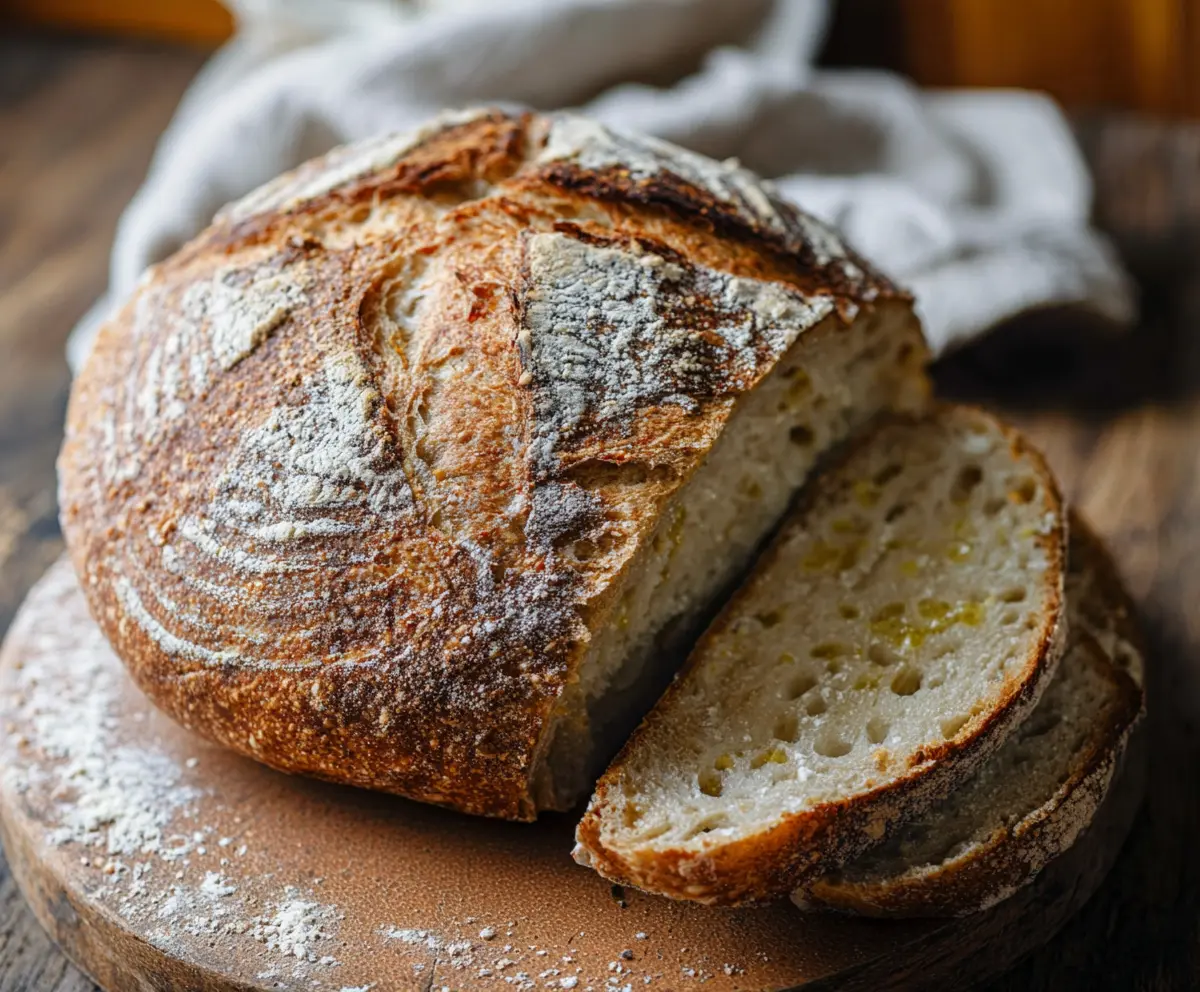
Artisan Sourdough Bread
Ingredients You’ll Need:
- 500g bread flour (about 4 cups)
- 350g water (about 1 1/2 cups), lukewarm
- 100g active sourdough starter (about 1/2 cup), fed and bubbly
- 10g salt (about 2 tsp)
How Much Time Will You Need?
This recipe takes about 30 minutes for preparation, plus around 4-6 hours for fermentation and proofing. After that, you’ll need about 50 minutes for baking. So, set aside a good part of your day, but most of that is hands-off time waiting for the dough to rise!
Step-by-Step Instructions:
1. Mix the Dough
In a large bowl, combine the bread flour and lukewarm water. Mix with a spoon or your hands until no dry flour remains (you want a shaggy mess!). Once mixed, cover the bowl with a cloth or plastic wrap and let it rest for 30 minutes. This waiting is called “autolyse” and helps develop the gluten.
2. Add Starter and Salt
After the resting period, add your bubbly sourdough starter and salt to the dough. Mix it all together until everything is well combined. The dough will feel sticky and a bit loose. Don’t worry; that’s perfectly normal!
3. Bulk Fermentation
Now it’s time for the magic to happen! Cover the bowl again with a damp cloth or plastic wrap. Let it sit at room temperature (around 70°F or 21°C) for about 4-6 hours. Every 30 minutes during the first 2 hours, gently stretch and fold the dough a few times. This helps strengthen the dough—just grab a section of dough, stretch it up and fold it over itself. Repeat this all around the dough.
4. Shape the Dough
Once fermentation is complete, lightly flour your work surface. Turn the dough out onto it, and shape it into a round loaf by folding the edges towards the center. Gently tuck it under to create a smooth top and build some tension on the surface.
5. Final Proof
Now you’ll let the shaped loaf rest one more time! Place it seam side up in a well-floured banneton basket or a bowl lined with a floured kitchen towel. Cover it again and let it proof for 2-4 hours at room temperature or overnight in the fridge if you prefer a deeper flavor and easier handling later.
6. Preheat Oven and Baking Vessel
About 30 minutes before you’re ready to bake, place your Dutch oven or heavy oven-safe pot (with lid) in the oven and preheat it to 450°F (232°C). This will create a beautiful steam environment for your bread!
7. Score and Bake
Carefully turn the dough out onto a piece of parchment paper, seam side down. Using a sharp knife or a lame, make a few slashes on top of the loaf for expansion. Then, carefully remove the hot Dutch oven, transfer the dough (with parchment) inside, and cover with the lid. Bake it for 20 minutes.
8. Finish Baking
After 20 minutes, remove the lid and continue to bake for another 20-25 minutes, until the crust is a deep golden brown and crisp. Your kitchen will smell amazing!
9. Cool
Once baked, transfer the bread to a wire rack and let it cool completely. Patience is key here—waiting to slice into it allows the flavors to settle!
Enjoy your homemade artisan sourdough bread with that beautiful crust and tender crumb! Perfect for sharing or enjoying on your own. Happy baking!
Can I Use All-Purpose Flour Instead of Bread Flour?
Yes, you can! While bread flour provides a chewier texture due to its higher protein content, all-purpose flour will still work. Just be aware that the bread may turn out a bit softer.
What If My Sourdough Starter Is Not Active?
Your sourdough starter should be bubbly and active for the best results. If it’s not, try feeding it a day or two before using it in the recipe. If it still isn’t bubbly, consider using a store-bought or a friend’s active starter for this batch.
How Do I Store Leftover Sourdough Bread?
Once completely cooled, store your sourdough bread in a paper bag at room temperature for up to 3 days. For longer storage, slice the bread and freeze it in an airtight bag. Just toast the slices from frozen when you want to enjoy some!
Can I Make This Bread Without a Dutch Oven?
Absolutely! If you don’t have a Dutch oven, you can use a baking stone or a regular baking sheet. Just add a pan of boiling water to the bottom of the oven to create steam, which will help with the crust formation.