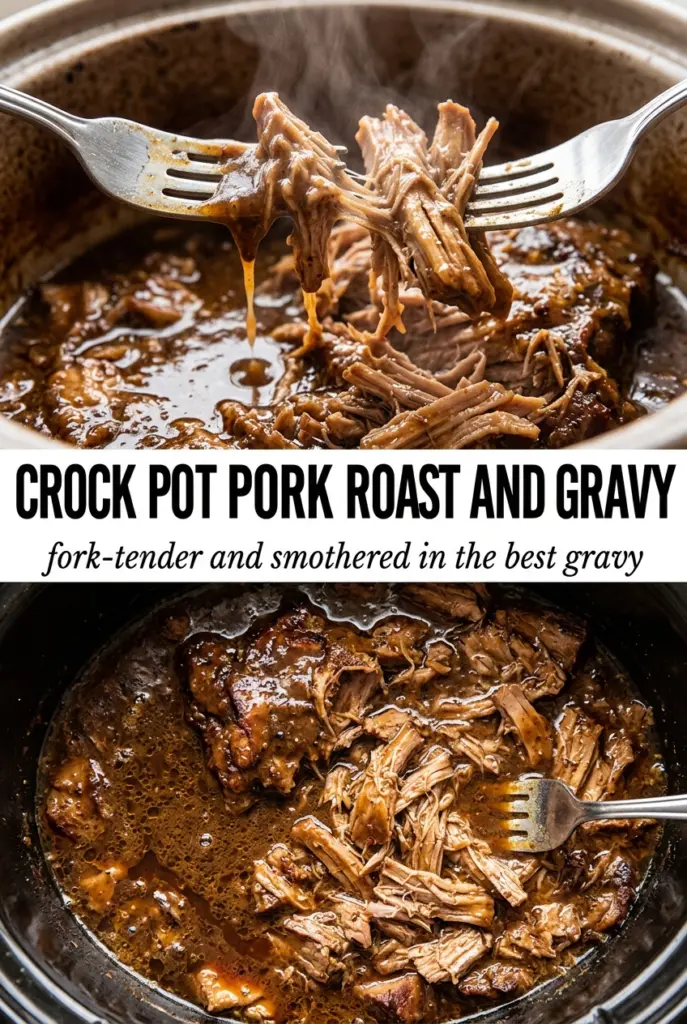
Fork-tender pork roast with a deep, savory gravy is exactly the kind of dinner that earns a permanent spot in the rotation. The pork turns silky and sliceable, or you can shred it right into the gravy if that’s how your people like it best. Either way, you get a slow cooker meal that tastes like it took more effort than it did.
The trick here is building flavor before the lid ever goes on. A quick sear gives the roast a browned crust, and that browning carries through the whole pot instead of leaving the finished gravy flat. The other key move is mixing the gravy base until smooth before it hits the slow cooker so the soup, broth, and seasoning blend into one rich sauce instead of staying separate.
Below, I’ve included the details that matter most: why the sear is worth the extra pan, how to keep the gravy from turning thin, and the easiest way to thicken it at the end if you want a spoon-coating finish.
The pork was fall-apart tender and the gravy had such a good onion-and-mushroom flavor. I thickened it at the end and served it over mashed potatoes, and my husband went back for seconds before I sat down.
Save this Crock Pot Pork Roast and Gravy for a hands-off dinner with rich, slow-cooked gravy.
The Sear Is What Gives the Gravy Its Depth
A slow cooker will make pork tender on its own, but tenderness isn’t the same thing as flavor. That browned crust from the skillet is where the roast picks up the deep, roasted notes that keep the gravy from tasting one-dimensional. Skip the sear and the final dish still works, but it tastes softer and flatter.
The other reason for searing is structure. A roast that gets color before it goes into the slow cooker holds up better when you slice it, and even if you shred it later, the meat tastes meatier instead of boiled. If the pan looks a little sticky after searing, that’s a good sign — those browned bits dissolve into the gravy base and do half the work for you.
What Each Ingredient Is Actually Doing in This Dish
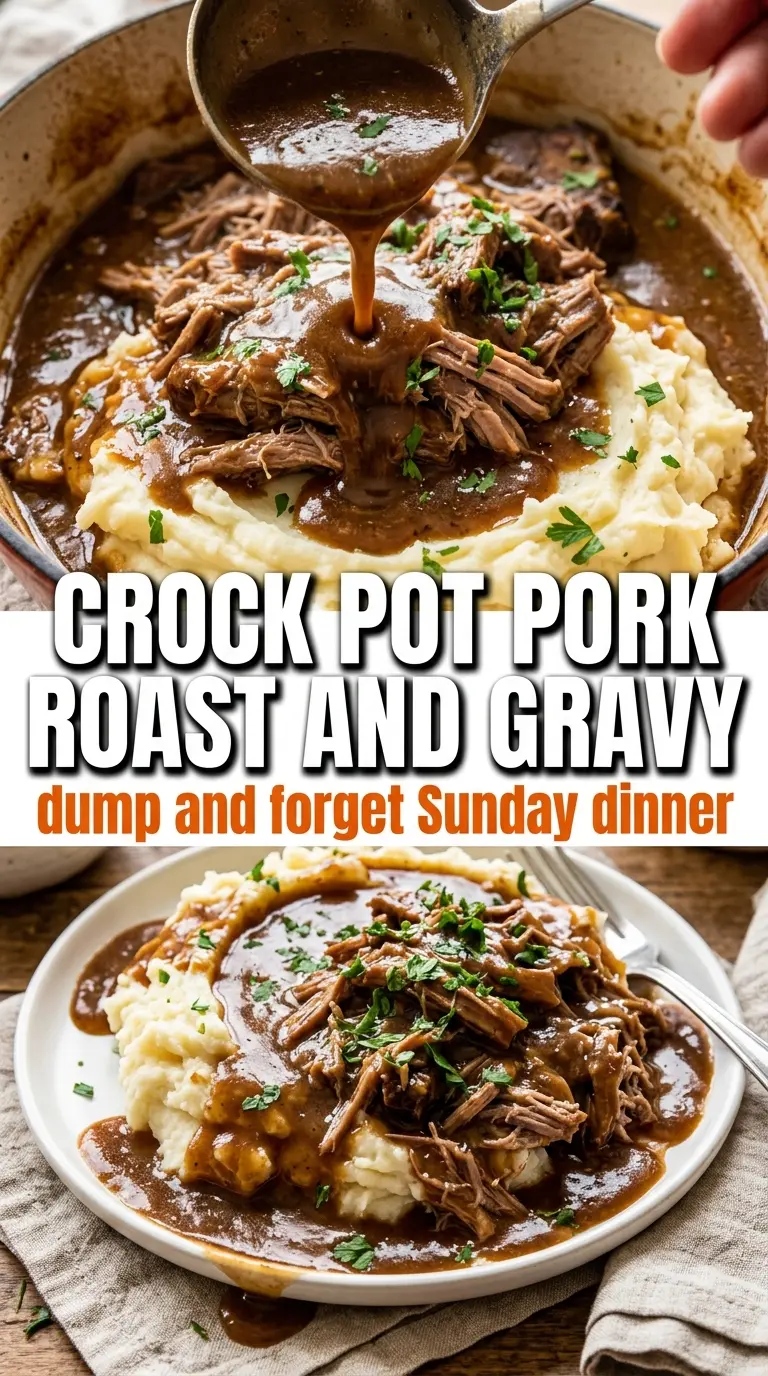
- Pork loin roast or shoulder — Pork shoulder gives you the richest, most forgiving result because the extra fat breaks down into that silky, pull-apart texture. Pork loin is leaner and slices neatly, but it can dry out if you cook it past tender, so watch the texture at the end if you use it.
- Cream of mushroom soup — This is the body of the gravy. It brings thickness and a little earthy flavor without needing a separate roux, and it holds up better in the slow cooker than a cream sauce made from scratch.
- Beef broth and Worcestershire sauce — These are what keep the gravy from tasting like canned soup. Beef broth adds savory depth, while Worcestershire brings that little hit of acid and salt that wakes everything up.
- Onion soup mix — This is the shortcut seasoning that makes the whole pot taste like it simmered all day. If you don’t have it, substitute a mix of extra onion powder, garlic powder, and a pinch of dried thyme, but the packaged mix still gives the most rounded flavor.
- Onion and garlic — They sit under the roast and melt into the gravy as the pork cooks. Dice the onion small so it softens completely; big chunks can stay stringy instead of disappearing into the sauce.
- Cornstarch slurry — This is optional, but it’s the cleanest way to finish the gravy if it looks thin. Add it only after the pork comes out, then let the sauce bubble on High for a few minutes so the starch can thicken without turning cloudy or pasty.
How to Build the Roast and Gravy So Nothing Tastes Flat
Seasoning and Browning the Pork
Season the roast generously on all sides, then sear it in hot oil until the surface turns deep golden brown. You want actual color, not just a pale gray exterior with a few spots. If the pan smokes a little, that’s fine; if the meat sticks, give it another minute and it will release when the crust is ready.
Setting Up the Slow Cooker Base
Scatter the onion and garlic in the bottom of the slow cooker so they form a bed under the meat. That keeps the pork from sitting directly in the hottest spot and gives the aromatics time to melt into the gravy. Stir the soup, broth, Worcestershire, and onion soup mix until the mixture looks smooth and uniform, then pour it over the roast so the seasoning coats everything evenly.
Cooking Until the Pork Gives Without Force
Cook on Low for 8 to 9 hours or High for 4 to 5 hours, but judge doneness by the meat, not the clock. The roast is ready when a fork slides in easily and the meat starts to pull apart with very little resistance. If you use pork loin, stop as soon as it’s tender; if you let it go too long, it can dry out even in gravy.
Finishing the Gravy
Lift the pork out first, then decide whether the gravy needs thickening. If it does, stir in the cornstarch slurry on High and let it bubble until the sauce turns glossy and coats a spoon. Thin gravy usually means it needs a few more minutes uncovered, not more cornstarch right away, so give it time to tighten before adding extra.
Three Practical Ways to Adjust This Pork Roast for Your Table
Use pork shoulder for the most forgiving texture
If you want the roast to shred easily and stay juicy even after a long cook, choose shoulder. It has more fat and connective tissue, which break down into a richer gravy and a softer, more fall-apart finish. Pork loin still works, but it gives a cleaner slice and needs closer attention near the end.
Make it gluten-free with one label check
Use a gluten-free cream of mushroom soup and make sure the onion soup mix and Worcestershire sauce are certified gluten-free. The texture stays the same, and the gravy still thickens well with cornstarch. This is one of the easiest swaps here because the slow cooker does the heavy lifting.
Skip the cornstarch for a looser gravy
If you’re serving this over mashed potatoes, rice, or buttered noodles, you might not need to thicken the sauce at all. The gravy will be thinner, but it soaks into the starch on the plate in a good way. Leave it alone if you like a more rustic, spoonable sauce.
Add carrots or potatoes for a full pot meal
Chunked carrots and waxy potatoes can go in around the roast and cook right along with it. Cut them larger than you think, because the long cook softens them a lot. This turns the dish into a true one-pot dinner without changing the flavor of the gravy.
Storage and Reheating
- Refrigerator: Store leftovers in an airtight container for up to 4 days. The gravy thickens as it chills, which helps the pork reheat without drying out.
- Freezer: This freezes well. Pack the pork and gravy together in freezer containers for up to 3 months, and thaw overnight in the refrigerator before reheating.
- Reheating: Warm gently on the stove or in the microwave with a splash of broth if needed. Low heat keeps the pork tender; high heat can make leaner cuts like pork loin go stringy.
Answers to the Questions Worth Asking
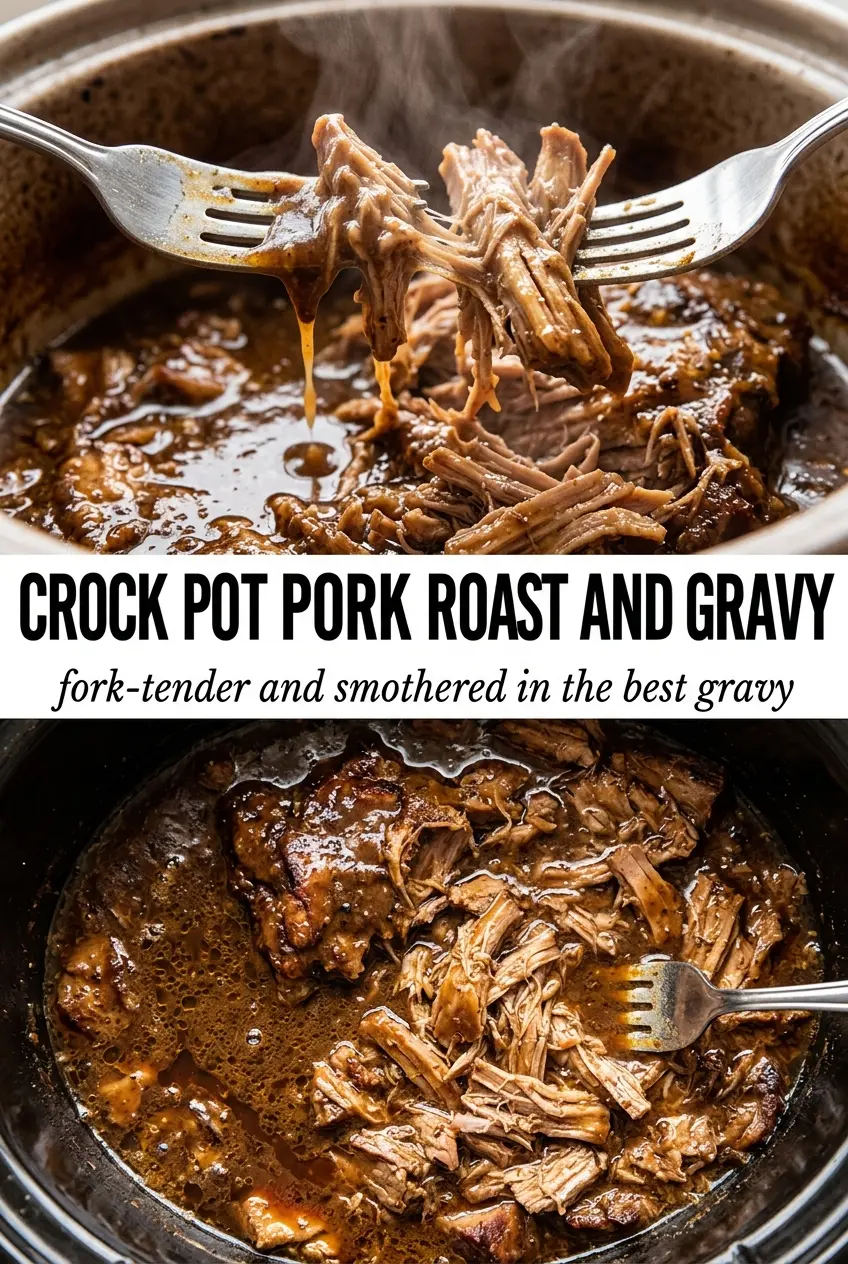
Crock Pot Pork Roast and Gravy
Ingredients
Equipment
Method
- Season the pork roast generously with salt, pepper, garlic powder, and onion powder. Heat 2 tablespoons oil in a skillet over medium-high heat and sear the pork on all sides until golden, about 3–4 minutes per side for even browning.
- Add the diced onion and minced garlic to the bottom of the slow cooker. In a bowl, mix cream of mushroom soup, beef broth, Worcestershire sauce, and onion soup mix until smooth, then pour it over the pork.
- Cook on Low for 8–9 hours, or High for 4–5 hours, until the pork is tender and pulls apart easily. Keep the lid on during cooking to maintain temperature and prevent the gravy from reducing too much.
- Remove the pork from the slow cooker and set aside. Turn the slow cooker to High and stir in the cornstarch slurry (cornstarch mixed with water) if desired, cooking 5–10 minutes until the gravy turns glossy and smooth.
- Slice or shred the pork and serve it smothered in the thickened gravy.