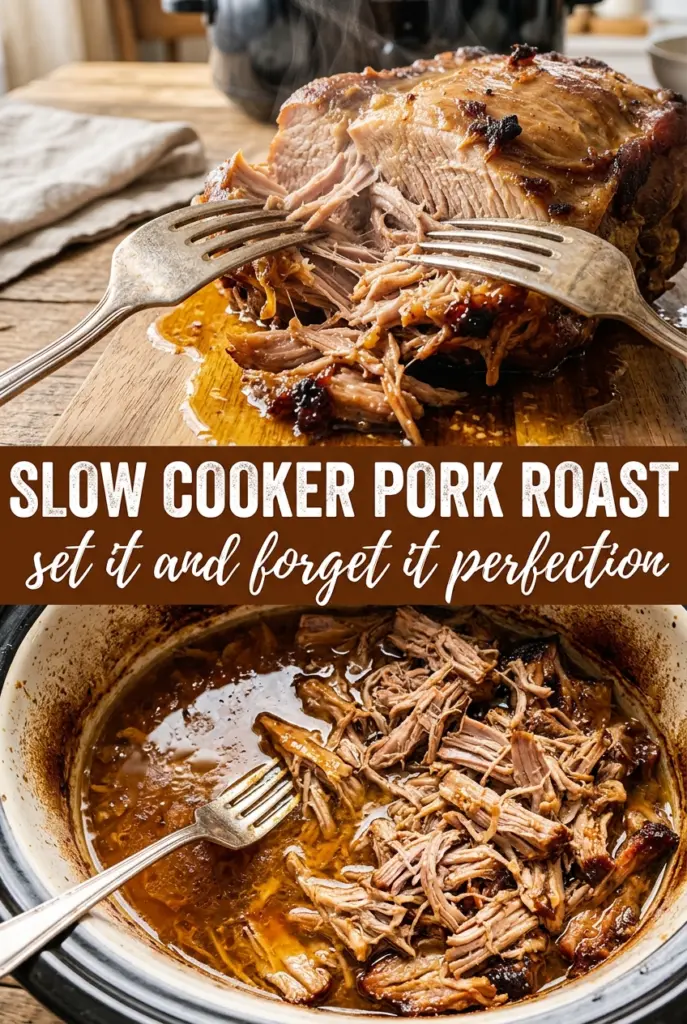
Pull-apart slow cooker pork roast earns its place on the dinner rotation because it gives you deep, savory flavor with almost no babysitting once it goes in the pot. The shoulder turns spoon-tender, the onions melt into the juices, and the whole thing finishes with that glossy, shredded texture that makes people reach for a second helping before the first plate is gone.
The part that matters most here is the sear. Browning the pork before it goes into the slow cooker gives the finished roast a richer, meatier flavor than you get from dumping everything in raw. The broth, Worcestershire, and soy sauce do more than add liquid; they build a salty, balanced braising base that keeps the pork from tasting flat after hours of cooking.
Below, I’m walking through the small details that make a big difference — where to put the onions, when to shred the pork, and how to keep the juices worth spooning over mashed potatoes or rice.
The pork shredded cleanly after 9 hours on low, and the onion-garlic juices were so good over mashed potatoes that I didn’t even need gravy. My husband said it tasted like Sunday dinner from a diner in the best way.
Save this slow cooker pork roast for the kind of dinner that turns one pork shoulder into tender, shred-able meat and rich pan juices.
The Sear Is What Keeps Slow Cooker Pork Roast from Tasting Flat
Slow cooker pork roast can go one of two ways: deeply savory and silky, or bland and one-note. The difference usually comes down to whether the pork gets browned first. That quick sear builds a crust on the outside and leaves browned bits in the pan, which is where a lot of the finished flavor comes from.
Another place people lose flavor is in the liquid. If the broth tastes thin on its own, the roast will taste thin at the end too. Worcestershire sauce and soy sauce add salt, umami, and a darker backbone that stands up to long cooking. The herbs matter here as well, but they work best as background support rather than the main event.
- Pork shoulder or butt — This cut has the fat and connective tissue that break down into tender shreds over hours. Leaner pork loin won’t give you the same fall-apart texture and can dry out before it gets soft enough to pull.
- Onion — Sliced onion goes under the roast and slowly melts into the cooking liquid. It sweetens as it cooks and helps keep the bottom of the slow cooker from tasting like straight broth.
- Worcestershire sauce and soy sauce — These are the quiet flavor boosters. You can swap in coconut aminos for soy sauce if needed, but don’t skip the salty, savory element entirely or the roast will taste unfinished.
- Fresh rosemary and thyme — Fresh herbs hold up well through a long cook and perfume the juices without taking over. Dried herbs will work in a pinch, but use less; dried rosemary in particular can turn sharp if you overdo it.
What Happens During the Long Cook Matters More Than the Clock

Season the pork generously all over before it hits the skillet. The surface should look coated, not dusty. When you sear it, let each side sit until it releases on its own and you see a deep brown crust; if it sticks, it is not ready yet. Crowding or rushing that step gives you gray meat, and gray meat makes gray juices.
Building the Flavor Base
Set the sliced onion and minced garlic in the bottom of the slow cooker first. They act like a rack and keep the pork slightly lifted while they soften underneath. Pour the broth mixture around the meat instead of over the top so you don’t wash off all the seasoning you just put on the roast. The herbs can go straight into the liquid; they need time to steep.
Cooking Until It Shreds Cleanly
Cook on low for 8 to 10 hours or on high for 4 to 5, but use the fork test instead of the clock as your final check. The pork is done when a fork slides in with no resistance and the meat pulls apart in long strands. If it still feels tight in the center, it needs more time. Pork shoulder gets more tender as it rests in the heat, so don’t stop the cook at the first sign of softness.
Shredding and Returning the Juices
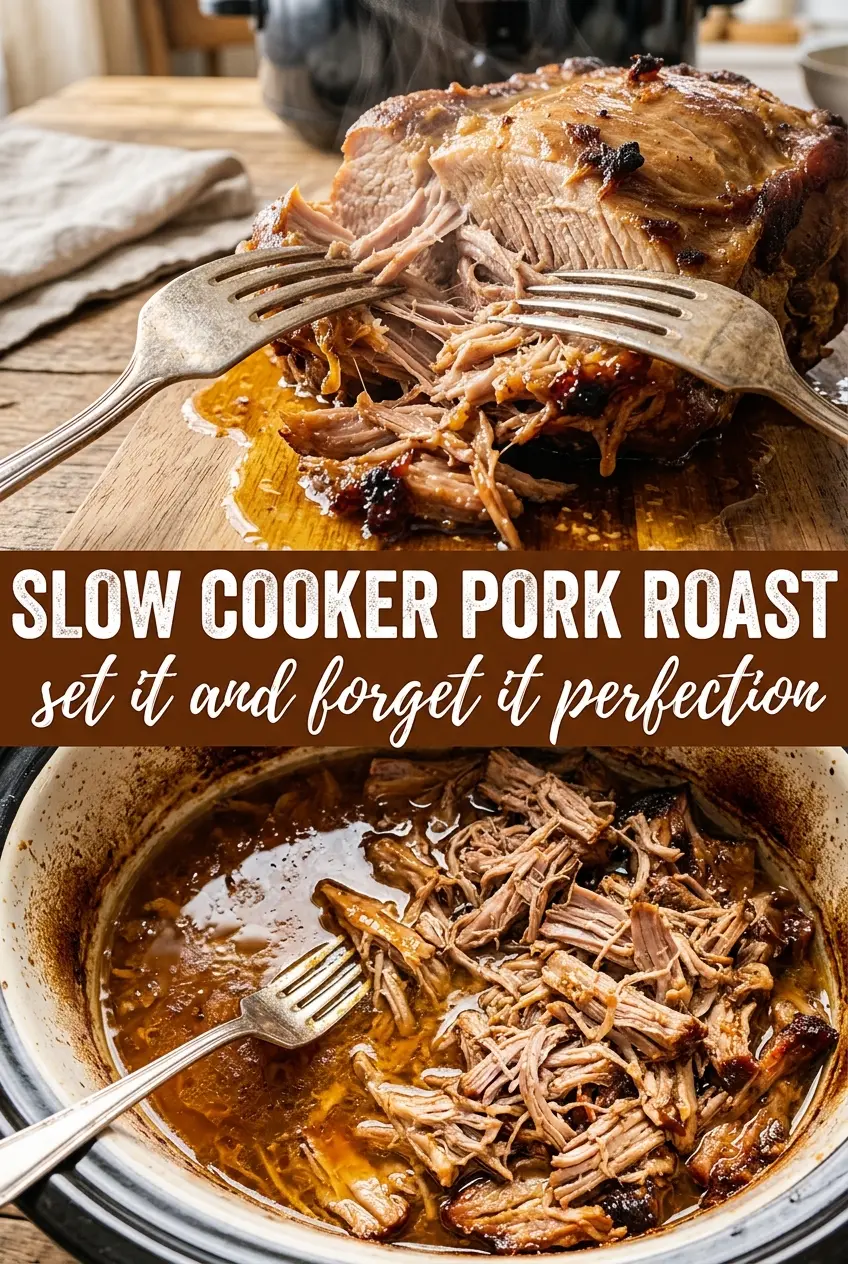
Move the roast to a cutting board or shallow bowl and shred it with two forks while it’s still hot. Then toss the meat back into the slow cooker and let it sit in the juices for a few minutes. That last step keeps the pork moist and seasons every shred from the outside in. If the liquid looks greasy, skim off a little fat before serving, but leave enough behind to coat the meat.
How to Adapt This for Different Dinners and Different Diets
Make It Gluten-Free Without Losing Depth
Use a gluten-free soy sauce or coconut aminos in place of regular soy sauce and check that your Worcestershire sauce is gluten-free. The roast will still have the same savory backbone, though coconut aminos are a little sweeter and less salty, so you may want a small extra pinch of salt at the end.
For a Saucer, Richer Finish
After shredding, spoon some of the cooking liquid into a skillet and simmer it for a few minutes to concentrate it. That gives you a thicker sauce-like coating for the pork instead of loose juices, which is especially good over mashed potatoes.
Swap the Serving Base
Mashed potatoes catch the juices best, but rice works when you want something simpler or need the meal to stretch. Egg noodles or crusty bread also work because they soak up the broth without fighting the pork’s seasoning.
Storage and Reheating
- Refrigerator: Keep leftovers in a covered container for up to 4 days. The pork often tastes even better the next day because it sits in the juices.
- Freezer: It freezes well for up to 3 months. Portion it with some of the juices so it doesn’t dry out when thawed.
- Reheating: Warm it gently on the stove or in the microwave with a spoonful of the reserved liquid. High heat is the mistake here; it tightens the meat and drives out moisture.
Questions I Get Asked About This Recipe
Slow Cooker Pork Roast
Ingredients
Equipment
Method
- Season pork roast generously on all sides with salt, pepper, garlic powder, and smoked paprika.
- Let the seasoned pork rest while you heat the skillet (about 5 minutes) so the spices adhere before searing.
- Heat olive oil in a skillet over medium-high heat until shimmering.
- Sear pork on all sides until browned, about 2–3 minutes per side, turning as needed for even color.
- Place sliced onion and garlic in the bottom of the slow cooker, then set the seared pork on top.
- Combine chicken broth, Worcestershire sauce, and soy sauce and pour around the pork.
- Add rosemary and thyme over and around the pork so the herbs perfume the cooking liquid.
- Cook on Low 8–10 hours or High 4–5 hours, until pork shreds easily when pressed with a fork.
- When done, tilt a spoon near the pork to check the juices: they should be bubbling gently and look glossy, not watery.
- Shred the pork with two forks, pulling into tender shreds.
- Toss the shredded pork with the juices in the slow cooker until evenly coated.
- Serve over mashed potatoes or rice, spooning extra pan juices on top.