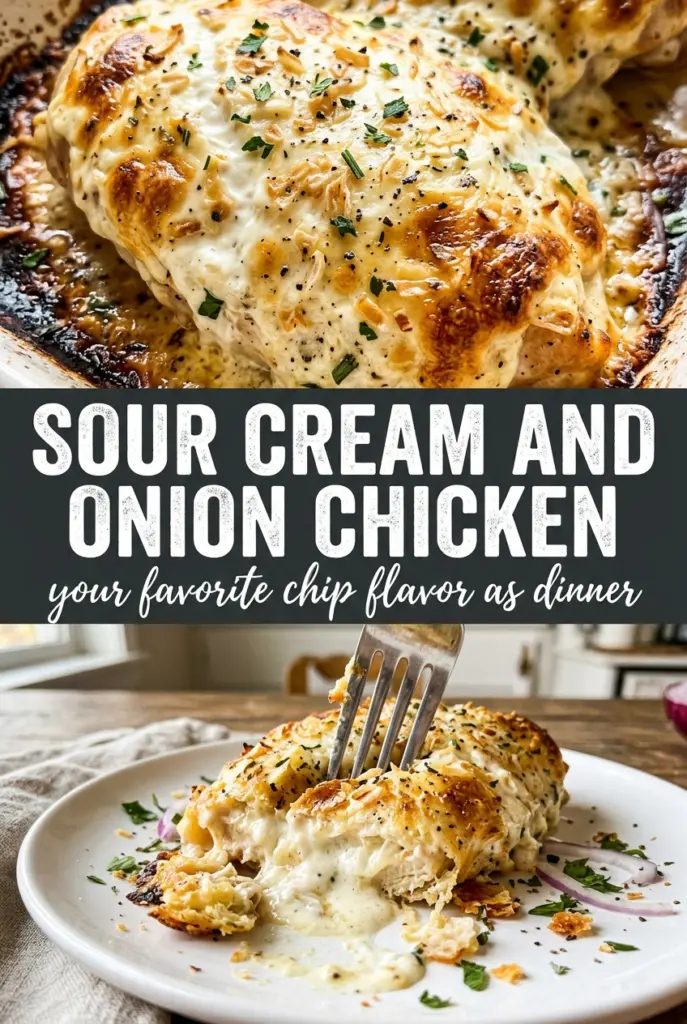
Sour cream and onion chicken comes out with the kind of crust that makes people pause at the table before they take the first bite. The topping bakes into a crackly, savory shell, while the chicken underneath stays tender and juicy from the sour cream coating. It tastes like the best part of a chip dip and a baked chicken dinner got together in one pan.
The trick is layering the coating instead of stirring everything into one bowl. Sour cream gives the chicken something tangy and clingy to hold onto, and the crushed crispy onions mixed with Parmesan bake into a topping that actually browns instead of turning soft. The coating needs to be pressed on firmly so it stays put long enough to crisp in the oven.
Below, I’ve included the small details that matter most here: how thick to spread the sour cream, why the onion topping should be crushed a bit, and how to keep the chicken from drying out before the crust turns golden.
The sour cream layer kept the chicken so juicy, and the onion topping got crunchy instead of soggy. I used extra chives at the end and my husband kept sneaking bites straight from the pan.
Save this sour cream and onion chicken for nights when you want a golden crust and a tangy, creamy chicken bake with almost no prep.
The Secret to a Crust That Stays Crisp Instead of Going Soft
The biggest mistake with this kind of chicken is putting all the coating ingredients together at once and expecting them to behave like breading. Sour cream is wet enough to protect the chicken, but it also softens anything mixed directly into it. That’s why the onion mixture goes on top as its own layer: the sour cream underneath keeps the chicken juicy while the crushed onions and Parmesan bake into a dry, browned crust.
Pressing the topping on matters more than people think. If it sits loosely, it slides off as the sour cream warms up. If you pack it on firmly, it sticks long enough for the oven heat to set the crust before the chicken finishes cooking. The result is a top that turns golden and crackled instead of patchy and bare.
What Each Ingredient Is Actually Doing in This Dish
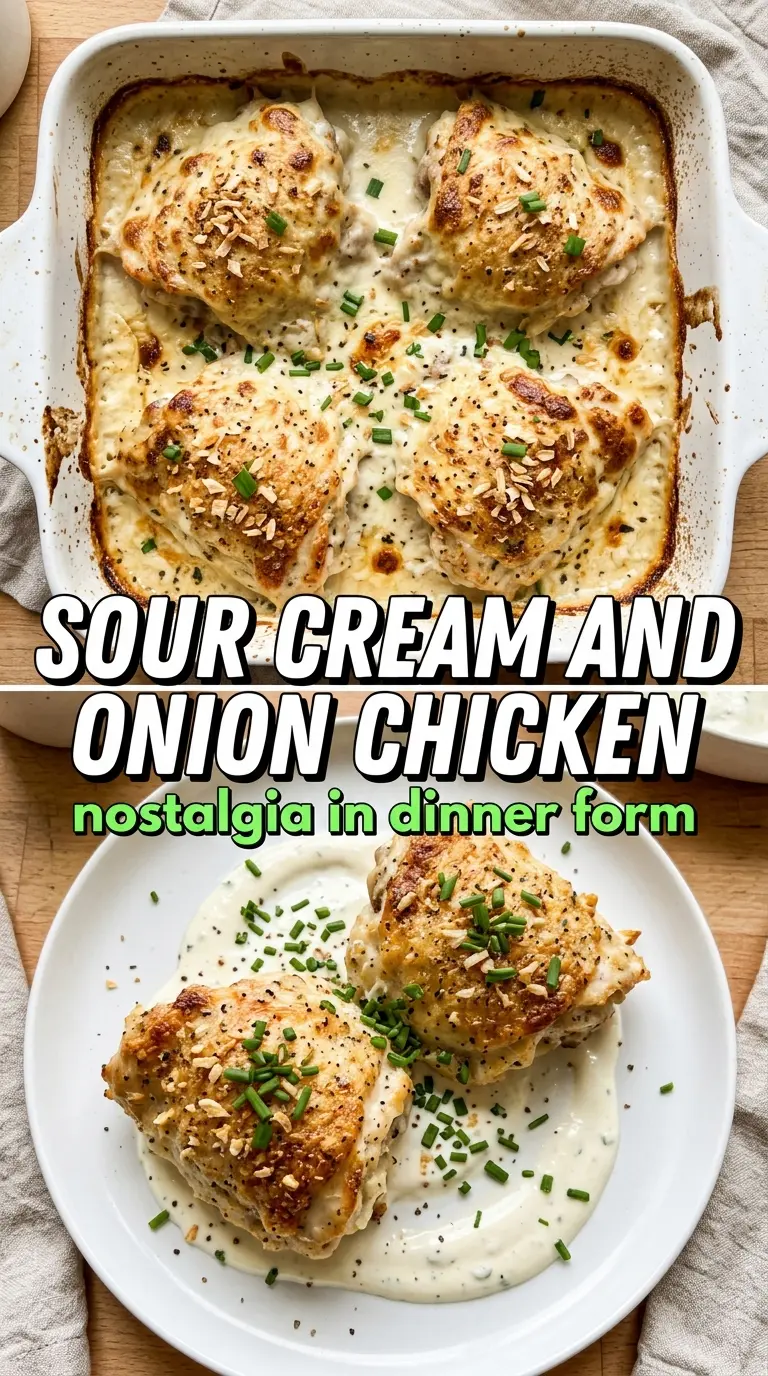
- Chicken breasts — Boneless, skinless breasts work because they bake quickly under the topping. If yours are very thick, pound them to an even thickness so the crust finishes at the same time the center reaches 165°F.
- Sour cream — This is the creamy base that keeps the chicken moist and gives the coating its tang. Full-fat sour cream holds up best in the oven; light sour cream can work, but it’s a little looser and less rich.
- Onion soup mix — This brings the salt, onion flavor, and the savory backbone all at once. There isn’t a perfect substitute for the seasoning blend, but in a pinch you can use dried onion flakes with a little extra salt and garlic powder; the flavor will be less rounded.
- Crispy fried onions — Crushing them a bit helps them press onto the chicken and brown evenly. Leave some pieces larger for texture, but don’t turn them into dust or you’ll lose the crunchy bite.
- Parmesan cheese — Parmesan helps the topping brown and adds a salty, nutty edge that keeps the crust from tasting one-note. Freshly grated melts and clings better than the shelf-stable canister style.
- Garlic powder — This fills in the flavor so the topping tastes complete instead of just onion-heavy. Garlic powder is better than fresh garlic here because fresh garlic can scorch under the crust.
Building the Chicken So the Topping Browns, Not Burns
Set up the baking dish first
Heat the oven to 375°F and grease the baking dish before you start mixing anything. This recipe moves quickly once the coatings are ready, and you don’t want to be fumbling with the pan after the chicken is already covered. A lightly greased dish also helps the edges of the sour cream mixture bake up cleanly instead of sticking.
Mix the creamy base
Stir the sour cream and onion soup mix until the mixture looks smooth and evenly speckled. You want every spoonful to taste seasoned, not streaky with pockets of dry powder. If it looks too loose, that’s normal; the chicken will hold it in place once you spread it on.
Press on the crunchy topping
Combine the crushed crispy fried onions, Parmesan, and garlic powder in a separate bowl, then press that mixture firmly onto the sour cream-coated chicken. Don’t sprinkle it lightly. The pressure helps the topping stick and gives you that thick, puffy crust instead of a few loose crumbs. Seasoning the chicken before coating keeps the meat itself from tasting flat under all that richness.
Bake until the center is done
Bake until the topping is deep golden and the chicken reaches 165°F in the thickest part, usually 25 to 28 minutes. If the crust is browning too fast, loosely lay a piece of foil over the top for the last few minutes. Cutting into it too early lets the juices run out, so let the chicken rest for a few minutes before serving.
Three Ways to Change It Without Losing the Point
Make it gluten-free with a better crunchy topping
Use a certified gluten-free onion soup mix and check the fried onions carefully, since many brands contain wheat. The texture stays crisp and the flavor stays close to the original, which is what matters most here. If your gluten-free onions are a little more fragile, press them on gently and avoid overbaking.
Swap the sour cream for Greek yogurt
Plain full-fat Greek yogurt works if you want a slightly sharper, lighter-tasting coating. It won’t be quite as rich, and it can brown a little faster, so keep an eye on the top near the end of baking. The chicken still stays creamy underneath the crust.
Turn it into a pork chop dinner
The same coating works on boneless pork chops, but the bake time changes because pork chops are usually thinner and cook faster. Start checking early so the crust doesn’t overbrown while the meat finishes. The tangy onion topping tastes especially good with pork.
Use chicken thighs for a juicier version
Boneless, skinless thighs stay tender and add more richness under the crust. They may need a few extra minutes in the oven, but they’re more forgiving if your pieces vary in size. The only tradeoff is that the coating won’t sit as flat as it does on breasts.
Storage and Reheating
- Refrigerator: Store leftovers in an airtight container for up to 3 days. The crust softens in the fridge, but the flavor stays good.
- Freezer: It freezes, but the topping loses some crunch after thawing. If you freeze it, wrap portions well and reheat from thawed for the best texture.
- Reheating: Warm in a 350°F oven until heated through, uncovered, so the topping can dry out and crisp a little again. The microwave will heat the chicken faster, but it softens the crust and makes the onion topping limp.
Questions I Get Asked About This Recipe
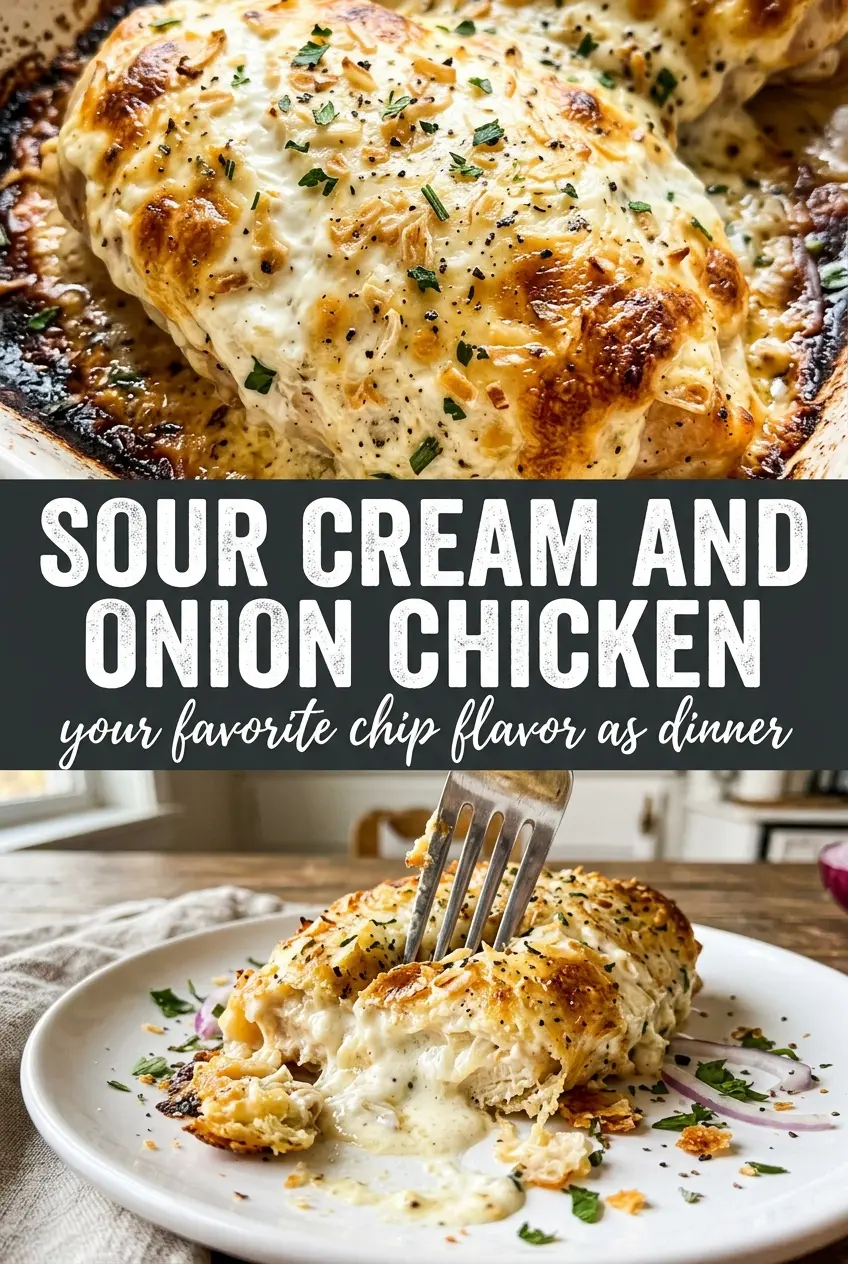
Sour Cream and Onion Chicken
Ingredients
Equipment
Method
- Preheat the oven to 375°F and grease a baking dish.
- Mix the sour cream and onion soup mix until well combined.
- In a separate bowl, combine the crushed crispy fried onions, Parmesan cheese, and garlic powder.
- Season the chicken breasts with salt and pepper, then coat each breast thickly with the sour cream mixture.
- Press the onion-Parmesan mixture firmly onto the top of each sour cream-coated breast.
- Bake for 25-28 minutes at 375°F until the topping is golden and puffed, and the internal temperature reaches 165°F; garnish with extra crispy fried onions and fresh chives.