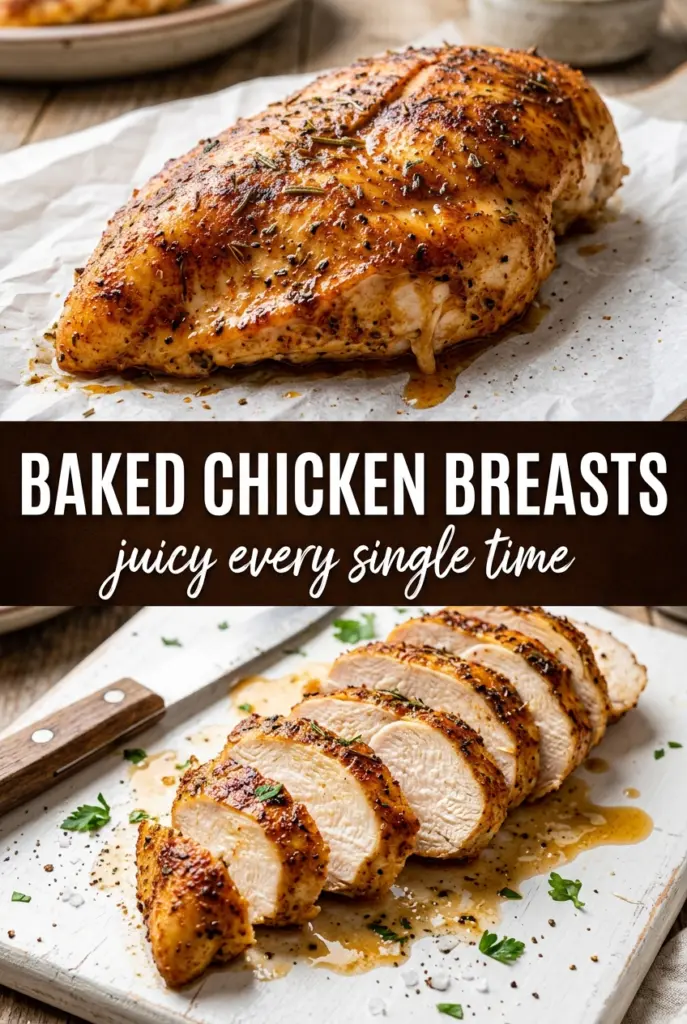
Golden baked chicken breasts can be dry and forgettable, or they can come out juicy with a herb-speckled crust that smells like dinner is already won. This version leans on a hot oven, a thin even thickness, and a seasoning mix that clings to the chicken instead of sliding off in the pan. The result is simple, but it eats like you paid attention.
The biggest difference here is the shape of the chicken. Thick ends finish late, thin ends overcook, and that’s how you end up with one piece that’s still pink and another that chews like sawdust. Pounding the breasts to an even 3/4-inch thickness gives you predictable timing, and the olive oil helps the spices bloom while the surface turns deeply golden. A quick rest after baking keeps the juices where they belong.
Below, I’ll walk through the part that matters most, which is how to keep baked chicken breasts tender instead of stringy. I’ve also added a few smart swaps and the questions people usually ask after their first batch.
The chicken stayed juicy all the way through and the herb crust actually browned instead of just looking seasoned. I followed the 3/4-inch thickness tip and it came out perfectly at 20 minutes.
Save these juicy baked chicken breasts for the nights when you want a golden crust and a dependable 22-minute dinner.
The Reason Baked Chicken Breasts Dry Out Before They Brown
The problem with most baked chicken breasts is timing, not seasoning. By the time the thickest part reaches 165°F, the thinner edges have already spent too long in the oven. That’s when the meat turns chalky and the surface still looks pale.
Even thickness changes everything. Once the chicken is pounded to a uniform 3/4-inch, the whole breast cooks at the same pace, so the outside has time to color before the center overshoots. A hot 425°F oven gives you that light crust without needing a long bake that drains the meat.
The resting time matters just as much as the oven time. Slice too early and the juices run across the cutting board instead of staying in the chicken. Give it five minutes and the texture stays much cleaner.
What Each Ingredient Is Actually Doing in This Dish
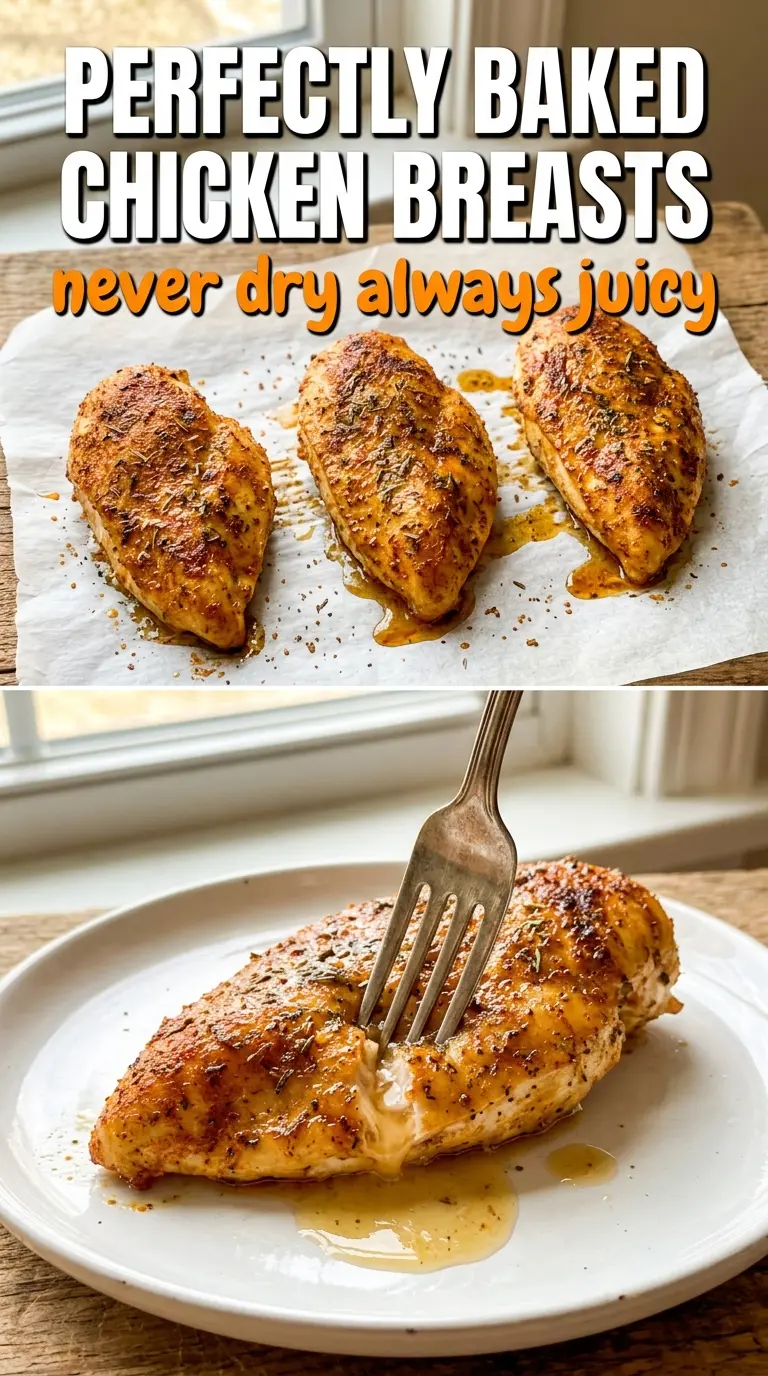
- Chicken breasts — Boneless, skinless breasts are lean, which is why they need the even thickness and the short, hot bake. Bigger breasts can be sliced in half horizontally if they’re especially thick, but pounding them is the cleaner fix.
- Olive oil — This helps the seasonings adhere and promotes browning on the surface. A neutral oil works too, but olive oil adds a little more flavor and a better-looking crust.
- Garlic powder, onion powder, smoked paprika, and Italian seasoning — This blend gives the chicken color and depth without needing a marinade. Paprika brings the golden finish, while the powders season the meat directly instead of sitting on top in a dusty layer.
- Salt and black pepper — The salt draws the seasoning mix into the surface of the chicken and makes the finished meat taste like more than just plain poultry. If you use kosher salt, keep the amount listed; if you switch to fine table salt, use a little less because it hits harder.
- Parsley and lemon wedges — These aren’t garnish for the sake of garnish. Parsley adds freshness, and a squeeze of lemon cuts through the richness and wakes up the herbs at the end.
How to Bake the Chicken So It Stays Juicy
Getting the Thickness Even
Start by pounding the chicken to an even 3/4-inch thickness if the breasts taper sharply on one end. A zip-top bag or sheet of plastic keeps the mess down and helps you control the shape without tearing the meat. If you skip this, the thin end dries out while you’re waiting for the thick end to finish.
Seasoning the Surface
Brush both sides with olive oil first, then rub the spice mix over every exposed surface. The oil gives the spices something to cling to, which means you get a darker crust instead of loose seasoning left behind in the baking dish. Press the spices lightly into the chicken with your fingers so they stay put in the oven.
Baking Until Just Done
Lay the breasts in a lightly greased baking dish and roast at 425°F for 18 to 22 minutes, depending on size. Pull them when the thickest part hits 165°F and the tops are golden with a few deeper brown spots. If you keep waiting for them to look firm and dry, they’ll be past their best texture by the time you cut in.
Resting Before Slicing
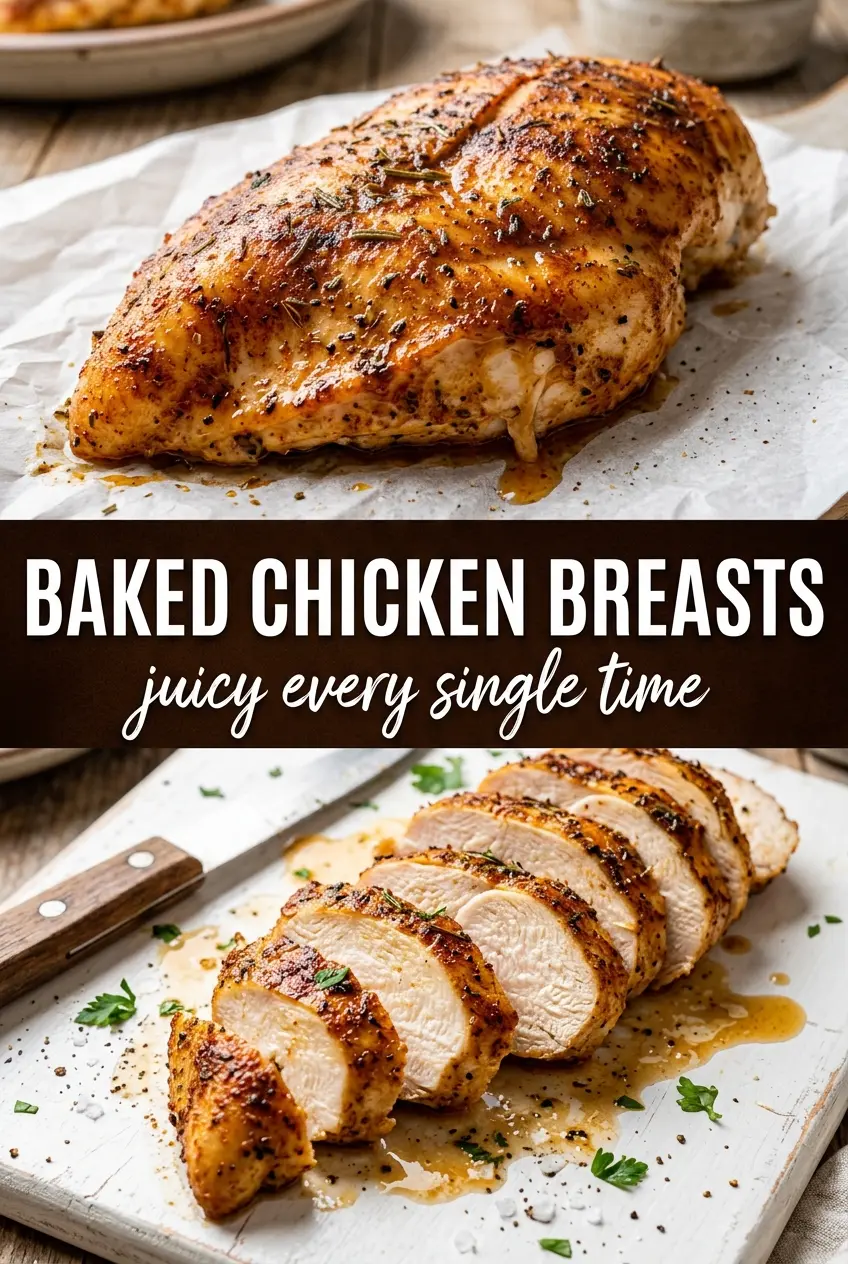
Let the chicken sit for five minutes after it comes out of the oven. The juices settle back into the meat during that rest, which gives you cleaner slices and a moister bite. Slice too soon and you’ll see the moisture flood the plate instead of staying in the breast.
Three Smart Ways to Adjust This for Your Kitchen
Gluten-Free and Naturally Low-Carb
This recipe already fits both without any special swaps. The seasoning mix has no breadcrumbs, flour, or sugar, so the chicken stays clean and straightforward with a crisp, seasoned surface.
Using Chicken Thighs Instead
Boneless thighs work well if you want richer, more forgiving meat. They usually need a few extra minutes in the oven and won’t dry out as quickly, but they also won’t give you the same lean, sliceable finish as breasts.
Making It Brighter or More Herb-Heavy
Add lemon zest to the spice rub if you want a sharper finish, or swap the Italian seasoning for dried thyme and rosemary for a more pronounced herb note. Just keep the total seasoning amount about the same so the chicken still browns instead of steaming under a thick coat.
Storage and Reheating
- Refrigerator: Store leftovers in an airtight container for up to 4 days. The crust softens a bit, but the chicken stays useful for salads, sandwiches, and grain bowls.
- Freezer: It freezes well for up to 2 months if you wrap the pieces tightly and keep out as much air as possible. Thaw overnight in the refrigerator so the meat doesn’t get watery.
- Reheating: Reheat gently at 325°F covered with foil, or warm slices in a skillet with a splash of broth. High heat dries out lean chicken fast, and the goal is just to bring it back to serving temperature without squeezing out the juices.
Answers to the Questions Worth Asking
Baked Chicken Breasts
Ingredients
Equipment
Method
- Preheat the oven to 425°F and lightly grease a baking dish.
- Pound the chicken breasts to an even 3/4-inch thickness if they vary in size.
- Brush both sides of each chicken breast with olive oil.
- Mix together garlic powder, onion powder, smoked paprika, Italian seasoning, salt, and pepper, then rub evenly over both sides of the chicken.
- Bake for 18-22 minutes, until the internal temperature reaches 165°F and the tops are golden; do not overbake.
- Rest for 5 minutes before slicing, then garnish with fresh parsley and lemon wedges.