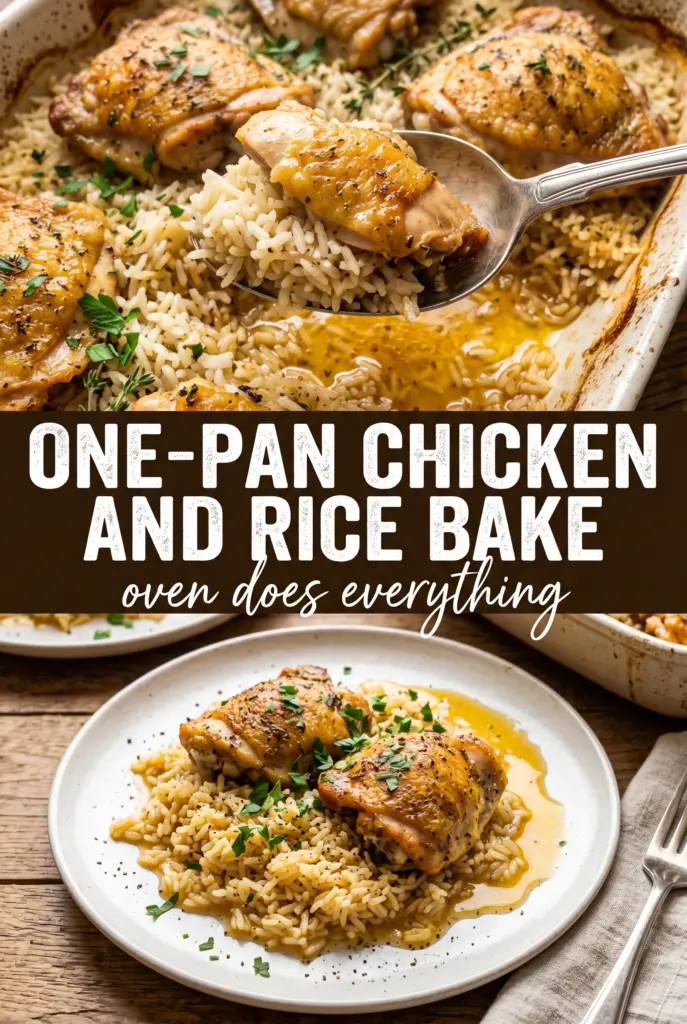
Golden-skinned chicken over herb-scented rice is the kind of dinner that disappears fast because it gets everything right at once: crisp skin, tender meat, and grains that soak up every bit of savory broth from the pan. The rice turns fluffy instead of mushy, and the bottom layer picks up just enough richness from the chicken to taste like it cooked all day, even though the whole thing comes together with almost no hands-on work.
The trick is keeping the chicken on top and the rice underneath, where the steam can cook the grains evenly while the fat from the skin drips down into the dish. Bone-in, skin-on thighs do the heavy lifting here because they stay juicy through the bake and give the rice better flavor than boneless pieces ever could. Using long-grain white rice matters too; it holds its shape and absorbs the broth without collapsing into a gummy layer.
You’ll find the timing, the seasoning balance, and the one step that keeps the rice from drying out below, along with a few smart swaps if you want to change the flavor without losing that same all-in-one comfort.
The rice came out fluffy and full of flavor, and the chicken skin actually crisped up after uncovering it. I’ve made baked chicken and rice before, but this was the first time the bottom wasn’t soggy.
Save this one-pan chicken and rice bake for the night when you want crispy chicken, fluffy rice, and one dish to wash.
The Step That Keeps the Rice Fluffy Under Crispy Chicken
Most chicken-and-rice bakes fail for one of two reasons: the rice gets gummy, or the chicken never gets properly browned. Both problems come from rushing the setup. The rice needs enough liquid to cook through, but it also needs to stay under a tightly covered dish long enough to steam before the top gets exposed.
That’s why the foil comes off only at the end. The first covered stretch cooks the rice evenly and gives the chicken time to render some fat into the pan. The final uncovered minutes dry the surface just enough for the skin to turn golden and crackly without overcooking the meat underneath.
- Long-grain white rice holds its shape best here. Short-grain rice will soften too much, and brown rice needs a longer bake with more liquid.
- Bone-in, skin-on thighs bring the most flavor and stay juicy during the bake. Boneless chicken works in a pinch, but it cooks faster and won’t give the rice the same richness.
- Chicken broth matters more than plain water because the rice absorbs every bit of it. Low-sodium broth is the safest choice if you want control over the salt level.
- Onion and garlic disappear into the rice while still giving it depth. Dice the onion small so it softens fully under the chicken.
Building the Bake So the Chicken Stays Juicy and the Rice Cooks Evenly
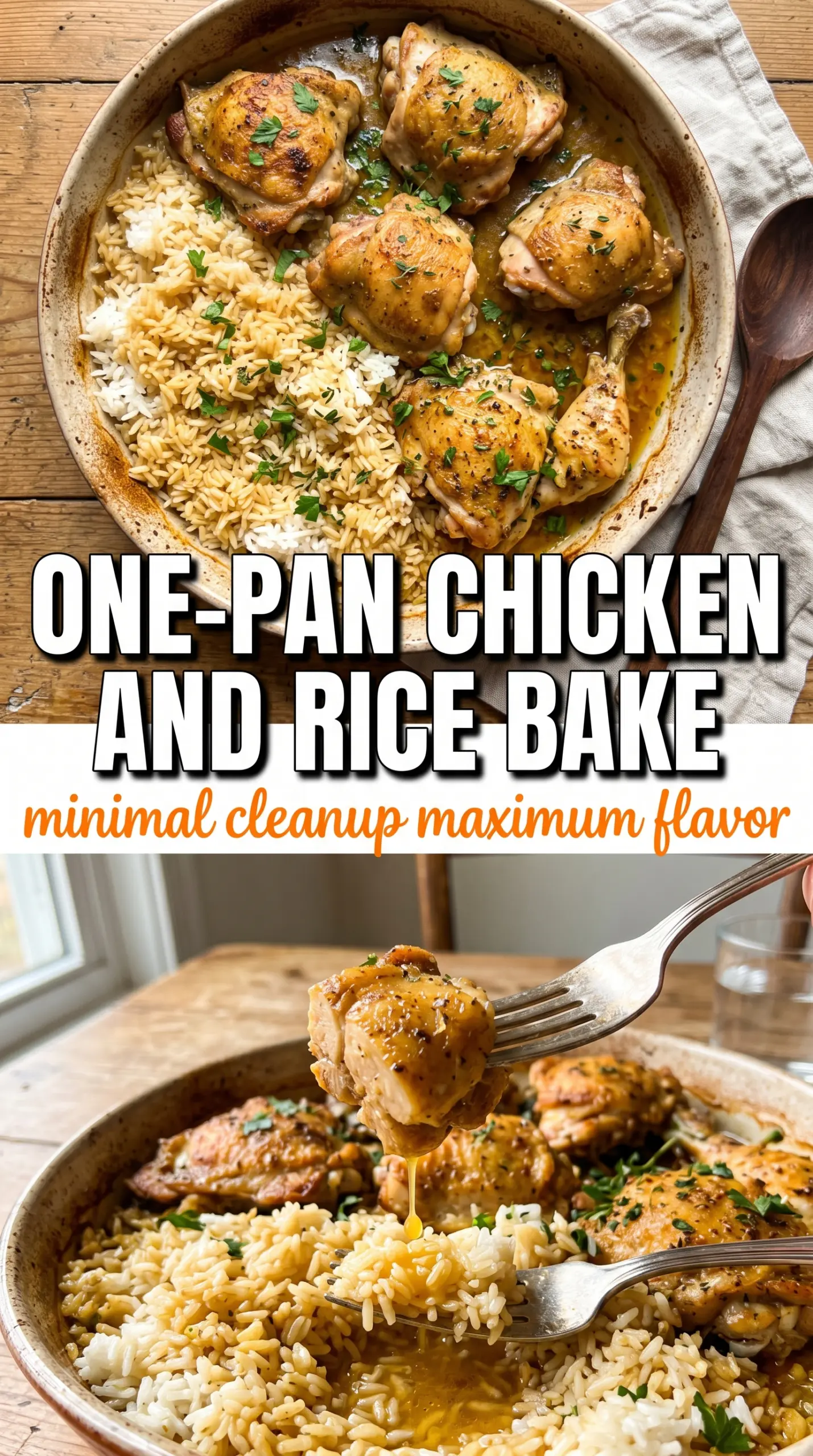
- Chicken thighs — Bone-in, skin-on thighs give you the best balance of moisture and flavor. The skin shields the meat during the covered bake, then turns crisp once the foil comes off. If you use boneless thighs, cut the covered time down or they’ll go dry before the rice is finished.
- Long-grain white rice — This is the grain that makes the dish work. It cooks up tender and separate instead of sticky. Rinse it only if your brand tends to be dusty; otherwise, dry rice goes straight into the dish so it can absorb the broth evenly.
- Chicken broth — This is where the dish gets its seasoning base. A good broth gives the rice a deeper, rounder flavor than water can. If your broth is salted, hold back on extra salt until after baking and taste the rice at the edge of the dish.
- Onion, garlic, thyme, and Italian seasoning — These are the quiet flavor builders. They season the rice from the inside out as it bakes. Fresh garlic works well, but don’t use a heavy hand with it; too much can turn sharp under the long bake.
The Covered Bake and the Uncovered Finish
Mix the Rice Base First
Start by stirring the rice, broth, onion, garlic, thyme, Italian seasoning, and salt together in the baking dish. The rice should look evenly distributed and fully submerged, with the onion and garlic scattered through the liquid instead of clumped at one edge. If the rice isn’t spread in a level layer, the center can stay undercooked while the edges soften too much.
Season the Chicken Generously
Season the thighs on both sides with salt, pepper, garlic powder, paprika, and a little more Italian seasoning. The skin needs to be dry enough for the spice mixture to cling, so pat the chicken dry first if it looks damp. Place the pieces skin-side up so the rendered fat drops into the rice instead of pooling on top of the skin.
Bake Covered, Then Let the Skin Crisp
Cover the dish tightly with foil and bake until the rice has had time to steam through. When you pull the foil off, the top should look mostly set, with liquid absorbed but not bone-dry at the edges. Keep baking uncovered until the skin is deeply golden and the rice underneath is tender and fluffy. If the rice still looks wet at the end, give it a few more minutes uncovered rather than cranking up the heat.
Rest Before Serving
Let the bake sit for a few minutes after it comes out of the oven. That short rest gives the rice time to settle and finish absorbing any stray liquid at the bottom of the pan. If you cut into it too soon, the grains can seem loose and wet even when they’re actually cooked through.
Swap the Chicken for Thighs or Drumsticks
This bake works best with bone-in pieces, but drumsticks are a solid swap if that’s what you have. Keep the skin on and watch the uncovered finish closely, because smaller pieces brown faster and can dry out before the rice is done. Boneless chicken will work, but it loses some of the flavor that drips into the rice.
Make It Dairy-Free Without Changing the Texture
This recipe is naturally dairy-free as written, which is part of why it works so well for a crowd. The broth, chicken fat, and herbs give the rice enough richness without butter or cream. If you want a little more silkiness, drizzle the finished dish with a touch more olive oil before serving.
Turn It into a Lemon-Herb Version
Add lemon zest to the rice mixture and tuck a few lemon slices around the chicken before baking. The lemon brightens the broth-heavy rice and cuts through the richness of the skin. Don’t add lemon juice to the raw liquid, though, or the flavor can turn sharp and the rice won’t taste as round.
Storage and Reheating
- Refrigerator: Store leftovers in an airtight container for up to 4 days. The rice will firm up a bit as it chills, which is normal.
- Freezer: It freezes well, though the rice softens slightly after thawing. Cool completely, portion into airtight containers, and freeze for up to 2 months.
- Reheating: Reheat covered in the oven at 325°F with a splash of broth or water to loosen the rice. The common mistake is blasting it uncovered in the microwave until the chicken dries out and the rice turns hard at the edges.
Questions I Get Asked About This Recipe
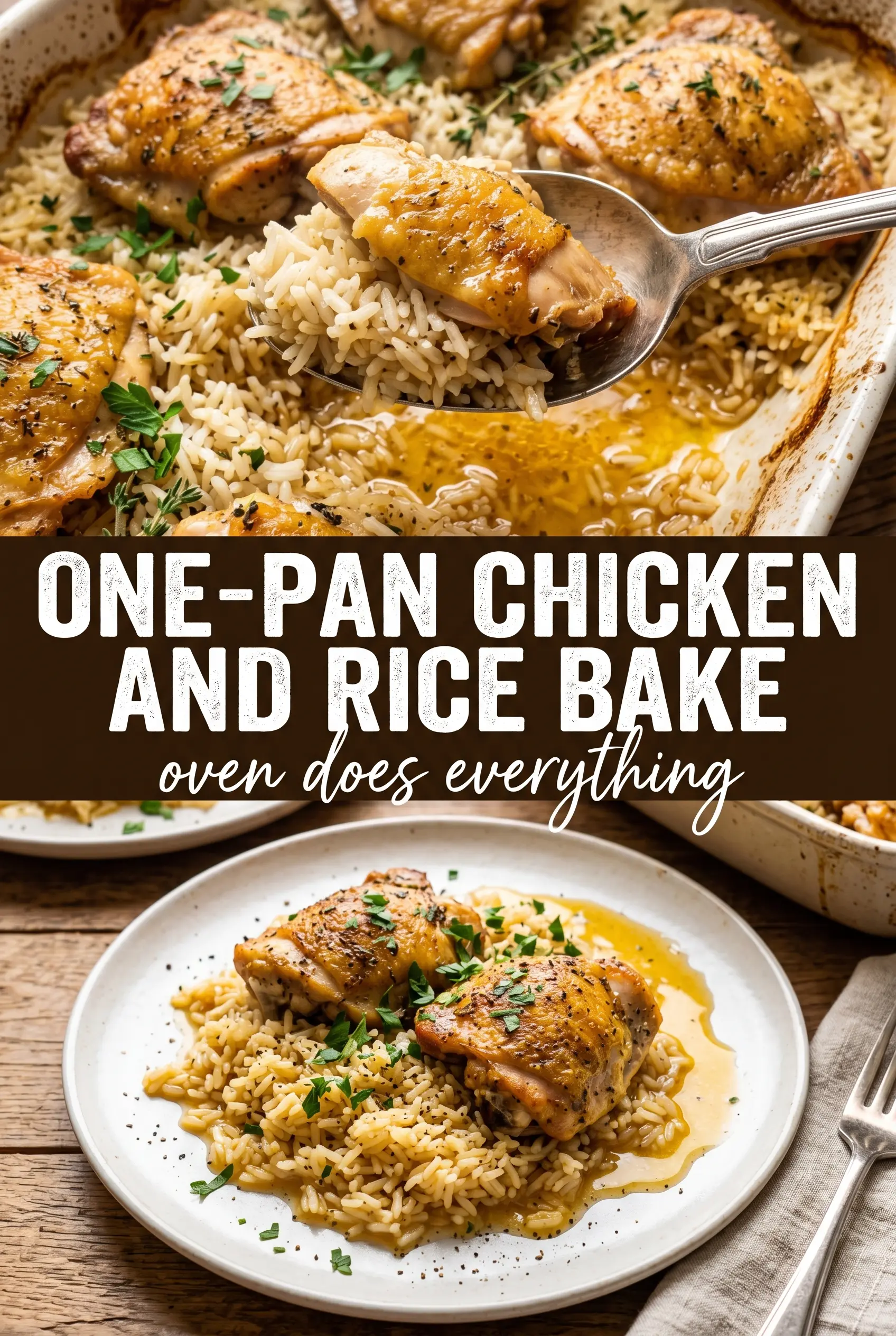
One-Pan Chicken and Rice Bake
Ingredients
Equipment
Method
- Preheat the oven to 375°F, ensuring it reaches temperature before baking. This helps the rice cook evenly and the chicken skin crisp properly.
- Add the long-grain white rice, chicken broth, diced onion, garlic, dried thyme, dried Italian seasoning, and salt to a 9x13 baking dish and stir to combine. Spread the rice into an even layer so it bakes at the same rate.
- Season the bone-in skin-on chicken thighs generously on all sides with pepper, garlic powder, paprika, and Italian seasoning. Rub the spices in so they cling to the skin as it bakes.
- Nestle the chicken thighs skin-side up on top of the rice mixture, then drizzle with olive oil. Keep the thighs spaced so the skin above the surface turns golden.
- Cover tightly with foil and bake for 40 minutes at 375°F. Look for bubbling at the edges as the rice absorbs the broth.
- Remove the foil and bake for another 15 minutes at 375°F until the chicken skin is golden and the rice has absorbed all liquid. The surface should look crisp and the rice should not be soupy.
- Garnish with fresh parsley and serve directly from the baking dish. Spoon rice and chicken together so everyone gets the herb-flecked drippings.