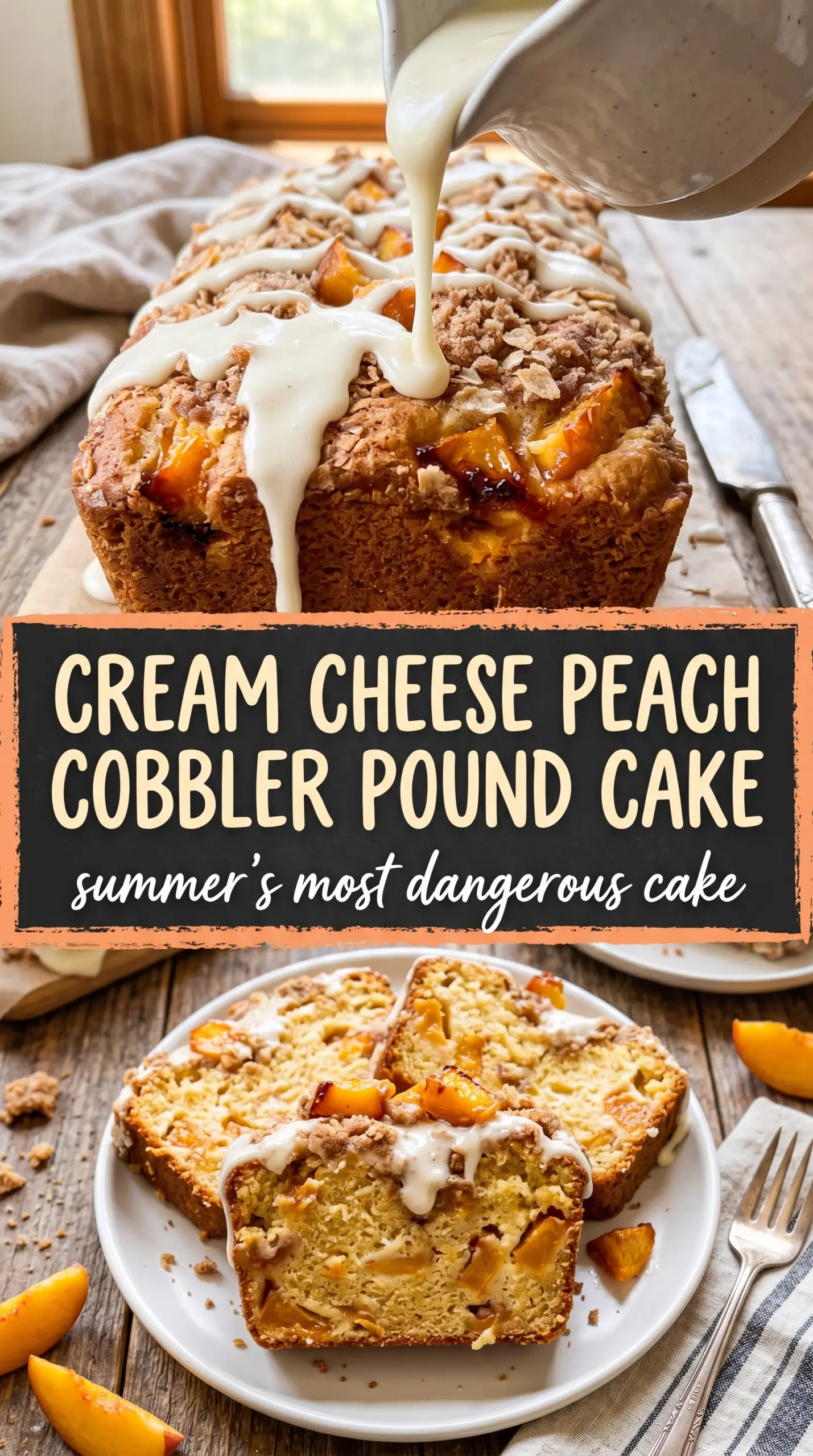
Ultra-dense, velvety pound cake gets a whole new life when it’s layered with sweet peaches and a little cinnamon sugar. This cream cheese peach cobbler pound cake bakes up with that tight, buttery crumb people love in a good pound cake, but the peach layer keeps every slice moist and gives it a cobbler-like pocket of fruit running through the middle. The glaze on top ties it all together without covering up the flavor that makes the cake worth baking in the first place.
The trick is in the mixing and the layering. Cream cheese adds richness and helps the crumb stay tender, but it also means you need to beat the butter, cream cheese, and sugar until they’re genuinely light before anything else goes in. The peaches are tossed with brown sugar and cinnamon first so they don’t taste flat, and they stay in one concentrated layer instead of disappearing into the batter. That gives you a clean slice with a visible peach ribbon instead of a cake that just tastes vaguely fruity.
Below, I’ll walk through the parts that matter most: how to keep the batter from turning heavy, how to layer the peaches so they don’t sink, and how to get that glossy peach glaze just thick enough to cling to the cake.
The peach layer stayed right in the middle and the crumb was so tender it sliced cleanly after cooling. I used fresh peaches like you said and the glaze had just enough peach flavor without making the cake soggy.
Save this cream cheese peach cobbler pound cake for the kind of dessert that slices beautifully and keeps its peach swirl front and center.
The Mistake That Makes Peach Pound Cake Sink in the Middle
The most common problem with peach pound cake is a heavy center that never catches up to the edges. That usually happens when the fruit is folded straight into the batter or piled too close to the top, where it floods the crumb with moisture. This version avoids that by tucking the peaches into the middle, where the batter can support them and bake around them instead of collapsing under them.
The second mistake is rushing the creaming stage. Butter, cream cheese, and sugar need the full five minutes so the batter traps enough air to carry the weight of the peaches and all that flour. If you stop early, the cake still tastes good, but the texture turns dense in the wrong way — tight and heavy instead of plush and velvety.
- Fresh peaches give the best flavor and texture here because they hold their shape and release just enough juice for the swirl. If they’re very ripe, dice them small so they don’t melt into the cake.
- Cream cheese is what gives the crumb that rich, almost custardy tenderness. Full-fat cream cheese matters; the reduced-fat kind can make the batter looser and the finished cake less luxurious.
- Brown sugar and cinnamon turn the peach layer into something that tastes more like cobbler filling than plain fruit. That small amount of spice keeps the peaches from tasting one-note.
- Peach juice in the glaze is worth using if you have it, because it makes the topping taste like it belongs on the cake instead of just sitting on top of it. If you’re short on juice, use a little milk, but the glaze will be less peach-forward.
What Each Ingredient Is Actually Doing in This Peach Cobbler
- Fresh peaches (the star fruit) — Use ripe but firm peaches. Overripe turns to mush.
- Sugar (the sweetness and sauce base) — This draws juices from peaches and creates syrup. Adjust based on ripeness.
- Lemon juice (the brightness and acid) — This prevents the filling from tasting one-dimensional. Keeps peaches from browning.
- Thickener (flour, cornstarch, or tapioca) — This keeps filling from being runny. Don’t skip this.
- Biscuit or crumble topping (the texture element) — This creates contrast with soft fruit. Biscuits are cake-like; crumbles are crispy.
- Butter in topping (the richness) — Cold butter creates flakier biscuits. Creates golden finish.
- Spices (cinnamon, nutmeg, or ginger) — These warm up peach without overpowering. Use sparingly.
- Baking temperature (375-400°F, 40-50 minutes) — Hot enough to cook fruit and brown topping without burning.
Building the Batter and Keeping the Peach Layer in Place
Creaming for Volume
Beat the butter, cream cheese, and sugar until the mixture looks pale and fluffy, not just mixed together. That usually takes the full five minutes, and the bowl should look lighter by the end. If the mixture still looks dense and grainy, keep going. This is the base that supports the whole cake, so cutting this step short makes the crumb heavy before it ever reaches the oven.
Adding the Eggs One at a Time
Drop in the eggs one by one and let each one disappear before adding the next. This keeps the batter smooth and prevents it from looking curdled or broken. If the batter starts to look separated, the eggs were probably too cold or went in too quickly, but it usually comes back together once you add a little flour. Vanilla goes in after the eggs so it stays fragrant instead of getting lost in the early mixing.
Layering the Peaches
Pour half the batter into the prepared bundt pan first, then spoon the peach mixture over the center, leaving a little space around the edges. That helps the batter climb up the sides and hold the fruit in place. Add the remaining batter gently over the top so you don’t drag the peaches upward. If you stir the fruit into the batter, the cake bakes unevenly and the swirl disappears.
Baking Until the Center Is Set
Bake at 325°F for 70 to 75 minutes until a toothpick comes out clean from the thickest part of the cake. The top should be deeply golden and the cake should pull slightly from the sides of the pan. If the outside browns too quickly, your oven may run hot, so start checking a few minutes early. Let it cool for 20 minutes before inverting; too soon and it may break, too late and it can stick.
Three Ways to Change the Cake Without Losing the Peach Cobbler Feel
Make it dairy-free
Use a plant-based butter and a dairy-free cream cheese with a firmer texture. The cake will still be rich, but it won’t have quite the same tangy depth that real cream cheese brings. Chill the dairy-free batter for 15 minutes before baking if it looks loose, since some substitutes soften more as they sit.
Use canned peaches when fresh ones aren’t in season
Drain them well and pat them dry before tossing with the brown sugar and cinnamon. Canned peaches are softer, so they’ll give you a sweeter, more jammy center and less defined fruit pieces. They work fine, but the slice will be a little more delicate.
Turn it into smaller loaves or mini bundts
Divide the batter among smaller pans and start checking early, since the bake time will drop a lot. The texture stays the same, but the peach layer may settle more dramatically in smaller pans, which gives each slice a stronger cobbler-style center.
Storage and Reheating
- Refrigerator: Store covered for up to 5 days. The crumb gets even more tender on day two, but the glaze will soften a little.
- Freezer: Wrap individual slices tightly and freeze for up to 2 months. Thaw in the refrigerator so the peach layer doesn’t turn watery.
- Reheating: Warm a slice in the microwave for 10 to 15 seconds, just until the butter in the crumb loosens. Too much heat will make the cake oily and can turn the glaze sticky.
Answers to the Questions Worth Asking

Cream Cheese Peach Cobbler Pound Cake
Ingredients
Equipment
Method
- Preheat oven to 325F and grease a 10-inch bundt pan. Lightly coat all ridges so the dense cake releases cleanly.
- Toss diced peaches with brown sugar and cinnamon, then set aside. The peaches should look glossy and lightly coated after a brief mix.
- Beat butter, cream cheese, and sugar for 5 minutes until very light and fluffy. Stop and scrape the bowl as needed so the mixture turns smooth and airy.
- Add eggs one at a time, then add vanilla, beating well after each addition. The batter should look thick and well-emulsified after all eggs are mixed in.
- Gradually mix in flour, baking soda, and salt until just combined. Stop as soon as no dry streaks remain to keep the crumb ultra tender.
- Pour half the batter into the prepared pan, then top with the spiced peach mixture. Spread the peaches evenly so you get a visible swirl layer in the slice.
- Pour the remaining batter on top to cover the peaches. Tap the pan gently to settle the batter and reduce air pockets.
- Bake at 325F for 70-75 minutes until a toothpick comes out clean. The cake should be deeply golden and the center should test free of wet batter.
- Cool the cake 20 minutes in the pan before inverting. The exterior should firm up and pull away slightly from the pan for an easier release.
- Drizzle with peach glaze when the cake is cool. Let the glaze drip down the sides for a glossy finish.