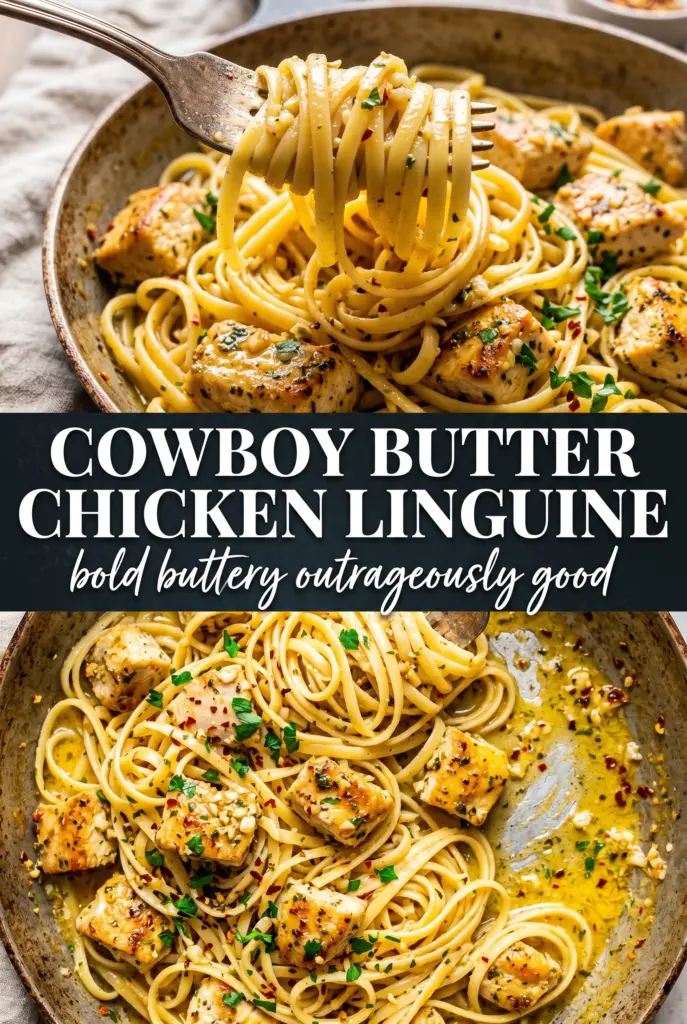
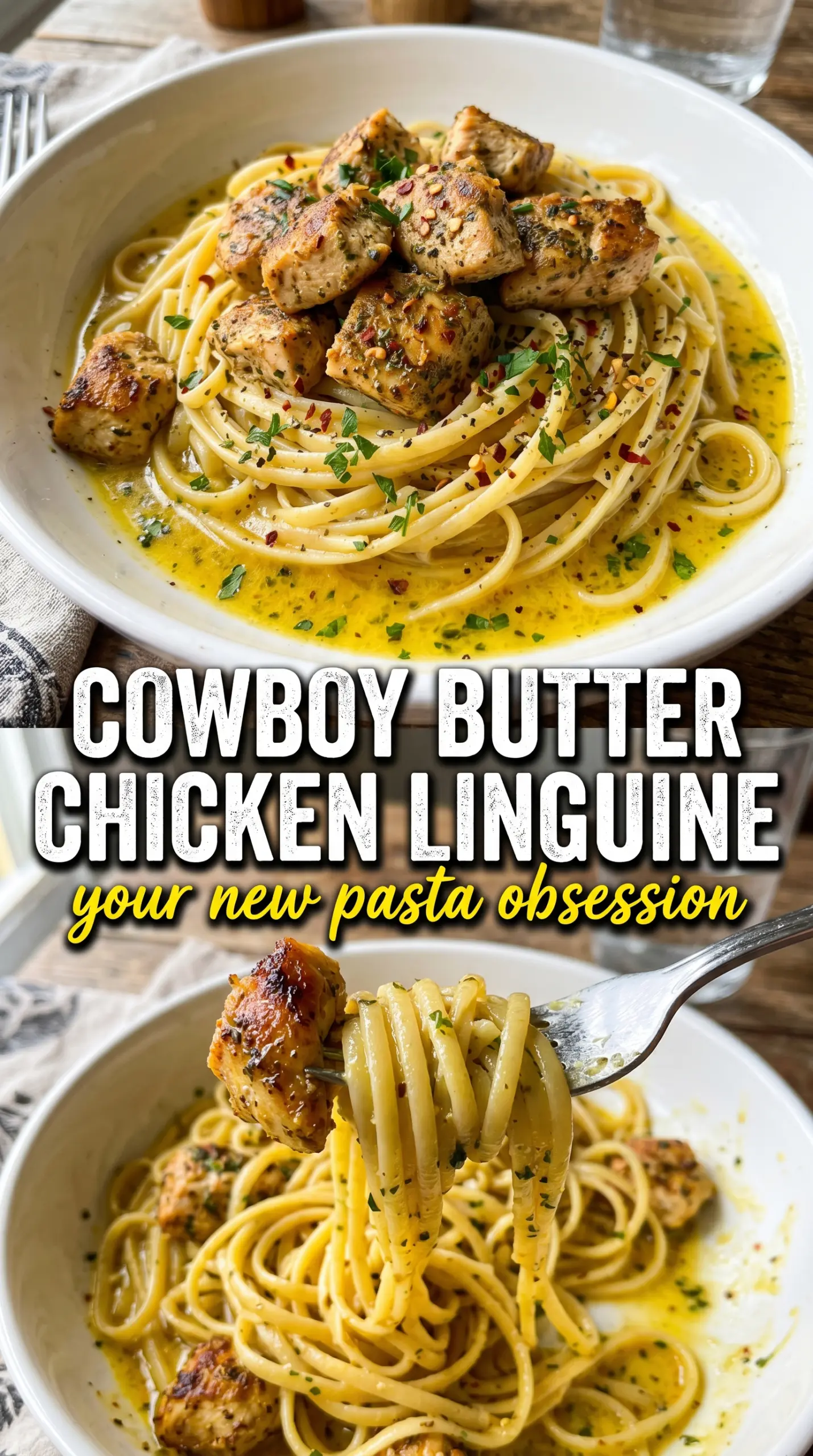
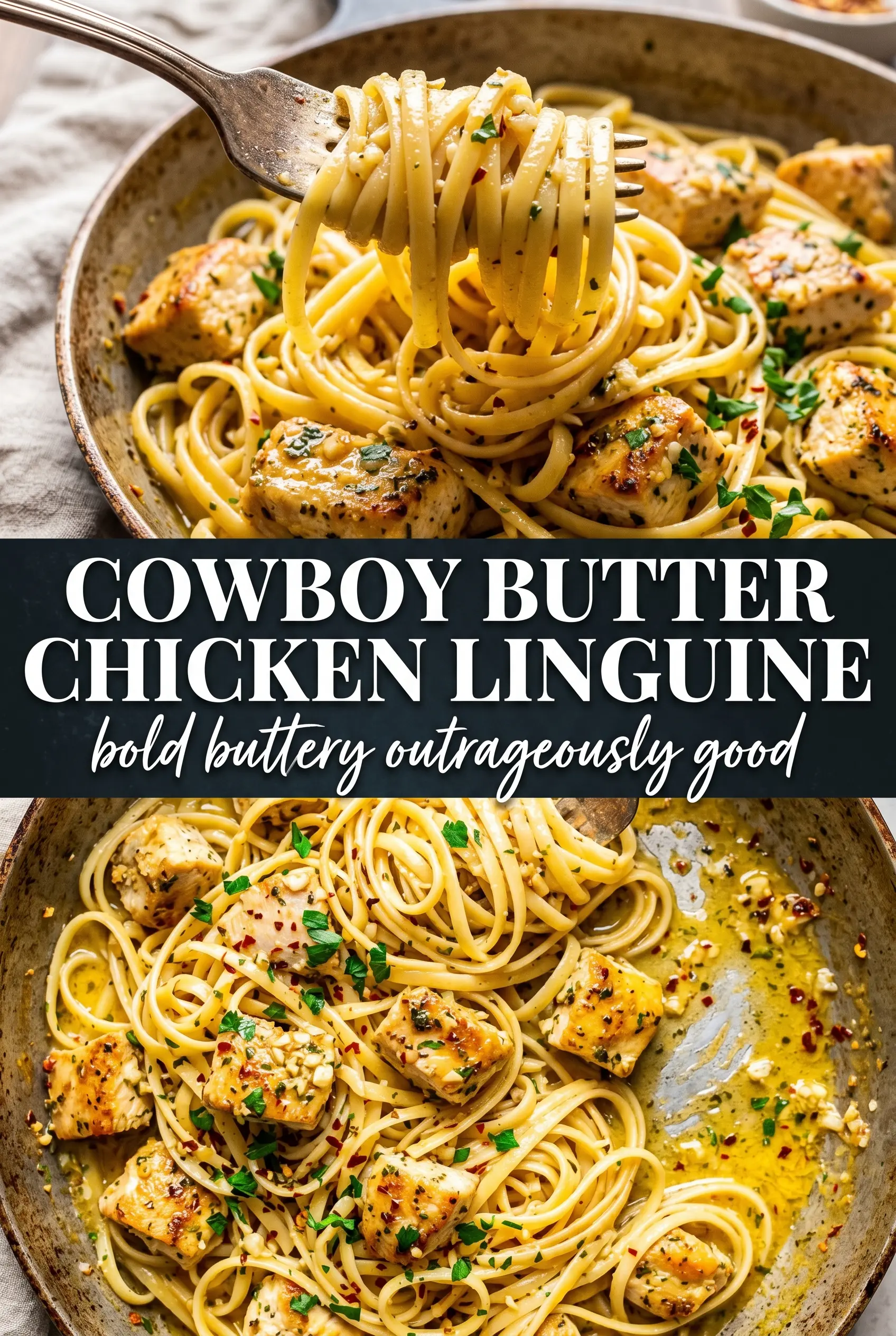
Linguine coated in cowboy butter has a way of tasting louder than the effort it takes to make it. The sauce clings to every strand, the chicken picks up a little char from the skillet, and the whole bowl lands with garlic, lemon, herbs, and just enough heat to keep each bite interesting. It’s the kind of pasta that feels bold without turning fussy, which is exactly why it earns repeat status.
What makes this version work is the balance in the sauce. Butter gives it body, Dijon sharpens the richness, lemon keeps it from tasting heavy, and the smoked paprika plus red pepper flakes build that cowboy butter personality without burying the chicken. The pasta water matters too. It loosens the sauce just enough to coat the linguine instead of leaving a slick of butter at the bottom of the pan.
Below, I’ll walk through the sear that gives the chicken its edge, the exact moment to pull the skillet off the heat so the butter doesn’t separate, and a few swaps that still keep the dish in the same bold lane.
The sauce coated the linguine perfectly and didn’t turn greasy, and the little hit of lemon at the end kept it from feeling heavy. My husband went back for seconds before I even sat down.
Cowboy Butter Chicken Linguine brings seared chicken, lemony butter sauce, and Cajun heat together in one pan — save it for the nights when you want a pasta dinner with a little attitude.
The Trick to Keeping Cowboy Butter Sauce Silky Instead of Greasy
Cowboy butter sounds indulgent, but the sauce can split if you treat it like a simmering cream sauce. Butter doesn’t want high heat once the garlic and spices are in. It wants a gentle melt, then a quick finish with lemon and herbs so the emulsion stays cohesive and glossy.
The other place people go wrong is with the pasta water. Too little, and the sauce sits heavy on the noodles. A splash of starchy water helps the butter and lemon cling to the linguine, which is what gives the dish that restaurant-style sheen instead of a puddle in the pan.
- Butter — This is the backbone of the sauce, so use real butter and let it melt slowly. If you rush it over high heat, the milk solids can brown too fast and the sauce loses that smooth finish.
- Dijon mustard — Just a tablespoon helps bind the butter and lemon together. It doesn’t taste mustardy in the final dish; it just sharpens the sauce and keeps it from feeling flat.
- Smoked paprika, red pepper flakes, and cayenne — These build the cowboy butter character. If you need less heat, cut the cayenne first and keep the paprika, since that’s where a lot of the savory depth comes from.
- Lemon juice — Fresh lemon juice matters here because bottled lemon tastes blunt in a sauce this simple. Add it at the end so it stays bright instead of cooking off.
- Fresh parsley and chives — Dry herbs won’t give you the same clean, green finish. If you need a substitution, use parsley alone before you reach for dried herbs; the sauce still needs that fresh pop.
- Linguine — The flat shape catches the butter sauce better than thinner strands. If you swap in spaghetti, the recipe still works, but the coating won’t feel quite as lush.
What Each Ingredient Is Actually Doing in This Chicken Pasta
- Pasta (the vehicle) — Cook to al dente so it doesn’t turn mushy. Reserve water for sauce adjustment.
- Chicken (the protein) — Cut into uniform pieces so they cook evenly. Don’t overcook or it becomes dry.
- Butter or oil (the cooking medium) — This browses the chicken and carries flavors. Don’t skip browning.
- Cream or sauce (the richness base) — This brings everything together and coats the pasta. Balance with acid.
- Cheese (optional umami and binding) — This adds depth and helps sauce cling. Add off heat so it melts smoothly.
- Garlic and herbs (the flavor layers) — Cook with oil first to bloom. These define the dish’s personality.
- Acid (lemon, wine, or vinegar) — This prevents heavy sauces from tasting flat. Add at the end.
- Final toss (the emulsification) — Toss gently so pasta stays al dente and every piece gets coated.
How to Get the Chicken Charred Before the Butter Goes In
Season the Chicken Well
Season the chicken strips with salt, pepper, and Cajun seasoning before they hit the pan. The surface needs visible seasoning, not a dusting, because the pasta and sauce are carrying a lot of the dish and the chicken has to stand on its own. If the chicken looks pale and under-seasoned before cooking, it will taste flat after it gets folded into the pasta.
Sear in a Hot Skillet
Cook the chicken in olive oil over high heat until the edges pick up color and the centers turn opaque, about 4 to 5 minutes. Don’t crowd the pan or the chicken will steam and turn gray instead of getting those browned edges. Pull it out as soon as it’s cooked through; it finishes its last bit of cooking when it goes back on top of the pasta.
Build the Cowboy Butter Base
Use the same skillet and lower the heat to medium before the butter goes in. The garlic should sizzle gently for about a minute, not aggressively brown, because burnt garlic will dominate everything else. Stir in the Dijon and spices just long enough for the paprika to darken slightly and smell toasted, then add the lemon juice, parsley, and chives right away.
Toss the Pasta Until It Glazes
Add the cooked linguine to the skillet and start tossing with a small splash of reserved pasta water. The sauce should turn silky and cling to the noodles in a thin, shiny coat. If it looks dry, add pasta water a tablespoon at a time; if it looks greasy, it needs more tossing and a little more starchy water to pull the fat and liquid together.
How to Adjust the Heat, Richness, or Protein Without Losing the Point
Make it milder without making it bland
Cut the cayenne in half or leave it out completely, but keep the smoked paprika and red pepper flakes if you still want the cowboy butter flavor. The dish will land warmer and less sharp, and the lemon will read a little louder against the butter.
Use shrimp instead of chicken
Swap in peeled shrimp and sear them for just a couple of minutes per side. Shrimp takes on the cowboy butter beautifully, but it cooks fast, so add it back at the very end or it will turn rubbery.
Make it dairy-free
Use a good plant-based butter that melts cleanly and skip the temptation to add extra oil instead. You’ll lose a little of the classic cowboy butter richness, but the garlic, lemon, and spices still carry the dish if the butter substitute is decent.
Turn it into a gluten-free pasta dinner
Use your favorite gluten-free linguine and reserve a little extra pasta water, since gluten-free noodles usually need more help binding to the sauce. Cook them just to al dente or they’ll fall apart once tossed.
Storage and Reheating
- Refrigerator: Store leftovers in an airtight container for up to 3 days. The sauce will tighten up as it chills, so expect the pasta to look a little less glossy.
- Freezer: This pasta doesn’t freeze well. Butter sauces and reheated noodles tend to separate and turn grainy after thawing.
- Reheating: Warm it gently in a skillet over low heat with a splash of water or chicken broth. The common mistake is blasting it in the microwave until the butter breaks and the chicken turns tough.
Answers to the Questions Worth Asking
Cowboy Butter Chicken Linguine
Ingredients
Equipment
Method
- Season the chicken strips with salt, black pepper, and Cajun seasoning. Heat olive oil in a large skillet over high heat and cook the chicken for 4-5 minutes until charred and cooked through, then remove.
- Melt butter in the same skillet over medium heat. Add the minced garlic and cook for 1 minute until fragrant.
- Stir in Dijon mustard, smoked paprika, red pepper flakes, and cayenne. Cook for 30 seconds, watching for the spices to darken slightly.
- Add fresh lemon juice, chopped parsley, and chopped chives. Toss the cooked linguine in the cowboy butter sauce with pasta water as needed until glossy and evenly coated.
- Return the seared chicken strips to the skillet and top the pasta. Toss just once to distribute, then serve immediately.