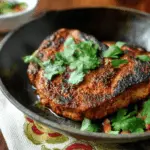
Golden chicken thighs tucked over creamy rice make the kind of one-pot dinner that disappears fast and leaves behind a pot worth scraping clean. The chicken stays juicy because it’s seared first, then finished gently on top of the rice instead of simmering hard the whole time. The rice picks up every bit of flavor from the pan drippings, broth, cream, and Parmesan, so each spoonful tastes layered instead of flat.
What separates this version from a bland chicken-and-rice skillet is the order of operations. Browning the thighs first gives the whole dish a deeper base, and toasting the rice in the onion and garlic mixture keeps the grains from turning mushy. The cream goes in with the broth, but the heat stays low once everything is covered; that’s what keeps the sauce glossy instead of grainy and the rice tender instead of broken.
Below, I’m walking through the small details that matter most: how to get the chicken skin properly golden, what to watch for when the rice finishes, and the easiest way to adjust the dish if you need a lighter or dairy-free version.
The chicken stayed crisp on top and the rice cooked up creamy without getting soupy. I let it rest the full 5 minutes and the sauce thickened up perfectly.
Save this one pot creamy chicken and rice for the nights when you want golden chicken thighs and rich, glossy rice from a single pan.
The Pan Drippings Are the Whole Point Here
The biggest mistake with chicken and rice is treating the chicken and the rice like separate parts. They need to share the same pot from the moment the onion goes in, because the browned bits left behind by the thighs are what give the rice its depth. If you wipe the pot clean after searing, you’re throwing away most of the flavor.
Long-grain white rice holds up best here because it stays separate enough to absorb the liquid without collapsing into mush. The other key move is keeping the simmer gentle once the lid goes on. A hard boil pushes the rice around too much and can leave the top grains underdone while the bottom turns soft.
- Chicken thighs — Bone-in, skin-on thighs bring the richest flavor and stay juicy through the covered cook time. Chicken breasts dry out too fast here, and boneless thighs won’t give you the same drippings or skin. If you use boneless thighs, shave 5 to 7 minutes off the covered cooking time and expect less browned flavor.
- Long-grain white rice — This rice keeps its shape and cooks evenly under the chicken. Medium-grain or instant rice changes the texture and can turn pasty. Rinse only if your rice is especially dusty; otherwise, the surface starch helps the sauce cling.
- Heavy cream — This gives the dish its silky finish without curdling as easily as milk. Half-and-half works in a pinch, but the sauce will be thinner. Stir it in before the simmer starts so it blends into the broth instead of sitting on top.
- Parmesan — Freshly grated Parmesan melts cleaner than the pre-shredded kind, which often contains anti-caking agents. That little bit of texture from the fresh cheese helps the sauce thicken naturally. Add it off the direct heat path as you bring the liquid up to a simmer.
What Each Ingredient Is Actually Doing in This Recipe

- Primary ingredient (the star) — Quality matters most. Choose the best you can find.
- Cooking medium (oil, butter, or broth) — This carries flavors and prevents dryness.
- Seasonings (salt, pepper, spices, herbs) — Layer flavors so nothing overpowers. Build depth gradually.
- Aromatics (garlic, onion, herbs) — Cook with fat to bloom flavors. Become the foundation.
- Supporting ingredients — Complement the main ingredient without overpowering it.
- Sauce or liquid (if applicable) — Brings flavors together. Balance richness with acid.
- Acid (lemon, vinegar, wine, or other) — Brightens and prevents flat-tasting results.
- Final finish (garnish, glaze, or sauce) — Prevents one-dimensional taste and adds visual appeal.
How to Keep the Rice Creamy Without Turning It Mushy
Building a Deep Golden Sear
Season the chicken well before it hits the pot, then lay it in skin-side down and leave it alone until the skin turns deeply golden and releases easily. If you try to flip too early, the skin sticks and tears, and you lose both the crisp surface and the rendered fat that flavors the rice. Once the skin is browned, flip just long enough to give the other side some color, then move the chicken out while you build the base.
Toasting the Rice in the Onion Base
Cook the onion until it softens and starts to pick up color at the edges, then stir in the garlic for just a minute so it stays fragrant instead of bitter. Add the rice and stir for about two minutes; the grains should look glossy and a little translucent at the edges. That quick toast keeps the rice from tasting flat and helps it hold its texture through the covered cook.
Finishing Under a Tight Lid
Pour in the broth, cream, Parmesan, and thyme, then stir well before nestling the chicken back in skin-side up. The liquid should come to a gentle simmer, not a rolling boil, before you cover the pot. If the heat is too high, the rice on the bottom cooks too fast and the cream can separate. Low heat for the final cook keeps the sauce unified and lets the chicken finish without drying out.
Resting Before You Fluff
When the rice is tender and the chicken reaches 165°F, take the pot off the heat and leave the lid on for five minutes. That rest is what lets the rice finish absorbing the last bit of steam so it turns fluffy instead of wet. Fluff gently with a fork around the chicken, then finish with parsley for a fresh note that cuts through the richness.
How to Adapt This One Pot Chicken and Rice Without Losing the Creamy Finish
Dairy-Free Version
Swap the heavy cream for full-fat canned coconut milk and leave out the Parmesan. The dish will still feel rich, but the flavor shifts slightly sweeter and less savory, so lean a little harder on the garlic, thyme, and pepper. Use a plain, unsweetened coconut milk with a high fat content so the rice stays creamy.
Using Boneless Chicken Thighs
Boneless thighs work well if that’s what you have, but they won’t season the rice quite as deeply because you lose some of the drippings and bone-in structure. Sear them the same way, then reduce the covered cook time by a few minutes and check early. They should still finish juicy, but the rice will be a little less luxurious.
Making It a Little Lighter
You can replace half the cream with extra broth if you want the sauce less rich. The rice still turns tender, but the finished pot will look a little looser and won’t cling to the spoon as much. I wouldn’t remove the cream entirely unless you’re also increasing the Parmesan or the dish can taste thin.
Storage and Reheating
- Refrigerator: Store leftovers in an airtight container for up to 4 days. The rice firms up as it chills, but the flavor gets even deeper.
- Freezer: It freezes better than most cream-based rice dishes, though the texture softens a bit after thawing. Cool completely, portion into freezer containers, and freeze for up to 2 months.
- Reheating: Reheat gently on the stove or in the microwave with a splash of broth to loosen the rice. The common mistake is blasting it on high heat, which dries out the chicken and makes the rice gluey before the center is hot.
Answers to the Questions Worth Asking

One Pot Creamy Chicken and Rice
Ingredients
Equipment
Method
- Season the chicken thighs with salt, pepper, garlic powder, smoked paprika, and Italian seasoning to taste. Heat olive oil in a Dutch oven over medium-high heat, then place thighs skin-side down and sear 7-8 minutes until deeply golden, with a sizzling skin that looks browned and crisp.
- Flip the thighs and sear for 3 minutes until the second side is also browned, keeping the crust intact. Remove the chicken to a plate and drain any excess fat if needed.
- Add the diced onion to the same pot and cook for 3 minutes, stirring until softened and lightly translucent. Stir in the minced garlic and cook 1 minute until fragrant.
- Add the uncooked long-grain white rice and toast for 2 minutes, stirring until the grains look slightly opaque and smell nutty.
- Pour in the chicken broth and heavy cream, then stir in the grated Parmesan cheese and dried thyme until smooth. Bring to a simmer over medium-high heat, watching for bubbling around the edges.
- Nestle the chicken thighs skin-side up into the rice and spoon sauce around them. Cover tightly and cook over low heat for 22-25 minutes until the rice is cooked and the chicken reaches 165°F, with the liquid absorbed and the top sauce looking creamy.
- Rest the pot covered for 5 minutes off the heat. Fluff the rice gently so it stays fluffy and creamy with visible glossy sauce.
- Garnish with fresh parsley and serve, leaving the chicken thighs on top so the golden seared skin is visible.