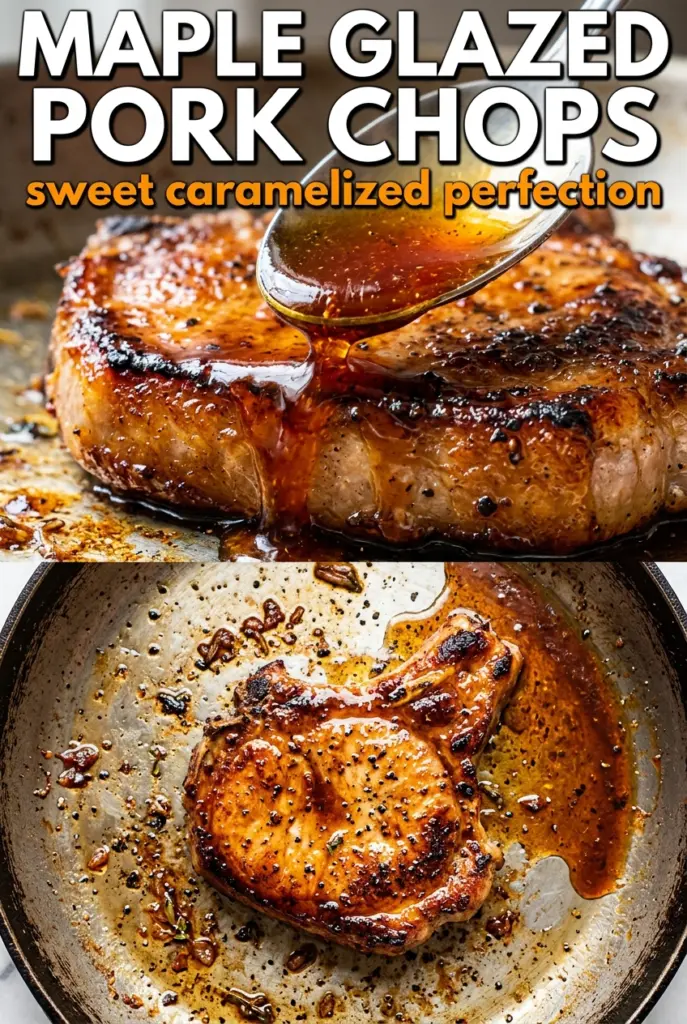
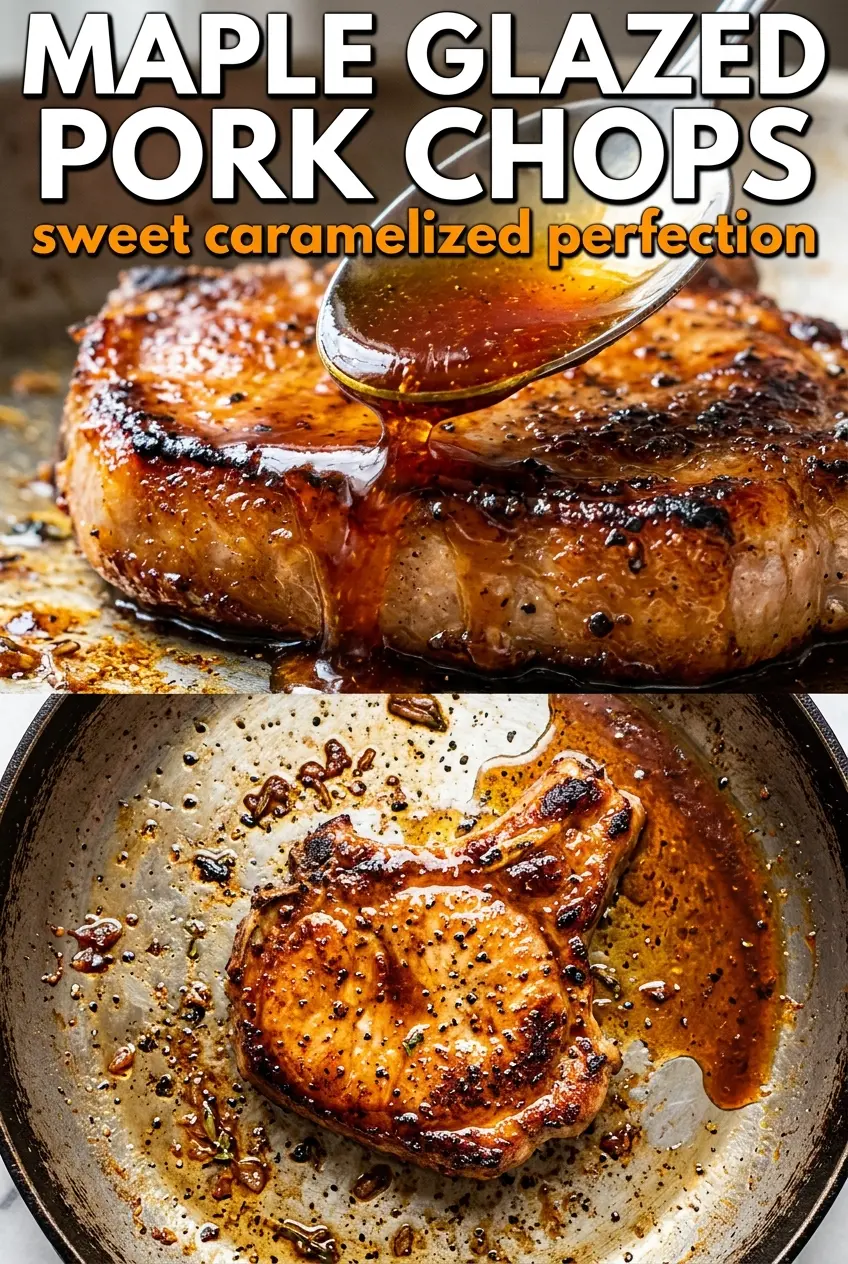
Sticky maple glazed pork chops hit that sweet-savory spot that makes people hover near the skillet waiting for dinner. The glaze clings in a glossy amber layer, the pork stays juicy, and the whole pan smells like garlic, rosemary, and caramelized maple by the time it’s done. It’s the kind of main dish that feels a little special without asking for much from you.
The key is building flavor in two stages: a hard sear first, then a short simmer in the same pan so the glaze picks up every browned bit left behind by the pork. Dijon gives the maple syrup enough sharpness to keep it from tasting flat, and a splash of soy sauce adds the salty backbone that makes the glaze taste deeper than the ingredient list suggests. Boneless chops work well here as long as they’re about 1 inch thick, since thinner ones cook too fast and dry out before the glaze has time to coat them properly.
Below you’ll find the small details that matter most, including how to keep the glaze from turning thin and how to know exactly when the chops are done.
The glaze got sticky and glossy in the pan, and the pork stayed tender instead of drying out. I served it with mashed potatoes and my husband went back for seconds before I even sat down.
Save these maple glazed pork chops for the night you want a sticky, glossy skillet dinner that tastes like you worked harder than you did.
The part that keeps the glaze glossy instead of grainy
The biggest mistake with maple pork chops is rushing the glaze over heat that’s too high. Maple syrup can go from smooth to sticky-sugar-fast, and once it starts to harden in the pan, the coating turns tacky instead of lacquered. The fix is simple: sear the chops first, take a minute to mix the glaze, then let it simmer gently so it thickens just enough to cling.
Another thing that matters here is the same-pan method. Those browned bits from the pork are not something to scrape away and clean up later; they’re the foundation of the sauce. Dijon helps emulsify the glaze a little, but if the pan is screaming hot when the maple mixture goes in, the sugar tightens before the mustard and soy can do their work.
What each ingredient is doing in the pan

- Boneless pork chops — Choose chops that are close to 1 inch thick so they can sear well without overcooking before the glaze finishes. Thin chops work against you here because they dry out fast and don’t give the sauce enough time to coat them.
- Pure maple syrup — Use the real stuff. Pancake syrup won’t give you the same clean sweetness or the way true maple thickens into a glossy glaze as it reduces.
- Dijon mustard — This keeps the glaze from tasting one-note sweet and helps it cling to the meat. Grainy mustard can work in a pinch, but it changes the texture and looks a little less smooth.
- Soy sauce — This is the salt and depth in one ingredient. If you need a gluten-free version, tamari works the same way without changing the method.
- Fresh rosemary — Rosemary and maple play beautifully together, but fresh is the right choice because dried rosemary can taste sharp and woody in such a short cook time.
- Olive oil — Use enough to create a hot, even sear without smoking the pan dry. The oil should help the chops brown, not shallow-fry them.
How to get the chops browned first and coated last
Seasoning and Searing the Pork
Season the chops with salt and pepper just before they hit the pan, then place them in hot olive oil and leave them alone until they release easily. That first side should develop a deep golden crust, not pale spots, and the edges should look opaque halfway up the chop. If you move them too early, they’ll stick and tear, which means less browning and less flavor in the pan sauce.
Building the Maple Glaze
Stir the maple syrup, Dijon, soy sauce, garlic, rosemary, and black pepper together before you pour anything into the skillet. The glaze should look loose at first; it thickens as it warms. Pour it into the same pan over medium heat and let it bubble for 1 to 2 minutes, just until it turns slightly syrupy. If the garlic starts to scorch or the glaze smells sharp instead of rounded, the heat is too high.
Finishing the Pork in the Sauce
Return the chops to the pan and spoon glaze over them constantly while they finish cooking. You’re looking for a lacquered surface and an internal temperature of 145°F, not a hard boil around the meat. If the glaze gets too thick before the pork is done, add a teaspoon of water to loosen it and keep basting. Let the chops rest for a couple of minutes before serving so the juices stay inside the meat instead of running onto the plate.
How to change this skillet dinner without losing what makes it work
Make it gluten-free with tamari
Swap the soy sauce for tamari in the same amount. You’ll keep the salty depth and glossy finish without changing the way the glaze reduces, and it’s the cleanest substitution if gluten is the issue.
Use bone-in chops for a little more flavor
Bone-in pork chops bring a deeper pork flavor and usually stay juicier, but they can take a few minutes longer to cook through. Keep the same sear, then finish them over lower heat so the glaze doesn’t burn before the center reaches temperature.
Add a little heat
A pinch of red pepper flakes or a small spoonful of hot sauce works well if you want the glaze to lean more savory than sweet. Add it to the glaze before it goes into the pan so the heat disperses evenly instead of landing in one sharp bite.
Storage and Reheating
- Refrigerator: Store leftovers in an airtight container for up to 3 days. The glaze thickens as it chills, and the pork stays best when sliced after cooling slightly.
- Freezer: You can freeze the cooked pork chops for up to 2 months, but the glaze will lose some of its shine after thawing. Wrap them well and freeze with a little extra sauce if you have it.
- Reheating: Warm gently in a covered skillet over low heat with a splash of water to loosen the glaze. High heat dries the pork out fast and can make the maple coating hard instead of silky.
Questions I Get Asked About This Recipe
Maple Glazed Pork Chops
Ingredients
Equipment
Method
- Pat the boneless pork chops dry and season both sides with salt and pepper.
- Heat olive oil in a cast iron skillet over medium-high heat until shimmering, then sear the pork chops 4 minutes per side until golden; set aside on a plate.
- Mix pure maple syrup, Dijon mustard, soy sauce, minced garlic, minced fresh rosemary, and black pepper in a bowl until smooth.
- Pour the maple glaze into the same pan over medium heat and simmer 1–2 minutes until slightly thickened, scraping up browned bits.
- Return the pork chops to the pan and cook 2–3 minutes, spooning the glaze over constantly, until the internal temperature reaches 145°F.
- Garnish with fresh rosemary and serve immediately.