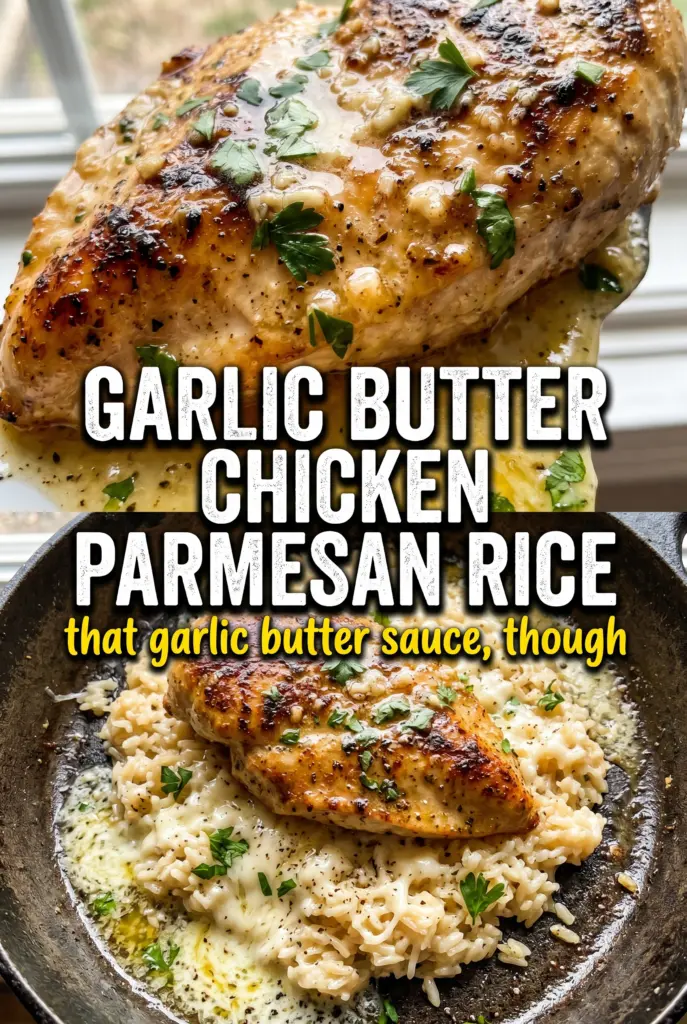
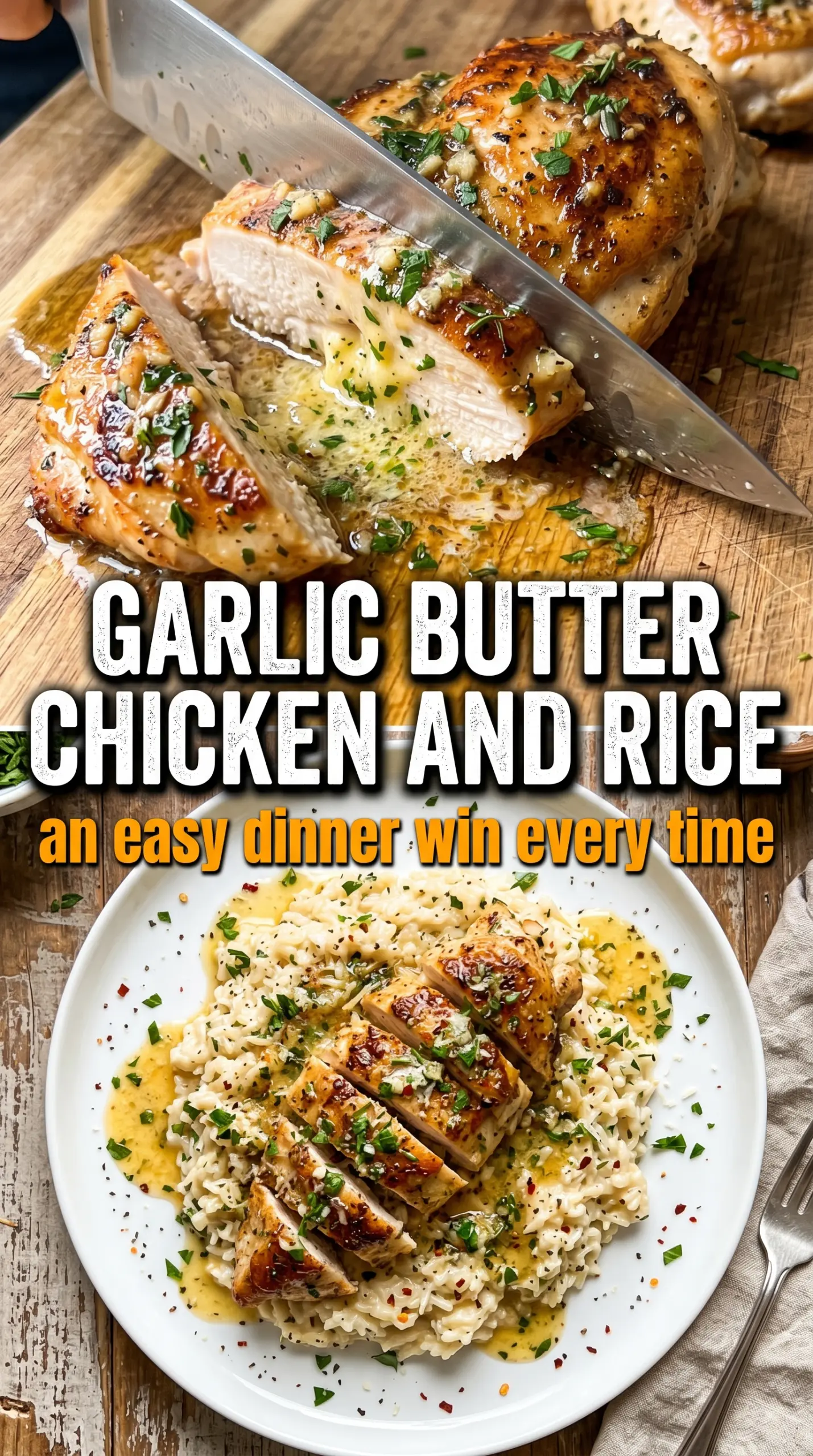
Golden garlic butter chicken over creamy Parmesan rice earns its place in the dinner rotation because every bite gives you something different: crisp-edged chicken, tender rice, and a savory sauce pulled together by the pan drippings. It eats like a one-pan comfort meal, but it doesn’t taste heavy or muddy when the skillet is handled the right way.
The chicken gets a hard sear first, which builds the browned bits that later season the rice. Then the garlic goes into the butter for just long enough to turn fragrant without going bitter, and the rice gets toasted before the broth goes in. That small extra step gives the grains a better backbone and keeps the finished dish from turning soft and flat.
Below, I’ll walk through the part that matters most: how to keep the rice creamy without making it pasty, and how to bring the chicken back to the pan so it stays juicy. There are also a few smart swaps if you need to adjust for what’s in the fridge.
The rice came out creamy without turning mushy, and the garlic butter drippings made the whole pan taste like I had been cooking for hours. I used the full 18 minutes for the rice and it was perfect under the chicken.
Save this garlic butter chicken with Parmesan rice for the nights when you want a creamy skillet dinner with real pan flavor.
The Part That Keeps the Rice Creamy Instead of Gluey
The biggest mistake with Parmesan rice is adding the dairy too early or boiling it too hard after the cream goes in. Rice needs steady, low heat once it starts absorbing liquid. If the pan is raging, the starch releases too quickly and you end up with a sticky mass instead of rice that stays tender and spoonable.
To keep this dish balanced, the rice cooks in broth first, then the Parmesan and cream get stirred in at the end. That order matters because the broth finishes the grains cleanly, and the dairy coats them without taking over the whole pan. The chicken goes back in after the rice is creamy, so it warms through without overcooking.
- Boneless skinless chicken thighs — Thighs stay juicier than breasts in a skillet like this, especially after a sear and a short rest. If you use chicken breasts, slice them in half horizontally so they cook through before the rice is done.
- Long-grain white rice — This is the rice that gives you separate, tender grains. Short-grain rice turns softer and can push this dish into risotto territory.
- Chicken broth — Use a broth you’d actually drink from a spoon. This is where the rice picks up most of its seasoning, so a thin broth makes a thin-tasting dish.
- Parmesan cheese — Grate it fresh if you can. Pre-shredded Parmesan often contains anti-caking agents that make the sauce less smooth.
- Heavy cream — This adds body and keeps the rice glossy. Half-and-half can work, but the sauce will be looser and a little less rich.
- Butter and garlic — These carry the pan flavor into the rice. Don’t let the garlic brown; it should smell sweet and nutty, not sharp.
What Each Ingredient Is Actually Doing in This Recipe
- Primary ingredient (the star) — Quality matters most. Choose the best you can find.
- Cooking medium (oil, butter, or broth) — This carries flavors and prevents dryness.
- Seasonings (salt, pepper, spices, herbs) — Layer flavors so nothing overpowers. Build depth gradually.
- Aromatics (garlic, onion, herbs) — Cook with fat to bloom flavors. Become the foundation.
- Supporting ingredients — Complement the main ingredient without overpowering it.
- Sauce or liquid (if applicable) — Brings flavors together. Balance richness with acid.
- Acid (lemon, vinegar, wine, or other) — Brightens and prevents flat-tasting results.
- Final finish (garnish, glaze, or sauce) — Prevents one-dimensional taste and adds visual appeal.
Building the Skillet in the Right Order
Seasoning and Searing the Chicken
Coat the chicken thighs with salt, pepper, garlic powder, and smoked paprika, then sear them in hot olive oil until the outside is deep golden and the center reaches 165°F. You want a real crust here, not just a pale surface with grill marks of color. If the skillet is crowded, the chicken will steam instead of sear, so give each piece room. Remove the chicken once it’s done; it finishes its job for now.
Using the Fond Under the Rice
When the butter goes into the same skillet, scrape up the browned bits as it melts. Those drippings carry the chicken flavor that makes this dish taste layered instead of flat. Add the garlic and stir for about a minute, just until it smells fragrant. If it starts to darken, pull the pan back from the heat; burned garlic will take over the whole skillet.
Letting the Rice Absorb the Liquid Slowly
Stir the rice into the butter and garlic and toast it for a couple of minutes before adding broth. That light toasting helps the grains hold their shape and adds a faint nutty edge. Once the broth goes in, bring it to a boil, then drop the heat, cover the pan, and let it simmer without lifting the lid. If you keep peeking, you release steam and the rice may stay undercooked in the center.
Finishing With Cream and Parmesan
When the rice is tender and the liquid is absorbed, stir in the Parmesan, heavy cream, and thyme. The mixture should turn creamy and loose enough to spoon around the chicken, not stiff like a casserole. If it looks too thick, splash in a little warm broth. Return the chicken to the skillet and nestle it into the rice so the juices run back into the pan instead of onto the cutting board.
How to Change This Skillet Dinner Without Losing the Good Part
Dairy-Free Version
Swap the butter for olive oil and use full-fat coconut milk or an unsweetened plain dairy-free cream in place of the heavy cream. You’ll lose the sharp Parmesan finish, so add a little extra salt and a spoonful of nutritional yeast if you want more savory depth.
Chicken Breast Instead of Thighs
Breasts work, but they dry out faster, so pound them to an even thickness or slice them into cutlets before searing. Pull them from the pan as soon as they hit temperature and let the rice finish on its own.
Make It Gluten-Free
This recipe is naturally gluten-free as long as your broth is certified gluten-free. That’s worth checking because broth is one of the easiest places for hidden gluten to sneak in.
Add Vegetables Without Watering It Down
Stir in a handful of baby spinach at the very end or sauté mushrooms after the chicken comes out and before the garlic goes in. Add watery vegetables too early and they’ll dilute the rice; finishing vegetables at the end keeps the skillet creamy.
Storage and Reheating
- Refrigerator: Store leftovers in an airtight container for up to 4 days. The rice thickens as it chills, so it will look firmer the next day.
- Freezer: It freezes, but the rice softens a bit after thawing. Freeze in portions for up to 2 months and expect the texture to be a little less creamy than fresh.
- Reheating: Reheat gently on the stovetop or in the microwave with a splash of broth or water. The common mistake is blasting it on high heat, which dries out the chicken and tightens the rice before the center is hot.
Questions I Get Asked About This Recipe
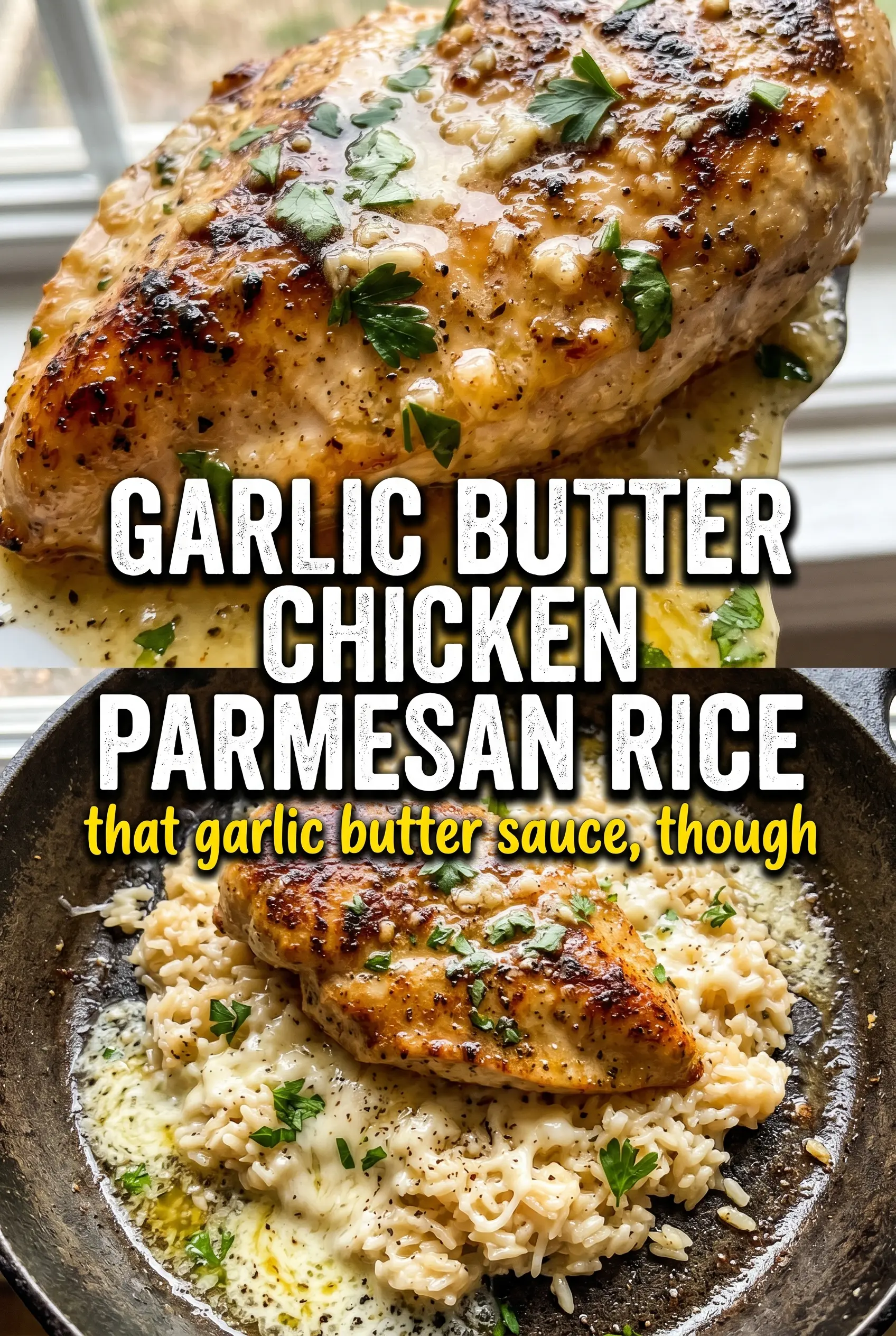
Garlic Butter Chicken with Parmesan Rice
Ingredients
Equipment
Method
- Season the chicken thighs with salt, pepper, garlic powder, and smoked paprika to taste. Heat olive oil in a large skillet over medium-high heat until shimmering, then sear chicken for 5-6 minutes per side until golden and cooked through to 165°F, and remove to a plate.
- Melt butter in the same skillet, then cook the minced garlic for 1 minute until fragrant, keeping the heat at medium. Add the rice and toast for 2 minutes, stirring so the grains are lightly coated and dry to the touch.
- Pour in chicken broth and bring to a boil, scraping up any browned bits from the bottom of the skillet. Cover and simmer over low heat for 18 minutes until the rice is tender.
- Stir in the grated Parmesan, heavy cream, and dried thyme until the rice is creamy and saucy, with no dry pockets. Return the chicken thighs to the pan, nesting them into the Parmesan rice so the sauce clings to the meat.
- Garnish with fresh parsley and serve immediately, spooning extra creamy rice over the chicken.