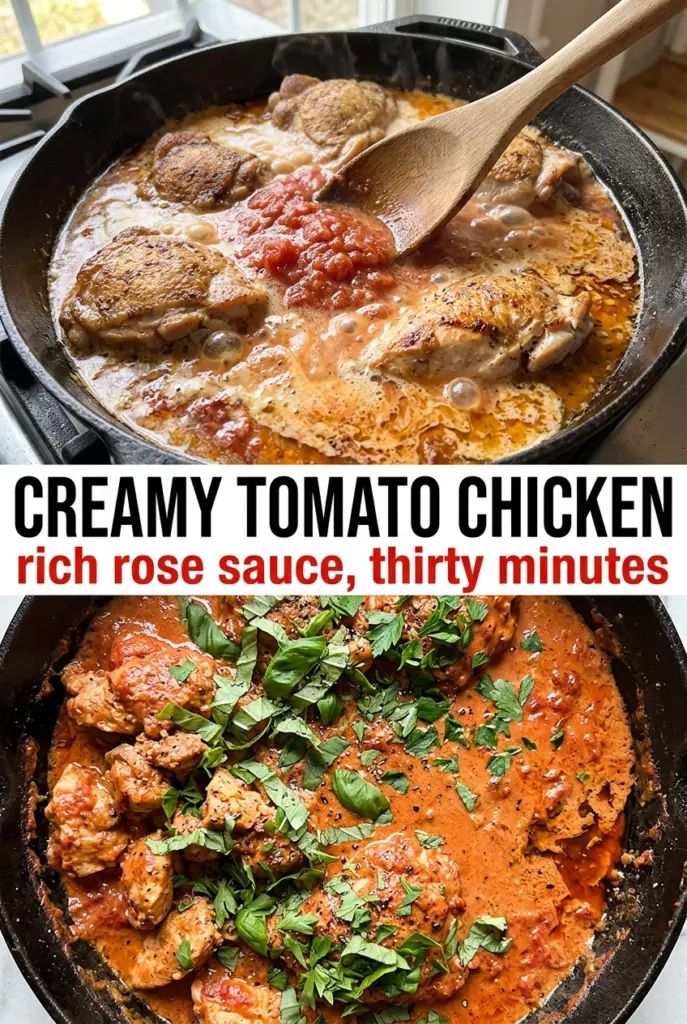
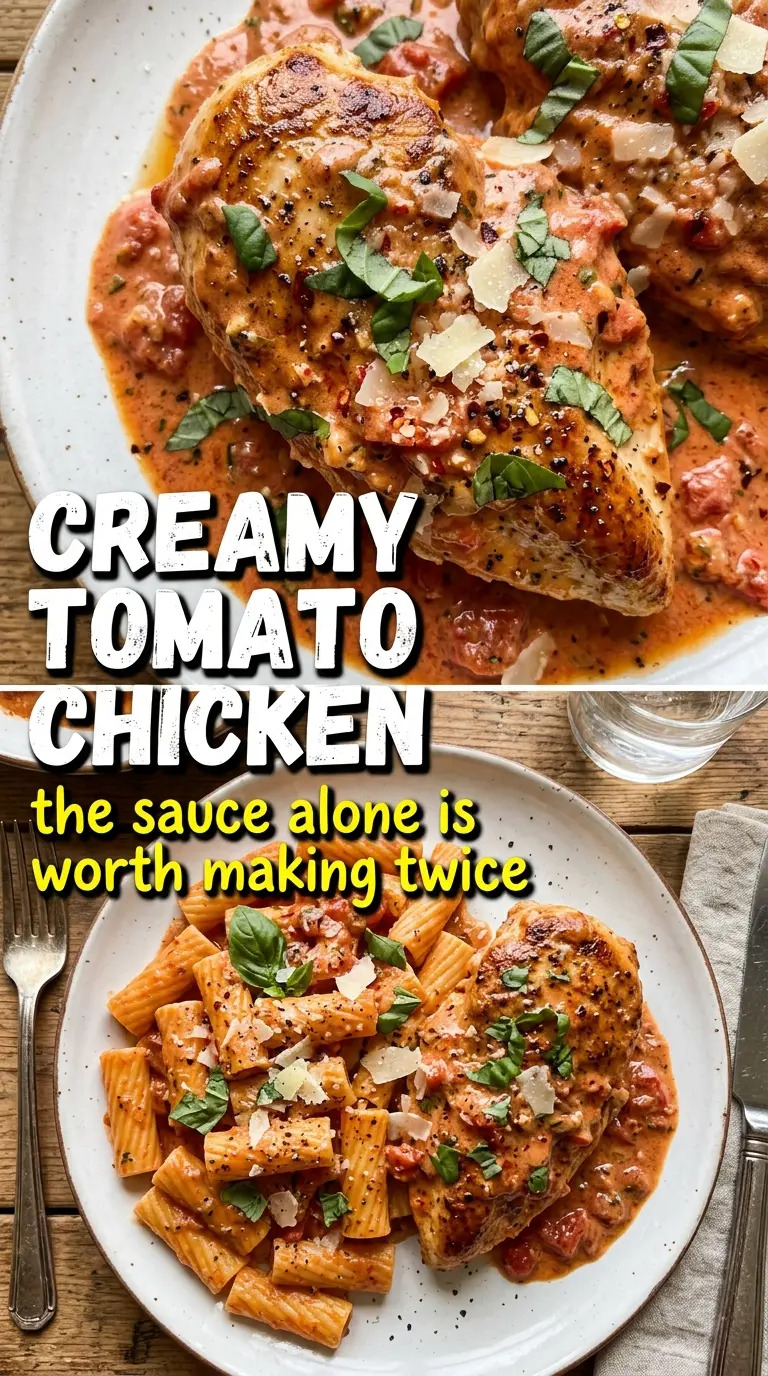
Golden seared chicken breasts tucked into a silky tomato cream sauce are the kind of dinner that disappears fast, but not because it feels heavy or one-note. The sauce lands in that sweet spot between bright and rich: tomato gives it backbone, cream rounds the edges, and Parmesan pulls everything into a glossy pan sauce that clings to the chicken instead of sliding off it.
What makes this version work is the order of operations. The chicken gets a hard sear first, which leaves flavorful browned bits in the skillet for the sauce. Then the garlic, wine, tomatoes, and cream build in the same pan, so nothing gets lost and the sauce develops depth without needing a long simmer. A small handful of red pepper flakes gives the sauce a quiet warmth without turning it into a spicy dish.
Below, I’ll walk through the part that matters most: how to keep the sauce smooth, how to judge when it’s thick enough, and what to change if you want to serve this with pasta, gnocchi, or a lighter side.
The sauce turned that perfect rosy pink and clung to the chicken instead of pooling at the bottom of the skillet. I added the Parmesan off the heat like you said and it stayed smooth all the way through.
Save this creamy tomato chicken for nights when you want a silky skillet sauce with a bright tomato finish and barely any cleanup.
The Reason the Sauce Stays Smooth Instead of Turning Grainy
The most common mistake with creamy tomato chicken is rushing the dairy into a pan that’s still too hot. That’s how you get a sauce that looks split, grainy, or greasy. The tomatoes need a short simmer first so they lose their raw edge, then the cream goes in over lower heat, and the Parmesan is stirred in gently so it melts into the sauce instead of clumping.
The other thing that matters is not over-reducing the tomatoes before the cream goes in. If the sauce gets too thick before the dairy is added, it can tighten up and turn heavy instead of velvety. You want it loose enough to simmer into a glossy pink sauce that still coats a spoon.
What Each Ingredient Is Actually Doing in This Skillet
- Chicken breasts — Boneless, skinless breasts give you a fast, lean base that slices neatly and soaks up the sauce. If yours are very thick, pound them to an even thickness so the outside doesn’t overcook before the center is done.
- Dry white wine or chicken broth — The liquid you use to deglaze matters because it lifts the browned bits from the pan. Wine adds a little more depth, but broth works well if you want to keep it alcohol-free.
- Crushed tomatoes — Use crushed tomatoes for a sauce with body. Tomato sauce will make the dish softer and smoother, while diced tomatoes leave it too loose and chunky for this style of pan sauce.
- Heavy cream — This is what turns the sauce from sharp and red into lush and pink. Half-and-half can work in a pinch, but it won’t be as stable or as rich, so keep the heat low if you use it.
- Parmesan — Grated Parmesan thickens the sauce and adds saltiness and a nutty edge. Freshly grated melts best; the shelf-stable kind can make the sauce a little sandy.
- Butter — Stirred in at the end, butter gives the sauce a glossy finish and softens any harsh tomato edge. Don’t skip it if you want that restaurant-style sheen.
Building the Sauce So It Stays Rosy, Not Broken
Getting the Chicken Color First
Season the chicken well before it hits the pan. You want a deep golden crust, not pale steamed chicken, so let it sit undisturbed until it releases cleanly from the skillet. If it sticks, it’s not ready to turn yet. Remove it when the center reaches 165°F, then set it aside while you build the sauce.
Pulling the Flavor from the Pan
Add the garlic to the same skillet and cook it just until fragrant, about 30 seconds. If it browns, the whole sauce can taste bitter, so keep it moving and go straight in with the wine or broth to scrape up the browned bits. Those bits are what make the sauce taste like it cooked for much longer than it did.
Letting the Tomato and Cream Meet Slowly
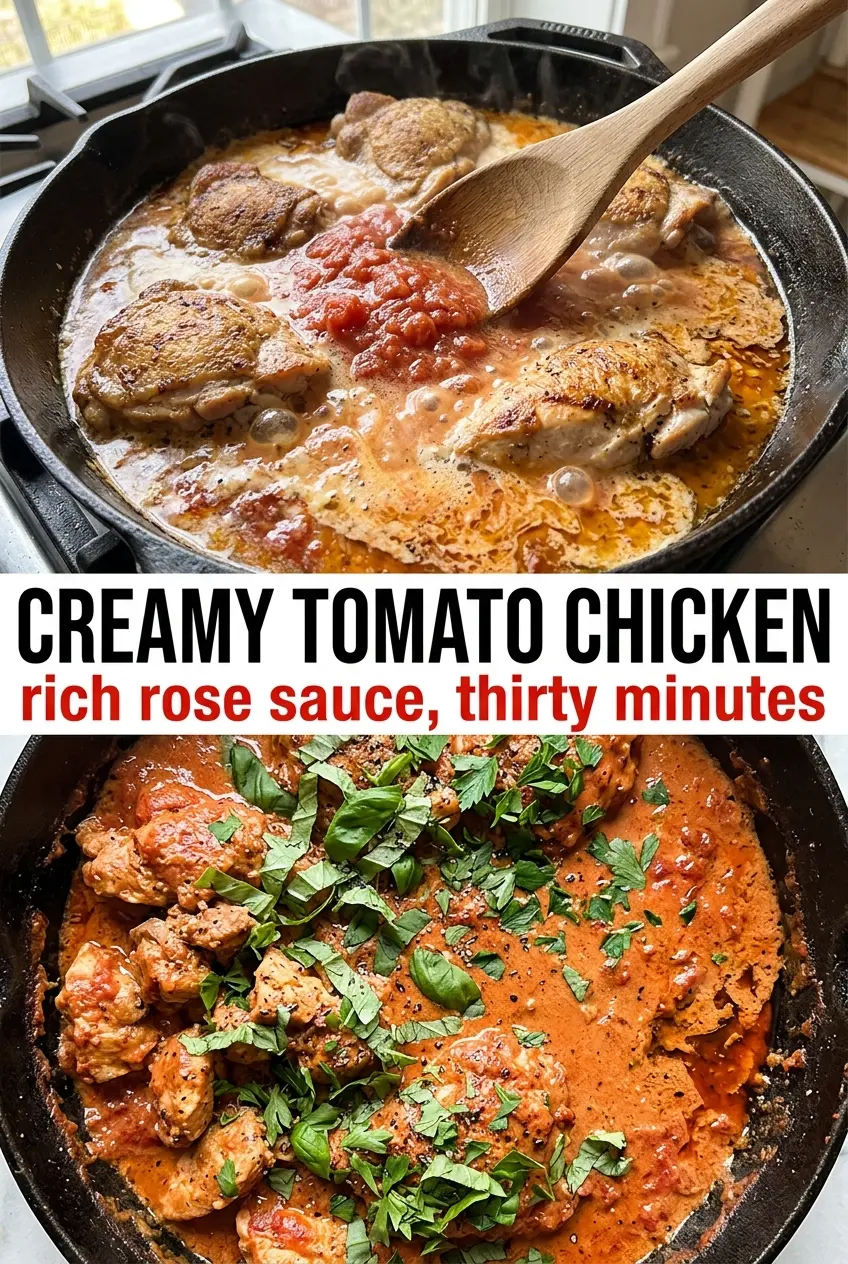
After the tomatoes and seasoning simmer for a few minutes, lower the heat before the cream goes in. The sauce should shift from bright red to a deeper pink as it comes together. Stir in the Parmesan gradually, not all at once, and let the sauce bubble gently until it thickens enough to coat the back of a spoon.
Finishing for a Glossy Skillet Sauce
Swirl in the butter at the very end. It gives the sauce a smoother finish and helps it look shiny instead of matte. Return the chicken to the pan and spoon the sauce over the top so it warms through without cooking past tender. Fresh basil goes on last for a clean, fresh contrast.
How to Adapt This for a Lighter Dinner or a Bigger Crowd
Dairy-Free Version
Use full-fat coconut cream in place of the heavy cream and skip the Parmesan, then add a little extra salt at the end. The sauce will be a little less tangy and less cheesy, but it still turns silky and rich.
Gluten-Free Serving Ideas
The sauce itself is naturally gluten-free, so the main thing is what you serve with it. Spoon it over mashed potatoes, gluten-free pasta, or polenta, and keep an eye on any broth or Parmesan you buy if you’re especially sensitive to additives.
Making It with Chicken Thighs
Boneless skinless thighs work well if you want a juicier result and a little more richness. They need a few extra minutes in the pan, but they’re more forgiving, especially if you tend to overcook chicken breasts.
Storage and Reheating
- Refrigerator: Store leftovers in an airtight container for up to 3 days. The sauce thickens as it chills, so it may look tighter the next day.
- Freezer: It freezes, but cream sauces can loosen a little after thawing. For the best texture, freeze the chicken and sauce in a shallow container for up to 2 months and thaw overnight in the refrigerator.
- Reheating: Warm it slowly in a skillet over low heat with a splash of broth or water. High heat is the quickest way to break the sauce, especially once the Parmesan is already in it.
Answers to the Questions Worth Asking
Creamy Tomato Chicken
Ingredients
Equipment
Method
- Pat the chicken dry, then season both sides with salt, pepper, garlic powder, and Italian seasoning to taste. Sear in olive oil over medium-high heat for 5-6 minutes per side until golden and the internal temperature reaches 165°F; remove to a plate.
- Reduce heat slightly and cook the minced garlic in the same pan for 30 seconds, stirring to prevent browning. Deglaze with white wine or chicken broth, then add crushed tomatoes and Italian seasoning and simmer for 5 minutes, stirring as needed.
- Stir in heavy cream, Parmesan cheese, and red pepper flakes, then simmer for 4-5 minutes until the sauce is thick and rose-colored. Swirl in the butter until glossy, then taste and adjust seasoning if needed.
- Return the chicken to the pan and spoon the tomato cream sauce over each breast. Garnish with fresh basil and serve over pasta or gnocchi.