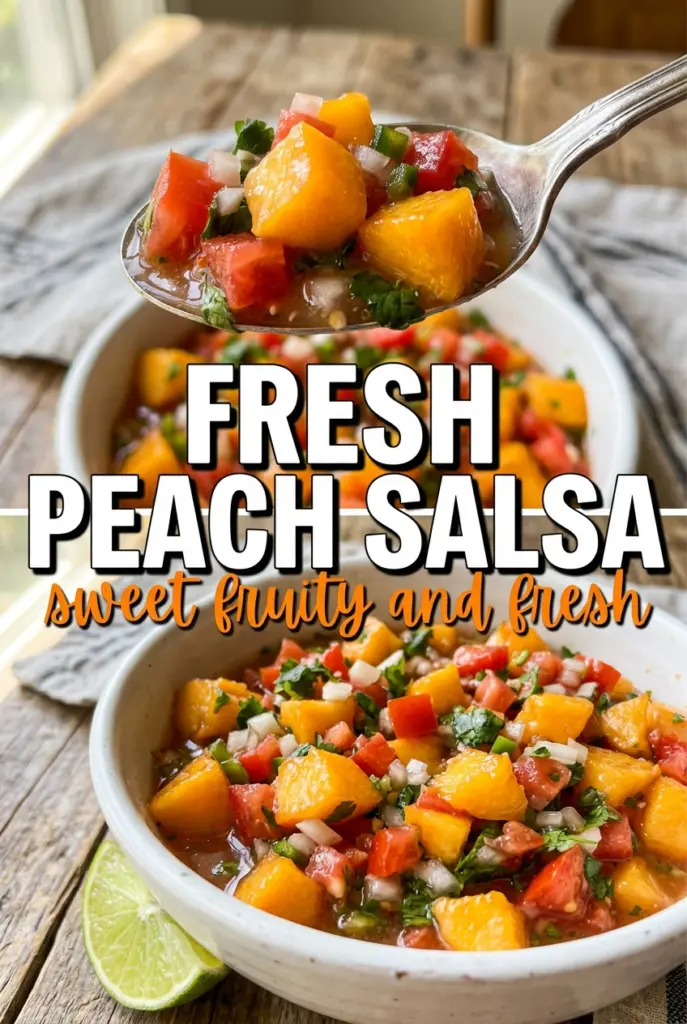
Fresh peach salsa brings the kind of bright, juicy crunch that disappears fast once the chips come out. The peaches stay front and center, but the red onion, jalapeño, lime, and cilantro keep each bite sharp, savory, and balanced instead of drifting into fruit salad territory. It’s the sort of appetizer that wakes up a table immediately.
What makes this version work is restraint. The peaches are diced small enough to catch a little lime and salt on every piece, but not so small that they turn mushy after resting. A short macerating time gives the fruit a chance to release a little juice and the onion a chance to mellow, which is what turns a pile of chopped ingredients into a salsa that actually scoops well.
Below you’ll find the one timing step that matters most, why the lime zest earns its place, and a few practical swaps if you want to lean this toward sweeter, spicier, or more savory.
The peaches held their shape after the 15-minute rest, and the lime-cumin balance was spot on. I served it with grilled chicken tacos and my husband kept sneaking spoonfuls from the bowl.
Like this fresh peach salsa? Save it for taco night, grilled chicken, or the kind of chip-and-dip snack spread that needs a bright, juicy kick.
The Part That Keeps Peach Salsa From Going Watery
Fresh fruit salsa falls apart when the fruit is too soft or cut too fine. Peaches need a little body left in them, because their juices will start moving as soon as salt and lime hit the bowl. That’s a good thing up to a point. The trick is stopping short of mush, so the salsa stays chunky enough to spoon onto chips instead of sliding off them.
Letting it rest for 15 minutes matters more than people expect. The salt draws out a little juice, the onion softens, and the lime gets into the fruit instead of sitting on the surface. If you serve it the second it’s mixed, it tastes a little flat and disconnected. If you let it sit too long, the peaches can soften past the ideal point, especially if they were extra ripe to begin with.
- Peaches — Ripe but still firm peaches give you the best balance of sweetness and structure. If they feel soft at the stem end and yield a little to pressure, they’re ready; if they’re collapsing in your hand, they’ll break down fast.
- Red onion — Finely diced onion keeps the bite sharp without overpowering the fruit. Soaking it briefly in cold water is an option if yours is aggressive, but I usually skip that and let the lime mellow it during the rest.
- Jalapeño — Removing the seeds keeps the heat moderate. Leave a few seeds in if you want a salsa that lands with more kick.
- Lime zest — This is the part that makes the salsa taste bright instead of just tart. The juice adds acidity; the zest adds the citrus aroma that makes the peaches taste even fresher.
How to Build the Salsa So It Stays Chunky and Bright
Cut the peaches with texture in mind
Dice the peaches into small, even pieces, but don’t mince them. You want pieces that can hold their shape after the salt goes in. If the peaches are slipping around under your knife, they’re probably too soft for the cleanest dice, and that’s the moment to lower your expectations and work a little faster.
Mix gently, not aggressively
Add the lime juice, zest, cumin, and salt, then fold everything together with a spoon. Hard stirring bruises the peaches and turns the bottom of the bowl into juice before the rest of the ingredients have a chance to season evenly. The salsa should look glossy, not mashed.
Let the rest do its work
Fifteen minutes at room temperature is enough for the flavors to settle in. You’ll notice the onions soften, the peaches get juicier, and the cumin stops tasting dusty. Right before serving, taste again and adjust the salt or lime; the right salsa should taste vivid, not sweet in one note.
How to Adapt This Peach Salsa Without Losing the Balance
Make it dairy-free and gluten-free by default
This salsa is naturally both, so the main job is serving it with something that matches. Tortilla chips, grilled chicken, fish, and tacos all fit cleanly here without adding anything that muddies the fruit and lime.
Swap in mango for a softer, sweeter salsa
Using mango instead of the optional corn gives the salsa a rounder sweetness and a softer bite. It’s a good move if your peaches are on the tart side, but the result will be a little less crisp, so keep the dice neat and the rest time short.
Add corn for more crunch and a little sweetness
Fresh corn kernels add texture and make the salsa feel a little more substantial on tacos or grilled meats. Blanched or raw fresh corn both work; canned corn won’t give the same snap, and frozen corn needs to be thawed and well drained first.
Turn up the heat with serrano instead of jalapeño
If you want the salsa to hit harder, swap in serrano pepper for the jalapeño or use half of one to start. Serrano brings a cleaner, sharper heat, but it can overwhelm the peaches if you use too much, so add it in small amounts and taste after the rest.
Storage and Reheating
- Refrigerator: Store in an airtight container for up to 2 days. The peaches will soften and the salsa will release more liquid as it sits.
- Freezer: Freezing isn’t a good fit here. The peaches turn soft and watery after thawing, and the fresh texture is the whole point.
- Reheating: No reheating needed. Stir before serving straight from the fridge and drain off a little excess liquid if the salsa has been sitting for a day.
Answers to the Questions Worth Asking
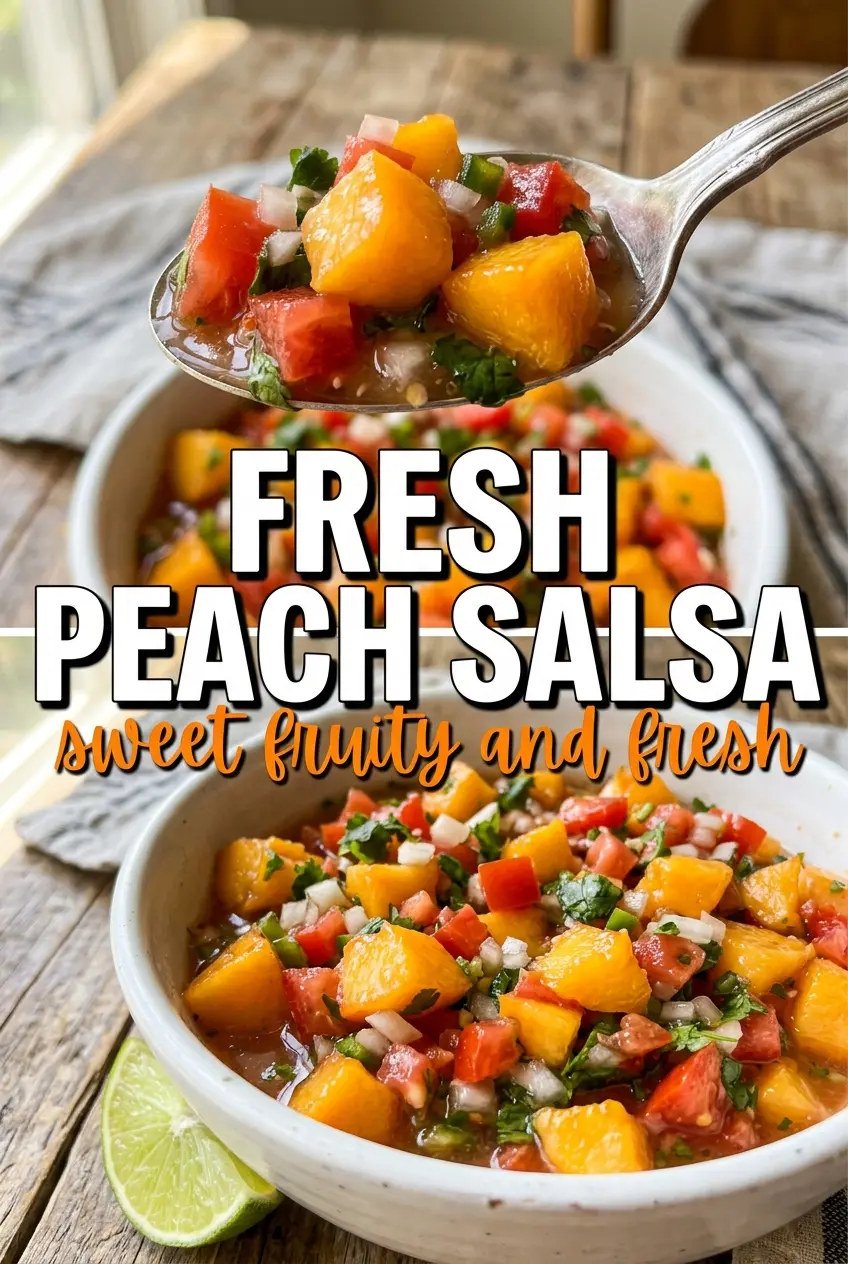
Fresh Peach Salsa
Ingredients
Method
- Combine the diced peaches, red onion, minced jalapeño, and chopped cilantro in a bowl.
- Add the lime juice, lime zest, cumin, and salt, then stir gently to combine.
- Stir in the corn kernels or diced mango if using, keeping the mixture chunky.
- Let the salsa sit for 15 minutes at room temperature so the flavors meld.
- Taste and adjust salt, lime juice, and jalapeño level to your preference.
- Serve immediately with tortilla chips or as a topping for grilled chicken, fish, or tacos.