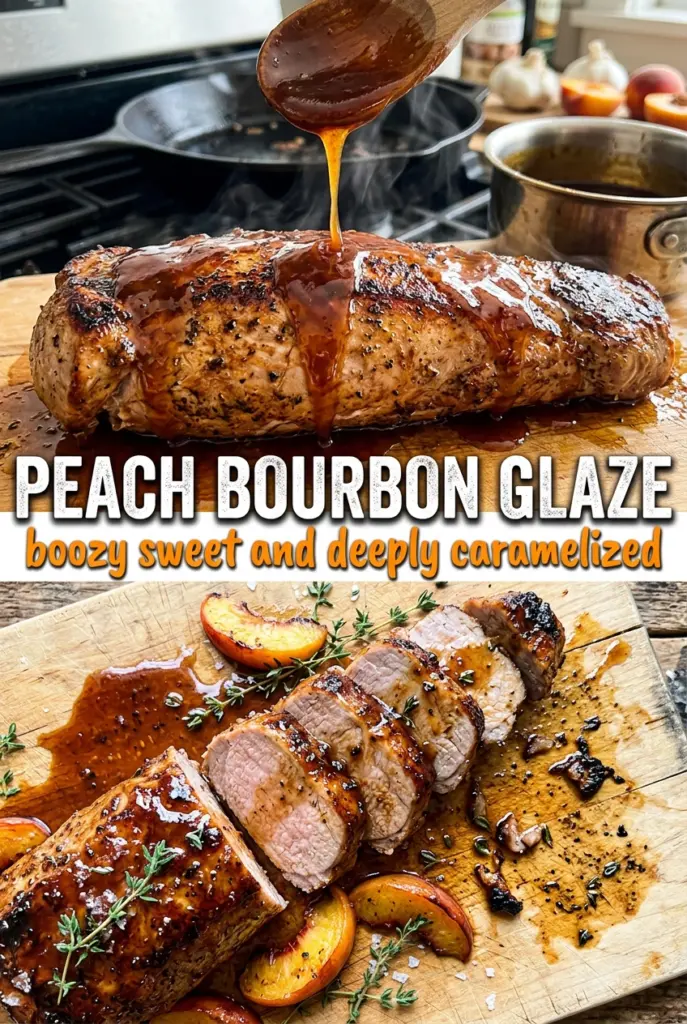
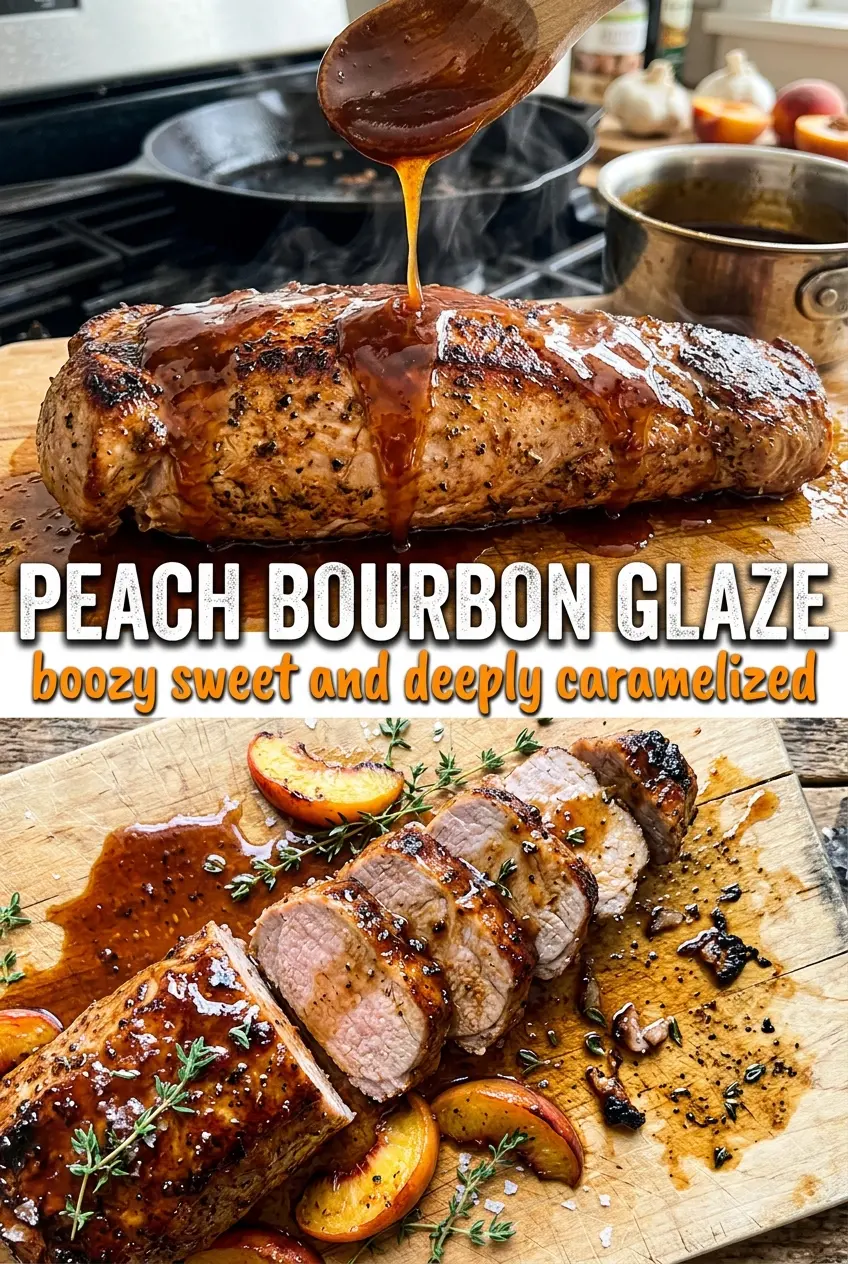
Peach bourbon glaze turns glossy, sticky, and spoon-coating when it’s reduced the right way. The peaches bring a soft, jammy sweetness, while the bourbon adds warmth and a little edge that keeps the sauce from tasting flat. Brushed over salmon, chicken, or pork, it settles into that lacquered finish that looks like you worked a lot harder than you did.
The key is patience at the stove. You want the peaches fully broken down and the liquid reduced enough that the glaze clings instead of running off the food. Soy sauce and vinegar keep the sweetness in check, and a little garlic, ginger, and cayenne give the glaze enough backbone to stand up to grilled or roasted meat.
Below you’ll find the exact simmering cues that tell you when it’s done, plus the swaps that still give you a good result if your peaches aren’t perfect. This is one of those sauces that’s worth learning once, because once you know how it should look and smell, you can pull it off anytime peaches are in the kitchen.
The glaze thickened up exactly like you described and brushed onto pork chops with a gorgeous shine. I also loved that the bourbon didn’t taste harsh after simmering; it just added this warm, mellow depth.
Save this peach bourbon glaze for the nights when you want a glossy, spoon-thick sauce for salmon, chicken, or pork.
The Secret Is Reducing the Peach Before You Trust the Shine
A lot of fruit glazes look finished too soon. They bubble, they smell great, and then they’re still thin enough to slide right off the food. With this glaze, the real job is not just heating everything together; it’s cooking out enough water from the peaches so the sugars and bourbon can concentrate into a thick, glossy coating.
If it still looks loose after 15 minutes, keep going. The bubbling should get slower and heavier, and the glaze should leave a clear line on the back of a spoon for a second or two before it flows back together. If you pull it early, it will seem fine in the pan and disappoint you the second it hits hot meat.
What Each Ingredient Is Actually Doing in This Glaze
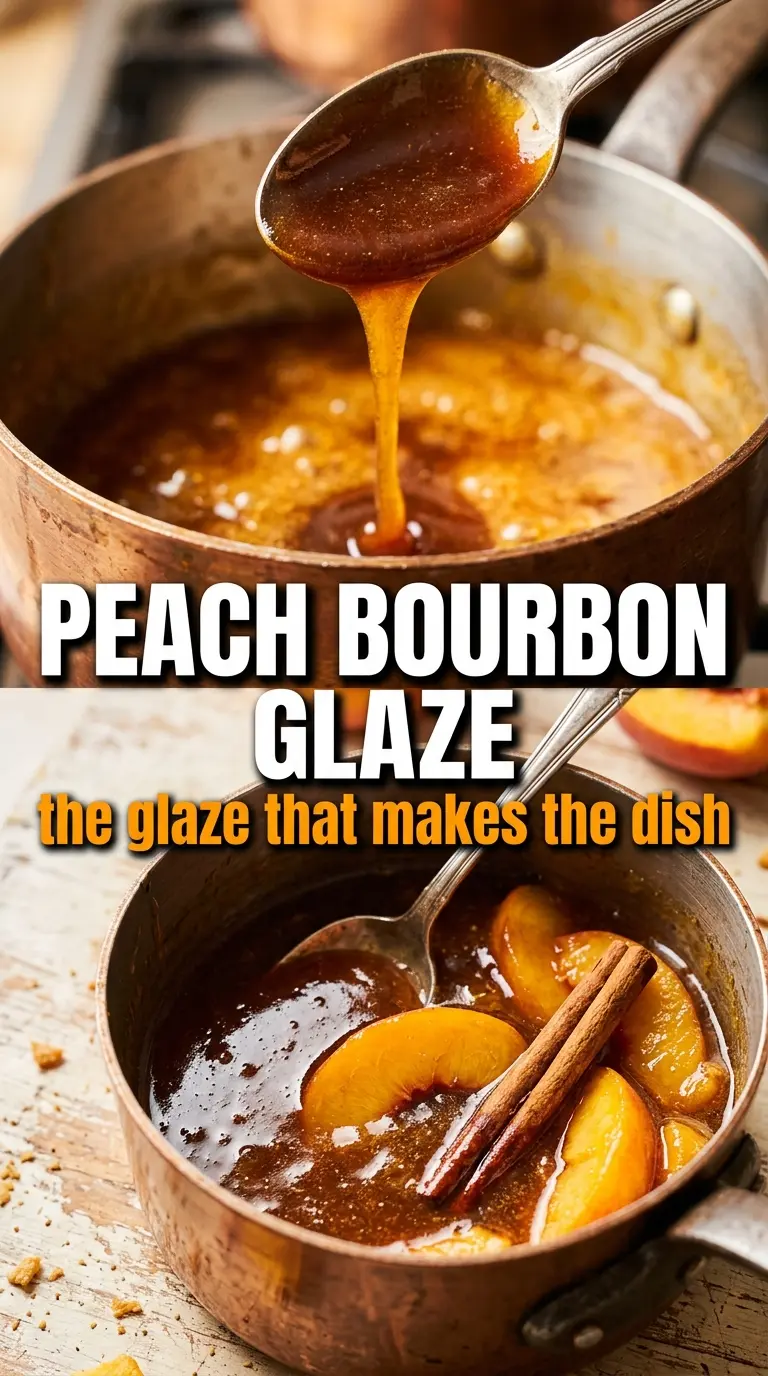
- Peaches — ripe peaches give the glaze its body and natural sweetness. Under-ripe peaches will taste sharp and stay watery, so use fruit that smells fragrant and yields slightly at the stem end. Frozen peaches work in a pinch; thaw them first and expect to simmer a few minutes longer.
- Bourbon — this adds warmth, oak, and that grown-up depth you can’t get from plain juice. It cooks down enough that it doesn’t taste boozy, but you still need a full simmer so the sharp alcohol note softens. A mid-range bourbon is perfect here.
- Brown sugar and honey — these build the sticky finish and help the glaze turn shiny as it reduces. Honey gives a rounder sweetness, while brown sugar adds a little molasses note. If you’re out of honey, maple syrup works, but the glaze will taste a touch less floral.
- Apple cider vinegar and soy sauce — these are the balance points. The vinegar brightens the peaches, and the soy sauce adds salt and savoriness so the glaze works on meat instead of tasting like dessert.
- Garlic, ginger, and cayenne — these small additions keep the glaze from reading one-note. Fresh ginger gives the cleanest lift, and the cayenne should stay in the background, not dominate. If you want gentler heat, use a tiny pinch and stop there.
How to Cook It Down Without Losing the Fresh Peach Flavor
Start with a Full, Even Simmer
Combine everything in a small saucepan and bring it up over medium heat until you see steady bubbling across the surface, not just around the edges. Stir often so the sugars don’t stick to the bottom and scorch while the peaches are still breaking down. If the heat is too high, the alcohol cooks off before the fruit has a chance to soften, and you lose the rounded bourbon note.
Let the Peaches Break Down Completely
Once the mixture is simmering, the peaches should collapse into a loose purée as you stir. Keep cooking until the bubbles look thicker and the glaze starts to cling to the spoon instead of dripping right off. If you still see a loose, watery layer around the edges, it needs more time; that’s the part that turns a promising sauce into a runny one.
Stop When It Coats, Not When It Looks Jammy
The finished glaze should reduce by about half and leave a shiny trail when you drag a spoon through it. It will thicken a little more as it cools, so don’t chase a super-stiff texture in the pan. Taste it at the end and adjust with a little more vinegar for brightness, a touch more honey for sweetness, or a pinch more cayenne if you want it to lean savory.
How to Adapt This for Different Meals and Different Kitchens
Dairy-Free and Naturally Gluten-Free
This glaze already fits both of those needs as written. Just check that your soy sauce is gluten-free if that matters for your table; tamari swaps in one-for-one and keeps the same salty depth. Nothing else needs changing.
No Bourbon on Hand
Use an equal amount of apple juice with an extra teaspoon of vinegar to replace some of the lost bite. You’ll lose the oakiness and warmth, but the glaze will still reduce into a glossy peach sauce that works well on chicken or pork.
Spicier, More Savory Glaze
Add a little extra cayenne or a pinch of black pepper if you want the glaze to lean more toward grilled meats than dessert sauce. A tiny splash of soy sauce at the end can also sharpen the savory side, but go slowly because too much will flatten the peach flavor.
Storage and Reheating
- Refrigerator: Store in a sealed container for up to 1 week. It thickens as it chills, so expect a slightly jam-like texture straight from the fridge.
- Freezer: It freezes well for about 2 months. Freeze in a small airtight container or ice cube tray, then thaw only what you need.
- Reheating: Warm it gently over low heat or in short microwave bursts, stirring between each one. High heat can make the sugars taste harsh and can push the glaze from glossy to sticky in a bad way.
Answers to the Questions Worth Asking
Peach Bourbon Glaze
Ingredients
Equipment
Method
- Add the peach puree, bourbon, brown sugar, honey, vinegar, soy sauce, garlic, ginger, and cayenne to a small saucepan and stir to combine.
- Set the saucepan over medium heat and bring to a simmer, stirring frequently so the sugar dissolves evenly.
- Simmer for 15-20 minutes until reduced by about half and it thickly coats the back of a spoon with a glossy surface.
- Taste and adjust sweetness, bourbon, or heat level, then stir to fully blend changes.
- Use immediately as a glaze for salmon, chicken, or pork while warm so it clings and shines.
- Cool and refrigerate the glaze for up to 1 week in an airtight container.
- Reheat gently until pourable, then drizzle or brush over grilled meat.