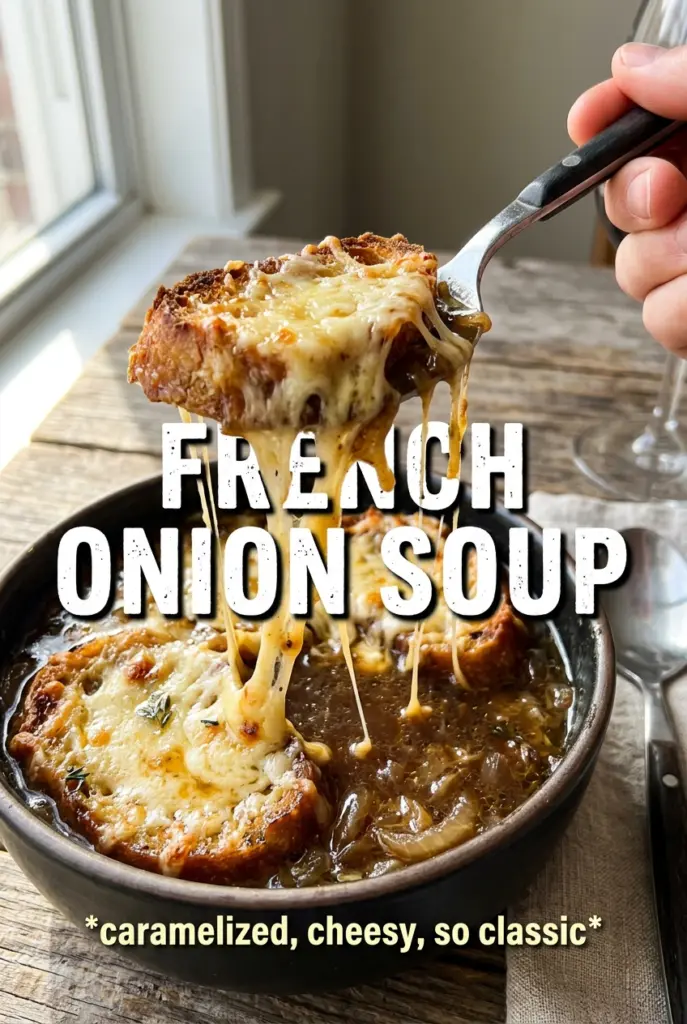
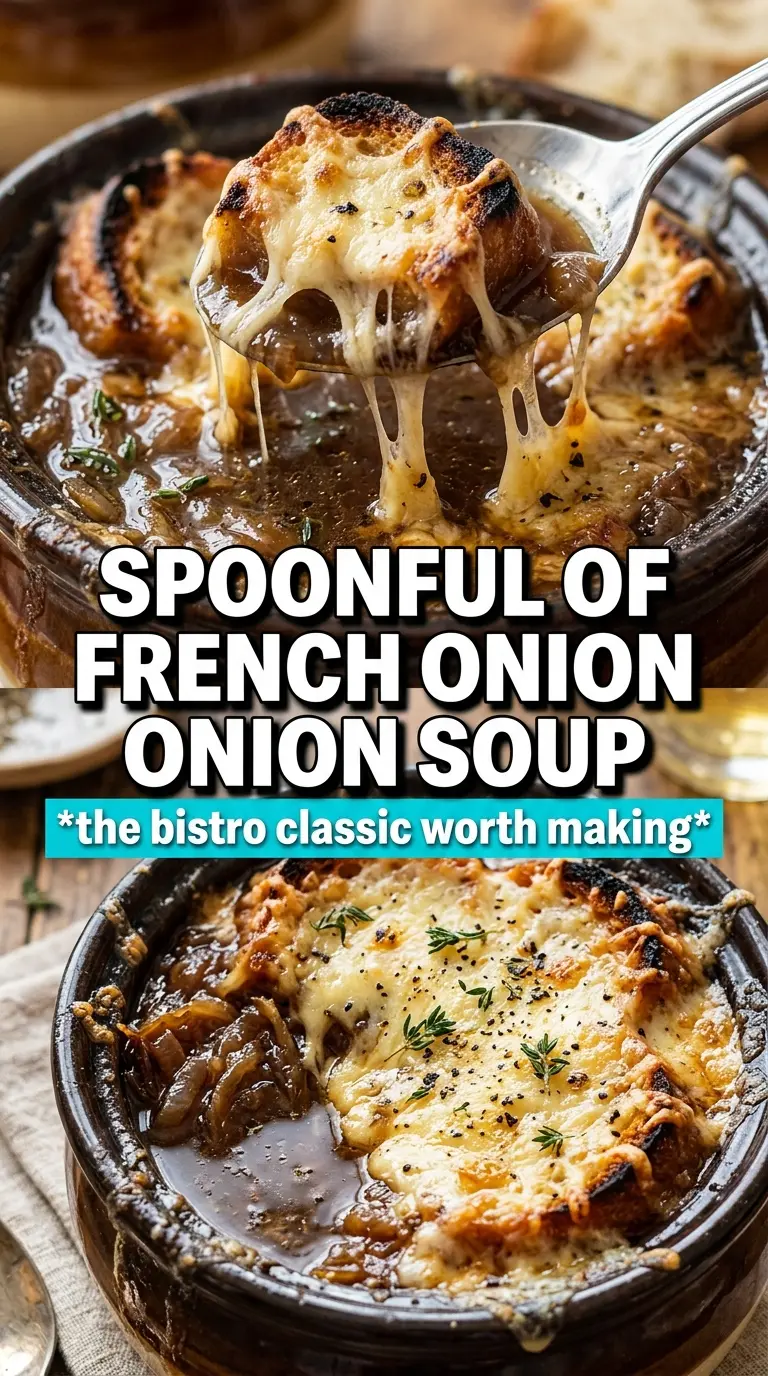
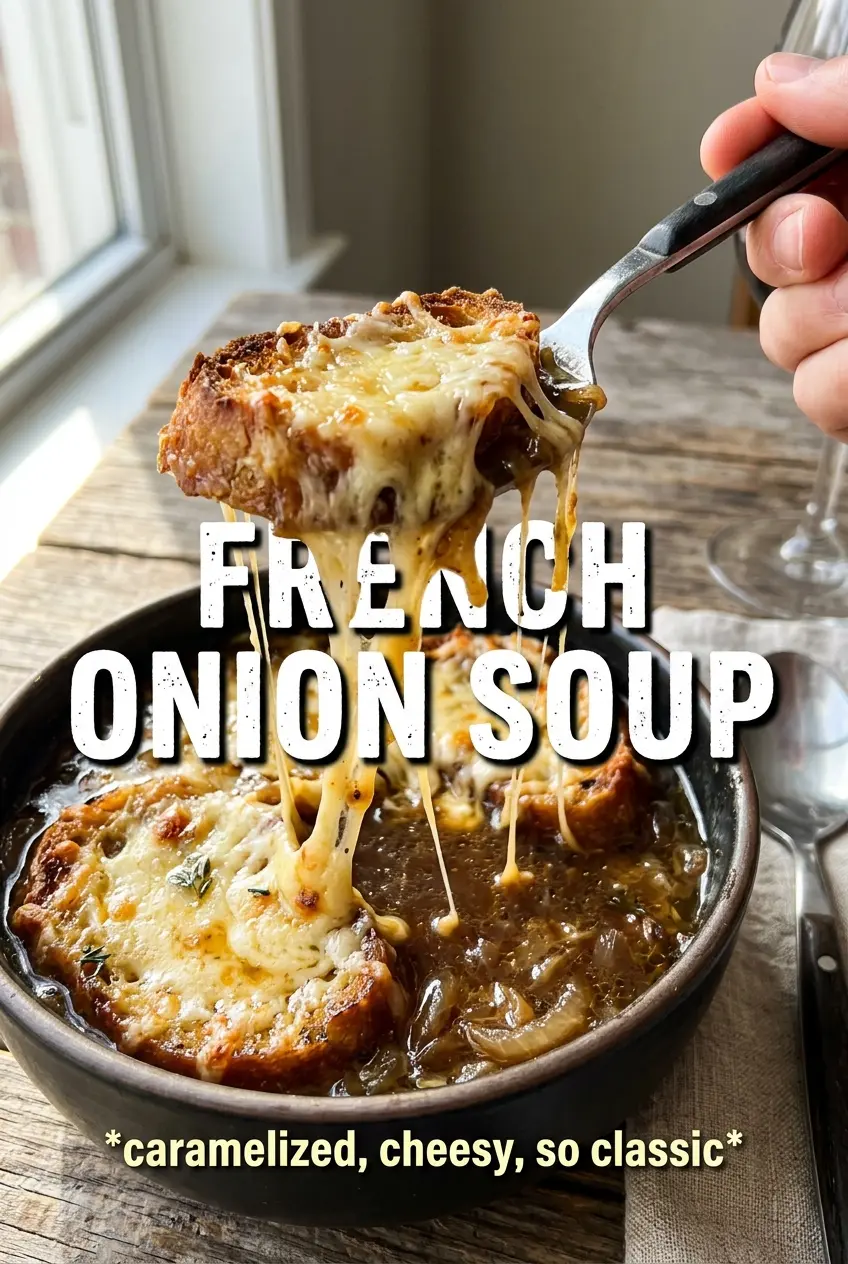
Deep, caramelized onion broth with a glossy, savory finish is what makes French onion soup worth the time. The onions turn sweet and jammy, the broth picks up every browned bit from the pot, and the cheese blanket on top bakes into a bubbling crust that cracks under the spoon. It’s the kind of bowl that feels simple at first glance and then keeps you coming back for one more taste.
The part that separates a great pot from a flat one is patience with the onions. They need low, steady heat and enough time to lose their sharp edge and build real color; rushing that stage leaves you with onions that taste cooked, not rich. A splash of wine loosens the fond and gives the broth a clean edge, while a mix of Gruyere and Parmesan adds both melt and salt so the top tastes as good as it looks.
Below, I’ve laid out the one timing mistake that causes most weak French onion soup, plus the small ingredient choices that make the broth deeper without turning it muddy. If you’ve ever wondered why some bowls taste thin and others taste like they came from a bistro kitchen, the difference is in the details here.
The onions cooked down into the deepest caramel color and the broth had that restaurant-style richness. The cheese topping stayed bubbly and browned under the broiler without turning greasy.
Like this French onion soup? Save it to Pinterest for the nights when you want deeply caramelized onions and a golden Gruyere crust.
The Part Most French Onion Soups Rush Past
The onions are the whole foundation here, and the biggest mistake is stopping when they’re merely soft and translucent. You want them to go all the way to deep gold and then past that into a sticky, jammy stage where they collapse into the broth instead of floating in it. That takes time, but it’s the difference between a bowl that tastes sweet-salty and one that tastes like onion water with cheese on top.
Keeping the heat at medium is important, but steady stirring matters just as much. If the onions start catching on the bottom too early, the pot is too hot and the sugars will scorch before they have a chance to brown evenly. Those browned bits are useful; blackened bits are not.
- Yellow onions — These have the right balance of sugar and sharpness for long caramelizing. Sweet onions work, but they can turn softer and sweeter faster, which gives you less depth.
- Butter and olive oil — Butter gives flavor, olive oil raises the smoke point a little so the onions can cook longer without scorching. You can use all butter, but it’s easier to burn the pan.
- Dry white wine or sherry — This deglazes the pot and adds brightness. Don’t skip it unless you have to; if you do, use a splash of broth and a teaspoon of vinegar to replace some of that lift.
- Gruyere — This is the cheese that gives you the classic melt and those long, stretchy strands. Swiss cheese can stand in, but it won’t have the same nutty edge.
What Each Ingredient Is Actually Doing in This Recipe
- Primary ingredient (the star) — Quality matters most. Choose the best you can find.
- Cooking medium (oil, butter, or broth) — This carries flavors and prevents dryness.
- Seasonings (salt, pepper, spices, herbs) — Layer flavors so nothing overpowers. Build depth gradually.
- Aromatics (garlic, onion, herbs) — Cook with fat to bloom flavors. Become the foundation.
- Supporting ingredients — Complement the main ingredient without overpowering it.
- Sauce or liquid (if applicable) — Brings flavors together. Balance richness with acid.
- Acid (lemon, vinegar, wine, or other) — Brightens and prevents flat-tasting results.
- Final finish (garnish, glaze, or sauce) — Prevents one-dimensional taste and adds visual appeal.
Building the Broth Without Losing the Onion Flavor
Slowly Caramelizing the Onions
Melt the butter with the olive oil, then add the onions with salt and let them cook down slowly until they’re deeply golden and jammy. Stir every 10 to 15 minutes, but scrape the bottom more often if you notice browning in one spot. If the pot looks dry before the onions are ready, lower the heat instead of adding more fat; extra grease won’t speed up caramelization, it just makes the soup heavy.
De-glazing the Pot
Pour in the wine and scrape the bottom while it bubbles. The pan should smell sharp and savory at first, then the wine settles down as it cooks for a few minutes. This step pulls all the browned flavor into the broth, so don’t rush it or the soup will taste flat instead of layered.
Finishing the Broth and Topping It Right
Add the broth, thyme, bay leaf, and Worcestershire sauce, then simmer long enough for the flavors to come together without boiling hard. Remove the herbs before seasoning the soup, because their flavor can turn woody if they sit too long. When you ladle it into crocks, toast the bread first so it stays afloat, then pile on the Gruyere and Parmesan and broil just until the cheese is melted, bubbling, and spotted with brown at the edges.
How to Adjust This Bowl for Different Kitchens and Diets
Make It Vegetarian Without Losing Depth
Use a rich vegetable broth and keep the Worcestershire only if yours is anchovy-free; many versions aren’t. The soup will still taste full if you caramelize the onions properly, but it won’t have the same beefy background note, so a longer simmer helps bridge that gap.
Use Sherry for a Deeper, Slightly Sweeter Finish
Dry sherry makes the broth a touch rounder than white wine and plays nicely with the onions’ sweetness. It’s a smart swap when you want a more old-school French onion soup feel, but keep it dry or the whole bowl can taste cloying.
Gluten-Free Version
Skip the baguette and use sturdy gluten-free bread that can hold up under the cheese. Toast it well before broiling so it doesn’t turn soggy in the crock.
Storage and Reheating
- Refrigerator: Store the soup without the bread and cheese for up to 4 days. The flavor deepens overnight, and the onions soften even more.
- Freezer: Freeze the soup base well for up to 3 months. Freeze it without the bread or cheese, then add those fresh when serving.
- Reheating: Warm gently on the stove over medium-low heat until steaming. Don’t boil it hard or the broth can taste muddled and the onions can break down too far.
Answers to the Questions Worth Asking
French Onion Soup
Ingredients
Equipment
Method
- Melt the butter with the olive oil in a large heavy pot over medium heat, then add the sliced onions and 1/2 teaspoon salt. Stir to coat the onions and keep them evenly moistened.
- Cook the onions for 60-70 minutes over medium heat, stirring every 10-15 minutes. Continue until deeply golden, jammy, and caramelized, with a sweet, browned aroma.
- Deglaze with the white wine or sherry and cook for 3 minutes, scraping up the browned bits from the bottom. Let the alcohol cook off so the broth tastes rich, not sharp.
- Add the beef broth, fresh thyme, bay leaf, and Worcestershire sauce, then bring to a simmer. Simmer for 20 minutes, then remove the thyme and bay leaf and season with salt and pepper to taste.
- Ladle the hot soup into oven-safe crocks and float the toasted baguette slices on top. Arrange them so each crock has a bread layer that will soak slightly.
- Pile the Gruyère and parmesan over the bread, then broil for 3-4 minutes until melted and bubbly. Look for a golden-brown, bubbling cheese surface before serving.