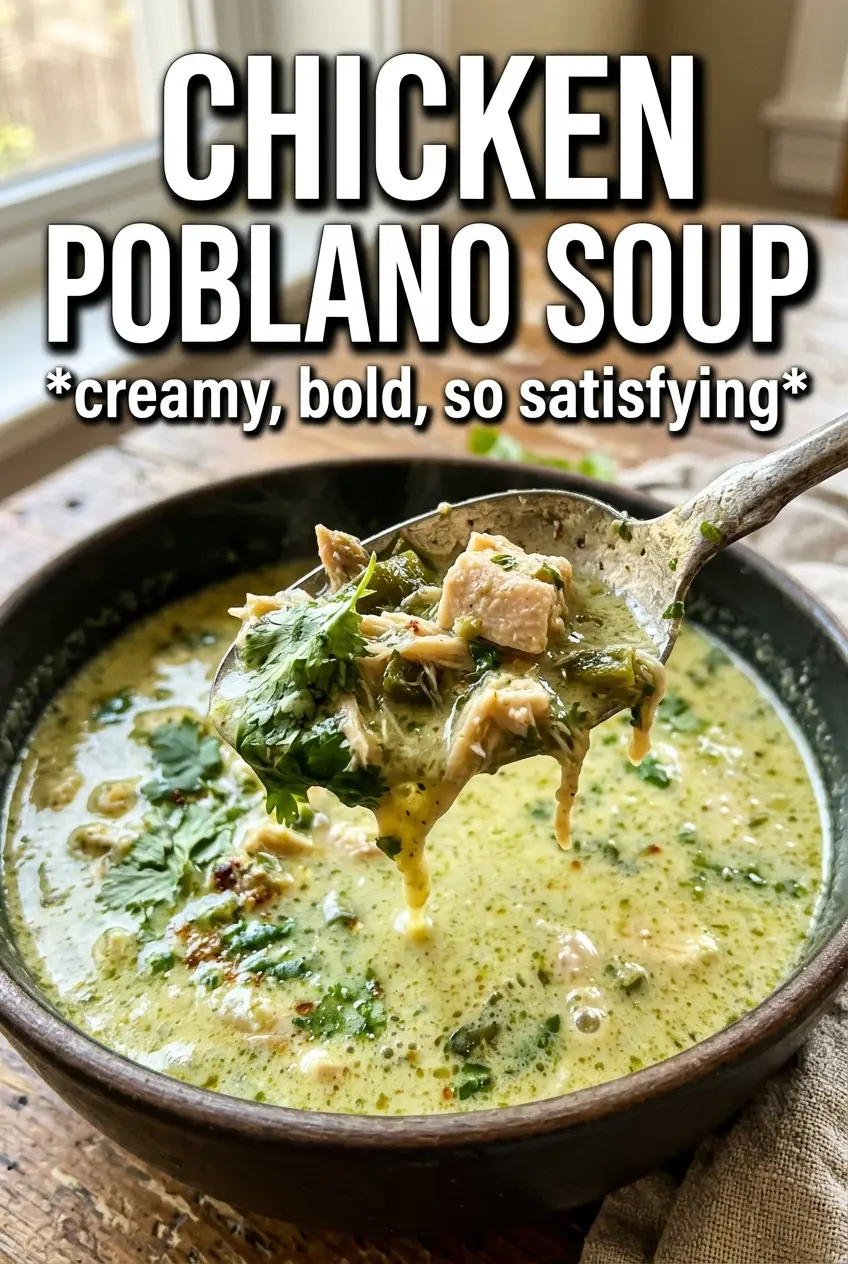
Chicken poblano soup lands in that sweet spot between cozy and lively. The broth is creamy and smoky, but the roasted poblanos keep it from tasting heavy, and the shredded chicken gives every spoonful a little substance. Corn brings a touch of sweetness, lime wakes everything up at the end, and the toppings add the crunch and freshness the bowl needs.
What makes this version work is the layering. The poblanos get roasted first so their flavor turns deep and rounded instead of grassy, then part of them are blended into the broth for body while the rest stay diced for texture. The cream goes in after the soup has simmered, which keeps it smooth, and the lime juice gets added at the end so the soup tastes bright instead of dull.
Below, I’m walking through the small choices that matter: how to roast the peppers without steaming them, why to blend only part of the soup, and what to do if you want a little more heat or a lighter bowl.
The roasted poblanos gave the broth this smoky depth, and blending just half of it made the soup creamy without losing the chunks of chicken and corn. My bowl thickened up beautifully after a few minutes, and the lime at the end pulled everything together.
Save this Chicken Poblano Soup for the nights when you want a smoky, creamy bowl with roasted peppers and shredded chicken.
The Trick to Keeping the Poblanos Smoky Instead of Watery
The biggest mistake with poblano soup is treating the peppers like a vegetable you just toss in and simmer. Poblanos need real heat first. Broiling them until the skins blister and blacken concentrates their flavor and gives the soup that smoky edge people expect from a good Tex-Mex bowl. If you skip that step, the soup tastes flat, and the pepper flavor reads more green than warm and roasted.
After roasting, the other move that matters is how you use them. Half of the peppers get blended into the broth, which thickens the soup naturally without flour, while the rest stay in dice so the finished bowl has some bite. That balance is what keeps the texture from turning into cream soup with no character.
- Roasted poblanos — these carry the whole soup. Fresh, unroasted peppers won’t give you the same smoky depth.
- Partial blending — this builds body without making the soup gluey. An immersion blender works best because you can stop as soon as the broth looks slightly thickened and still chunky.
- Cream at the end — adding it after the simmer protects it from separating and keeps the soup silky.
What Each Ingredient Is Actually Doing in This Bowl

- Chicken breast — cooked and shredded chicken keeps this quick and lets the soup come together without a long braise. Rotisserie chicken works fine here, and it saves time without changing the result much.
- Poblanos — this is where the flavor comes from. Roast them until the skins blister, then peel them well; any char left on the flesh is fine, but thick bits of skin can turn bitter.
- Corn — corn gives sweetness and little pops of texture that play against the smoky broth. Frozen corn is perfect and honestly just as useful as fresh in this soup.
- Heavy cream — this rounds out the broth and gives it that glossy finish. Half-and-half can work in a pinch, but the soup will be thinner and less plush.
- Cumin, smoked paprika, and chili powder — these spices build warmth underneath the peppers without making the soup taste fiery. The smoked paprika matters most if your poblanos aren’t especially charred.
- Lime juice — this is the final lift. Add it at the end so the soup stays bright and doesn’t taste muted by the cream.
Building the Creamy Broth Without Breaking It
Roast the Peppers Until the Skins Split
Set the poblanos under the broiler and let the skins blister in spots until they’re blackened and collapsed, turning them as needed so the peppers soften all the way through. Put them in a covered bowl or a sealed bag for a few minutes after roasting; that steam loosens the skins and makes peeling much easier. If you rush this part, you’ll end up fighting papery skin and losing the pepper’s smooth, roasted flavor.
Cook the Onion and Spices Together
Melt the butter, then cook the diced onion until it softens and starts to look translucent at the edges. Add the garlic, cumin, smoked paprika, and chili powder and stir for about 2 minutes, just until the kitchen smells warm and toasty. If the garlic starts browning hard, pull the pot off the heat for a moment; burnt garlic will make the whole soup taste bitter.
Simmer Before You Blend
Add the broth, corn, and half of the diced poblanos, then let everything simmer long enough for the flavors to settle in together. This is the point where the soup starts tasting like itself, not just like ingredients in a pot. Don’t add the cream yet, because you want the broth hot enough to blend smoothly but not so rich that you lose control of the texture.
Blend Just Enough, Then Finish Gently
Blend only part of the soup until it looks thicker and slightly creamy, with some corn and pepper still visible. Stir in the cream, shredded chicken, the remaining poblanos, and the lime juice, then let it warm through for a few minutes without boiling hard. A hard boil after the cream goes in is the fastest way to make the texture go grainy or split at the edges.
Three Good Ways to Make This Soup Fit Your Table
Make It Dairy-Free
Swap the heavy cream for full-fat coconut milk if you want a dairy-free bowl. The soup will still be creamy, but it picks up a faint coconut note, so keep the lime and smoked paprika in place to keep the flavor balanced.
Use Rotisserie Chicken on a Busy Night
Shred a rotisserie chicken and stir it in at the end just long enough to heat through. This doesn’t change the flavor much, but it does save time and keeps the chicken tender instead of simmering it until it dries out.
Turn Up the Heat
Add a minced jalapeño with the onion or finish each bowl with hot sauce. That keeps the base balanced for everyone, while the heat stays flexible instead of taking over the whole pot.
Storage and Reheating
- Refrigerator: Store for up to 4 days. The soup thickens as it chills, which is normal.
- Freezer: It freezes, but the cream may separate a little after thawing. For the best texture, freeze before adding the cream, then stir the cream in when reheating.
- Reheating: Warm it gently on the stove over low heat, stirring often. Don’t let it boil hard, or the cream can split and the chicken can turn dry.