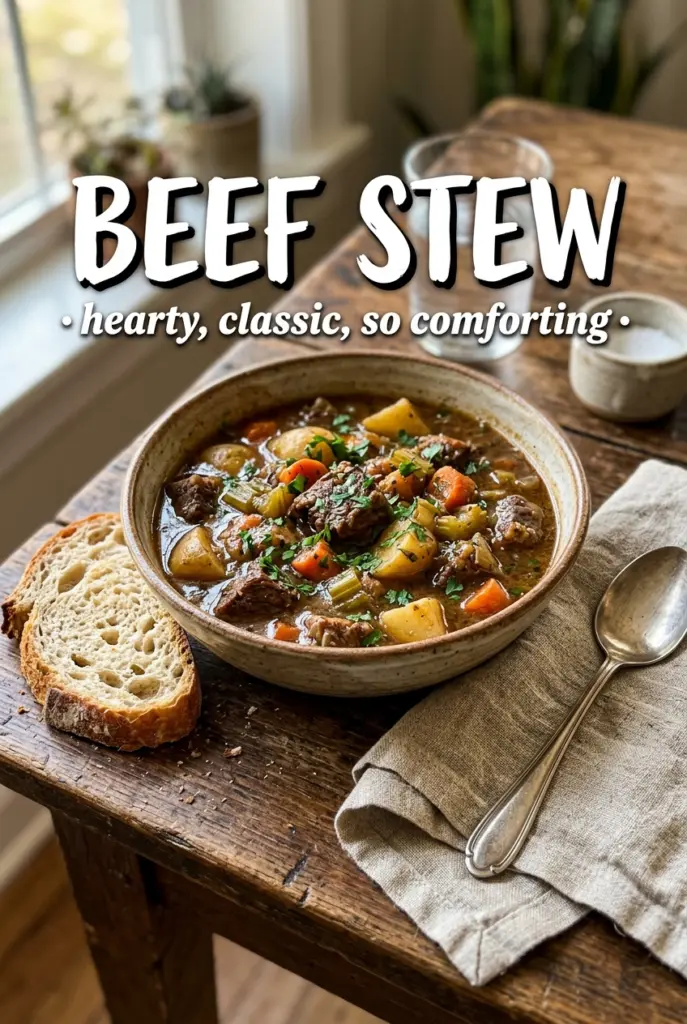
Beef stew earns its place when the beef turns spoon-tender, the broth goes deep and glossy, and the vegetables hold their shape without tasting plain. The best pot has balance: rich enough to feel like supper, but bright enough from tomato, wine, and thyme that every bite stays interesting. When it’s done right, you get soft potato edges, sweet carrots, and chunks of beef that break apart the second your spoon hits them.
This version builds flavor in layers instead of leaning on one big shortcut. Tossing the beef in flour before searing gives you a better crust and helps the broth thicken naturally as it simmers. Red wine and tomato paste get cooked down with the vegetables, which takes away any raw sharpness and gives the stew that dark, slow-cooked taste you can’t fake at the end.
Below, I’ll walk through the exact point where most stew goes flat, why the order of the vegetables matters, and how to keep the broth rich without turning the potatoes mushy.
The beef was falling apart after the simmer, and the broth thickened up beautifully without turning pasty. I followed the batch-searing tip and the flavor was deep enough that we didn’t even need extra salt at the table.
Save this beef stew for a slow simmer, deep mahogany broth, and fork-tender chunks of chuck.
The Browning Step That Gives This Stew Its Backbone
The biggest difference between a stew that tastes flat and one that tastes like it cooked all afternoon is the sear. If the beef goes into the pot crowded, it steams, the flour turns gummy, and you lose the dark drippings that build the broth later. Brown it in batches over high heat until the pieces have a real crust and the bottom of the pan has those sticky browned bits you can smell before you even stir.
The second trap is rushing the simmer. Once the liquid comes up, drop the heat low enough that you see only lazy bubbles breaking the surface. A hard boil tightens the beef instead of softening it, and it also makes the potatoes break down before the meat is done. Slow heat is what turns chuck into the tender, shreddable texture people want in beef stew.
What Each Ingredient Is Actually Doing in the Pot
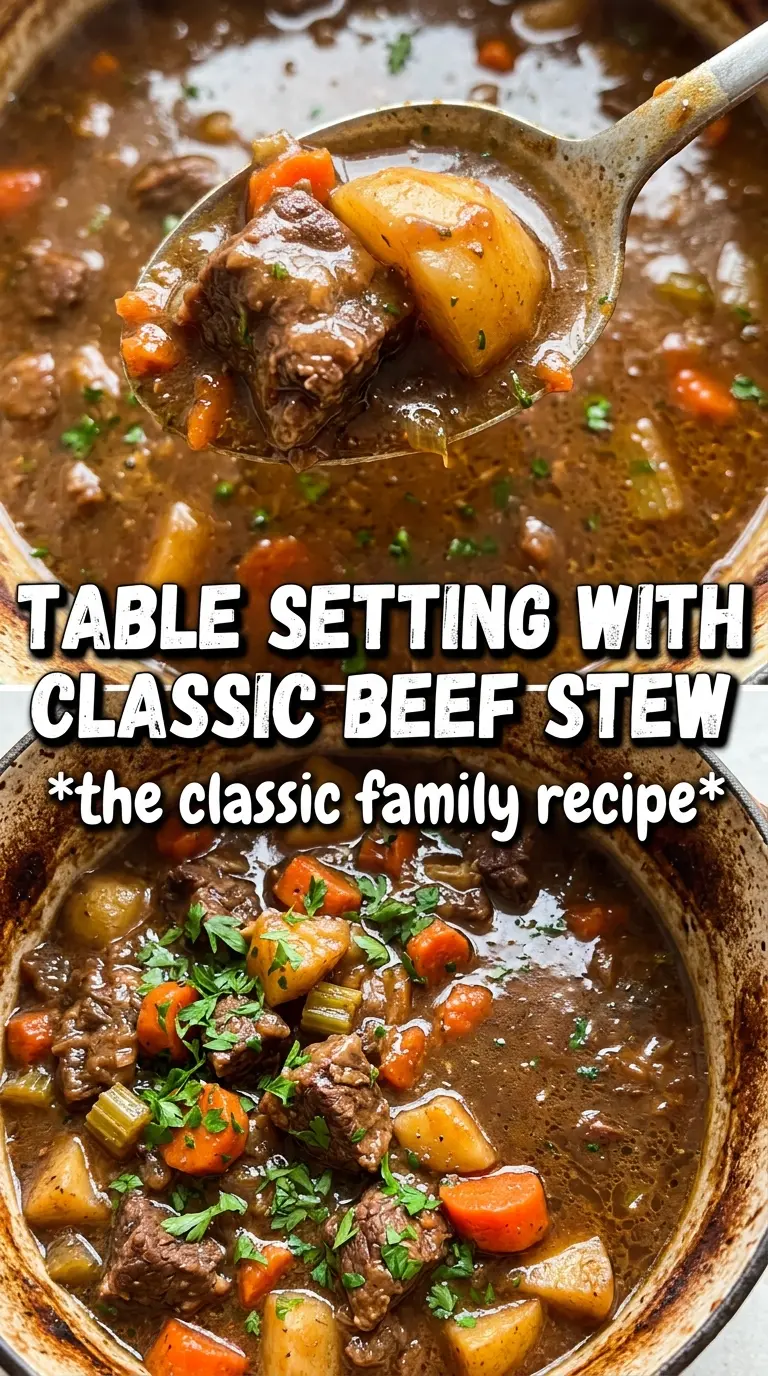
- Beef chuck — This is the right cut because it has enough connective tissue to turn silky during the long simmer. Lean stew meat works in a pinch, but it won’t give you the same rich, tender finish.
- Flour — Tossing the beef in flour before searing does two jobs: it helps the crust form and lightly thickens the broth as the stew cooks. If you need this gluten-free, use a 1:1 gluten-free flour blend and sear the beef the same way.
- Red wine — This adds depth and acidity that keeps the stew from tasting heavy. Use a dry wine you’d drink, not a sweet one; if you skip it, add extra broth plus a small splash of red wine vinegar at the end to wake up the flavor.
- Tomato paste and diced tomatoes — The paste brings concentrated savoriness, and the tomatoes keep the broth from tasting one-note. Cook the paste with the vegetables before the liquid goes in so it loses that raw tinny edge.
- Yukon gold potatoes — They hold their shape better than russets and give the stew a creamy bite without dissolving into the broth. Cut them a little larger than the carrots so they finish tender instead of turning soft too early.
- Frozen peas — These go in at the very end for color and a fresh pop of sweetness. If you add them too early, they lose both flavor and texture.
Building the Base So the Broth Tastes Slow-Cooked
Get the Beef Deeply Browned
Season the beef, toss it with the flour, then sear it in hot olive oil in small batches. You’re looking for a dark brown crust, not just a gray surface, and the pot should hiss the moment the meat hits it. If the pan starts crowding, stop and give the pieces room; overcrowding is the fastest way to lose browning and end up with pale beef and weak broth. Pull the meat out as soon as the edges are crusted, even if the centers are still raw.
Cook the Vegetables Until They Start to Sweeten
Add the onion, carrots, and celery to the same pot and stir them through the fat and browned bits. After about five minutes, the onion should look translucent and the vegetables should smell sweet, not raw. Garlic and tomato paste go in next, and that two-minute cook matters because it takes the sharp edge off both. If the paste sticks, add a splash of broth and scrape the pan clean.
Let the Liquid Do the Heavy Lifting
Pour in the wine first and stir until the bottom of the pot is clear, then add the broth, tomatoes, Worcestershire, thyme, bay leaves, and beef. Bring it just to a boil, then lower the heat and cover it. The stew should move with a slow, occasional bubble. If it boils hard, the beef gets stringy before it gets tender, and the broth can turn greasy instead of silky.
Add the Potatoes and Finish with the Peas
Once the beef is tender, add the potatoes and let them cook until a fork slides in with a little resistance. They need enough time to soften, but not so much that they start crumbling into the broth. Stir in the peas only at the end and cook just until they turn bright green and hot. Pull out the bay leaves before serving and season at the end so the salt lands on the finished stew, not the reduction-in-progress.
How to Adapt This Beef Stew for Different Kitchens and Schedules
Gluten-Free Beef Stew
Swap the all-purpose flour for a gluten-free 1:1 blend and coat the beef the same way. The stew will still thicken as it simmers, though the broth may look a touch lighter than the wheat-flour version. Let it bubble uncovered for the last few minutes if you want a slightly fuller body.
No Wine Version
Use an extra cup of beef broth in place of the wine and add 1 tablespoon of red wine vinegar at the end. You’ll lose a little of the deep, rounded flavor wine brings while the stew cooks, but the vinegar helps bring back the brightness that keeps the broth from tasting heavy.
Make-Ahead and Leftover Storage
- Refrigerator: Store covered for up to 4 days. The flavor gets even better overnight, and the broth thickens as it chills.
- Freezer: Freeze for up to 3 months in airtight containers, leaving a little headspace. Potatoes soften slightly after thawing, but the stew still freezes well overall.
- Reheating: Reheat gently on the stove over low heat with a splash of broth or water. Don’t boil it hard or the beef can dry out and the potatoes can start breaking apart.
Questions I Get Asked About This Recipe
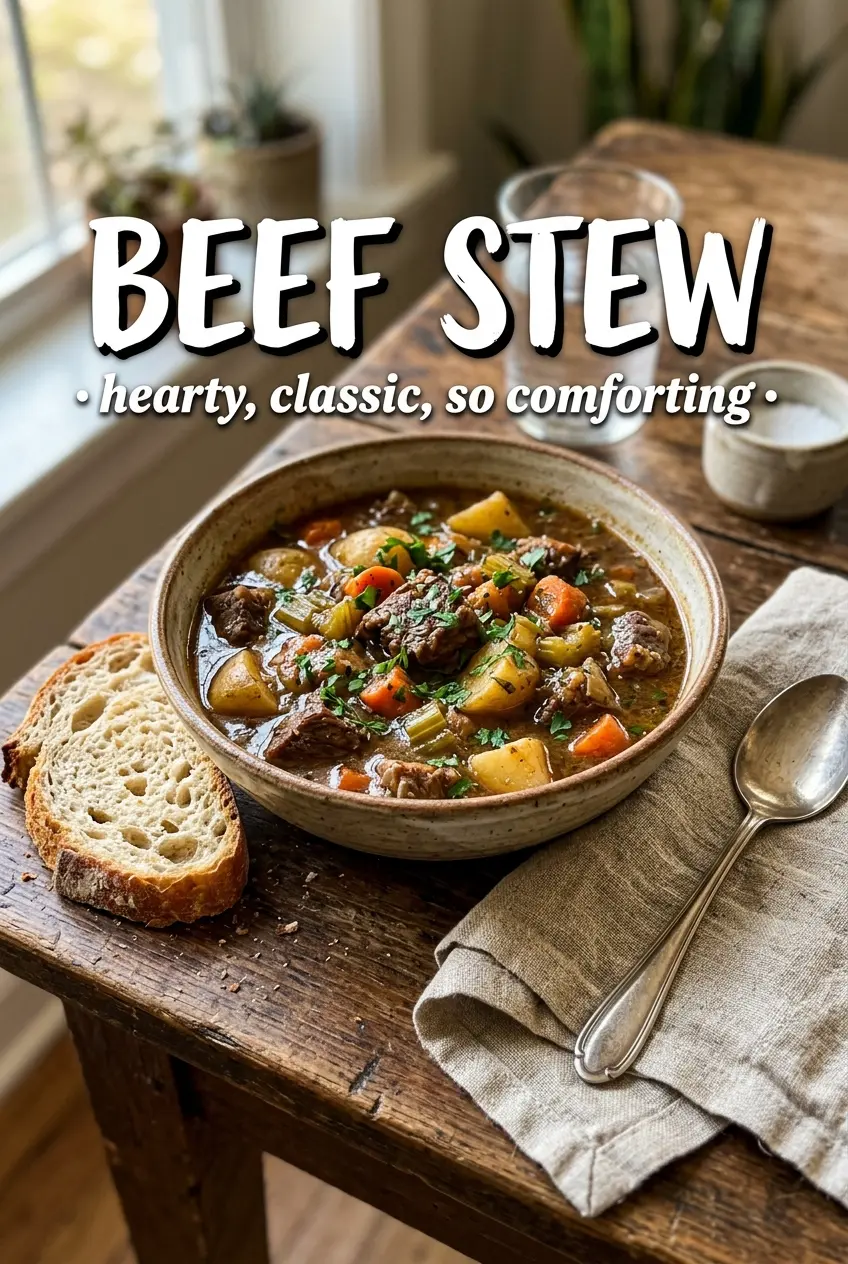
Beef Stew
Ingredients
Equipment
Method
- Toss the beef chuck cubes with the all-purpose flour until evenly coated. Sear in batches in olive oil over high heat for 3 to 4 minutes per batch, until deeply browned, then remove to a plate.
- In the same Dutch oven, sauté the onion, carrots, and celery over medium-high heat for 5 minutes, stirring until slightly softened. Add the garlic and tomato paste and cook for 2 minutes, until fragrant.
- Deglaze with the red wine, scraping up browned bits from the bottom. Add the beef broth, diced tomatoes, Worcestershire, dried thyme, bay leaves, and browned beef.
- Bring the mixture to a boil, then reduce heat to maintain a covered simmer at 190°F to 200°F (low simmer) for 60 to 75 minutes, until the beef is very tender with visible shredding.
- Stir in the cubed Yukon gold potatoes and continue simmering, covered, for 20 more minutes until tender. Add the frozen peas and cook for 3 minutes, until bright green.
- Remove the bay leaves and season with salt and pepper to taste. Serve hot with a thick, hearty broth and fall-apart beef chunks.