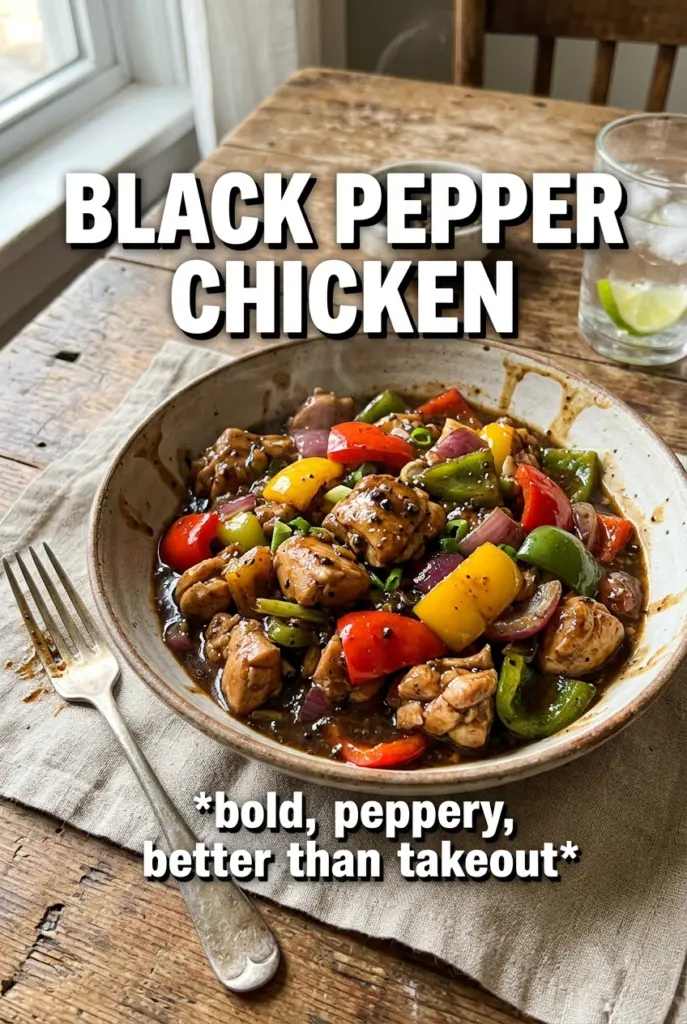
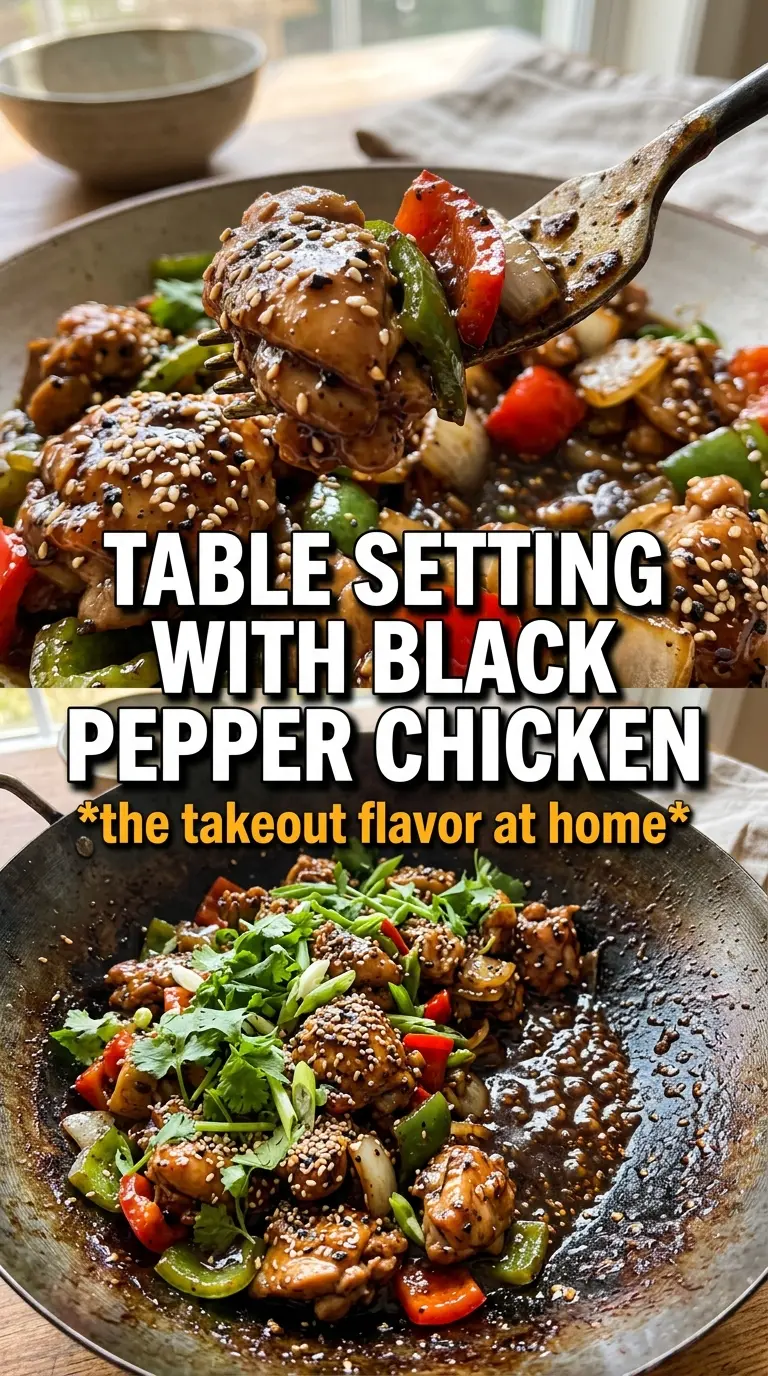
Black pepper chicken hits that sweet spot between fast takeout-style comfort and a dinner that still tastes like someone cared. The chicken stays tender, the peppers keep a little snap, and the sauce turns glossy and dark enough to cling to every piece of rice. What makes it stand out is the pepper: not just a background note, but the main flavor, warm and sharp and a little smoky when it hits the hot pan.
The trick is getting the chicken browned before the sauce goes in and keeping the heat high enough to thicken everything quickly without turning the vegetables limp. Freshly cracked black pepper matters here because preground pepper tastes dusty and flat next to the oyster sauce and dark soy. The cornstarch slurry finishes the sauce at the last minute, so it coats instead of puddling at the bottom of the skillet.
Below, I’ve included the small details that keep the sauce from going thin and the chicken from overcooking. Once you’ve made it once, it becomes one of those dependable dinners you can pull off without thinking too hard.
The sauce got shiny and thick in just a couple minutes, and the cracked black pepper gave it that takeout-style bite without tasting harsh. Even the onions stayed a little crisp, which I loved.
Save this black pepper chicken for the nights when you want glossy sauce, tender chicken, and a bold cracked-pepper finish over rice.
The Secret to Keeping the Sauce Glossy, Not Gummy
The biggest mistake with black pepper chicken is letting the sauce spend too long on the heat after the cornstarch goes in. Once the slurry hits the pan, it should thicken quickly and turn shiny. If it cooks down too long, it goes from silky to pasty, and the pepper gets harsh instead of warm.
Browning the chicken first matters for more than flavor. It gives the sauce a cleaner base because some of the chicken juices cook off instead of flooding the pan. That way the soy, oyster sauce, and dark soy can reduce into a tight glaze instead of thinning out into a salty broth.
What Each Ingredient Is Actually Doing in This Pan
- Chicken breast — Slicing it thin helps it cook fast and stay tender. Breast works well here because the sauce is bold enough to keep it interesting, but cut it against the grain so it doesn’t go stringy. Thighs work too if you want a little more richness.
- Freshly cracked black pepper — This is the backbone of the dish. Pre-ground pepper can taste flat and dusty after it simmers, while freshly cracked pepper stays bright and aromatic. Use a generous hand, especially at the finish.
- Dark soy sauce — This deepens the color and adds a rounded, slightly caramel note that regular soy sauce can’t fully replace. If you skip it, the flavor is still good, but the sauce will look lighter and taste less layered.
- Oyster sauce — It gives the sauce body and a savory sweetness that helps it cling to the chicken. There isn’t a perfect substitute for the exact flavor, but hoisin can work in a pinch if you want a sweeter result.
- Cornstarch slurry — This is what turns the sauce glossy in the final minute. Mix it with cold water before it goes in, or you’ll get little lumps that never smooth out once they hit the heat.
- Bell pepper and onion — These bring crunch and sweetness that balance the peppery sauce. Cook them until they’re just tender at the edges; if they go soft, the whole dish loses that fresh stir-fry feel.
Building the Stir-Fry So the Chicken Stays Tender
Whisk the sauce before the pan gets hot
Mix the soy sauce, oyster sauce, dark soy sauce, brown sugar, black pepper, and cornstarch slurry before you start cooking. Once the wok is hot, you won’t have time to measure while the chicken sits there overcooking. The sauce should look smooth and loose going in, with no cornstarch clumps hiding at the bottom.
Brown the chicken in batches
Cook the chicken in a single layer so it can sear instead of steam. If you crowd the pan, the pieces turn pale and watery, and you lose the browned edges that make the final dish taste deep and savory. Pull the chicken out as soon as it’s golden; it finishes in the sauce later, so it doesn’t need to be cooked through at this stage.
Let the vegetables keep a little bite
Stir-fry the onion and bell pepper just until the onion turns translucent and the pepper softens at the edges. You want them hot and fragrant, not collapsed. Garlic and ginger go in at the end of this stage because they burn fast, and burnt garlic gives the whole sauce a bitter edge.
Finish fast once the sauce goes in
Return the chicken, pour in the sauce, and toss constantly for 2 to 3 minutes. The pan should smell sharp and peppery, and the sauce should go from thin to shiny enough to coat the back of a spoon. If it still looks loose, give it another 30 seconds; if it gets too thick, a small splash of water loosens it without dulling the flavor.
How to Make This Black Pepper Chicken Work for Your Kitchen
Swap in chicken thighs for a juicier finish
Boneless thighs hold up well if you want a richer, more forgiving stir-fry. They take a minute or two longer to cook, but they stay juicy even if the pan runs hot. The sauce stays the same, though the final dish tastes a little rounder and less lean.
Make it gluten-free with a couple of labels checked
Use tamari or a certified gluten-free soy sauce, and check that your oyster sauce is labeled gluten-free if needed. The texture and finish stay the same, so you’re not sacrificing the glossy coating that makes this dish work.
Add heat without losing the pepper flavor
A pinch of red pepper flakes or a sliced fresh chile works well if you want the dish hotter. Keep the black pepper in place, though, because that’s the main flavor here; the extra heat should sit underneath it, not replace it.
Storage and Reheating
- Refrigerator: Store leftovers in an airtight container for up to 3 days. The sauce will thicken more as it chills, and the vegetables soften a bit.
- Freezer: It freezes, but the bell peppers lose some of their snap. For the best texture, freeze the chicken and sauce together and add fresh peppers when reheating if you can.
- Reheating: Rewarm in a skillet over medium-low heat with a splash of water to loosen the sauce. The biggest mistake is blasting it on high heat, which makes the chicken tough and can turn the sauce sticky before the center is hot.
Questions I Get Asked About This Dish
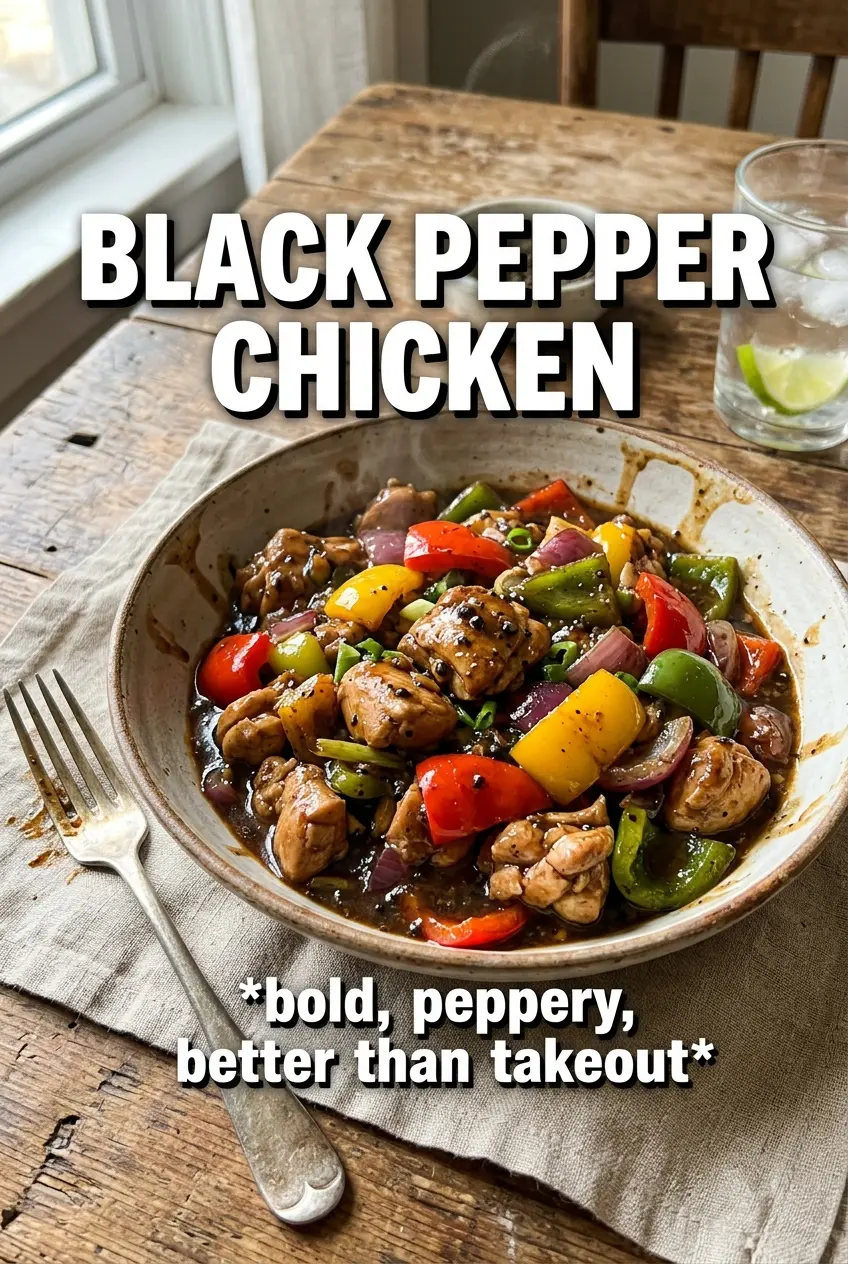
Black Pepper Chicken
Ingredients
Equipment
Method
- Whisk together soy sauce, oyster sauce, dark soy sauce, brown sugar, and freshly cracked black pepper until smooth, then set aside.
- Whisk cornstarch with water in a small bowl until fully dissolved, then keep it ready to add later.
- Heat vegetable oil in a wok or large skillet over high heat; stir-fry chicken in batches until golden, then remove to a plate.
- Stir-fry bell pepper and onion for 3 minutes until crisp-tender, then add garlic and ginger and cook for 1 minute, stirring constantly.
- Return the chicken to the skillet, then pour the sauce over and toss to coat evenly.
- Cook for 2–3 minutes until the sauce thickens and clings to the chicken and vegetables, then season with extra cracked black pepper.
- Serve the black pepper chicken over steamed rice for a saucy, pepper-crusted finish.