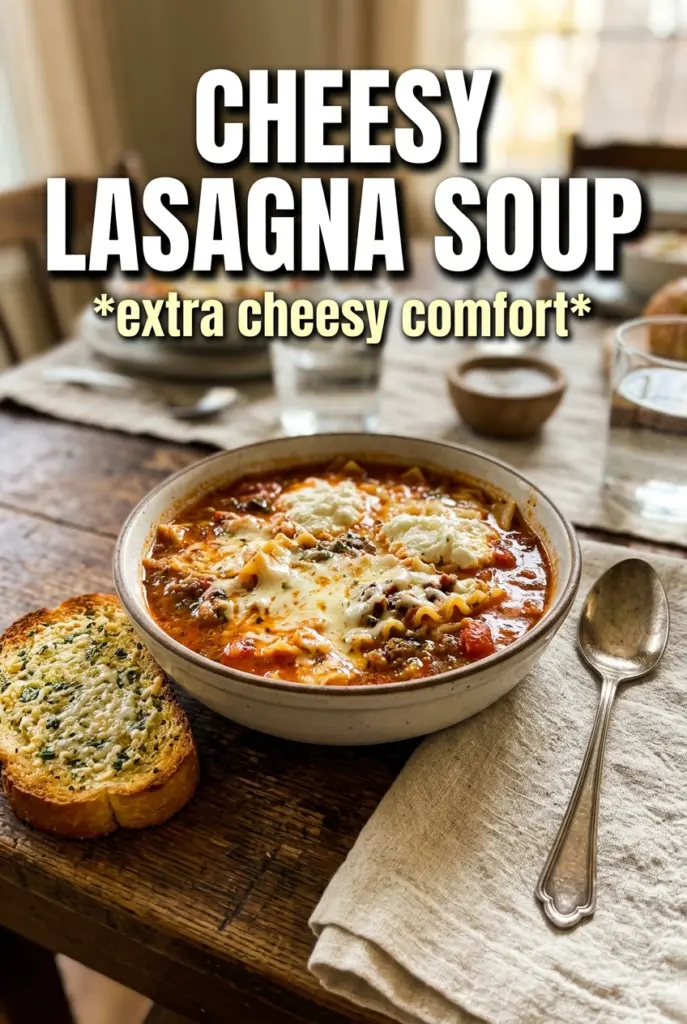
Cheesy lasagna soup has the same comfort as a bubbling pan of lasagna, but it gets to the table faster and with a lot less fuss. You still get the rich tomato broth, the savory sausage, the tender noodles, and that thick hit of cheese on top, but everything lands in one pot and turns into a spoonable dinner that feels bigger than the effort behind it. The broth should stay hearty, not thin, and the cheese needs to melt into the soup without disappearing into the base.
The trick is building the flavor in stages instead of dumping everything together at once. Browning the sausage first gives the soup its backbone, and cooking the tomato paste for a minute or two takes away that raw, tinny edge that can make tomato soups taste flat. The noodles go in only after the broth is seasoned and boiling, so they soften without turning bloated and mushy.
Below, I’ve included the exact point where the cheese should go in, because that’s the part that decides whether you get a silky bowl or a grainy one. If you’ve ever had lasagna soup taste good but not quite rich enough, this version fixes that.
The broth stayed rich and the noodles were perfectly tender, not bloated. Adding the ricotta and mozzarella at the end made the soup taste like actual lasagna instead of tomato soup with pasta.
Save this cheesy lasagna soup for nights when you want all the baked-lasagna comfort in one creamy, one-pot bowl.
The Reason the Cheese Stays Creamy Instead of Turning Grainy
Most lasagna soups go sideways when the cheese gets heated too aggressively. Ricotta, cream cheese, and mozzarella all behave better when they’re added off the heat or on very low heat, because dairy proteins tighten up fast once the pot is boiling. If you stir them in while the soup is still churning, you can end up with a grainy broth and stringy clumps instead of a smooth, rich finish.
The other detail that matters is the noodle timing. Broken lasagna noodles drink up broth quickly, so they need enough liquid and enough simmer time to soften without collapsing. Keep the simmer gentle once the pasta goes in. A hard boil will beat the noodles up and concentrate the soup too fast before the cheese has a chance to melt evenly.
That combination — controlled noodle cooking and late cheese addition — is what gives this soup the body people expect from lasagna without making it heavy or gluey.
What Each Ingredient Is Actually Doing in the Pot

- Italian sausage — This is the main source of savory depth, and it seasons the whole pot as it browns. Use mild or hot depending on how much spice you want; either one works. If you swap in ground beef, add a little extra Italian seasoning because beef is a little flatter on its own.
- Tomato paste — This adds concentration and gives the broth that slow-cooked lasagna taste. Cooking it with the onion and garlic before the liquid goes in wakes up the flavor and removes the raw edge.
- Crushed tomatoes — Crushed tomatoes give the soup body without making it too chunky. If all you have are diced tomatoes, the soup will be a little thinner and less cohesive, but it still works.
- Ricotta, cream cheese, and mozzarella — This trio is what makes the soup taste like lasagna instead of standard tomato soup. Ricotta gives the spoonful-on-top texture, cream cheese gives the broth its silky body, and mozzarella stretches into the bowl in the best way.
- Lasagna noodles — Broken noodles mimic the layered pasta without the work. Break them into uneven pieces so every spoonful has a mix of pasta sizes instead of neat little squares.
- Fresh basil — Don’t skip it. The basil lifts the rich cheese and sausage at the end and keeps the soup from tasting heavy.
Building the Soup So the Broth Stays Rich
Brown the sausage first
Cook the sausage in a large pot until it loses all pink color and starts to pick up some browned edges. Those browned bits are flavor, so don’t rush this stage. If there’s a lot of grease in the pot, drain most of it off, but leave a thin film behind so the onion can pick up the sausage flavor. If the sausage steams instead of browns, the heat is too low or the pot is overcrowded.
Wake up the tomato base
Add the onion and cook it until softened, then stir in the garlic and tomato paste. Let that mixture cook for about 2 minutes, stirring often, until the paste darkens slightly and smells sweet instead of sharp. That quick cook is what keeps the tomato flavor from tasting flat. If the garlic starts to brown hard, lower the heat right away so it doesn’t turn bitter.
Simmer the noodles gently
Once the broth and tomatoes come to a boil, add the broken lasagna noodles and drop the heat to a steady simmer. Stir now and then so the pasta doesn’t stick to the bottom of the pot, especially in the first few minutes. You want the noodles tender with a little bite still left in the center, not swollen and falling apart. If the soup gets too thick before the noodles are done, splash in a little extra broth.
Finish with cheese off the heat
Turn off the heat before adding the cream cheese and half the mozzarella. Stir until the cream cheese melts into the broth and the soup looks glossy and thickened. Then ladle it into bowls and finish each one with ricotta, more mozzarella, and parmesan. This order matters because it gives you a creamy soup base and those distinct cheesy pockets on top instead of one homogenous melt.
How to Adapt This for Different Kitchens and Different Cravings
Make it lighter with ground turkey
Swap the sausage for ground turkey if you want a leaner soup. Turkey needs a little help, so add an extra pinch of Italian seasoning and a bit more salt at the end. You’ll lose some richness, but the soup stays hearty if you keep the cheese finish the same.
Make it gluten-free without losing the texture
Use your favorite gluten-free lasagna noodles and cook them just until tender. Some gluten-free pastas soften faster and can break apart if they sit too long, so keep an eye on the pot near the end. The broth and cheese still give you that same lasagna feel.
Make it spicy enough to notice
Use hot Italian sausage and increase the red pepper flakes a little if you want more heat. The cream cheese and ricotta soften the spice, so this is the version to choose when you want a warm finish without making the broth sharp.
Storage and Reheating
- Refrigerator: Store leftovers for up to 4 days. The noodles will keep absorbing broth, so the soup gets thicker by day two.
- Freezer: It freezes, but the dairy can separate a little when thawed. For the best texture, freeze before adding the ricotta topping, then stir in fresh cheese after reheating.
- Reheating: Warm it slowly on the stove over medium-low heat with a splash of broth or water. A hard boil can make the dairy separate and can turn the noodles mushy.
Answers to the Questions Worth Asking
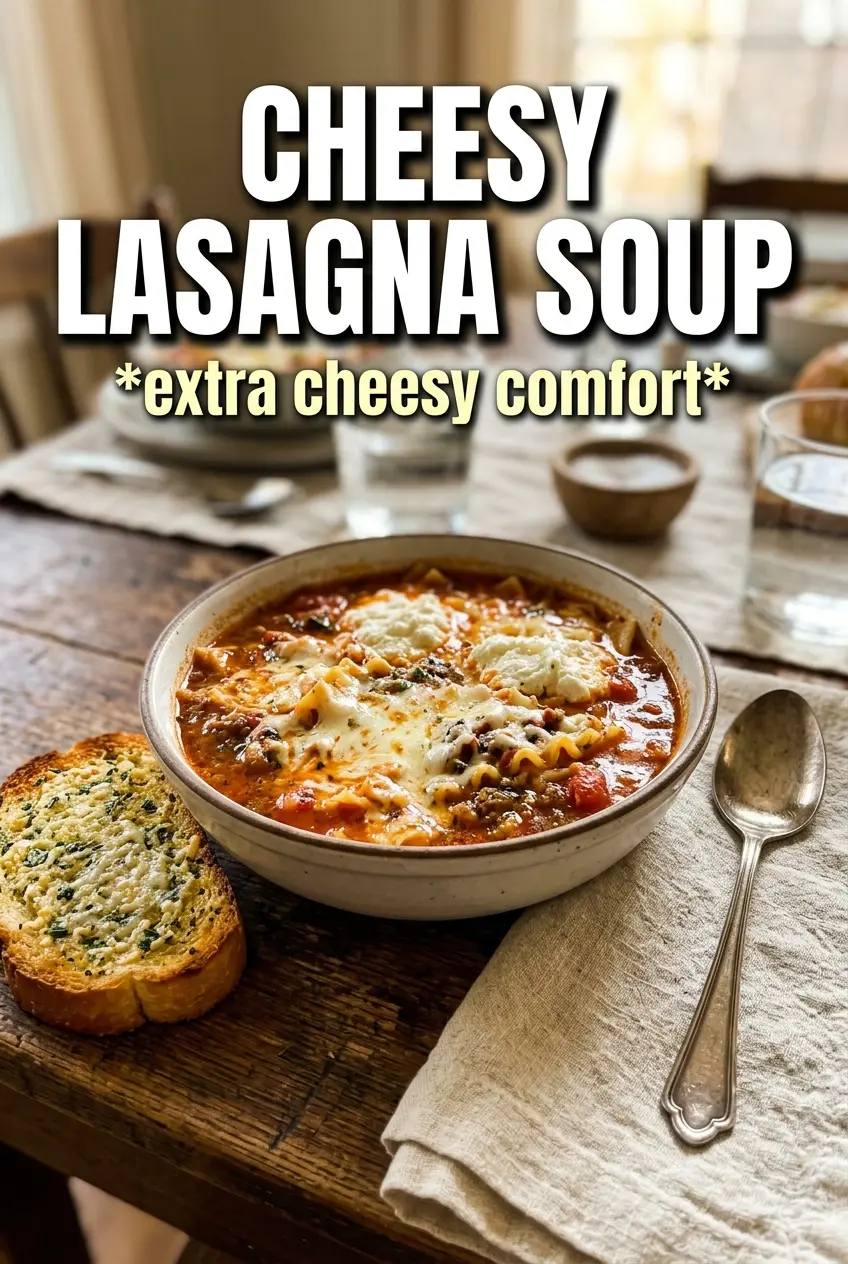
Cheesy Lasagna Soup
Ingredients
Equipment
Method
- Brown Italian sausage in a large pot over medium-high heat, then drain excess fat. Keep it moving so the sausage forms browned crumbles.
- Sauté onion for 4 minutes, until softened, then add garlic and tomato paste and cook for 2 minutes. Stir until fragrant and the tomato paste darkens slightly.
- Add crushed tomatoes, beef broth, Italian seasoning, and red pepper flakes and bring to a boil. Look for rapid bubbles that cover the pot surface.
- Add broken lasagna noodles and simmer for 10-12 minutes, until tender. Continue simmering at a steady, gentle bubble and stir occasionally so noodles don’t stick.
- Remove from heat and stir in cubed cream cheese and half the mozzarella until melted. The soup should turn glossy and thick with no visible cream cheese lumps.
- Season with salt and pepper to taste. Stir well and taste for balance.
- Serve in bowls, then top each with a spoonful of ricotta, a handful of the remaining mozzarella, and a sprinkle of parmesan. Use the toppings while the soup is hot so the cheese softens.
- Garnish with fresh basil. Add it right before serving for bright color and aroma.