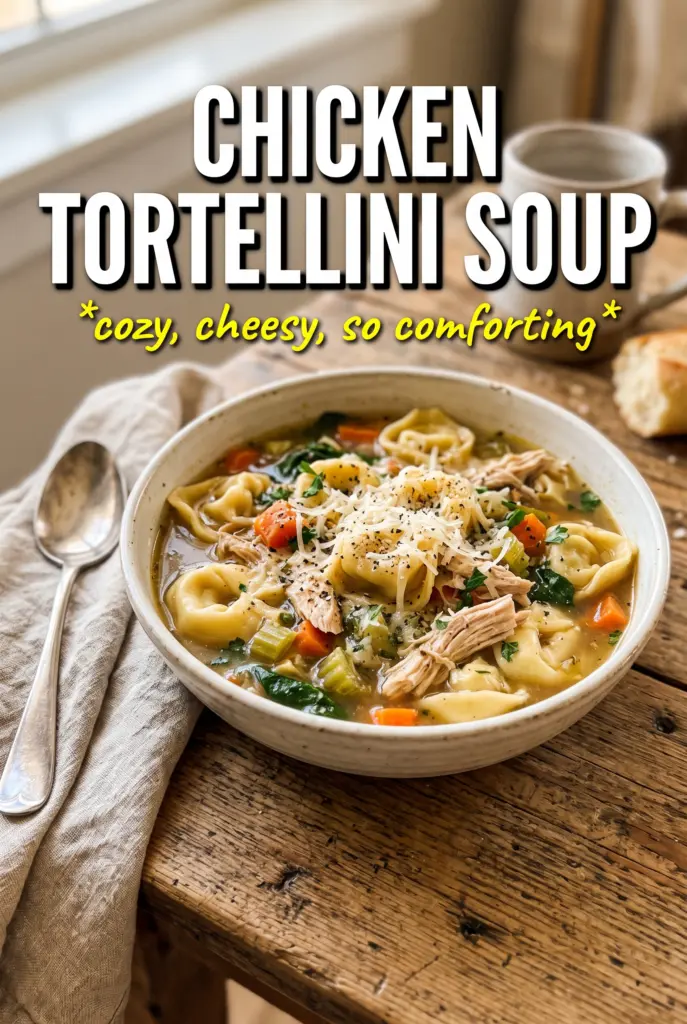
Chicken tortellini soup lands in that perfect middle ground between cozy and quick: a broth that tastes like it simmered all afternoon, tender cheese tortellini that hold their shape, and shredded chicken that makes every spoonful feel complete. The vegetables stay light instead of muddy, and the spinach wilts in at the end so the bowl still looks fresh when it hits the table.
What makes this version work is timing. The tortellini cooks directly in the broth, which gives the soup body without turning it heavy, but it only needs a few minutes or it starts to soften and split. The garlic and herbs bloom in the oil before the broth goes in, which is what keeps the flavor from tasting flat. Finish with parmesan at the table and you get that salty, savory edge that pulls the whole pot together.
If you’ve made chicken noodle soup before, the method here will feel familiar but a little smarter. The notes below explain how to keep the pasta tender, how to keep the broth clear, and what to swap when you want to stretch the pot or make it work with what’s already in the fridge.
The tortellini stayed tender, the broth picked up all the garlic and herb flavor, and the spinach didn’t turn mushy. I made it on a Tuesday and my husband asked for it again the next night.
Save this Chicken Tortellini Soup for the nights when you want a brothy, one-pot dinner with tender pasta and no heavy cream.
The Trick to Keeping Tortellini Tender Instead of Softening Into Mush
The biggest mistake with tortellini soup is treating the pasta like it can hang out in the pot for ages. Refrigerated tortellini cooks fast, and once it crosses that tender point it starts to swell and lose its shape. The broth should be at a real boil when the tortellini goes in, then you drop the heat just enough to keep it moving gently until the centers are just cooked through.
Another thing that helps here is building the broth around the vegetables and herbs before the pasta ever shows up. That gives the soup a clear, savory base instead of a one-note salted broth. If your soup tastes flat, it usually means the seasoning went in too late or the cheese ravioli-style filling never got enough support from the broth.
- Tortellini — Refrigerated cheese tortellini gives you the right texture fast. Frozen tortellini works too, but it usually needs a minute or two longer and can make the broth a little starchier.
- Chicken broth — Use the best broth you can get, since this is the body of the soup. If yours is low-sodium, you get better control over the seasoning at the end.
- Chicken breast — Cooked and shredded chicken keeps the recipe quick. Rotisserie chicken works well here and adds extra savoriness, but shred it fairly small so every spoonful gets some.
- Spinach — Baby spinach is the easiest choice because it wilts fast and stays delicate. If you use chopped kale, add it with the broth so it has time to soften.
What Each Ingredient Is Actually Doing in This Soup

The onion and carrots build a sweet base before anything else goes in. If you rush that first sauté, the soup tastes thinner and the vegetables stay a little sharp. You want the onion translucent and the carrots starting to soften at the edges.
Garlic, Italian seasoning, and dried basil only need a short stay in the hot oil. That quick bloom wakes up the herbs without letting the garlic brown, which would turn the whole pot bitter. Parmesan at serving time matters more than it looks like it should; it gives the soup a salty finish that the broth alone can’t quite match.
Building the Soup in the Right Order
Softening the Vegetables First
Heat the olive oil in a large pot and cook the diced onion and sliced carrots until the onion turns translucent and the carrots begin to lose their raw crunch. This first step gives the broth some sweetness and keeps the vegetables from tasting boiled. If the pot is overcrowded, the vegetables steam instead of sauté, so use enough surface area for them to sit in a thin layer.
Waking Up the Garlic and Herbs
Add the garlic, Italian seasoning, and dried basil and stir for about a minute. The garlic should smell fragrant, not sharp or burnt. If it starts to brown, your heat is too high and the herbs will taste harsh, so pull the pot off the burner for a few seconds if needed.
Cooking the Tortellini to the Center
Pour in the broth and bring it to a boil, then add the tortellini and cook just until tender, usually 4 to 5 minutes. The pasta should float and feel soft at the edges but still hold a little bite in the center. If you keep simmering after that point, the filling can burst and the tortellini gets gummy instead of plump.
Finishing With Chicken and Spinach
Stir in the shredded chicken and spinach at the end and cook only until the spinach wilts and the chicken is heated through. The chicken is already cooked, so this is a warming step, not a long simmer. Taste the broth now and season with salt and pepper, because the parmesan you add at the table will bring even more salt with it.
How to Adapt This for a Bigger Pot or a Different Diet
Make It Gluten-Free
Use gluten-free tortellini if you can find it, but watch it closely because some brands soften faster than wheat pasta. The broth, chicken, and vegetables stay the same, so the main change is in timing. Pull the pot off the heat as soon as the pasta is tender and serve right away.
Stretch It Into a Heartier Dinner
Add an extra cup of broth and another handful of spinach if you want a looser, more generous soup. You can also use a little extra shredded chicken to make the bowls feel fuller without changing the flavor balance. Just keep the tortellini amount steady unless you’re ready to add more broth too, or the soup turns heavy and starchy.
Swap in Rotisserie Chicken
Rotisserie chicken is the fastest shortcut here and it brings a little extra seasoning with it. Pull the skin off and shred the meat into smaller pieces so it blends into the broth instead of sitting in big chunks. Add it near the end just long enough to warm through.
Dairy-Free Serving Style
Skip the parmesan garnish and finish with fresh basil plus a little extra black pepper. The soup still tastes complete because the broth, herbs, chicken, and tortellini carry the meal. If you want a richer finish, a drizzle of good olive oil at the table works better than a dairy-free cheese substitute here.
Storage and Reheating
- Refrigerator: Store for up to 3 days. The tortellini keeps absorbing broth, so expect the soup to thicken as it sits.
- Freezer: It freezes, but the tortellini can soften after thawing. For the best texture, freeze the broth, chicken, and vegetables without the pasta, then cook fresh tortellini when you reheat.
- Reheating: Warm gently on the stove over medium-low heat until hot. Don’t boil it hard or the tortellini will split and the chicken can turn dry.
Answers to the Questions Worth Asking
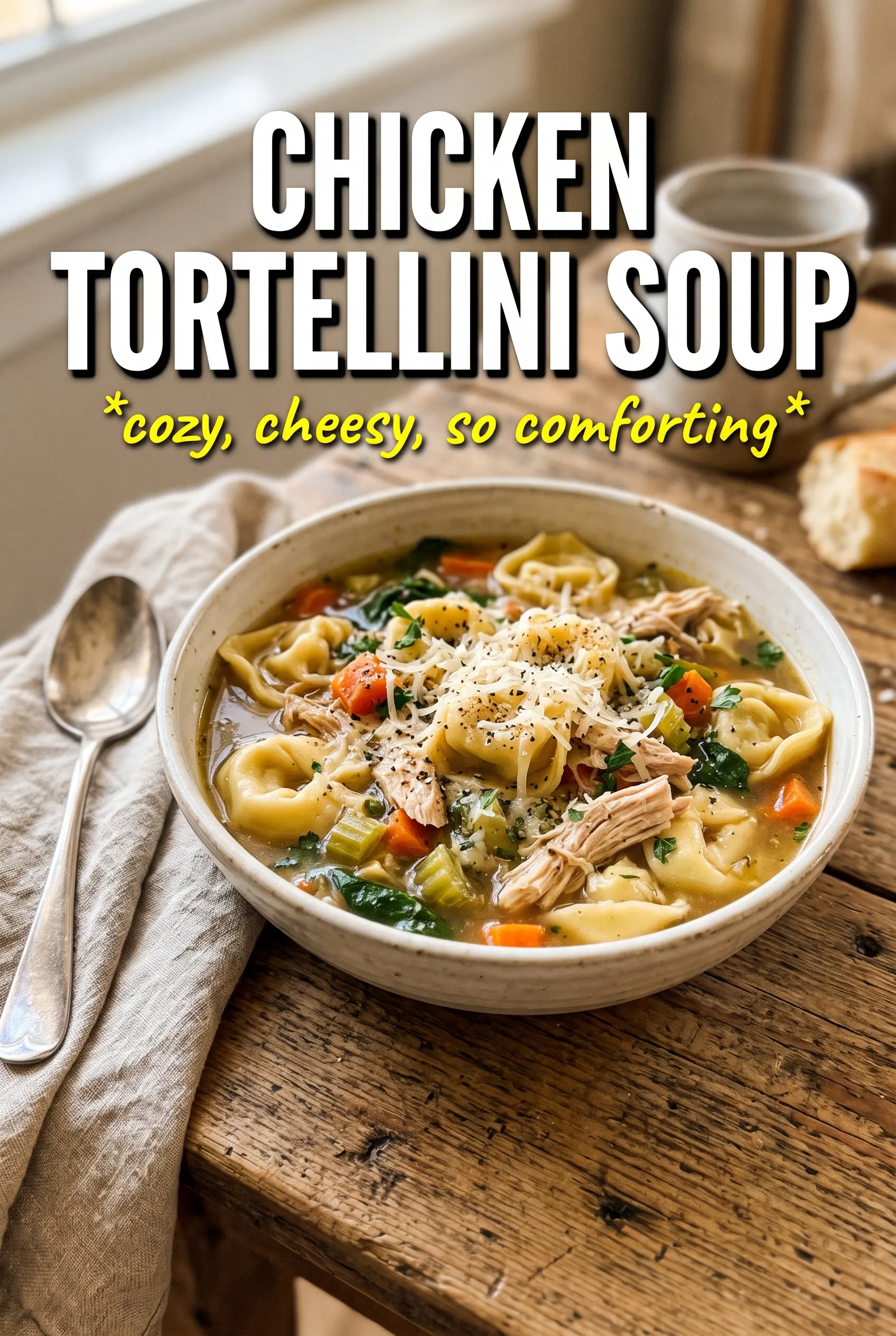
Chicken Tortellini Soup
Ingredients
Equipment
Method
- Heat the olive oil in a large pot over medium heat, then sauté the onion and carrots for 5 minutes until softened and fragrant.
- Add the garlic, Italian seasoning, and dried basil, then cook for 1 minute until the garlic smells aromatic.
- Pour in the chicken broth and bring it to a boil, making sure the liquid bubbles steadily.
- Add the refrigerated cheese tortellini and cook for 4-5 minutes until just tender, stirring once or twice so they cook evenly.
- Stir in the shredded chicken and cook for 2 minutes to warm through.
- Add the baby spinach and cook for 2-3 minutes until wilted and bright green.
- Season with salt and pepper to taste, then serve topped with generous parmesan and fresh basil.