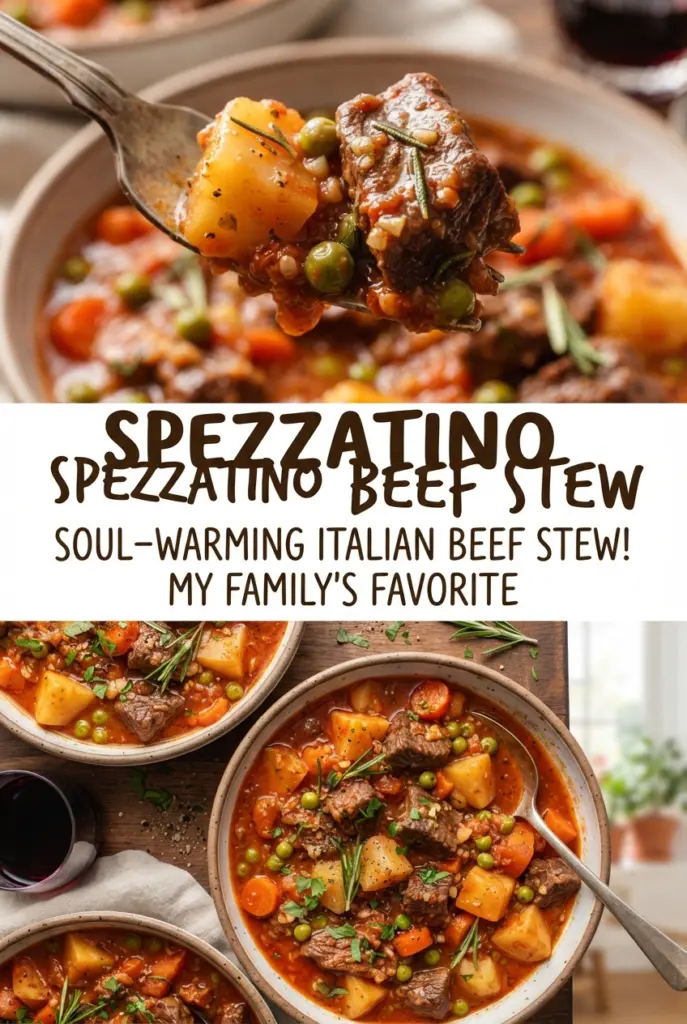
Spezzatino lands in the bowl with deep, winey beef flavor, tender potatoes, and a tomato broth that tastes like it spent all afternoon becoming itself. The beef stays in generous chunks instead of shredding apart, so every spoonful gives you something meaty to bite into, plus soft carrots, sweet peas, and rosemary in the background. It’s the kind of stew that gets even better as it sits on the stove, which is exactly why it earns a regular place in the cold-weather rotation.
What makes this version work is the order of the cooking. The beef gets a light flour coating before browning, which helps the stew thicken naturally later without turning gluey. The wine goes in after the vegetables have softened, and it needs to reduce before the tomatoes and broth join the pan; if you rush that step, the stew can taste flat instead of layered. The potatoes are added later on purpose so they keep their shape and don’t dissolve into the sauce.
Below, I’ve broken down the part that matters most: how to build a stew base that tastes rich instead of watery, plus the swaps that still keep this dish grounded in its Italian character.
The beef stayed tender and the sauce thickened up beautifully without needing extra cornstarch. I loved that the potatoes held their shape and the rosemary flavor came through without taking over.
Save this spezzatino for the night you want tender beef, rosemary, and potatoes simmered in a rich red wine tomato sauce.
The Browning Step That Gives Spezzatino Its Depth
The biggest mistake with beef stew is crowding the pan and rushing the sear. If the meat goes in all at once, it steams, the flour turns pasty, and the pot never develops the browned bits that make the sauce taste finished. Brown the beef in batches and leave it alone until you see a real crust; that dark fond on the bottom is what the wine loosens into the stew.
After the aromatics soften, the wine needs a minute to reduce before anything else goes in. That step burns off the sharp edge and concentrates the flavor so the final broth tastes round instead of thin. The stew should move from a wet sauté to a deeper, tighter sauce before the tomatoes, broth, and herbs join in.
What Each Ingredient Is Actually Doing In This Stew
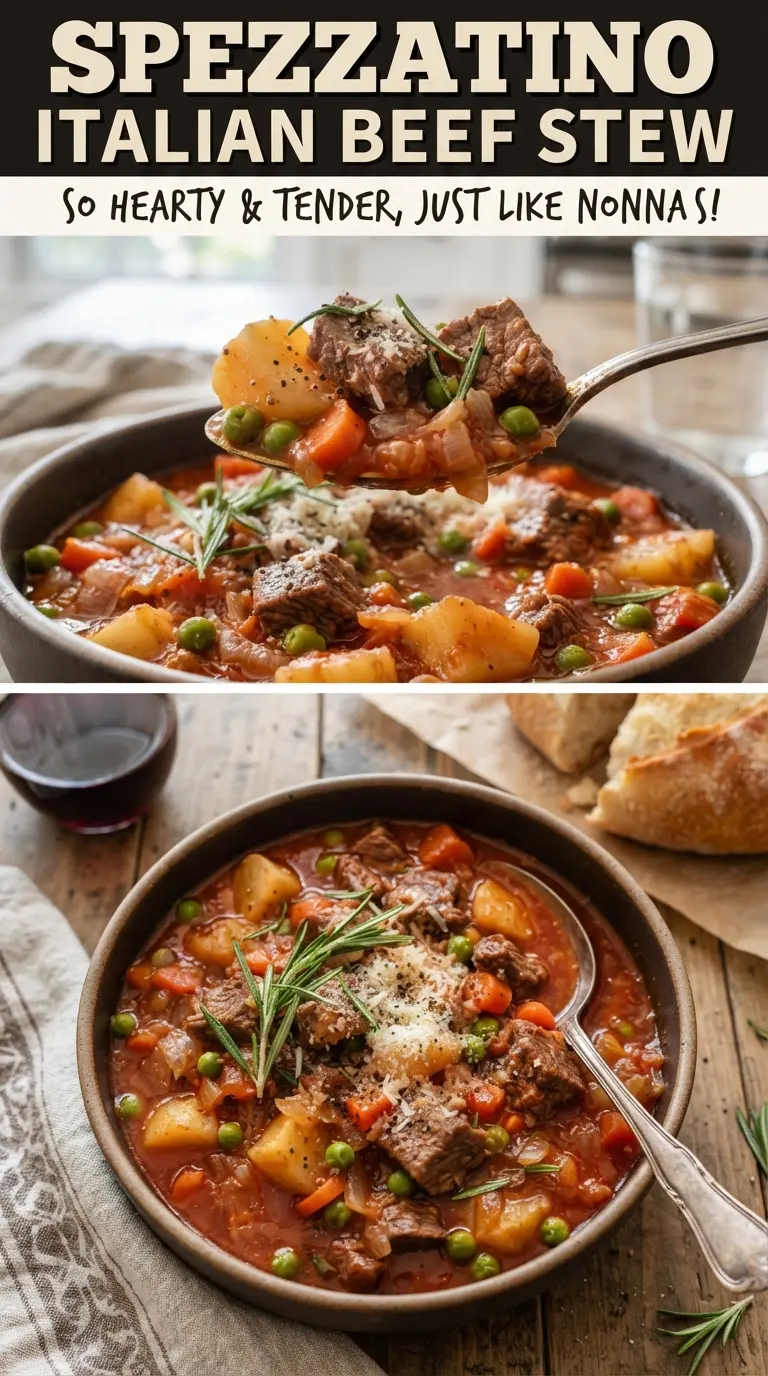
- Beef chuck — This cut has enough fat and connective tissue to stay juicy through a long simmer. Lean stew meat dries out before the potatoes are tender, so chuck is the right choice here.
- Flour — A light dusting helps the beef brown and gives the sauce a little body as it cooks. If you skip it, the stew will still work, but the broth stays looser and less velvety.
- Dry red wine — This adds the deep, savory base that makes spezzatino taste layered. Use something drinkable, not sweet, because the wine reduces and its flaws concentrate too.
- Crushed tomatoes — They bring acidity and a soft tomato backbone without making the stew taste like pasta sauce. Tomato puree will make the sauce thicker; diced tomatoes leave it a bit chunkier.
- Potatoes — Adding them later keeps them intact and lets them soak up the sauce instead of breaking apart. Waxy potatoes hold their shape best, but Yukon Golds work beautifully too.
- Peas — They go in at the end for color and a little sweetness. Frozen peas are the right move because fresh peas are not worth the extra effort in a stew like this.
Building the Stew So the Sauce Stays Rich
Seasoning and Browning the Beef
Pat the beef dry, season it well, then toss it with the flour until it looks lightly coated, not dusty. The olive oil should shimmer before the meat hits the pan; if it smokes hard, the outside will scorch before the inside gets a chance to brown. Work in batches and turn the pieces only after the first side releases cleanly.
Softening the Aromatics
Cook the onion, carrot, and celery until they stop looking raw and start turning sweet and translucent at the edges. This is the base of the stew, and if these vegetables stay undercooked, the sauce tastes harsh and unfinished. Add the garlic for just a minute at the end so it smells fragrant, not bitter.
Reducing the Wine
Pour the wine into the hot pot and scrape every browned bit from the bottom. Let it bubble until it looks about half gone and smells less sharp; that reduction is what keeps the stew from tasting boozy. If you add the tomatoes too early, the wine never loses that harsh edge.
Long Simmer, Late Potatoes
Once the tomatoes, broth, rosemary, bay leaves, and beef go in, the stew needs a gentle simmer, not a hard boil. A few lazy bubbles are enough; aggressive heat tightens the meat and breaks the sauce. Add the potatoes only for the last stretch so they turn tender without collapsing into the broth.
The Final Five Minutes
Stir in the peas at the end so they stay bright and a little sweet. Pull out the rosemary sprigs and bay leaves before serving, then taste the sauce and adjust the salt only if it needs it after the long simmer. The finished stew should coat a spoon lightly and leave you with tender beef, intact potatoes, and a sauce that clings.
How To Adapt Spezzatino When You Need A Different Pan Or Pantry
Gluten-Free Spezzatino
Swap the all-purpose flour for a gluten-free flour blend or skip it entirely and thicken the sauce by simmering uncovered for the last 15 to 20 minutes. The stew will still be rich, but the body will come from reduction instead of the light coating on the beef.
No-Wine Version That Still Tastes Deep
Replace the wine with an equal amount of beef broth plus 1 tablespoon of red wine vinegar. You’ll lose some of the roundness that wine brings, but the vinegar restores enough brightness to keep the stew from tasting heavy.
Make It Dairy-Free and Naturally Fitting
This stew is already dairy-free as written, so there’s nothing to change there. Serve it with crusty bread or polenta if you want something to soak up the sauce without changing the base recipe.
Make It Ahead For Better Flavor
Spezzatino tastes even better the next day after the beef and herbs have had time to settle into the sauce. Cook it completely, cool it fast, and reheat it gently so the potatoes keep their shape instead of turning mealy.
Storage and Reheating
- Refrigerator: Store in an airtight container for up to 4 days. The sauce thickens as it chills, and the potatoes soften a bit more.
- Freezer: It freezes well for up to 3 months, but the potatoes may get softer after thawing. For the best texture, freeze only until just tender and cool completely before packing.
- Reheating: Warm it low and slow on the stove with a splash of broth if needed. A hard boil will split the sauce and can make the beef go stringy.
Answers to the Questions Worth Asking
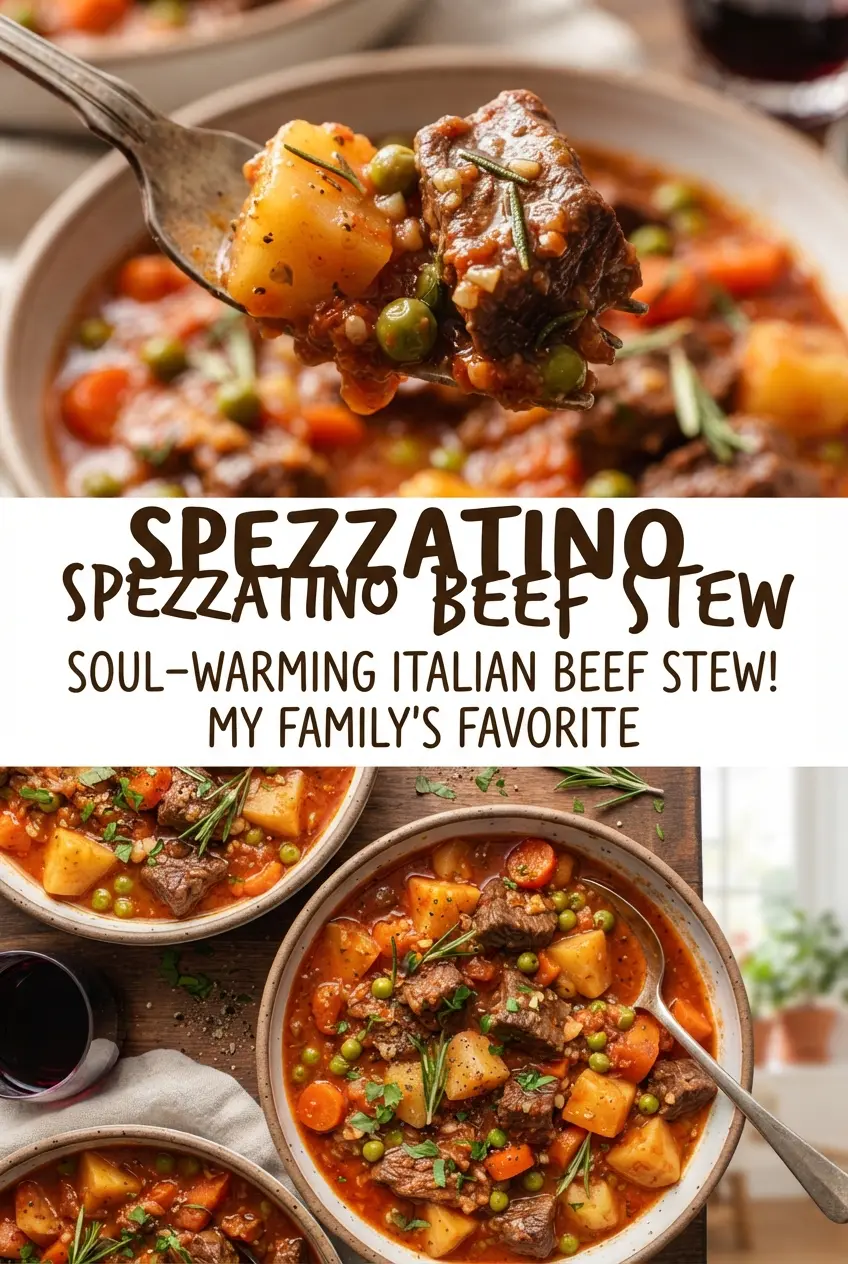
Spezzatino Italian Beef Stew
Ingredients
Equipment
Method
- Season beef with salt and black pepper, then dust with all-purpose flour. Heat olive oil in a Dutch oven over medium-high and brown beef in batches until deeply browned on the outside, transferring to a plate between batches.
- Keep the browned bits in the pot for flavor while you finish the remaining batches. Return all beef to the pot once browned.
- Add onion, carrot, and celery to the pot and cook for 8 minutes until soft. Stir in garlic for 1 minute to soften and become fragrant.
- Pour in dry red wine and simmer until reduced by half, scraping the bottom to loosen browned fond. The mixture should look slightly thickened and darker.
- Add crushed tomatoes, beef broth, rosemary, bay leaves, and the browned beef. Cover and simmer at 190°F to 200°F (gentle simmer) for 1 1/2 hours, stirring once or twice so nothing sticks.
- Add cubed potatoes and simmer uncovered at 190°F to 200°F for 40 minutes until tender. Stir to keep the stew evenly cooked.
- Stir in frozen peas and simmer for the last 5 minutes until bright green and heated through. Taste and adjust seasoning with salt and black pepper if needed.
- Remove rosemary and bay leaves and discard. Serve the spezzatino hot with crusty bread.