
Guinness beef stew settles into the kind of deep, glossy richness that makes a second bowl feel like the right decision. The beef turns spoon-tender, the broth takes on that dark stout backbone, and the vegetables hold enough shape to give every bite some contrast. It tastes slow-cooked in the best possible way because it is, but the flavor is built carefully enough that nothing turns muddy or flat.
The key is browning the beef in batches and giving the tomato paste a minute in the pan before the liquid goes in. That step wakes up the sweetness in the paste and keeps the stew from tasting like boiled beef with beer in it. Guinness adds bitterness and body, but the broth, Worcestershire, and brown sugar round it out so the finished pot tastes balanced instead of sharp.
Below, you’ll find the small details that matter most: how to keep the gravy thick and glossy, when to add the root vegetables so they don’t collapse, and what to do if you want to make this ahead for an even better result the next day.
The beef got meltingly tender and the broth turned dark and silky after that long simmer. I added the potatoes at the right time and they held their shape instead of falling apart.
Save this Guinness beef stew for the night you want a dark, silky broth and spoon-tender beef without a lot of fuss.
The Sear That Gives This Stew Its Depth
The difference between a stew that tastes flat and one that tastes layered starts with the beef. Browning the chuck in batches keeps the pan hot enough to build a dark crust instead of steaming the meat, and those browned bits become the base of the sauce once the Guinness goes in. If the pan looks crowded, stop and split the batch. Crowding is the fastest way to lose that deep, roasted flavor.
The other place people rush is the tomato paste. Let it cook for a minute with the onions and garlic before the stout goes in. That brief step pulls out the paste’s sweetness and removes the raw edge, which matters because stout already brings bitterness. If the base tastes balanced before the long simmer starts, the finished stew lands rich instead of harsh.
What the Beer, Broth, and Root Vegetables Are Each Doing Here
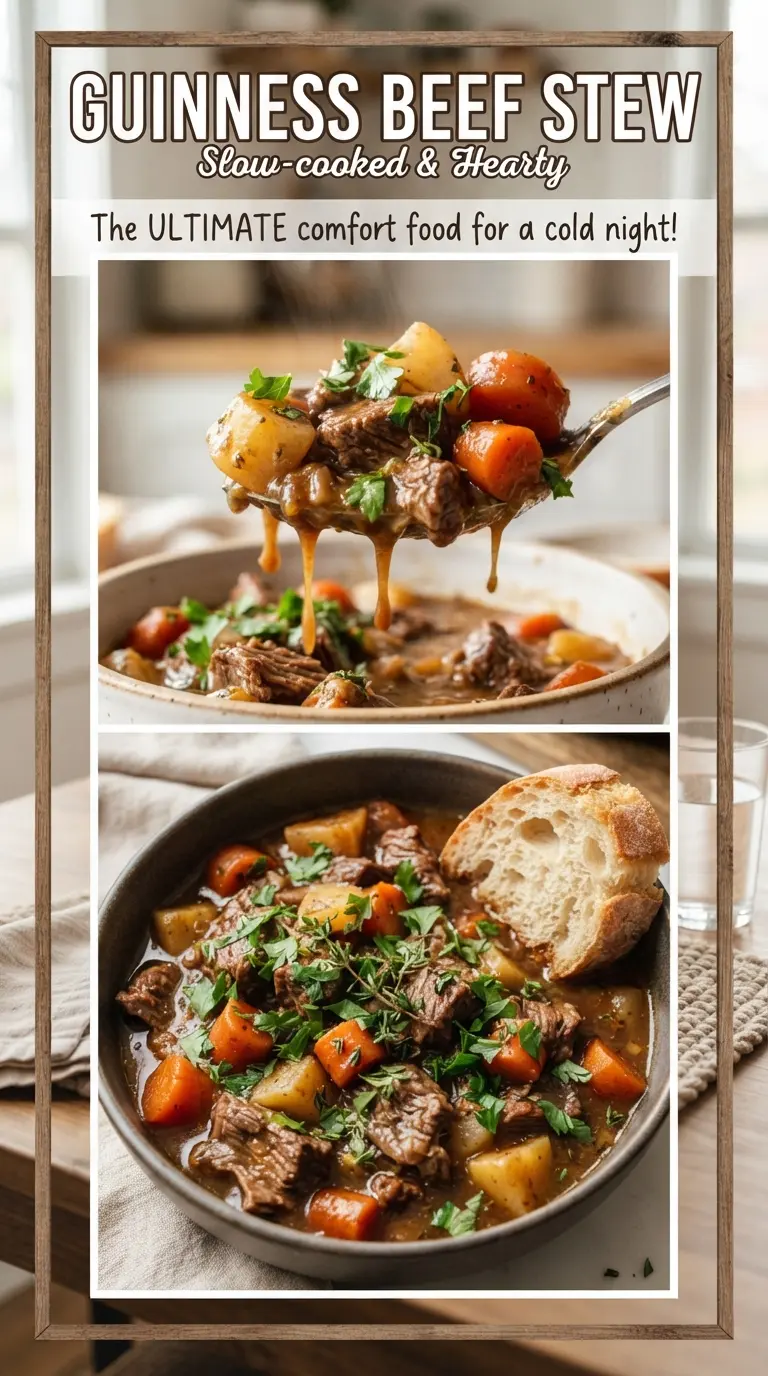
- Guinness stout — This is what gives the stew its deep color and malty backbone. Use the real stout here; a lighter beer won’t bring the same body or bitterness. If you need to swap, reach for another dry stout, not a pale lager.
- Beef chuck — Chuck has enough fat and connective tissue to turn tender over a long simmer. Lean beef dries out before the broth has time to do its work. Cut the pieces evenly so they finish at the same time.
- Parsnips and carrots — These add sweetness that balances the beer’s bitterness. Slice them thick so they keep their shape during the final simmer. Thin slices disappear into the broth.
- Potatoes — Add them late or they’ll break down and cloud the stew. Yukon Golds hold their shape better than russets if you want cleaner chunks. If you use russets, expect a thicker, starchier broth.
- Flour — Tossing the beef with flour before browning gives the stew a little natural body. It won’t make the broth gummy if you keep the amount modest and simmer gently. For a gluten-free version, use a 1:1 gluten-free flour blend and brown the meat just the same.
Building the Pot So the Broth Turns Rich, Not Muddy
Seasoning and Browning the Beef
Coat the beef with salt, pepper, and flour, then brown it in hot oil in small batches. You’re looking for a dark crust on the outside, not cooked-through meat; the center will finish in the simmer. If the pieces release a lot of liquid, the pan isn’t hot enough or it’s too full. Pull them out as soon as they’re well browned so the fond stays in the pot.
Softening the Onions and Toasting the Tomato Paste
Once the beef is out, cook the onions until they’re translucent and starting to pick up color at the edges. Add the garlic and tomato paste for one minute and stir constantly so the garlic doesn’t scorch. The paste should darken a shade and smell sweet, not raw. That small extra minute changes the whole base of the stew.
De-glazing with Guinness
Pour in the Guinness and scrape the bottom of the pot until all the browned bits dissolve into the liquid. This is where the flavor gets deep and layered, and it’s also where you can rescue any stuck-on flour or meat from the sear. Let the beer come to a gentle simmer before adding the broth so the sharpest edge cooks off a little. If you dump everything in too fast, the bottom bits won’t fully lift.
Long Simmer, Late Vegetables
Return the beef, cover, and simmer gently for about two hours until the meat starts to give when pressed with a spoon. The heat should stay low enough that you see only an occasional bubble; a hard boil tightens the meat instead of softening it. Add the carrots, parsnips, and potatoes only after the beef is almost there, then simmer until the vegetables are tender and the broth has thickened around them. Finish with parsley once the bay leaves come out so the top tastes fresh against the rich stew.
How to Adapt This for a Bigger Pot or a Different Pantry
Gluten-Free Guinness Stew
Swap the all-purpose flour for a good 1:1 gluten-free blend. You still get a little body from the coating on the beef, but don’t expect the exact same silkiness as wheat flour. Let the stew simmer uncovered for the last 15 minutes if it needs to tighten up.
No Guinness on Hand
Another dry stout works best, but in a pinch you can use a dark beer with a roasty edge. Avoid anything very hoppy or sweet, because bitter hops and sweetness both throw off the balance. If the substitute beer tastes sharper, add the brown sugar a little at a time rather than all at once.
Make It Heartier with Mushrooms
Brown sliced cremini mushrooms after the beef and before the onions, then continue with the recipe as written. They deepen the savory note and make the stew feel even more substantial. This version leans earthy and still keeps the same stout richness.
Storage and Reheating
- Refrigerator: Keep in a sealed container for up to 4 days. The flavor gets deeper overnight, and the broth thickens as it chills.
- Freezer: This freezes well for up to 3 months. Cool it completely first, then freeze in portions so the potatoes don’t suffer from repeated thawing and reheating.
- Reheating: Warm it gently on the stove over low heat, stirring now and then. A hard boil can break the potatoes and make the beef feel stringy, so go slow until it’s hot all the way through.
Answers to the Questions Worth Asking
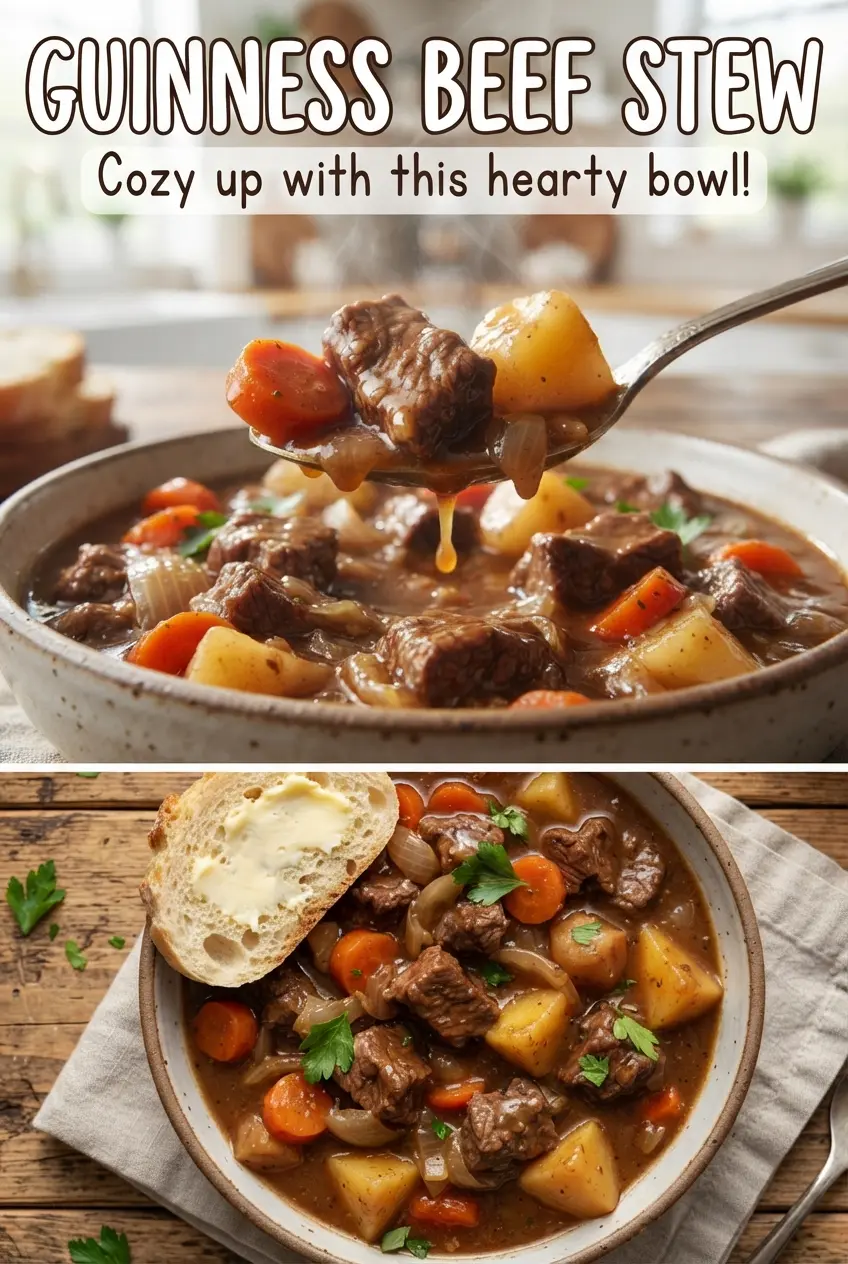
Guinness Beef Stew
Ingredients
Equipment
Method
- Season the beef chuck cubes with salt and black pepper, then toss with the all-purpose flour until lightly coated. Heat the vegetable oil in a Dutch oven until shimmering.
- Brown the beef in batches in the hot oil, turning so all sides develop deep color. Transfer browned beef to a plate while you repeat with the remaining batches.
- Add the chopped onions to the Dutch oven and cook for 5 minutes, stirring until softened. Add the minced garlic and tomato paste and cook for 1 minute, then scrape up any browned bits.
- Pour in the Guinness stout and scrape the bottom of the pot to dissolve the fond. Add the beef broth, Worcestershire sauce, brown sugar, dried thyme, and bay leaves.
- Return the browned beef to the pot, cover, and simmer gently until the beef is tender, about 2 hours. Keep the surface at a gentle bubbling so the gravy stays glossy.
- Add the sliced carrots, sliced parsnips, and cubed potatoes to the stew. Simmer for 45-60 minutes until the vegetables are tender and the potatoes are cooked through.
- Remove the bay leaves from the stew. Sprinkle with chopped fresh parsley, then serve hot while the gravy clings to the beef and vegetables.


