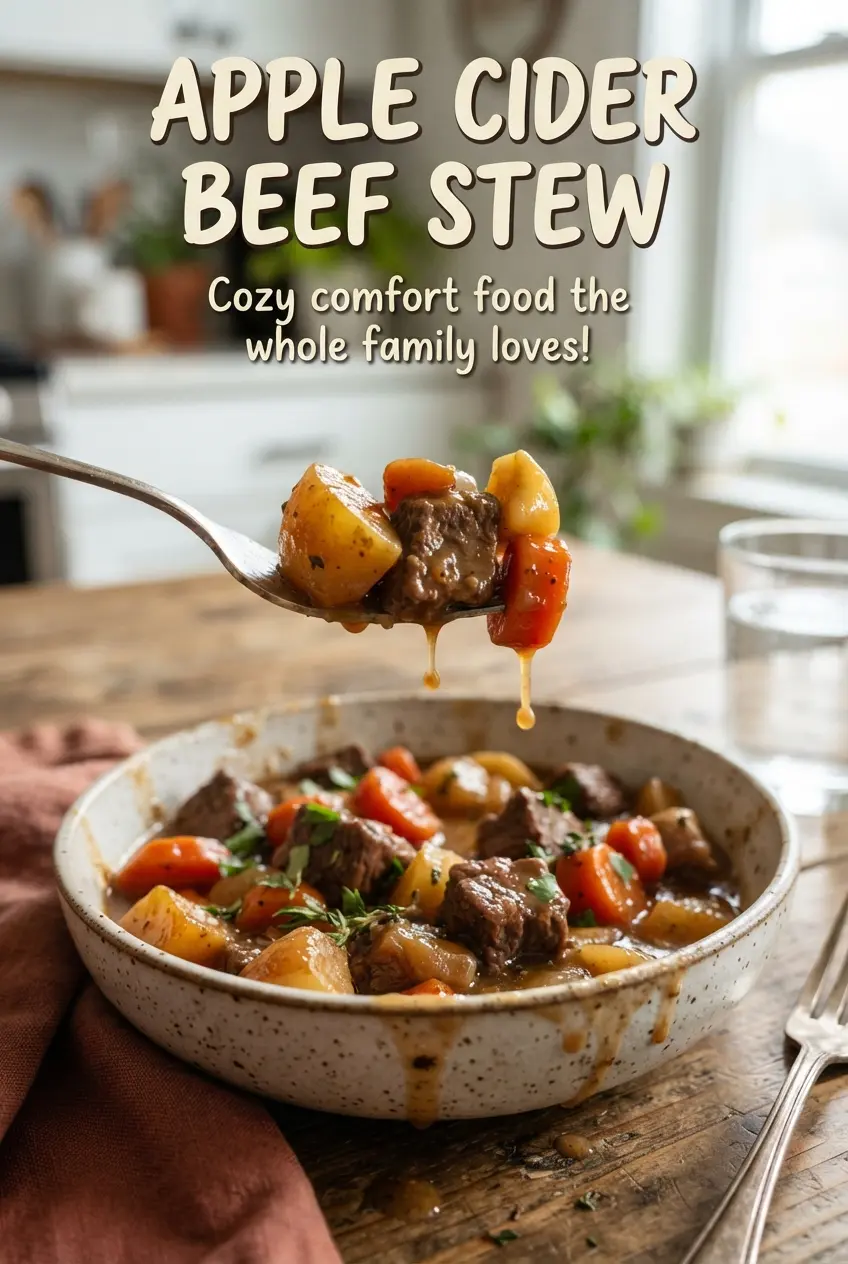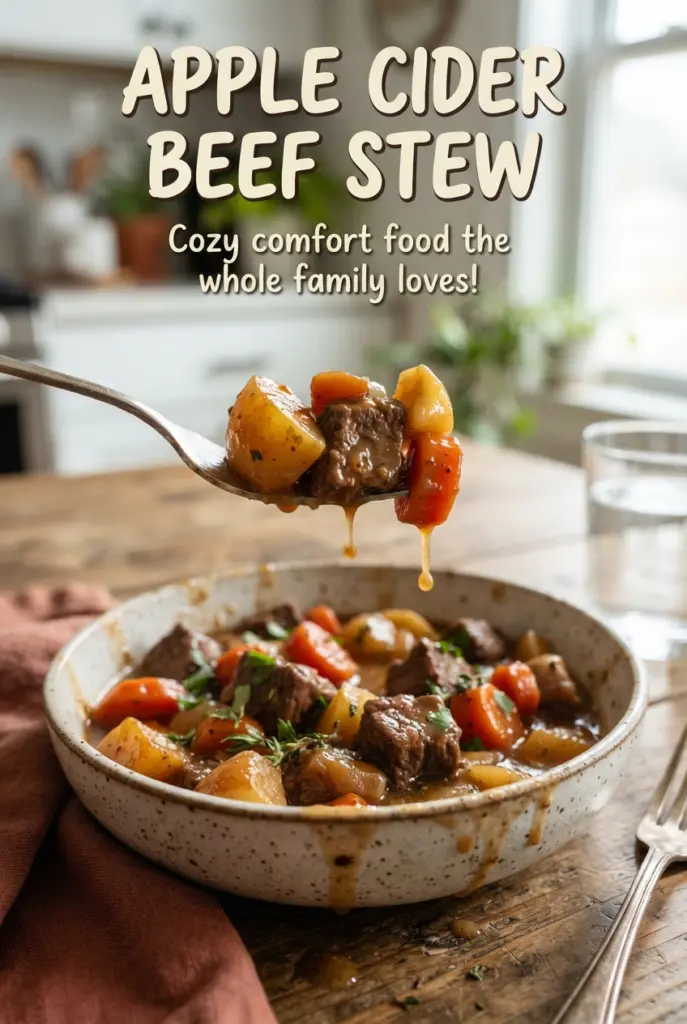
Apple cider beef stew lands with a deep, savory richness that still tastes bright at the finish. The beef turns spoon-tender, the broth cooks down into a glossy gravy, and the apples soften just enough to give each bite a little sweetness without taking over. It’s the kind of stew that tastes like it simmered all day, because it basically did, but the work is straightforward and the payoff is big.
The cider does more than add sweetness. It helps loosen the browned bits from the pot, then reduces with beef broth, tomato paste, thyme, cinnamon, and vinegar into a sauce that tastes rounded instead of sharp. Sweet potatoes and carrots hold their shape well, while the apples go in near the end so they stay distinct and don’t melt into the stew. Browning the beef in batches is worth the extra few minutes because that crust is what gives the broth its depth.
Below, you’ll find the small timing choices that keep the stew balanced, plus a few swaps if you need to work with what’s in the kitchen. The apple timing matters here, and there’s a reason the vinegar goes in with the broth instead of at the end.
The beef got fork-tender and the cider gravy reduced into the perfect glossy sauce. I was worried the apples would turn mushy, but they stayed intact and added just the right amount of sweetness.
Love the sweet-savory balance in this Apple Cider Beef Stew? Save it to Pinterest for a cozy pot of cider-braised beef with apples and thyme.
The Trick to Keeping the Cider Gravy Deep, Not Sweet
Apple cider can push a stew in the wrong direction if it never gets the chance to cook down. Here, it hits the pot after the onion and tomato paste have already picked up color, then it gets deglazed with beef broth and simmered long enough to lose the raw apple edge. That leaves you with a gravy that tastes like beef first, cider second, and never like dessert.
The other thing that matters is when the apples go in. Add them too early and they disappear; add them at the end and they stay shaped, a little soft at the edges, with enough texture to stand up to the beef. The vinegar sounds small, but it keeps the broth from tasting flat once the sweet potato and cider have simmered together.
- Beef chuck — Chuck is the right cut because its connective tissue breaks down during the long simmer, giving you tender pieces instead of dry cubes. Stew meat can work, but it’s often mixed cuts and the texture is less predictable.
- Apple cider — Use fresh cider if you can. It brings a round apple flavor and enough natural sugar to make the broth taste full, but it still cooks into balance. Hard cider changes the profile completely, so don’t swap it unless you want a drier, more alcoholic edge.
- Apple cider vinegar — This is what keeps the stew from reading heavy. If you only have red wine vinegar, use a little less since it’s sharper; the goal is lift, not brightness that takes over.
- Sweet potatoes and apples — Both go in later because they cook fast compared with the beef. Firm apples like Honeycrisp or Granny Smith hold their shape best, while softer varieties will dissolve into the gravy.
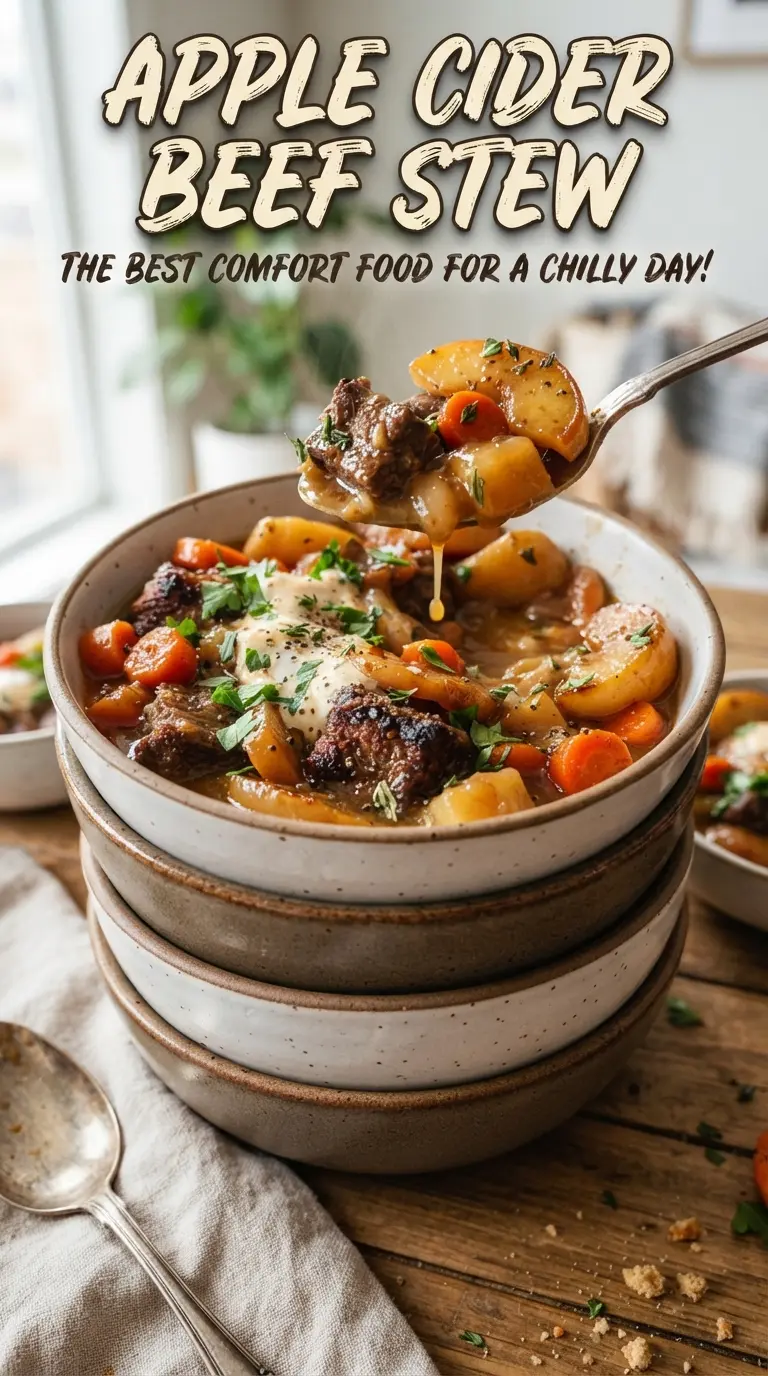
What Each Ingredient Is Actually Doing in This Recipe
- Primary ingredient (the star) — Quality matters most. Choose the best you can find.
- Cooking medium (oil, butter, or broth) — This carries flavors and prevents dryness.
- Seasonings (salt, pepper, spices, herbs) — Layer flavors so nothing overpowers. Build depth gradually.
- Aromatics (garlic, onion, herbs) — Cook with fat to bloom flavors. Become the foundation.
- Supporting ingredients — Complement the main ingredient without overpowering it.
- Sauce or liquid (if applicable) — Brings flavors together. Balance richness with acid.
- Acid (lemon, vinegar, wine, or other) — Brightens and prevents flat-tasting results.
- Final finish (garnish, glaze, or sauce) — Prevents one-dimensional taste and adds visual appeal.
Building the Stew in the Right Order
Brown the Beef in Quiet Batches
Tossing the beef with flour before it hits the pan helps it develop a light crust and gives the broth a little body later on. Brown it in batches so the pot stays hot; if you crowd it, the meat steams and you lose that dark fond on the bottom. You’re looking for deep color on the edges, not full cooking at this stage.
Cook Down the Onion Base
Once the beef comes out, the onion goes into the same pot to pick up all those browned bits. Let it soften and take on a little color before adding the garlic and tomato paste, because tomato paste needs direct heat to lose its raw taste and turn brick red. If the bottom looks like it’s getting too dark, a splash of cider will loosen it right away.
Simmer Until the Beef Gives
After the cider, broth, vinegar, thyme, cinnamon, bay leaves, and beef go back in, cover the pot and keep the simmer gentle. You want small bubbles, not a hard boil, or the beef can tighten up before it gets tender. At around 1 1/2 hours, the meat should start yielding when pressed with a spoon or fork.
Add the Vegetables in Stages
Sweet potatoes and carrots need enough time to soften without collapsing, so they go in after the beef has already started to tenderize. Fifteen minutes after they’re added, stir in the apples and finish the simmer. The apples should be just tender at the edges, not broken down, and the stew should look thick enough to coat the back of a spoon.
Three Ways to Adjust the Pot Without Losing What Makes It Good
Make It Gluten-Free
Swap the all-purpose flour for a gluten-free flour blend or skip the coating and thicken the stew a little longer at the end. The flour helps the broth cling to the beef, so if you leave it out, expect a slightly lighter texture unless you simmer uncovered for the last 10 to 15 minutes.
Use Pears Instead of Apples
Firm pears can stand in for the apples if that’s what you have, especially Bosc or Anjou. They’ll bring a softer sweetness and less tartness, so the stew will taste a little rounder and less bright at the finish.
Turn It into a Bigger-Batch Make-Ahead Stew
This stew scales up well, but use a wider pot so the beef still browns instead of steaming. The flavor actually improves overnight because the cider, thyme, and cinnamon settle into the broth. Add the apples during reheating if you want them to stay firmer.
Storage and Reheating
- Refrigerator: Store for up to 4 days. The broth thickens as it chills, and the apples soften a little more overnight.
- Freezer: Freezes well for up to 3 months, though the apples and sweet potatoes will be softer after thawing. Cool completely, portion into airtight containers, and leave a little headspace for expansion.
- Reheating: Warm gently on the stove over low heat with a splash of broth or water. A hard boil can tighten the beef and make the vegetables fall apart, so keep it at a lazy simmer until hot.