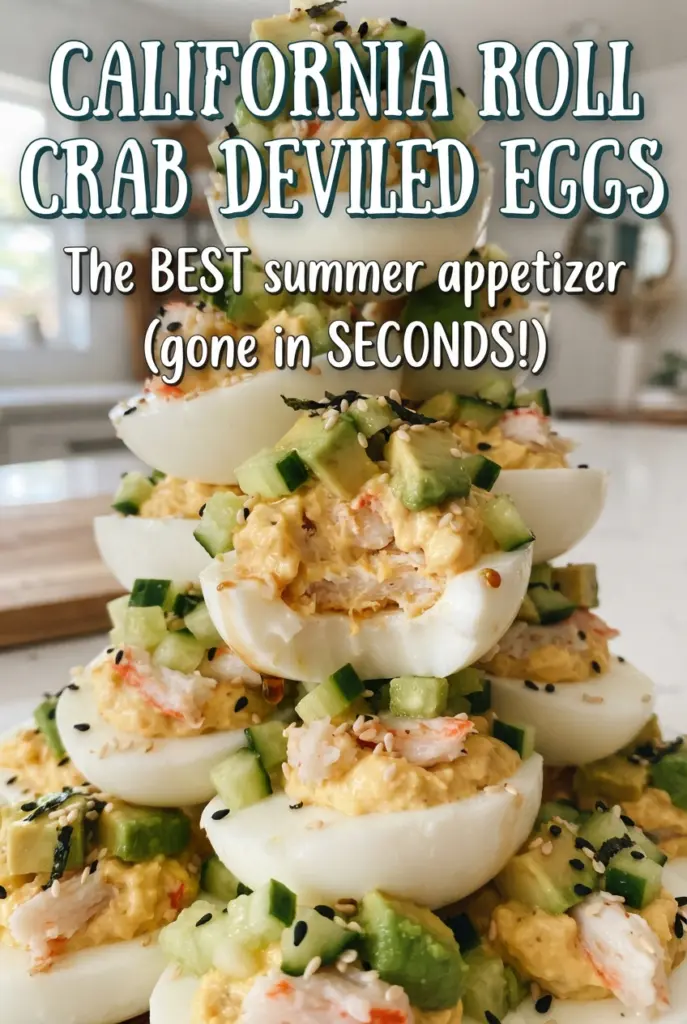
California Roll Crab Deviled Eggs bring the best parts of a sushi roll into a bite-sized appetizer: creamy yolk filling, sweet crab, cool cucumber, buttery avocado, and just enough soy-sesame depth to keep each bite from tasting flat. The eggs stay familiar, but the topping turns them into something sharper, fresher, and a little more playful than standard deviled eggs. They disappear fast because they taste like a party snack that took more effort than it did.
The trick is keeping the filling smooth and balanced before the toppings go on. Japanese mayonnaise gives the yolk mixture a richer, silkier texture than regular mayo, while rice vinegar and soy sauce keep it from tasting heavy. A little wasabi in the filling is optional, but even a small amount helps echo the clean heat you expect from California roll flavors. The crab gets folded through part of the filling and then piled on top so every egg has both a creamy base and a fresh, textural finish.
Below, you’ll find the detail that matters most for getting a tidy, polished look on the platter, plus the small adjustments that make these work with real pantry ingredients.
The filling was creamy and the crab stayed distinct instead of turning into paste. I loved the little crunch from the cucumber and the spicy mayo on top made them taste like sushi in deviled egg form.
Love these California Roll Crab Deviled Eggs? Save them for your next appetizer spread when you want sushi-inspired flavor in one creamy, crunchy bite.
The Creamiest Part Is Also the Easiest to Overdo
The filling works because the yolks stay smooth without turning loose or watery. Japanese mayonnaise is thicker and tangier than standard mayo, so it gives the base a plush texture that holds its shape in the egg whites. Rice vinegar keeps the yolks bright, and soy sauce adds depth without making the mixture taste salty in a blunt way.
The bigger mistake with deviled eggs is overmixing the filling until it turns greasy. Stop mashing as soon as the mixture looks uniform and spreadable. If it seems stiff, add a small extra spoonful of Japanese mayo instead of trying to force it smooth with more aggressive mixing.
What Each Ingredient Is Actually Doing in These Eggs
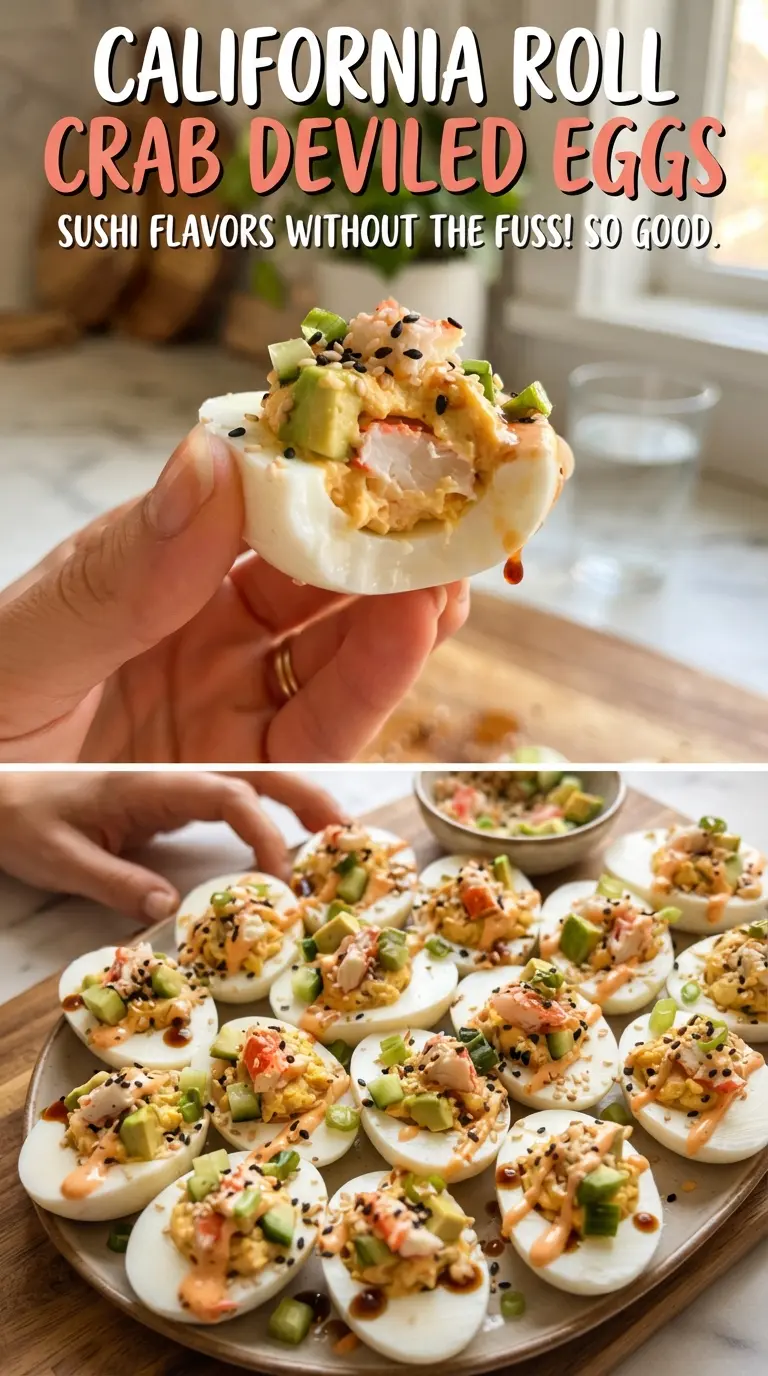
- Japanese mayonnaise — This is the ingredient that gives the filling its signature richness. Regular mayo works in a pinch, but it tastes flatter and less velvety. If you need to substitute, use regular mayonnaise and add a tiny pinch of sugar plus a few drops of rice vinegar to mimic the balance.
- Rice vinegar — It sharpens the yolks without making them taste sour. Lemon juice can step in if needed, but it reads brighter and less sushi-like. Use it sparingly; too much will thin the filling and make the eggs taste sharp instead of creamy.
- Crab meat or imitation crab — Real crab gives the cleanest seafood flavor and the softest texture. Imitation crab is a perfectly workable shortcut here because it chops neatly and blends well with the other toppings. Chop it fine enough that it sits neatly on the egg without tumbling off the sides.
- Cucumber and avocado — These are not decoration; they keep the bites from feeling heavy. Dice both very small so they settle into the topping instead of slipping off. If the avocado is too firm, it won’t eat well; if it’s overripe, it will smear into the crab.
- Spicy mayo, sesame seeds, and nori — These finish the eggs the way a sushi roll finish would. The spicy mayo adds heat and shine, sesame seeds add a light crunch, and thin nori strips bring the briny note that ties everything together. Don’t skip the nori if you want the most accurate California roll flavor.
Building the Layers So the Eggs Eat Like Sushi, Not Salad
Cooking and Chilling the Eggs
Start the eggs in cold water, bring them just to a boil, then cover and take the pot off the heat for the full 12 minutes. That steady heat gives you set yolks without a chalky gray ring. The ice bath matters because it stops the cooking fast and makes the shells easier to peel. If the whites tear while peeling, the eggs were still too warm or too fresh.
Mashing the Yolks into a Smooth Base
Mix the yolks with Japanese mayo, rice vinegar, soy sauce, and wasabi until the filling turns creamy and pale. Press hard enough to break up every lump, but stop before the mixture starts looking glossy and loose. That’s the line between smooth filling and one that slides around on the platter. Taste before you fill the whites, because soy sauce varies and can push the seasoning too far if you pour by instinct.
Folding in the Crab and Topping for Texture
Stir half the crab into the yolk mixture so the filling gets little pockets of seafood in every bite. Spoon or pipe the mixture into the egg whites, then top with the remaining crab, cucumber, and avocado. Add the spicy mayo after the toppings are in place so the drizzle stays visible instead of disappearing into the filling. Finish with sesame seeds and nori right before serving; those toppings lose their best texture if they sit too long.
How to Adapt These Without Losing the California Roll Feel
Use imitation crab for a budget-friendly version
Imitation crab works well here because it chops cleanly and gives you the sweet, familiar California roll flavor without the higher cost of real crab. Just chop it finely so the topping sits neatly on the eggs. The texture will be slightly firmer and more uniform, which actually helps if you’re making these ahead for a platter.
Make it dairy-free without changing the texture
This recipe is already dairy-free as written, so there’s nothing to remove. Just check your mayonnaise and sriracha label if you’re cooking for someone with an allergy concern, since brands vary. The finished eggs stay just as creamy because the richness comes from the yolks and mayo, not dairy.
Skip the wasabi for a milder appetizer
Leave the wasabi out if you want the eggs to lean more creamy and less sharp. The spicy mayo on top still gives you enough heat to keep the flavor interesting. Without wasabi, the crab and cucumber come through a little more clearly, which works well for a mixed crowd.
Storage and Reheating
- Refrigerator: Store covered for up to 2 days. The avocado will soften and darken, so these are best the day they’re assembled.
- Freezer: Don’t freeze them. The egg whites turn rubbery and the avocado and mayo toppings separate once thawed.
- Reheating: These are meant to be served cold. If they’ve been refrigerated, let them sit out just long enough to take the chill off, but don’t leave them at room temperature for more than 2 hours.
Answers to the Questions Worth Asking
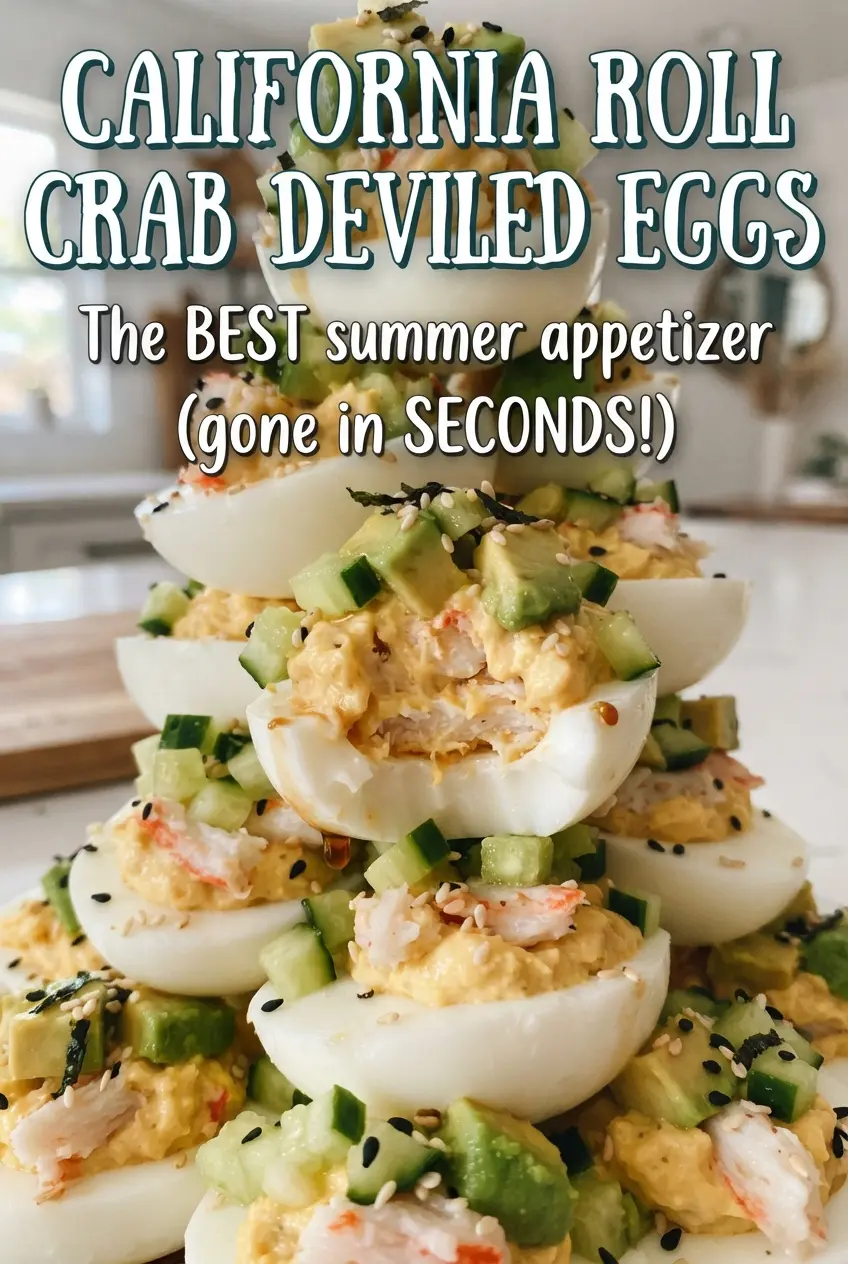
California Roll Crab Deviled Eggs
Ingredients
Equipment
Method
- Place 12 large eggs in a pot, cover with cold water, and bring to a boil over high heat. Cover the pot, remove from heat, and let the eggs stand at a consistent hot temperature for 12 minutes, until the whites are set.
- Transfer the eggs to an ice bath and chill for 10 minutes. This quick cooling step makes the shells easier to peel and helps the centers set.
- Peel the eggs and halve them lengthwise. Arrange the halves so the yolks are exposed for mashing.
- Mash the yolks with Japanese mayonnaise, rice vinegar, soy sauce, and wasabi paste until smooth. Keep mashing until the mixture looks creamy with no yolk lumps.
- Fold in half of the crab so it’s evenly distributed through the yolk mixture. Stop when the crab is incorporated but still has a visible texture.
- Spoon the crab-yolk filling into the egg white halves. Fill each egg half generously for a high-contrast top.
- Top each egg with the remaining crab, cucumber, and diced avocado. Add them in small piles so each bite includes creamy, crunchy, and fresh pieces.
- Mix sriracha with mayonnaise, then drizzle the spicy mayo over the deviled eggs. Finish with toasted sesame seeds and thin nori strips for a California roll look.