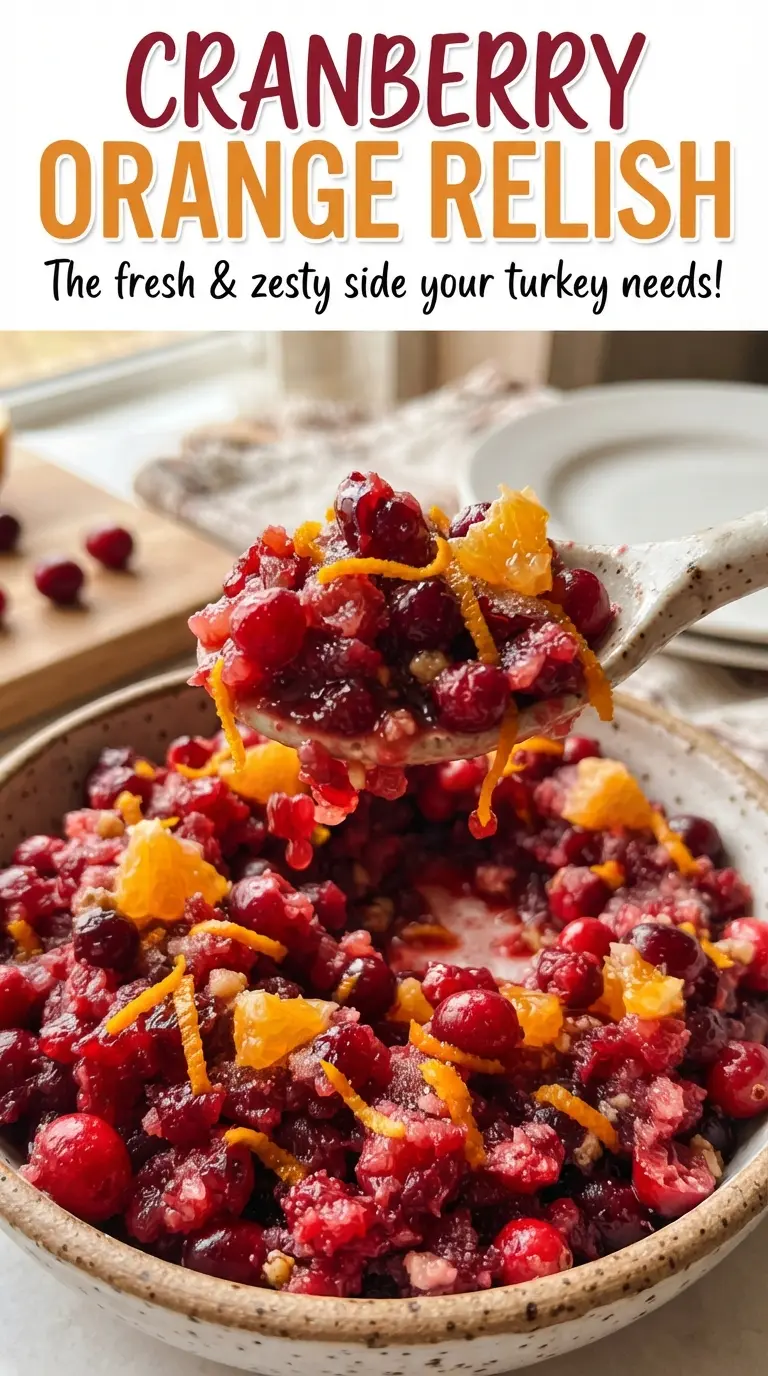
Bright cranberry orange relish has a way of waking up a plate in one spoonful. It’s sharp, sweet, citrusy, and just chunky enough to feel fresh instead of jammy. The cranberries keep their snap, the orange brings perfume and juiciness, and the sugar tames the edges without flattening the whole thing.
The trick is stopping the processor before the mixture turns to paste. You want finely chopped fruit with some texture left, because the chill time lets the sugar draw out juice and mellow the cranberries on its own. Using the orange with the peel on adds a little bitterness and a lot of aroma, which keeps the relish from tasting one-note.
Below you’ll find the one step that matters most for the texture, plus a few ways to adjust the sweetness and make the flavor lean brighter or softer depending on what you’re serving it with.
I thought I’d over-processed it, but after chilling the cranberry orange relish, the texture turned out perfect — bright, chunky, and not watery at all. My dad kept sneaking spoonfuls straight from the fridge.
Save this bright cranberry orange relish for turkey dinners, ham, and any plate that needs a sharp, juicy bite.
The Chill Time Is Where the Flavor Settles In
Fresh cranberry relish tastes aggressive right after mixing. The sugar hasn’t had time to draw out the juices, and the orange can feel sharp on top of that. After a few hours in the fridge, the mixture loosens, the cranberries soften at the edges, and the orange flavor spreads through the whole bowl instead of sitting on top.
The other thing that changes is the texture. If you serve it immediately, it can look dry and chopped. Overnight, it becomes glossy and spoonable without losing the little bits of cranberry that make it interesting. That’s why this recipe tastes more balanced on day two than it does the minute you finish it.
What the Orange Peel Is Doing Here
- Fresh cranberries — These bring the sharp, clean tartness that makes relish taste alive. Frozen cranberries work too; use them straight from the freezer so they chop evenly and don’t leak too much juice while processing.
- Navel orange, unpeeled — The peel is part of the flavor, not just a shortcut. It adds aroma and a little bitterness that keeps the relish from tasting flat. Remove every seed and any thick white pithy patches that look extra tough, but keep the peel on the rest.
- Sugar — This does more than sweeten. It softens the cranberries as the relish chills and rounds out the citrus peel. If you want a tarter relish, start with a little less and taste after chilling before adding more.
- Orange liqueur or orange juice — Liqueur gives a deeper orange note and a slightly rounder finish, while juice keeps it alcohol-free and lighter. Either works; the liqueur just leaves a more polished edge.
- Salt — A pinch is enough to wake up the fruit and keep the sweetness from taking over. It won’t read salty, but you’ll notice when it’s missing.
How to Keep It Chunky Instead of Turning It to Jam
Pulse, Don’t Puree
Start with short pulses in the food processor and stop often to check the texture. You want tiny, even pieces, not a wet puree with no structure left. If the mixture starts gathering into a paste around the blade, you’ve gone too far; scrape it down and move on before it gets smoother from the residual spinning.
Let the Sugar Do the Work
Once the fruit is chopped, stir in the sugar, orange liqueur or juice, and salt right away. The mixture will look dry at first, then it will get juicier as it sits. That resting time is what keeps the relish bright instead of muddy, so don’t rush it by serving straight from the bowl.
Chill Before You Judge It
Four hours is the minimum, but overnight is better. The flavors settle, the sugar dissolves more completely, and the cranberries lose that hard, raw edge. Stir it well before serving because the juices collect at the bottom and the top can look less finished than it actually is.
How to Adapt the Sweetness, the Citrus, or the Make-Ahead Plan
Less-Sweet Cranberry Relish
Drop the sugar by a few tablespoons if you like a sharper relish, especially for serving with rich meats. The texture will still soften as it chills, but the finished flavor will stay brighter and less candy-like.
Alcohol-Free Version
Use orange juice instead of orange liqueur. You’ll get a cleaner citrus note and a little extra juice in the bowl, which makes the relish taste lighter and a touch fresher.
Make It Ahead for a Crowd
This is a great make-ahead side dish because the flavor improves after a night in the fridge. Stir it again before serving, then garnish with mint right at the end so the herbs stay bright and don’t wilt into the fruit.
Storage and Reheating
- Refrigerator: Store covered for up to 5 days. It gets softer and a little juicier as it sits, which is normal.
- Freezer: It freezes well for about 2 months, but the texture softens after thawing. Thaw in the refrigerator and stir well before serving.
- Reheating: No reheating needed. Serve it cold or cool, and don’t warm it on the stove or the fruit will lose the fresh, punchy texture that makes it work.
Answers to the Questions Worth Asking

Cranberry Orange Relish
Ingredients
Equipment
Method
- Pulse the fresh cranberries and the orange chunks in a food processor until finely chopped but not pureed, about 20–30 pulses, stopping to scrape down the sides as needed. The mixture should look finely chopped with visible cranberry pieces, not smooth.
- Transfer the chopped cranberry-orange mixture to a bowl and stir in the sugar, orange liqueur or orange juice, and salt until the sugar looks evenly distributed. The mixture should look glossy and evenly speckled.
- Cover and chill in the refrigerator for at least 4 hours or overnight. The relish should thicken slightly and the flavors should taste more blended after chilling.
- Stir well before serving to re-mix any juice that has separated. Garnish with fresh mint right before serving for visible green flecks and a fresh aroma.