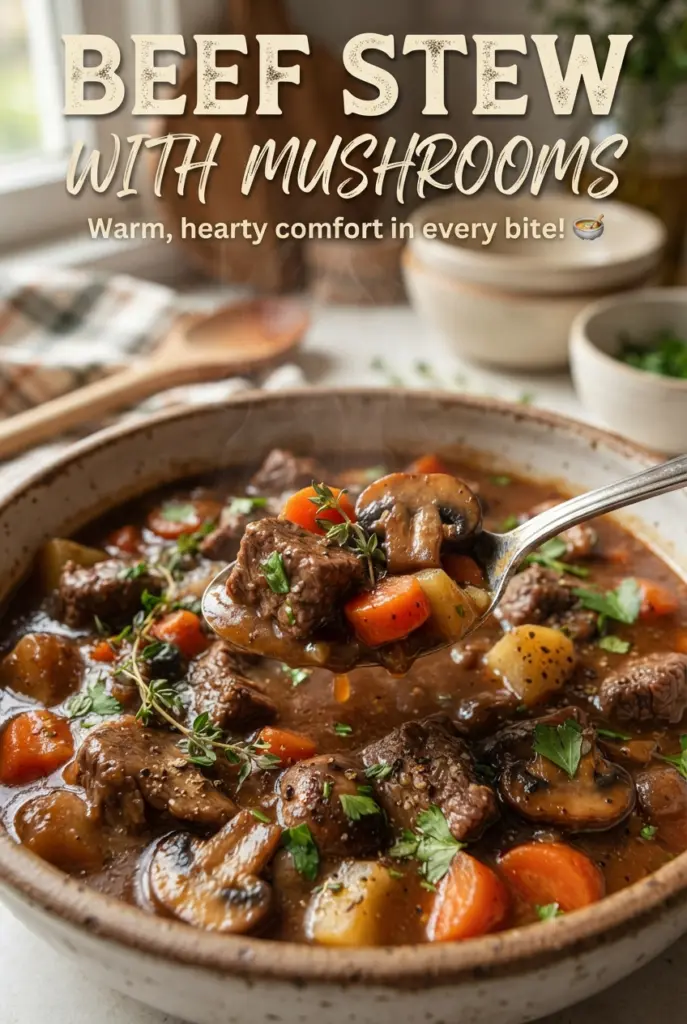
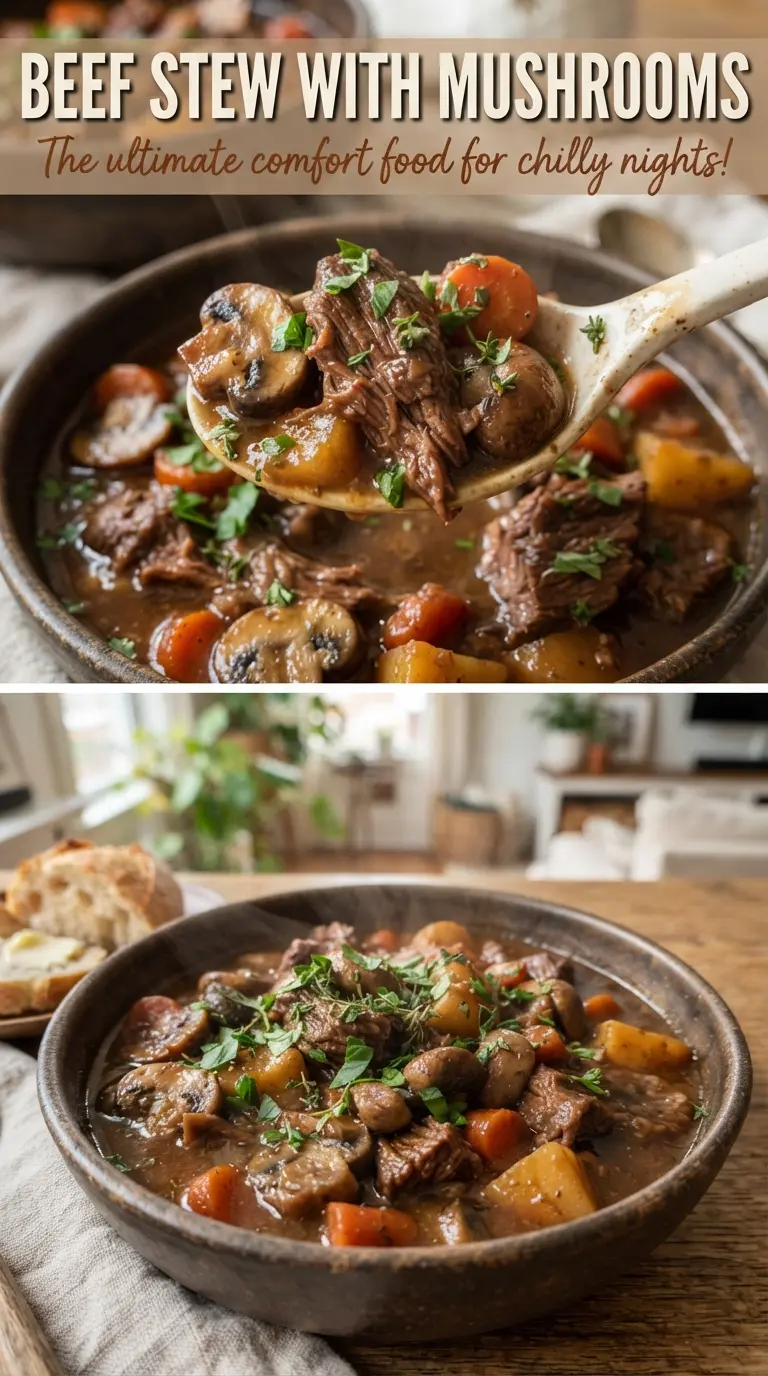
Beef stew with mushrooms earns its place in the rotation when you want deep, slow-cooked flavor without needing to fuss over it all afternoon. The broth turns rich and savory, the beef softens until it pulls apart with a fork, and the mushrooms bring an earthy depth that makes the whole pot taste fuller than a standard beef stew.
What makes this version work is the order. The mushrooms are browned first so they keep their meaty texture instead of disappearing into the gravy, and the beef gets tossed in flour before searing, which helps build body in the sauce later. A little red wine and tomato paste add backbone, while soy sauce quietly boosts the savory notes without making the stew taste like soy sauce.
Below, I’ve included the browning detail that matters most, plus a few swaps and storage notes for the nights you want to stretch one pot into several meals.
The mushrooms stayed browned and meaty, and the gravy thickened up beautifully after the flour on the beef worked its magic. My husband went back for a second bowl before I’d even sat down.
Save this beef stew with mushrooms for the nights when you want rich gravy, browned mushrooms, and fork-tender beef in one Dutch oven.
The Browning That Gives This Stew Its Depth
The biggest mistake with beef stew is crowding the pan and expecting the oven to fix it later. It won’t. If the beef or mushrooms steam, you lose the browned bits that make the gravy taste dark and savory instead of flat. Browning them in separate batches gives you a better crust and keeps the mushrooms from turning soft and waterlogged.
Flouring the beef before it hits the pan does two jobs here: it helps the surface brown, and it gives the stew a little body once the liquid goes in. Don’t dump the flour into the pot after everything is already simmering, because that’s how you get raw flour taste or little lumps that never fully dissolve. The broth should look slightly thickened by the end, with a glossy spoon-coating finish.
What Each Ingredient Is Actually Doing in This Recipe
- Primary ingredient (the star) — Quality matters most. Choose the best you can find.
- Cooking medium (oil, butter, or broth) — This carries flavors and prevents dryness.
- Seasonings (salt, pepper, spices, herbs) — Layer flavors so nothing overpowers. Build depth gradually.
- Aromatics (garlic, onion, herbs) — Cook with fat to bloom flavors. Become the foundation.
- Supporting ingredients — Complement the main ingredient without overpowering it.
- Sauce or liquid (if applicable) — Brings flavors together. Balance richness with acid.
- Acid (lemon, vinegar, wine, or other) — Brightens and prevents flat-tasting results.
- Final finish (garnish, glaze, or sauce) — Prevents one-dimensional taste and adds visual appeal.
What Each Ingredient Is Actually Doing in the Pot
- Beef chuck — This cut needs long, slow cooking, but that’s exactly why it works. The connective tissue breaks down into a silky texture that lean cuts can’t match. Cut it into even pieces so it softens at the same rate.
- Cremini mushrooms — These bring a deep, woodsy flavor and hold their shape better than white button mushrooms. Browning them first keeps them from sinking into the stew and turning dull. If you only have white mushrooms, use them, but expect a lighter flavor.
- Dry red wine — Wine adds acidity and complexity, and it helps loosen the browned bits from the pan. Use something you’d drink, not cooking wine. If you skip it, add a splash of extra broth with a teaspoon of vinegar for some of that lift back.
- Tomato paste and soy sauce — Tomato paste builds color and a subtle sweetness, while soy sauce boosts savoriness without reading as Asian or salty. Together, they make the broth taste like it simmered for much longer than it did.
- Potatoes and carrots — These go in later so they stay intact. Add them too early and they’ll break down before the beef is tender, which muddies the stew instead of giving you distinct spoonfuls of each ingredient.
Building the Stew in the Right Order
Brown the Mushrooms First
Cook the mushrooms in butter and a little oil until they’ve released their moisture and the edges are deep gold. They should sound like they’re frying, not boiling. If they still look pale and wet, keep going; underbrowned mushrooms disappear into the stew and lose the texture that makes this version stand out.
Sear the Beef in Batches
Toss the beef with flour, salt, and pepper, then sear it in a single layer. The flour will look a little dusty at first, but it should turn into a browned coating on the surface. If the pot gets crowded, the cubes will gray out instead of crusting, and that missing browning shows up later as a weaker gravy.
Cook Down the Aromatics
Once the onion goes in, scrape up the browned bits from the bottom of the pot as it softens. Add the garlic and tomato paste just long enough to smell them bloom and darken slightly. If the tomato paste sits in the pan too long, it can scorch, so keep it moving and add the wine as soon as it looks brick-red and glossy.
Slow Simmer Until the Beef Yields
After the broth, soy sauce, thyme, bay leaves, and beef go in, keep the pot at a gentle simmer with the lid on. You want small bubbles, not a hard boil. A rough boil tightens the meat and clouds the broth, while a slow simmer gives you tender beef and a clean, rich gravy.
Add the Vegetables at the End
Potatoes, carrots, and the browned mushrooms go in after the beef has already had time to soften. That timing keeps the vegetables intact and lets the mushrooms keep their browned edges. Cook until the potatoes yield easily to a fork and the carrots are tender but not collapsing.
How to Adapt This Stew Without Losing the Good Part
Make It Gluten-Free
Swap the all-purpose flour for a gluten-free flour blend that’s meant for thickening, or skip the flour and reduce the finished stew a little longer. The texture won’t be quite as velvety, but you’ll still get a rich broth if you brown the beef well and let the liquid simmer uncovered for a few minutes at the end.
No Wine, Still Deep Flavor
Use an extra half cup of beef broth plus 1 teaspoon red wine vinegar or apple cider vinegar. You’ll lose a little of the wine’s roundness, but the vinegar keeps the stew from tasting heavy and flat.
Make It Dairy-Free
Use all olive oil instead of the butter for the mushrooms. You’ll lose a little of the round, buttery edge, but the mushrooms will still brown well if you give them enough time in the pan.
Storage and Reheating
- Refrigerator: Store for up to 4 days. The broth thickens as it chills, and the potatoes soften a bit more overnight.
- Freezer: It freezes well for up to 3 months, though the potatoes can turn slightly softer after thawing. Cool it completely first and freeze in airtight containers.
- Reheating: Warm it gently on the stovetop over low heat with a splash of broth if needed. A hard boil can break the potatoes down and make the beef seem stringy.
Questions I Get Asked About This Recipe
Beef Stew with Mushrooms
Ingredients
Equipment
Method
- In a Dutch oven, melt the butter with 1 tablespoon of the olive oil. Brown the quartered cremini mushrooms for 8 minutes over medium-high heat until golden, then transfer to a plate (keep the browned bits in the pot).
- Season the beef chuck cubes with salt and black pepper, then toss with the flour until coated. Brown the beef in batches in the remaining 2 tablespoons olive oil over medium-high heat until browned on all sides.
- In the same Dutch oven, cook the diced onion over medium heat for 4 minutes until softened. Add the minced garlic and tomato paste for 1 minute, then deglaze with the red wine, scraping up any browned residue.
- Add the beef broth, soy sauce, dried thyme, bay leaves, and browned beef, then cover the Dutch oven. Simmer for 1 3/4 hours until the beef is tender, keeping a steady gentle bubble.
- Uncover and add the cubed potatoes, sliced carrots, and the browned mushrooms back to the pot. Simmer for 45-60 minutes until the potatoes and carrots are tender and the gravy looks thickened and glossy.
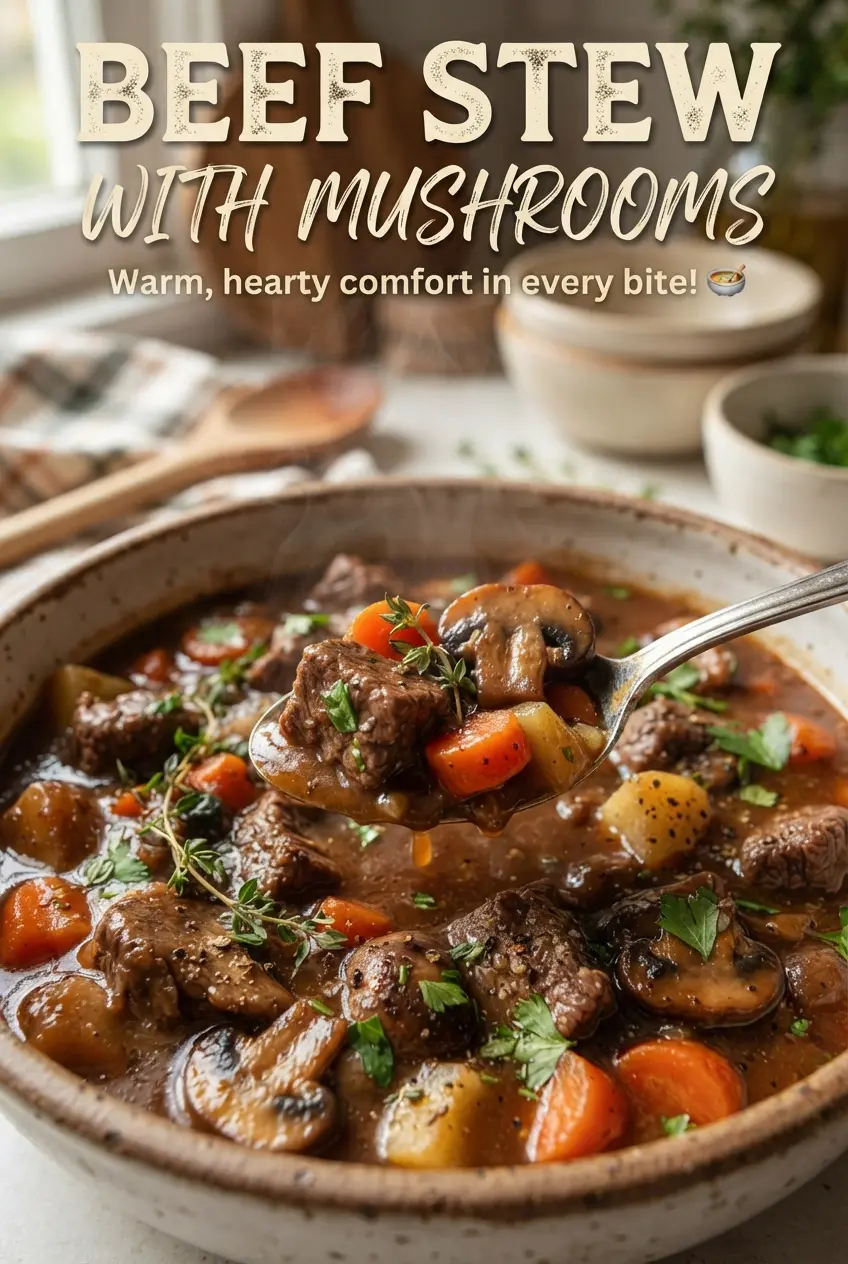
- Remove the bay leaves and serve the stew hot. Spoon the stew into bowls so you can see the beef, mushrooms, carrots, and potatoes coated in the rich gravy.