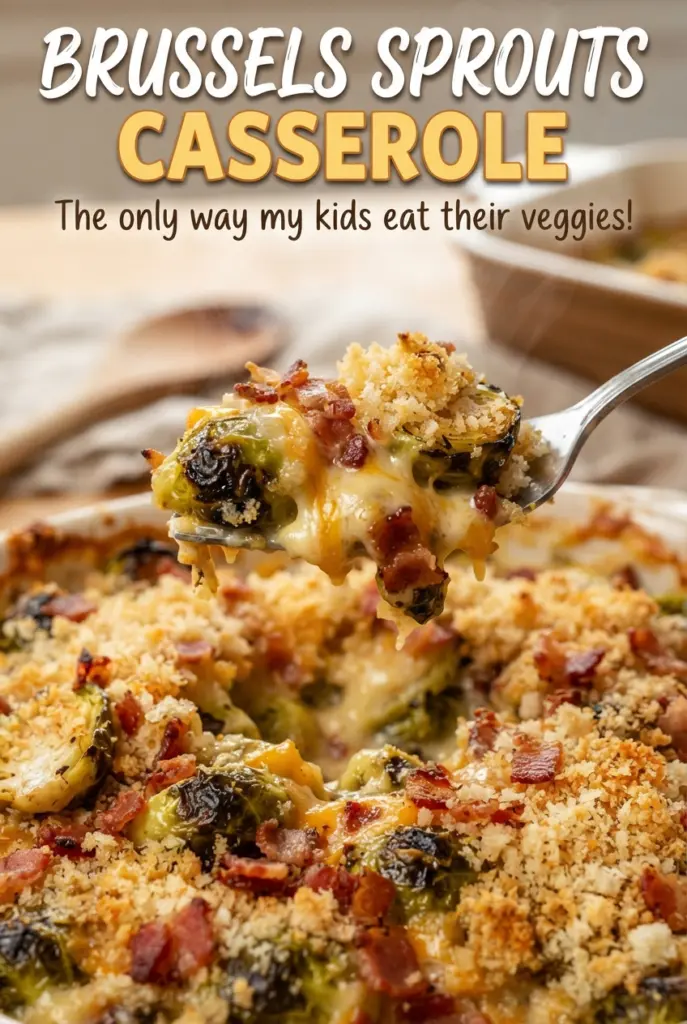
Bubbling Brussels sprouts casserole lands on the table with the kind of contrast that keeps people going back for another spoonful: tender sprouts, a creamy Gruyere sauce, crisp bacon, and a golden panko top that cracks under your fork. It eats like comfort food, but the Brussels sprouts keep it from feeling heavy or flat. The bacon brings salt and smoke, the cheese brings stretch and body, and the breadcrumb topping gives you that little bit of crunch every good casserole needs.
The part that makes this version work is the way the Brussels sprouts are blanched before they ever meet the oven. That short boil takes the raw edge off and gives them a head start, so they bake up tender without turning mushy. The sauce is built the old-fashioned way with butter, flour, milk, and cream, which keeps it thick enough to coat the sprouts instead of pooling at the bottom of the dish.
Below you’ll find the timing that keeps the sauce smooth, the topping crisp, and the sprouts green instead of dull. I’ve also included a few smart swaps and make-ahead notes, because this is the kind of side dish that tends to show up for holidays, potlucks, and any dinner where you want one pan to do a lot of work.
The sauce stayed creamy after baking, and the bacon-panko topping turned out crisp instead of soggy. Even my Brussels sprouts skeptic went back for seconds.
Save this Brussels sprouts casserole for the nights when you want a creamy, cheesy side with a crisp bacon-panko topping.
The Blanching Step That Keeps Brussels Sprouts Tender, Not Watery
Brussels sprouts casserole can go wrong fast if the sprouts go into the oven raw. They need a short blanch first, just long enough to soften the center and calm down that cabbage-like bite without cooking them all the way through. That head start matters because the sauce and topping are both carrying a lot of moisture; if the sprouts start out firm and raw, the dish ends up uneven, with crisp edges outside and tough centers inside.
The other key move is draining them well after blanching. Wet sprouts thin out the sauce and make the topping slump before it browns. Once they’re drained, toss them right into the sauce while they’re still warm so they absorb some of the cheesy coating instead of sitting there like little green stones.
What Each Ingredient Is Actually Doing in This Casserole

- Brussels sprouts — Trimmed and halved sprouts hold their shape better than shredded ones and give you proper bite in the finished casserole. Fresh is worth using here; older sprouts can turn sulfurous and soft. If yours are large, quarter the biggest ones so they cook at the same pace as the rest.
- Bacon — This is more than garnish. The bacon drippings help build the sauce base, and the crisp pieces on top add salt, smoke, and crunch. Thick-cut bacon works, but standard slices crisp faster and distribute better through the casserole.
- Gruyere and Parmesan — Gruyere melts smoothly and gives the casserole that nutty, stretchy pull. Parmesan sharpens the sauce and keeps it from tasting one-note. If you need a swap, Swiss cheese can stand in for Gruyere, but the flavor will be milder and less complex.
- Milk and cream — The mix of both gives the sauce body without making it pasty. Whole milk keeps the sauce loose enough to pour, while cream helps it stay rich after baking. Lower-fat milk will work in a pinch, but the sauce won’t cling the same way.
- Panko breadcrumbs — Panko stays lighter and crispier than standard breadcrumbs, which is exactly what you want over a creamy casserole. If you only have regular breadcrumbs, use them, but expect a denser top. A drizzle of melted butter over the panko helps it brown evenly.
Building the Sauce, Folding the Sprouts, and Getting That Top Crunchy
Blanching and Drying the Sprouts
Bring a large pot of salted water to a boil and blanch the halved Brussels sprouts for about 4 minutes, just until they turn bright green and the outer leaves start to soften. They should still have a little resistance in the center; if they go soft now, they’ll collapse in the oven. Drain them well and let the steam escape for a minute so the sauce doesn’t thin out.
Rendering the Bacon and Starting the Base
Cook the chopped bacon until it’s crisp and browned at the edges, then lift it out and keep just a tablespoon of the drippings. That little bit of fat gives the sauce a savory backbone without making it greasy. If the pan looks crowded with fat, spoon off the extra before you add the butter or the sauce can taste heavy.
Making the Cream Sauce
Melt the butter with the reserved drippings, then stir in the garlic and flour and cook just long enough to smell the flour lose its raw edge. Whisk in the milk and cream gradually so the sauce stays smooth instead of lumpy. Let it simmer until it coats the back of a spoon; if it looks thin in the pan, it’ll bake up loose in the oven.
Adding Cheese and Assembling the Dish
Pull the pan off the heat before adding the Gruyere and Parmesan. Cheese melts cleanly in gentle heat; over high heat, it can turn grainy or stringy. Stir until the sauce is smooth, then fold in the sprouts and half the bacon, transfer everything to the baking dish, and finish with the remaining cheese, bacon, and panko.
Baking to a Bubbly Finish
Bake until the casserole is bubbling around the edges and the top is deeply golden, about 20 to 25 minutes. The center should be hot all the way through, but the top shouldn’t look dry or hard. If the breadcrumbs brown too fast, lay a sheet of foil loosely over the top for the last few minutes and let the casserole finish heating underneath.
How to Adapt This for Different Tables and Different Pantries
Make It Gluten-Free
Swap the all-purpose flour for a 1:1 gluten-free flour blend and use gluten-free breadcrumbs or crushed gluten-free crackers on top. The sauce still thickens the same way, but give it an extra minute on the stove because some blends need a touch more time to hydrate. The finished casserole stays creamy, just with a slightly different crust.
Skip the Bacon
For a vegetarian version, leave out the bacon and use butter only in the sauce. To bring back some of the savory depth, add an extra pinch of salt and a little more Parmesan. The casserole will still be rich and cheesy, just less smoky.
Use What You Have in the Cheese Drawer
If Gruyere isn’t in the fridge, Swiss, fontina, or an aged white cheddar will all melt into the sauce. Swiss keeps the flavor closest to the original, while cheddar makes the casserole sharper and a little less silky. Keep at least one mellow melting cheese in the mix so the sauce doesn’t turn greasy or clumpy.
Storage and Reheating
- Refrigerator: Store leftovers covered for up to 4 days. The topping softens, but the flavor holds up well.
- Freezer: This freezes better before baking than after. Assemble it, wrap it tightly, and freeze for up to 2 months. Bake from thawed for the best texture.
- Reheating: Reheat covered in a 350F oven until hot, then uncover for the last few minutes so the top crisps back up. The biggest mistake is blasting it in the microwave, which turns the sprouts rubbery and the sauce greasy.
Answers to the Questions Worth Asking
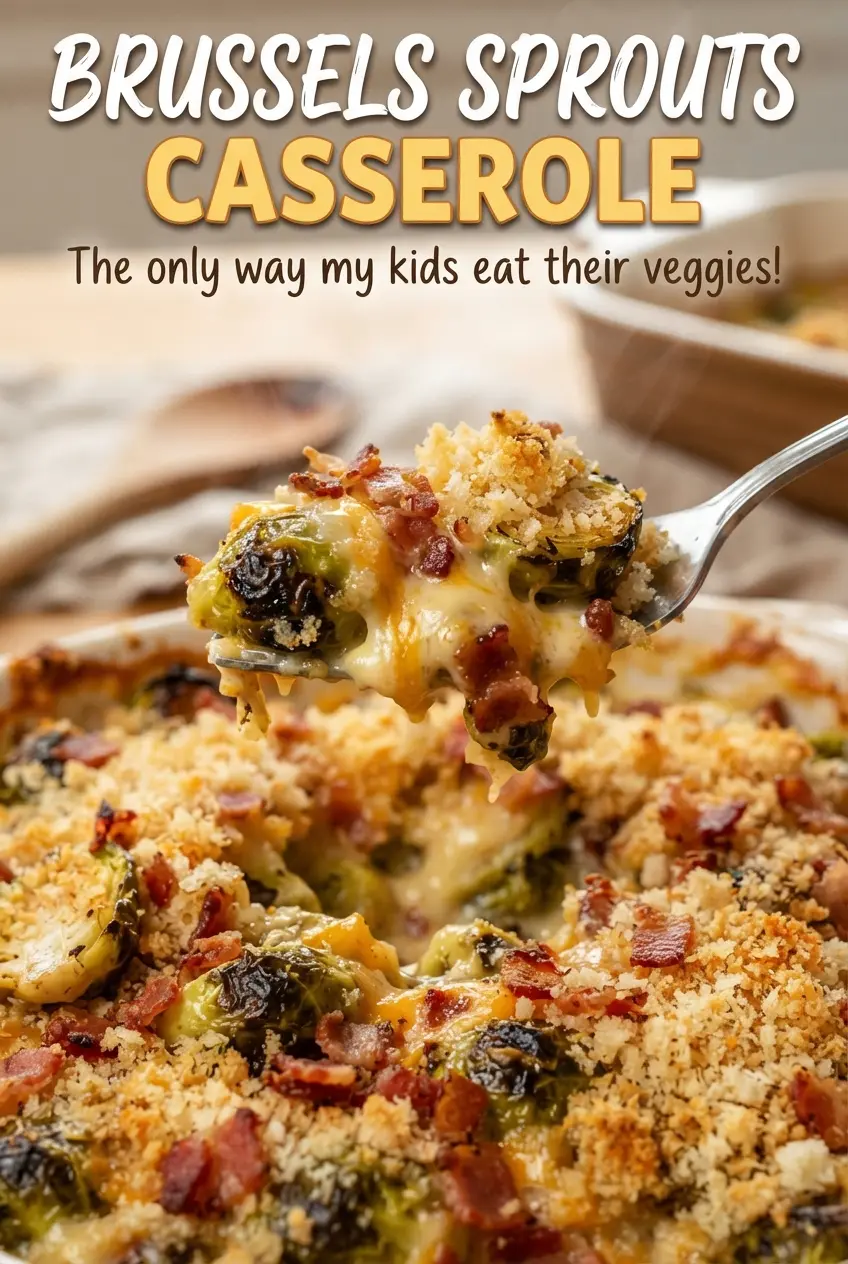
Brussels Sprouts Casserole
Ingredients
Equipment
Method
- Preheat your oven to 400°F so it’s ready when the casserole is assembled. Blanch the Brussels sprouts 4 minutes in boiling salted water, then drain and set aside.
- Cook the bacon until crisp, then remove it and reserve 1 tablespoon drippings. Melt the butter with the drippings, add garlic and flour, and cook 1 minute while whisking.
- Whisk in the whole milk and heavy cream, then simmer until thickened and smooth. Stir in 1 cup Gruyère, Parmesan, salt, and black pepper until fully melted and glossy.
- Fold the Brussels sprouts and half the bacon into the sauce, then pour into a baking dish. Top with the remaining Gruyère, remaining bacon, and panko breadcrumbs.
- Bake 20-25 minutes at 400°F until bubbly and golden on top. Let it rest briefly so the sauce sets slightly before serving.