Mangonada lands right in that sweet spot between slushy, tangy, and a little salty-spicy, which is exactly why it disappears fast once the glasses hit the table. The frozen mango base stays thick enough to sip through a straw, but it still feels bright and refreshing instead of heavy. The tajín rim and chamoy give it the kick that turns plain mango into something you keep going back to.
The trick is balance. Too much lime and the drink turns sharp; too little and it tastes flat. Too much liquid, and the blender gives you mango juice instead of that thick, spoonable texture. This version keeps the mango front and center, then layers in acidity, heat, and sweetness in a way that tastes intentional instead of crowded.
Below, I’m walking through the small details that matter most: how to keep the texture slushy, how to get the chamoy to cling to the glass, and what to swap if you need to adjust the heat or sweetness without losing the whole point of the drink.
The texture was perfect — thick enough to hold the tajín rim and still easy to drink, and the chamoy streaks kept every sip tangy and sweet. I used a little extra lime and it tasted just like the one I get from the food truck.
Save this mangonada for the days when you want that thick mango slush, tajín rim, and chamoy swirl without leaving home.
The Difference Between a Thick Mangonada and Mango Soup
The texture lives or dies on the balance between frozen fruit and liquid. Frozen mango gives you body and that icy, almost sorbet-like feel, while the mango juice loosens it just enough to blend. If you pour in too much juice at the start, the blender has no chance of keeping the drink thick, and you end up with something closer to a mango smoothie than a mangonada.
The lime juice matters for more than brightness. It keeps the mango from tasting one-note and cuts through the sweetness of the honey and nectar. Chamoy and tajín bring salt, chile, and acid into the picture, but they work best as accents; if the base is already too tart, the whole drink starts tasting harsh instead of layered.
What Each Ingredient Is Actually Doing in This Mangonada
Frozen mango chunks are the backbone. Fresh mango won’t give you the same slushy body, so keep the frozen fruit if you want that classic thick texture. Mango nectar or juice is the easiest way to get the blender moving; if yours is very sweet, use less honey, because the drink only needs enough sweetness to round out the lime.
Lime juice is the sharp edge that keeps this from tasting flat. Chamoy does two jobs here: it adds that tangy, savory-spicy note and it clings to the glass, so each sip changes as the slush melts. Tajín is best used both on the rim and, if you like, lightly over the top. Fresh mango chunks and cilantro are garnish, but they also give the drink a fresh finish so it doesn’t feel like an all-freezer situation.
- Frozen mango chunks — These create the thick, icy body. If you only have fresh mango, freeze it first in a single layer until hard; otherwise the drink won’t have the right slushy texture.
- Mango juice or nectar — This helps the blender work without watering everything down. Nectar is usually thicker and sweeter than juice, so taste before adding all the honey.
- Lime juice — Use fresh lime here. Bottled lime juice tastes flatter and can make the drink lose that bright, clean edge.
- Honey — This smooths out the tartness. You can swap in agave if that’s what you keep on hand, and it will blend just as easily.
- Tajín seasoning — This gives the drink its signature salty-chile rim. If you want less heat, use a lighter rim instead of mixing it into the blender.
- Chamoy sauce — Chamoy is what makes a mangonada taste like a mangonada. It’s worth buying a bottle if you plan to make this again, because no simple substitute gives the same sweet-tangy-salty finish.
How to Blend It So It Stays Slushy, Not Watery
Start With the Frozen Fruit
Add the frozen mango chunks first, then the juice, lime juice, honey, and ice. That order helps the blender catch the fruit before the liquid runs to the bottom. If your blender struggles, stop and scrape down the sides instead of dumping in more juice right away. The goal is a thick, spoonable blend with some resistance, not a pourable mango drink.
Blend Just Until Smooth
Pulse first, then blend in short bursts. Overblending warms the fruit and thins the texture, which is the fastest way to lose the slushy effect. Stop when the mixture looks smooth but still thick enough to mound slightly on a spoon. If it’s too stiff, add a splash more juice; if it’s too loose, a few more frozen mango chunks bring it back.
Rim and Swirl the Glasses
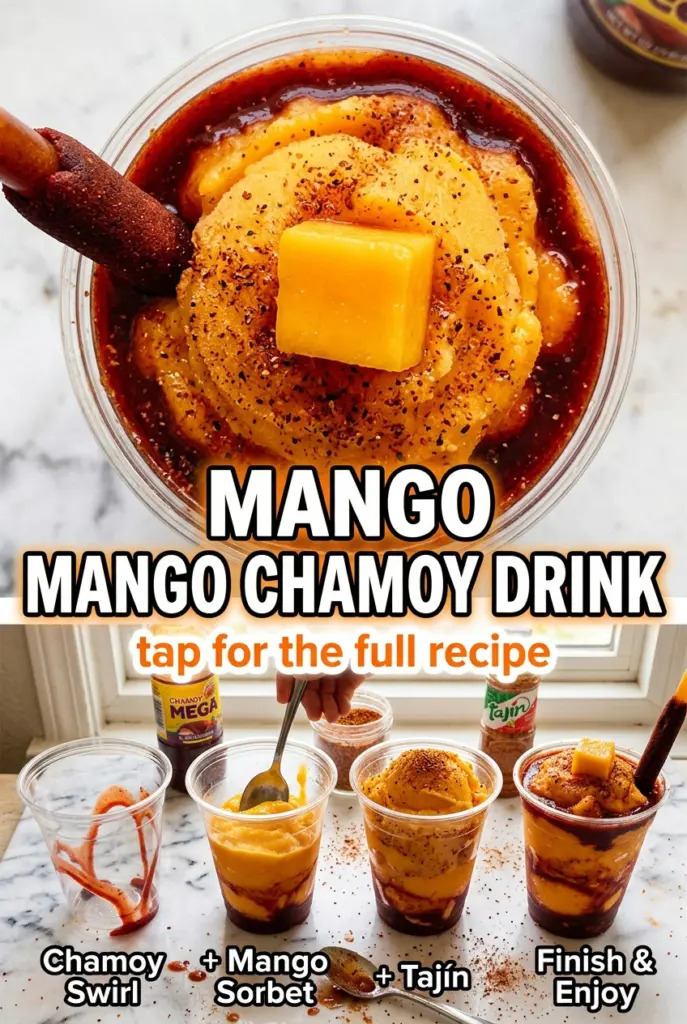
Run a lime wedge around the rim, then dip it in tajín so the seasoning sticks evenly. Drizzle chamoy down the inside of each glass before you pour the mangonada in. That step matters because the chamoy shouldn’t just sit on top; it should streak through the drink and catch on the ice as you sip.
Garnish and Serve Right Away
Top each glass with fresh mango chunks, a lime wedge, and a little cilantro. Mangonada waits for no one — the texture is best in the first few minutes, before the ice starts melting into the slush. If you’re serving it for guests, have the glasses rimmed and ready before you blend so you can pour and serve immediately.
Three Ways to Adjust the Heat, Sweetness, or Diet
Milder Mangonada for Sensitive Heat Levels
Use a light tajín rim instead of coating the whole glass, and keep the chamoy as a thin drizzle rather than a heavy swirl. You’ll still get the salty-tangy contrast, but the chile stays in the background instead of taking over the drink.
Dairy-Free, Naturally
This recipe already fits a dairy-free pattern as written, which is part of why it’s such an easy crowd drink. Just check the chamoy bottle and mango nectar label if you’re buying packaged versions, since a few brands add unexpected ingredients.
Less Sweet, More Tangy
Cut the honey in half and use the lower end of the mango juice amount. The drink will taste sharper and more fruit-forward, which works well if your mangoes are very sweet or your nectar is already heavily sweetened.
Batching for a Small Group
Blend the base in two batches if your blender is on the smaller side, then stir them together in a chilled pitcher before pouring. The texture stays better than trying to cram everything into one overloaded blender jar, and you can rim the glasses while the second batch blends.
Batching Ahead for a Crowd
You can blend the base up to 30 minutes ahead and keep it in the freezer, but stir it once or twice so it doesn’t set into a solid block. Rim the glasses and add chamoy right before serving, because those are the pieces that make the drink taste freshly made.
Serving and Holding Notes
Mangonada is best assembled at the last minute. If you need a short hold, keep the blended base frozen and the garnishes separate, then pour and top right before drinking so the ice doesn’t collapse into a thin melt.
The Things That Trip People Up With This Mangonada
Mangonada
Ingredients
Method
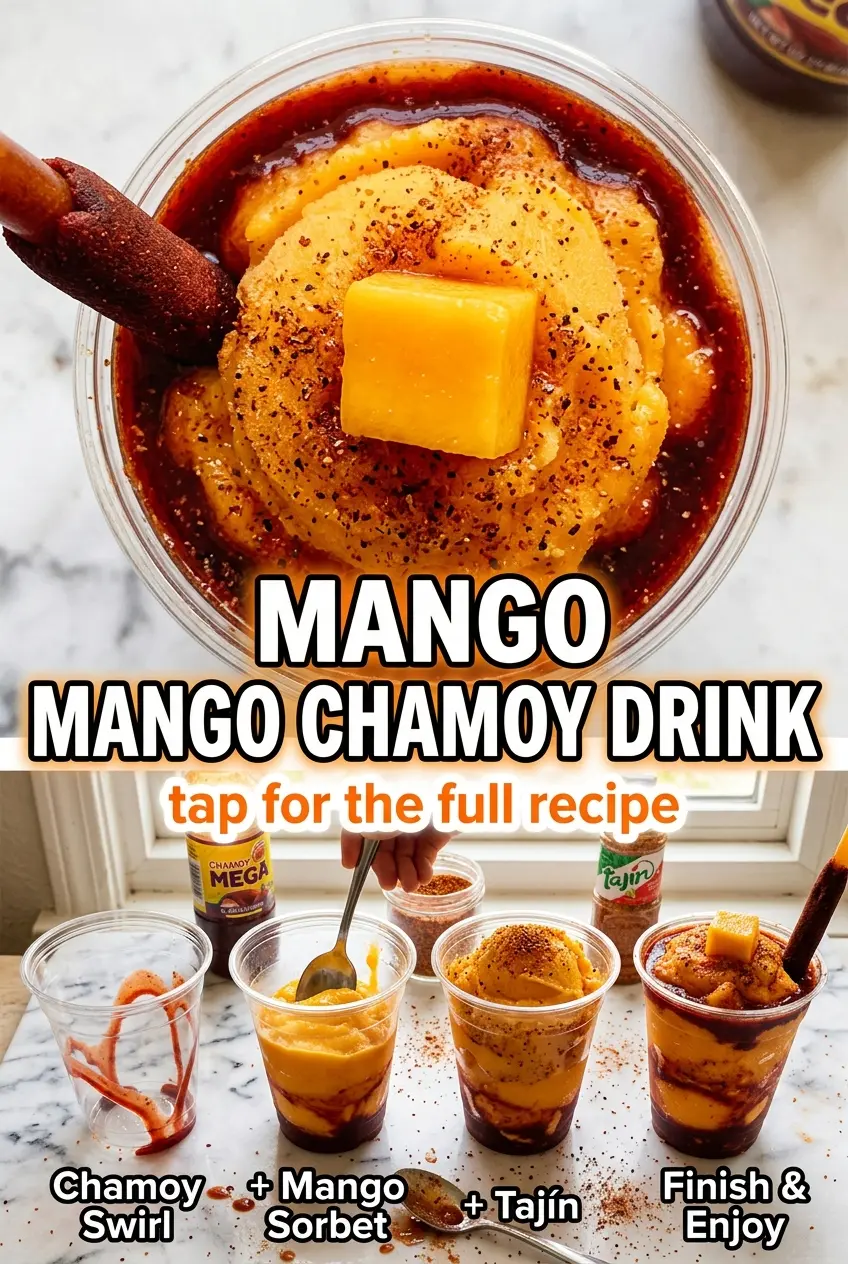
- Add frozen mango chunks, mango juice (or nectar), lime juice, honey, and ice cubes to a blender. Blend until smooth and slushy, scraping down once if needed for an even texture.
- Rim two glasses with tajín seasoning to coat the edge. Press lightly so the rim looks vibrant and evenly speckled.
- Drizzle chamoy sauce down the inside of each glass. Add a visible streak so it peeks through when the smoothie is poured.
- Divide the smoothie between the two glasses. Pour in carefully so the chamoy streaks remain on the inside walls.
- Top each glass with fresh mango chunks. Add them right on the surface so they don’t sink.
- Insert a straw and garnish with a lime wedge and cilantro. Serve immediately while the condensation forms on the glass.