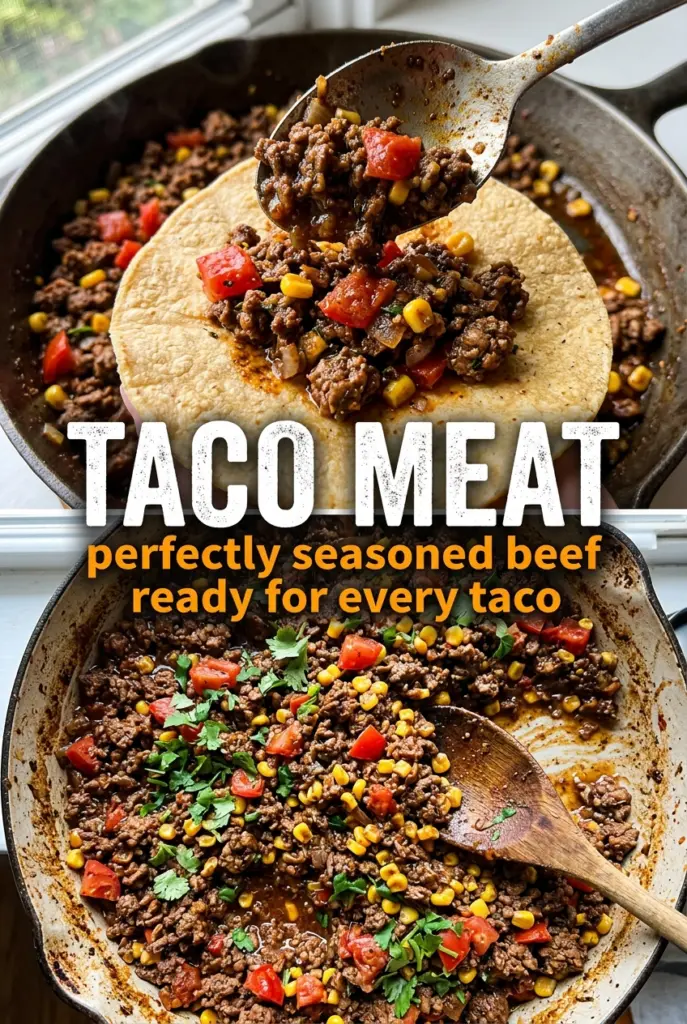
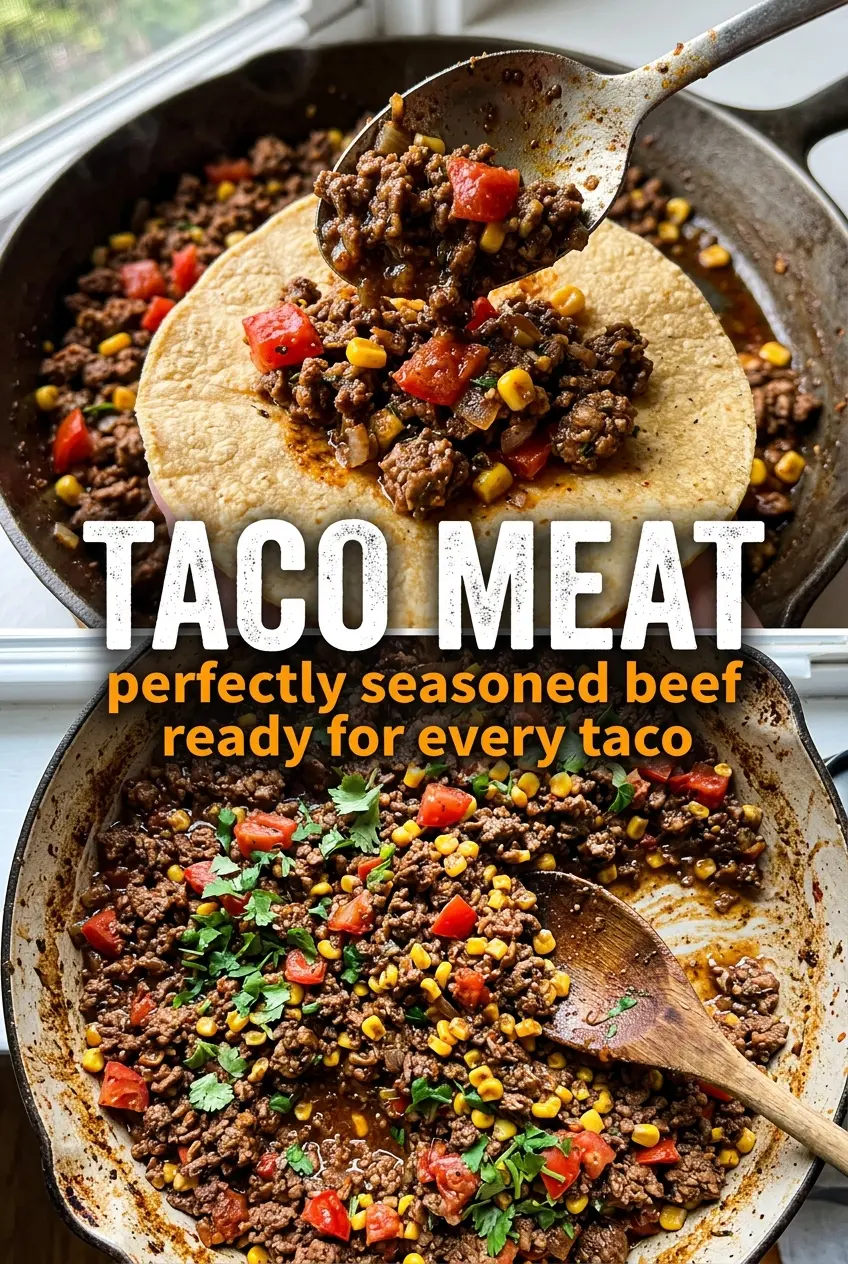
Browned taco meat with a rich, lightly sauced finish earns its keep fast. The beef stays crumbly instead of greasy, the seasoning clings to every bite, and the little bit of tomato paste turns the pan juices into something that actually coats the meat instead of pooling underneath it.
What makes this version work is the balance: enough water to dissolve the seasoning and loosen the pan drippings, but not so much that the meat turns soupy. Tomato paste adds body and a deeper savory note, while cumin and a small hit of cayenne give the meat that familiar taco-shop warmth without flattening everything into one generic spice blend.
Below, I’ll walk through the pan cues that matter, the ingredient swap that saves dinner when you’re out of taco seasoning, and the best way to store extra taco meat so it reheats without drying out.
The sauce thickened up perfectly and actually clung to the beef instead of sitting in the bottom of the pan. I used it for tacos one night and nachos the next, and it reheated without getting dry.
Save this saucy taco meat for tacos, burritos, nachos, and quick weeknight bowls.
The Pan Needs to Dry Out Before the Sauce Can Stick
The biggest mistake with taco meat is rushing the seasoning into beef that’s still swimming in fat. If the skillet is crowded with liquid, the spices slide around instead of coating the meat, and the result tastes flat. Drain off most of the fat after browning, but leave a thin film in the pan so the seasoning has something to bloom in.
That short simmer is doing more than thickening. It lets the tomato paste lose its raw edge and gives the cumin time to open up, which is what makes the meat taste integrated instead of dusted on top at the end. If the pan looks dry before the sauce clings, add another splash of water. If it looks wet at the end, keep simmering for another minute or two.
What Each Ingredient Is Actually Doing in This Dish
- Ground beef — An 80/20 blend gives you enough fat for flavor without turning the pan greasy. Leaner beef works, but it can taste a little drier, so keep an eye on the simmer and don’t overcook it.
- Tomato paste — This is the ingredient that gives the meat body and that deep, brick-red color. A small amount is enough; if you leave it out, the filling tastes looser and less cohesive.
- Taco seasoning + cumin + garlic powder — The seasoning blend covers the broad taco flavor, while the extra cumin and garlic sharpen it. If you only have taco seasoning, use it and skip the extra spices, but the cumin adds a warmer, more finished taste.
- Water — It dissolves the seasoning and helps the tomato paste turn into a light sauce. Broth works too, but water keeps the flavor clean and lets the spices stay in control.
- Cayenne — This doesn’t make the meat spicy-hot unless you want it to. It rounds out the seasoning with a little heat in the background, and you can leave it out for a milder batch.
Building the Taco Meat So It Stays Juicy, Not Greasy
Brown the Beef Hard Enough to Get Flavor
Cook the beef over medium-high heat and break it into small crumbles as it browns. You want scattered browned bits, not a pale pile of steamed meat. If the skillet is too crowded, the beef will release moisture and simmer instead of browning, so use a large pan and give it room. Once it’s no longer pink, drain the extra fat and leave just enough to keep the pan glossy.
Turn the Seasoning Into a Sauce
Add the water, taco seasoning, tomato paste, cumin, garlic powder, and cayenne, then stir until the tomato paste disappears into the meat. The mixture should look loose at first. That’s correct. As it simmers, the liquid reduces and the spices settle into a glossy coating. If you dump the heat too high here, the sauce can reduce too fast and leave the meat gritty instead of well-coated.
Let It Thicken Before You Stop
Give it 3 to 5 minutes at a steady simmer, stirring once or twice so the bottom doesn’t catch. You’re looking for sauce that clings to the crumbles and leaves the skillet mostly clean when you drag a spoon through it. Taste at the end and add salt and pepper only after the sauce has reduced, because the seasoning concentrates as the liquid cooks off.
Make It Milder for Kids or Heat-Sensitive Eaters
Skip the cayenne and use a mild taco seasoning if your blend runs hot. You’ll still get the savory taco flavor and the saucy texture, just without the back-of-the-throat heat. A small squeeze of lime at the table can help the flavor pop without adding spice.
Use Ground Turkey or Chicken Instead of Beef
Lean poultry works, but it needs a little help because it doesn’t bring the same richness as beef. Leave a tablespoon of oil in the pan after browning, then season and simmer exactly the same way. The final result is lighter and a bit less savory, but still great in tacos, bowls, and quesadillas.
Make It Gluten-Free Without Changing the Texture
Use a certified gluten-free taco seasoning, since that’s usually where the hidden gluten sneaks in. The rest of the recipe already fits naturally. If you’re checking labels, look for seasoning mixes that don’t rely on flour or maltodextrin from questionable sources.
Stretch It for More People
Add a small splash more water and serve the meat with beans, rice, or roasted potatoes if you need it to feed a bigger crowd. The flavor stays strong, but the texture turns a little looser, which works well in burritos and taco salads. Don’t double the spices blindly; taste after the simmer and adjust from there.
Storage and Reheating
- Refrigerator: Store in an airtight container for up to 4 days. The sauce will tighten as it chills, which is normal.
- Freezer: It freezes well for up to 3 months. Cool it first, then pack it flat in a freezer bag or airtight container so it thaws evenly.
- Reheating: Warm it in a skillet over medium-low heat with a splash of water until hot. The most common mistake is blasting it in the microwave until the edges dry out before the center heats through.
Answers to the Questions Worth Asking
Taco Meat
Ingredients
Equipment
Method
- Heat a large skillet over medium-high heat and add the ground beef, breaking it into small crumbles as it cooks for about 5-7 minutes until browned. Drain excess fat, leaving about 1-2 tablespoons behind.
- Add water, taco seasoning, tomato paste, cumin, garlic powder, and cayenne pepper to the skillet and stir well to combine. Keep the heat at medium-high so the mixture starts bubbling and clinging to the meat.
- Simmer for 3-5 minutes until the sauce thickens and coats the meat. You should see a glossy, spoon-coating texture rather than watery sauce.
- Season with additional salt and pepper to taste. Taste and adjust until the flavor is balanced and not flat.
- Use the taco meat immediately in tacos, burritos, quesadillas, or other Mexican dishes. Cool any leftovers quickly and store in an airtight container in the refrigerator for up to 4 days.