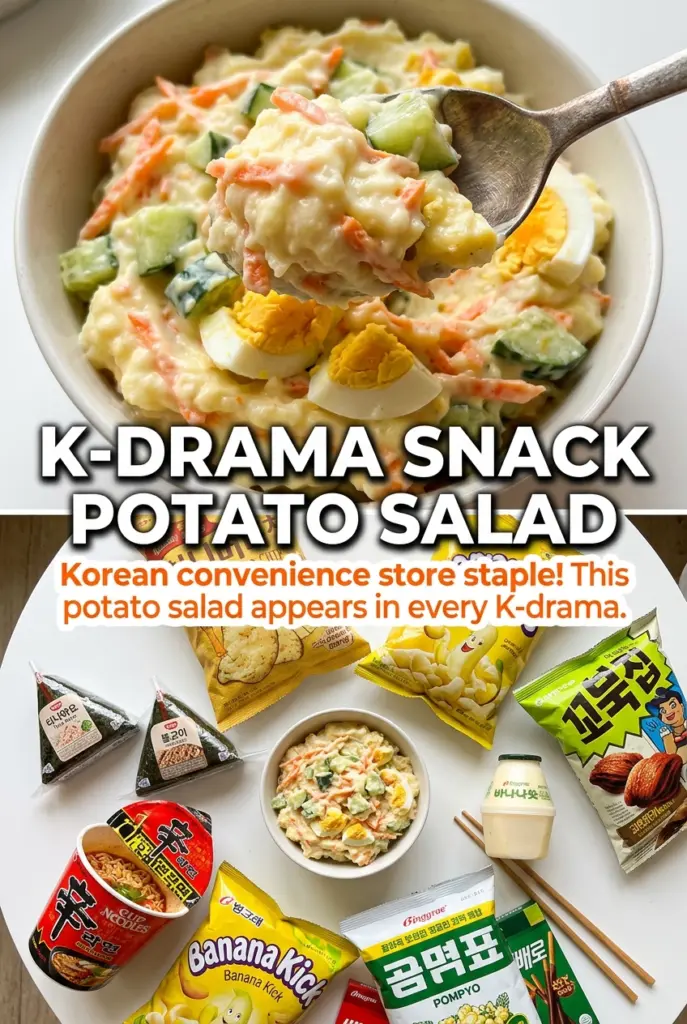
Creamy Korean potato salad lands somewhere between a classic picnic side and a soft, lightly sweet banchan-style dish, and that balance is what keeps it on the table. The potatoes stay tender and a little rustic instead of turning into glue, the vegetables bring crunch and color, and the dressing settles into everything after a short chill so the whole bowl tastes cohesive instead of flat.
The key is not mashing the potatoes smooth. A rough mash gives the dressing places to cling to, and it keeps the salad from becoming pasty once the mayonnaise goes in. Rice vinegar adds brightness without making the salad taste sharp, while a little sugar gives that familiar Korean-style sweetness that makes the cucumbers, carrots, and corn taste fuller.
Below, you’ll find the small details that make this version work: how soft the potatoes should be, why the salad needs time in the fridge, and what to change if you want a lighter or more egg-forward bowl.
The potatoes held their shape just enough, and after chilling the dressing soaked in without getting watery. The cucumber still had a little crunch the next day, which made the whole bowl taste fresh instead of heavy.
Save this creamy Korean potato salad for the days when you want something sweet, chilled, and full of tender potatoes, crisp vegetables, and egg.
The Trick Is Keeping the Potatoes Tender, Not Silky
Gamja salad goes wrong when the potatoes are cooked just enough to mash cleanly. That sounds convenient, but it leaves you with little firm bits that don’t absorb the dressing evenly, and the salad tastes uneven after chilling. The better move is to cook the potatoes until they collapse when pressed with a spoon, then mash them only halfway so some texture stays in the bowl.
That rough texture matters even more after the fridge time. The mayonnaise and vinegar get pulled into the nooks and crannies, which gives the salad a creamy bite without making it dense. If your salad looks loose right after mixing, that’s normal. The potatoes will tighten up as they cool, and the flavor gets better once everything rests together.
What Each Ingredient Is Actually Doing in This Bowl
- Russet potatoes — Their high starch content gives you that soft, fluffy base that absorbs the dressing well. Waxy potatoes stay too firm and can make the salad feel chunky in the wrong way.
- Mayonnaise — This is the creamy backbone, so use one you actually like the taste of. If you want a lighter version, swap in half mayo and half plain Greek yogurt, but the salad will taste tangier and set a little looser.
- Rice vinegar — It cuts through the richness without shouting. Apple cider vinegar works in a pinch, but it brings a sharper edge that changes the balance of the salad.
- Sugar — This is what gives the salad its familiar Korean-style sweetness and keeps the dressing from tasting flat after chilling. Don’t skip it unless you want a more savory result.
- Cucumber — Seed it first, or the salad can turn watery in the fridge. The cucumber should add crunch, not puddles.
- Eggs — They make the salad feel fuller and more substantial. Chop them after they’ve cooled completely so the yolks don’t smear into the dressing.
Building the Creaminess Without Turning It Watery
Cooking the Potatoes Until They Yield
Start the potatoes in cold water and bring them up together so the cubes cook evenly from the outside in. They’re ready when a knife slides through with almost no resistance and the pieces begin to break at the edges. Drain them well, then let the steam escape for a minute or two so extra water doesn’t end up in the bowl.
Blanching the Carrots for Sweetness and Color
The carrots only need a quick dip in boiling water, just long enough to take the raw edge off. That short blanch keeps them bright and slightly crisp instead of mushy. If they go too long, they fade into the potatoes and lose the little snap that makes the salad more interesting.
Mixing for Texture, Not Paste
Fold the potatoes with the vegetables and eggs before adding the dressing so you can see how everything is distributed. Then stir in the mayonnaise mixture gently, stopping as soon as the salad looks evenly coated. If you stir hard, the potatoes will break down too much and the salad will turn heavy.
Chilling Until the Flavor Settles
This salad needs time in the fridge. The dressing loosens just enough to coat the potatoes, then thickens again as everything chills, which is what gives you that creamy, spoonable texture. If you serve it right away, the sweetness and vinegar will taste separate instead of balanced.
How to Adapt This Salad for Different Tables
Dairy-Free Version with the Same Creamy Finish
This recipe is already dairy-free if you use a mayonnaise that doesn’t contain milk, which many standard brands don’t. Check the label, and the texture will stay exactly the same. The flavor comes from the vinegar and sugar, not from dairy.
A More Savory, Less Sweet Bowl
Cut the sugar back to 1 tablespoon and add a little more salt. You’ll lose some of the classic Korean-style sweetness, but the potatoes and eggs will taste a little more savory and the salad will work well beside grilled meat or fried chicken.
Extra Eggy, Protein-Forward Version
Add two more hard-boiled eggs and mash one yolk into the dressing before folding everything together. That gives the salad a richer color and a slightly deeper egg flavor without changing the texture much.
Storage and Reheating
- Refrigerator: Keeps for 3 days. The cucumber softens a bit, but the flavor stays good.
- Freezer: Don’t freeze this salad. The potatoes and mayonnaise separate when thawed, and the texture turns grainy.
- Reheating: This salad is meant to be served cold. If it’s been in the fridge overnight, let it sit out for 10 to 15 minutes so the dressing loosens and the flavor comes back.
Answers to the Questions Worth Asking
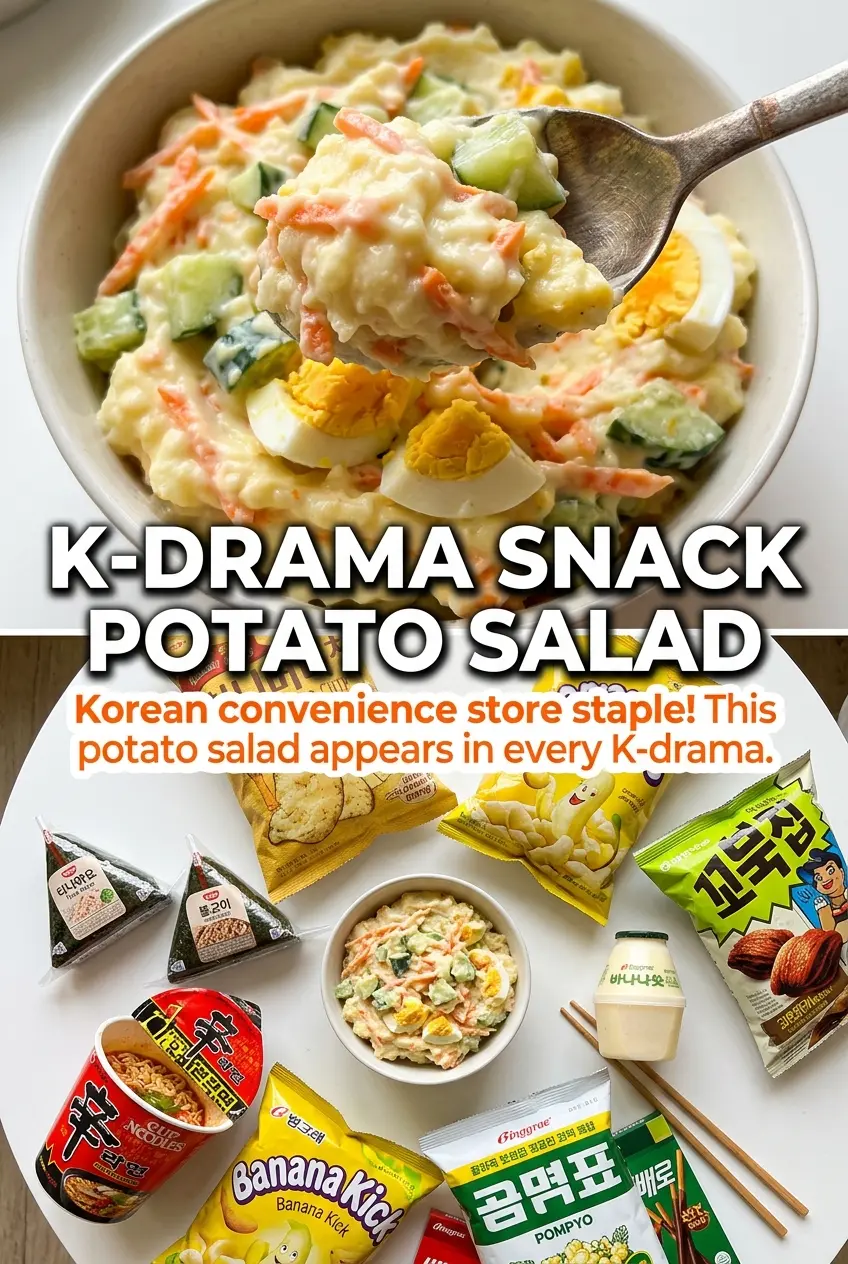
Korean Potato Salad
Ingredients
Method
- Boil the russet potatoes in boiling water until very tender, 15–20 minutes, then drain well. Keep the potatoes moving in the pot so they cook evenly.
- Mash the potatoes roughly (not completely smooth) right after draining. Aim for a thick, slightly chunky texture so the salad holds together.
- Blanch the carrots in boiling water for 2 minutes, then drain. They should be bright and still lightly crisp.
- Combine the mashed potatoes, carrots, cucumber, corn kernels, and hard-boiled eggs in a large mixing bowl. Mix just until evenly distributed.
- Stir the mayonnaise, sugar, rice vinegar, salt, and pepper together until smooth. Taste and adjust seasoning if needed.
- Fold the dressing into the potato mixture until everything is creamy and glossy. Use a gentle folding motion to keep the egg and vegetable bits intact.
- Refrigerate the Korean potato salad for at least 2 hours before serving. Chill until cold and thick enough to scoop.