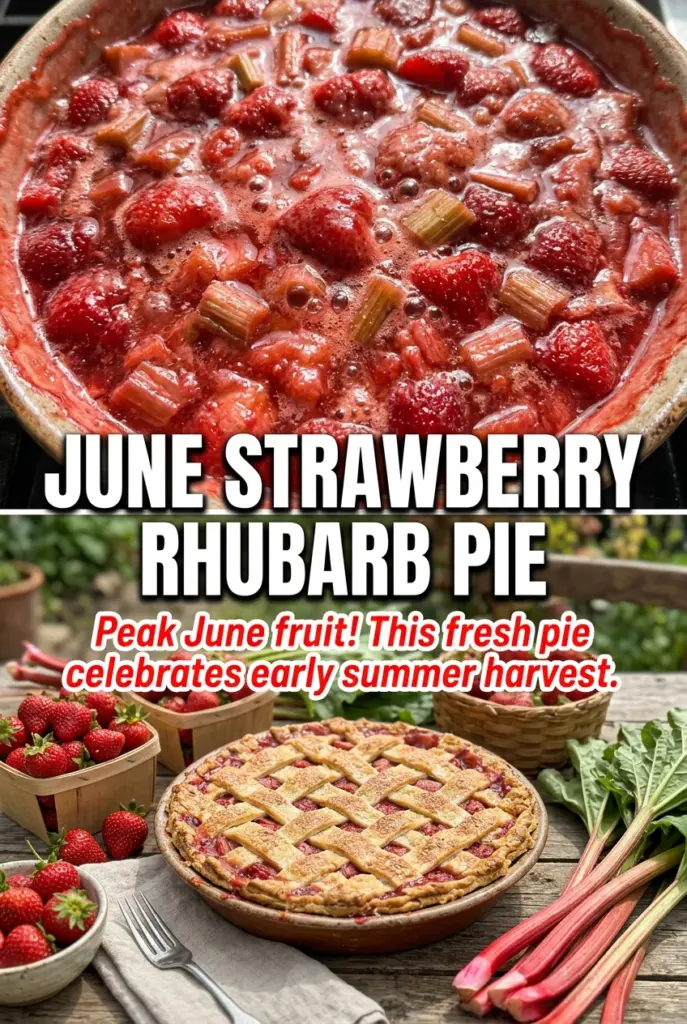
Fresh strawberry rhubarb pie earns its place at the table with a filling that lands right between jammy and bright. The rhubarb softens into tangy ribbons, the strawberries melt into the gaps with their own sweetness, and the crust gives you that flaky, golden contrast that makes each bite feel finished. When it’s baked properly, the filling bubbles up through the lattice and sets just enough to slice cleanly after cooling.
The part that matters most here is balance. Rhubarb needs sugar, but it also needs a little time with that sugar and cornstarch before it goes into the crust so the juices start to thicken instead of flooding the bottom later. The other detail that keeps this pie from turning soupy is patience at the end: it has to cool fully, or the filling will still be loose even if the center looked done in the oven.
Below, you’ll find the small details that make this pie work on the first try, from the crust choice to the exact visual cue that tells you it’s ready to come out of the oven.
The filling set up beautifully after cooling, and the lattice stayed crisp instead of getting soggy. I followed the bake times exactly and the pie sliced cleanly with those bright strawberry pockets still intact.
Save this strawberry rhubarb pie for the crisp lattice crust and jammy pink filling that slices clean after a proper cool-down.
The Trick to Keeping Strawberry Rhubarb Filling from Going Runny
Fruit pies usually fail in one of two places: the filling gets too wet before it goes into the oven, or it never gets hot enough long enough for the starch to do its job. Rhubarb gives off a lot of juice, and strawberries break down fast, so the goal here is not to keep the fruit dry. The goal is to let the sugar pull out some moisture early, then bake the pie until that mixture turns visibly thick and bubbling.
The first bake at a higher temperature helps set the crust before the fruit has time to leak everywhere. After that, the lower heat finishes the filling without overbrowning the top. If you pull the pie too early, the center will look close enough but the starch won’t be fully activated, and the filling will slice like sauce.
What the Fruit, Sugar, and Cornstarch Are Each Doing
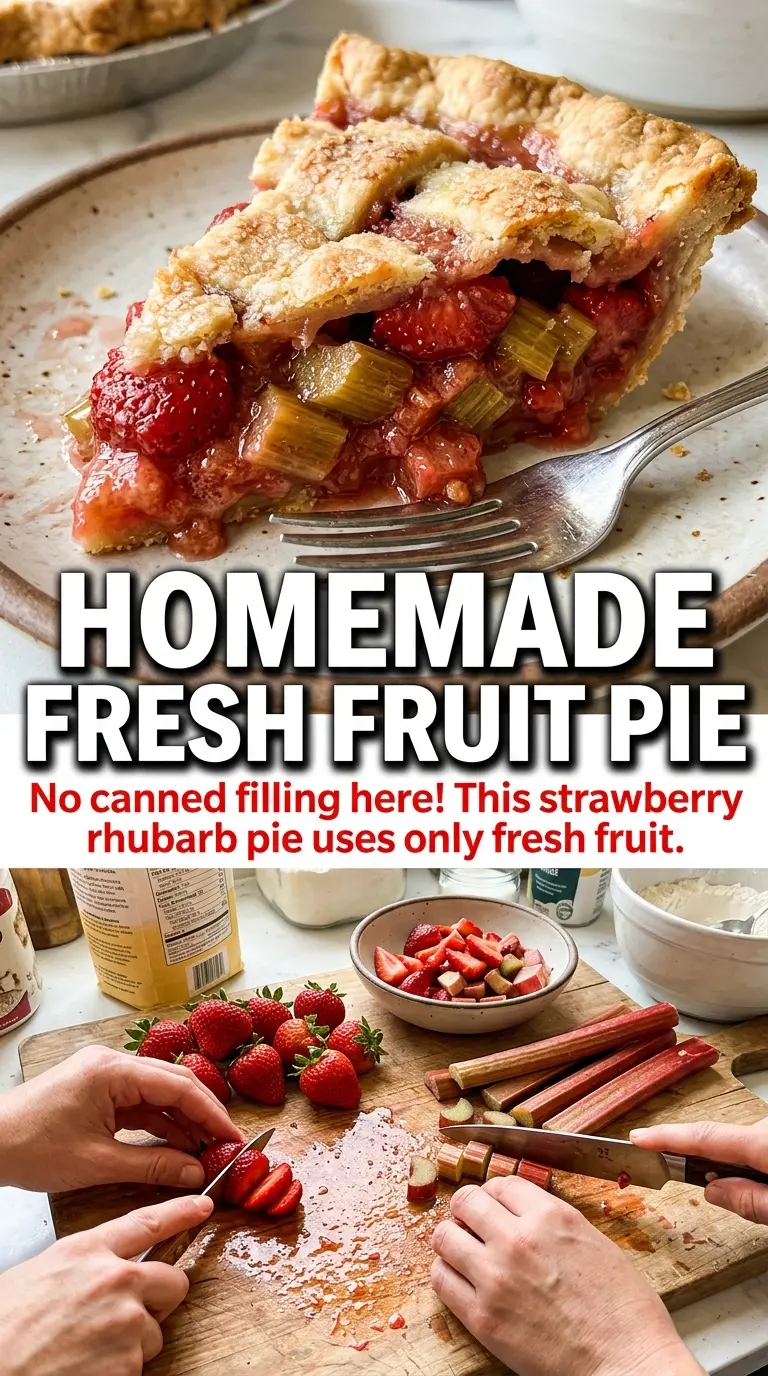
- Rhubarb — This is the backbone of the pie. It brings the sharp, tangy edge that keeps the filling from tasting flat. Use fresh stalks cut into even 1/2-inch pieces so they soften at the same rate and don’t leave hard bits behind.
- Strawberries — They add sweetness and that soft, almost jam-like texture. Fresh berries are best here because frozen strawberries release too much liquid and can make the filling looser unless you adjust the starch and bake time.
- Cornstarch — This is what turns the juices into a sliceable filling. Too little and the pie runs; too much and the filling turns pasty. The listed amount is the right middle ground for this fruit balance, especially after the filling has the chance to sit for 10 minutes before baking.
- Pie crust — A sturdy crust matters more than a decorative one. Homemade brings the flakiest result, but a good store-bought crust still works well if it bakes cold and gets brushed with egg wash for color and shine.
- Butter — Those little pieces melt into the filling and add a richer finish. It’s not a substitute for the starch or sugar, but it rounds out the tart fruit in a way you can taste in the final slice.
Building the Filling So It Sets After Cooling
Mixing the fruit with the dry ingredients
Stir the rhubarb, strawberries, sugar, cornstarch, and salt together until the fruit looks evenly coated. Then let it sit for 10 minutes. That pause starts drawing out juice, which sounds counterintuitive, but it gives the cornstarch a chance to dissolve into the liquid instead of clumping later in the oven.
Filling and topping the pie
Pour the fruit mixture into the bottom crust and dot the top with butter. If you’re using a lattice, keep the strips cold and work quickly so they don’t stretch or tear. Seal the edges well; loose seams are where fruit filling usually leaks onto the pan.
Baking until the center is actively bubbling
Bake at 400°F first, then lower the heat to 350°F. You’re waiting for the filling to bubble in the center, not just at the edges. If only the corners are bubbling, the thickener hasn’t finished cooking through. The crust should be deeply golden and the top should look set, not pale and damp.
Letting the pie rest before slicing
Cool the pie completely for at least 3 hours. This is the part people skip, then wonder why the slices slump. The filling firms as it cools, and cutting too early breaks that set before it has a chance to hold together.
How to Adapt Strawberry Rhubarb Pie Without Losing the Balance
Make it with a lattice top or a full crust
A lattice gives you more evaporation, which helps the filling tighten up a little faster and lets the fruit show through. A full top crust works too, but cut vents so steam can escape or the filling will pressure itself loose and bubble up unevenly.
Use a gluten-free crust
A gluten-free pie crust works well here because the filling is the star. Keep the dough cold and handle it gently, since gluten-free crusts can crack more easily when rolled and crimped.
Swap in tapioca starch for cornstarch
Tapioca starch gives the filling a glossier, slightly silkier finish and holds up well in fruit pies. Use about the same amount, but don’t overbake once it thickens or the texture can turn gummy instead of cleanly jammy.
Reduce the sugar for a tarter pie
If your rhubarb is especially red and sweet, you can pull back a little on the sugar. Go too low and the pie tastes sharp and thin instead of balanced, so reduce it in small amounts and keep the cornstarch the same.
Storage and Reheating
- Refrigerator: Store covered for up to 4 days. The crust softens a little in the fridge, but the filling holds well.
- Freezer: Baked pie freezes well. Cool completely, wrap tightly, and freeze for up to 2 months. Thaw overnight in the refrigerator before reheating.
- Reheating: Warm slices in a 325°F oven for 10 to 15 minutes. Skip the microwave if you want the crust to stay crisp; it makes the pastry soggy and the filling loose.
Answers to the Questions Worth Asking
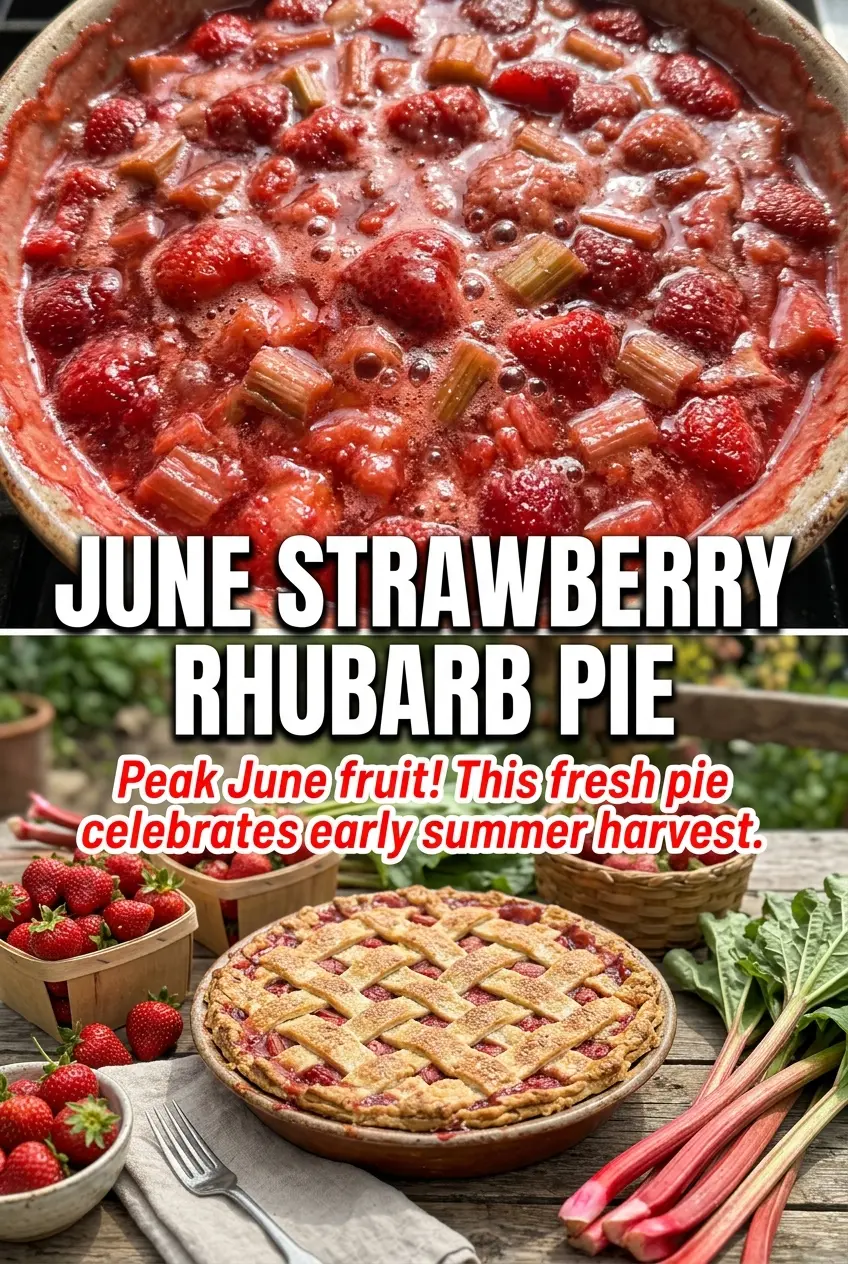
Fresh Strawberry Rhubarb Pie
Ingredients
Equipment
Method
- Preheat the oven to 400°F, then line a 9-inch pie plate with the bottom crust.
- Gather the rhubarb, strawberries, sugar, cornstarch, and salt so you can mix them right away.
- Combine rhubarb, strawberries, sugar, cornstarch, and salt in a bowl and let sit for 10 minutes.
- Pour the fruit mixture into the bottom pie crust and dot the top with butter.
- Top with the second crust, either whole or as a lattice, then trim and crimp the edges.
- Brush the crust with the beaten egg wash so it turns glossy and golden as it bakes.
- Sprinkle the top with sugar and cut vents if using a solid top crust for steam to escape.
- Bake for 20 minutes at 400°F, until the crust starts to turn golden and the filling begins to bubble.
- Reduce the heat to 350°F and bake 30 to 35 minutes more, until the crust is deeply golden and the filling bubbles actively.
- Cool completely for at least 3 hours before slicing, so the filling sets into a jewel-toned, thick texture.