
Warm potatoes turning glossy with white wine vinaigrette are what make French potato salad worth coming back to. It’s lighter than the mayo-heavy version most people know, but it still eats like something substantial because the potatoes soak up the dressing while they’re still warm. The herbs stay bright, the shallots soften just enough, and every bite lands with that clean, tangy finish that makes this dish fit beside grilled fish, roast chicken, or anything else that wants a sharp, elegant side.
The key is handling the potatoes while they’re hot enough to absorb the dressing but not so soft that they fall apart. Fingerlings hold their shape well and give you neat slices with creamy centers, which matters here because this salad is about texture as much as flavor. The vinaigrette is built with Dijon and a little wine, so it clings instead of pooling at the bottom of the bowl.
Below you’ll find the small details that matter most: when to season, how long to let the potatoes marinate, and why this salad tastes better at room temperature than straight from the fridge.
The potatoes held their shape, and the dressing soaked in instead of sitting on top. I let it marinate for an hour like you said, and the tarragon made it taste restaurant-level.
Like this French potato salad? Save it for the next time you need a vinaigrette-dressed side with herbs, mustard, and a clean finish.
The Part Most Potato Salads Get Wrong: Dressing Them Too Cold
The biggest difference between French potato salad and a forgettable potato salad is timing. Warm potatoes drink in the vinaigrette; cold potatoes resist it. If you wait until the potatoes have chilled, the dressing sits on the outside and the salad tastes separate instead of blended. That hour of marinating at room temperature is not idle time — it’s when the potatoes take on the mustard, wine, and shallot flavors from the inside out.
Another common mistake is overhandling the potatoes after they’re cooked. These should be tender, not fluffy enough to smear into mash when you toss them. Slice them while still warm, then fold in the vinaigrette gently. If they’re too hot, they’ll break apart; if they’re too cool, they won’t absorb the dressing.
What the Wine, Mustard, and Herbs Are Each Doing Here
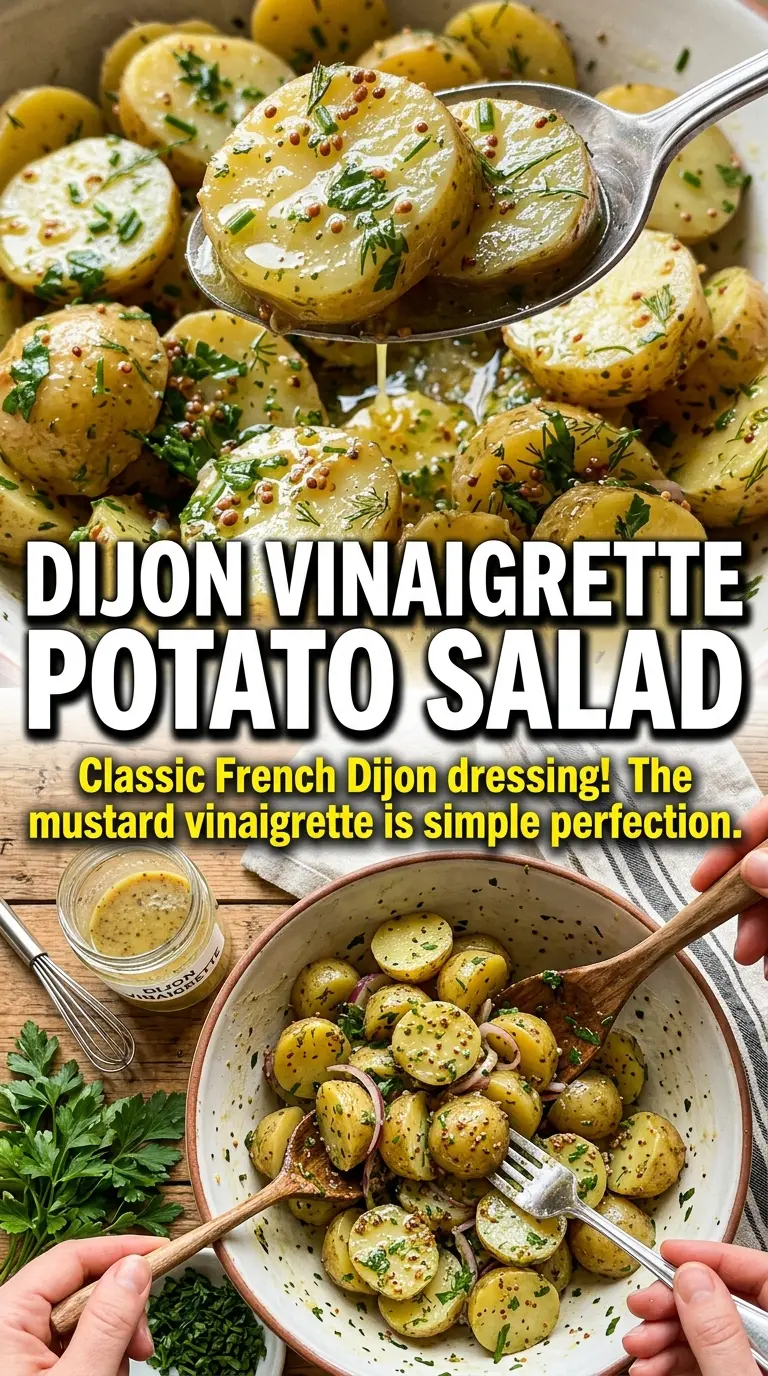
- Fingerling potatoes — Their waxy texture holds together after boiling, which gives you neat slices and a salad that still looks polished on the plate. Russets turn too soft and soak up the dressing in a mushy way. If fingerlings are hard to find, Yukon Golds are the best backup because they stay creamy without falling apart.
- Dry white wine — This adds a soft, rounded acidity that makes the vinaigrette taste more layered than vinegar alone. Use a wine you’d actually drink; a sharp or overly sweet wine shows up fast in the finished salad. If you need to skip it, use a little extra vinegar mixed with a spoonful of water, but the flavor will be flatter.
- Dijon mustard — Dijon is the emulsifier here. It helps the oil and vinegar hold together long enough to coat every slice instead of separating in the bowl. Whole-grain mustard works if that’s what you have, but the dressing will be a little looser and more rustic.
- Shallots, parsley, and tarragon — The shallots soften in the warm dressing and lose their raw edge, while parsley keeps things fresh and tarragon gives the salad its classic French lift. Don’t swap tarragon for dried herbs if you can avoid it; that anise note is part of what makes this taste specific instead of generic.
Building the Salad So the Potatoes Stay Intact and Full of Flavor
Boiling the Potatoes to the Right Point
Start the potatoes in well-salted water and cook them until a knife slips in with just a little resistance. You want them tender all the way through, but not crumbling at the edges. If they’re overcooked, they’ll shred when you slice them and the dressing will turn cloudy instead of clean. Drain them promptly and let the steam escape for a minute so the surface dries enough to catch the vinaigrette.
Whisking the Vinaigrette While the Potatoes Are Hot
Whisk the white wine, olive oil, vinegar, Dijon, shallots, salt, and pepper together in a bowl big enough to toss the salad later. The dressing should look lightly thickened and glossy, not separated. Taste it now, before it hits the potatoes, because warm potatoes mute salt and acid. If it tastes a touch aggressive on its own, that’s fine — the potatoes will round it out.
Tossing and Marinating Without Mashing
Slice the potatoes while they’re still warm, then pour the dressing over them and fold gently with a spatula. Stop as soon as everything looks coated. This is not the place for vigorous stirring, which turns the cut edges rough and pasty. Let the salad sit at room temperature for an hour so the vinaigrette can soak in and the flavors can settle together.
Finishing with Herbs at the End
Stir in the parsley and tarragon right before serving. If they go in too early, the herbs wilt and lose that bright green finish that makes the salad look fresh. Serve it at room temperature, not cold from the fridge. The olive oil softens and the flavors open up once the salad has had a little time to come back from the chill.
Three Ways to Adjust This French Potato Salad Without Losing What Makes It Work
Swap in Yukon Golds for a creamier bite
Yukon Golds work well if you can’t find fingerlings. They’re a little more tender and buttery, so slice them a bit thicker to keep them from breaking apart. The salad will still hold onto the vinaigrette nicely, but the look will be less tidy and a little more rustic.
Make it dairy-free and naturally vegetarian as written
This recipe already skips mayo and dairy, which is part of why it feels so light. If you need a dish that works for a mixed table, this is an easy one to keep exactly as written. The balance comes from the vinaigrette and herbs, not from creaminess, so there’s nothing to replace.
Use chives or dill when you don’t have tarragon
Tarragon gives the salad its classic French edge, but chives add a gentle onion note and dill brings a greener, more familiar herb flavor. Either one works, though the salad will taste less distinctly French without tarragon. If you’re using dill, go lighter so it doesn’t take over the vinaigrette.
Make it ahead for serving later the same day
This salad holds well for a few hours at cool room temperature if it’s covered. Add the herbs shortly before serving so they stay bright, and give the salad one last gentle toss if any dressing settles at the bottom. If it has been chilled, let it sit out until the olive oil loosens and the flavors wake back up.
Storage and Reheating
- Refrigerator: Store leftovers in an airtight container for up to 3 days. The potatoes firm up as they chill, and the herbs soften, so the salad tastes best after it comes back to room temperature.
- Freezer: Don’t freeze this salad. The potatoes turn grainy and watery after thawing, and the vinaigrette loses its clean texture.
- Reheating: This isn’t a reheated dish. Let it sit out for 20 to 30 minutes, then toss gently and taste for salt and vinegar. If it tastes dull, a tiny splash of vinegar wakes it right back up.
Answers to the Questions Worth Asking

French Potato Salad
Ingredients
Equipment
Method
- Boil fingerling potatoes in salted water until tender, about 20 minutes, then drain thoroughly.
- Slice the potatoes while warm, then transfer them to a mixing area so they can absorb the vinaigrette.
- Whisk together dry white wine, olive oil, white wine vinegar, Dijon mustard, minced shallots, and salt and pepper until the dressing looks smooth and slightly glossy.
- Pour the vinaigrette over the warm potatoes and toss gently so the surfaces are evenly coated.
- Let the salad marinate at room temperature for 1 hour so the potatoes take on tangy, Dijon flavor.
- Add chopped parsley and chopped tarragon and toss gently to distribute the herbs.
- Serve the French potato salad at room temperature for the best herb-forward flavor and silky coating.