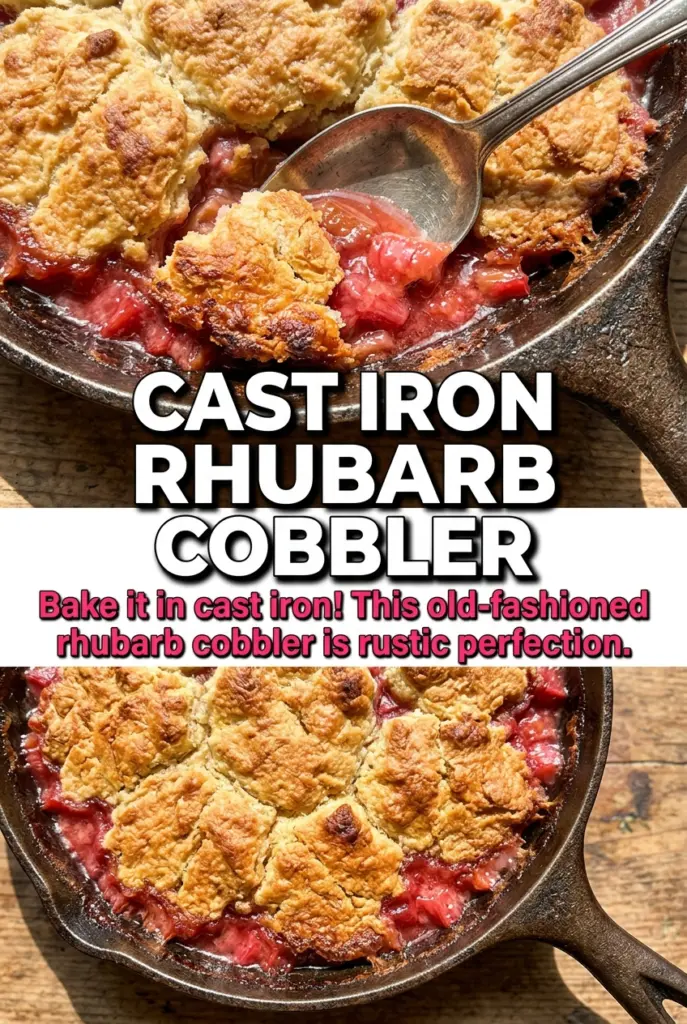
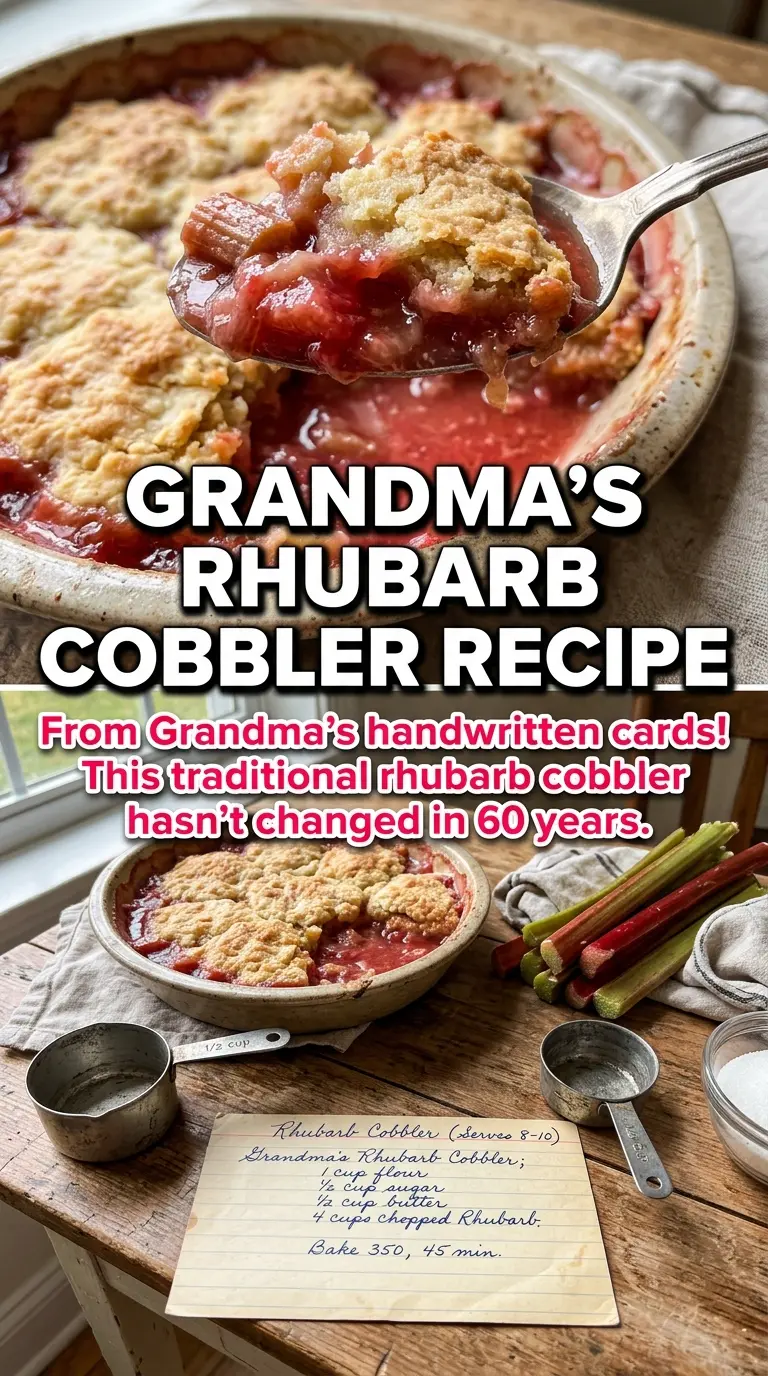
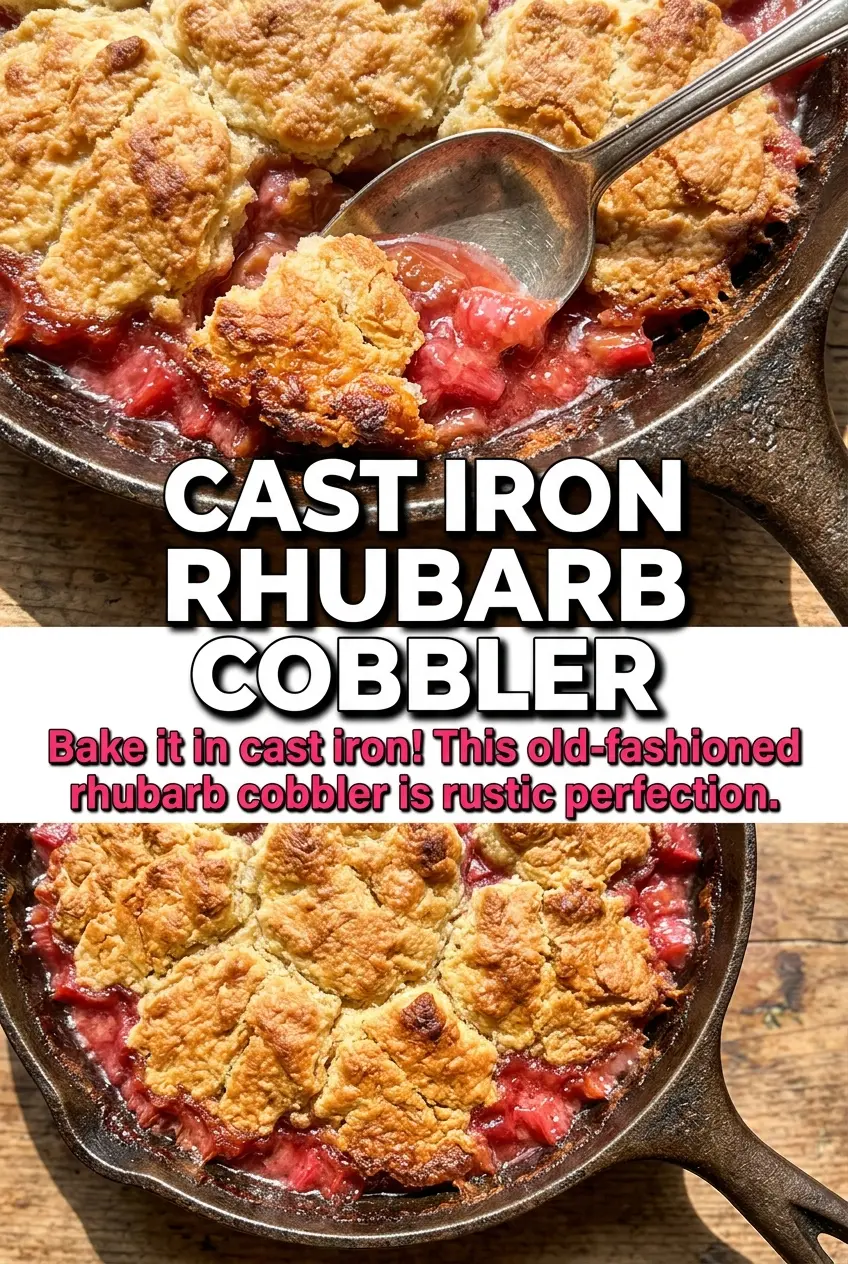
Tender biscuit topping and bubbling pink rhubarb are a hard combination to beat. The filling turns jammy at the edges while the center stays bright and tangy, and the biscuit layer bakes up golden with just enough structure to hold a spoonful of ice cream without collapsing into the fruit. It’s rustic in the best way, the kind of dessert that looks right at home in a baking dish with a big scoop missing from the middle.
What makes this version work is the balance between the rhubarb and the sugar-thickened juices. Rhubarb gives off a lot of liquid as it bakes, so the cornstarch matters here; it keeps the filling glossy instead of watery. The biscuit topping stays tender because the butter goes in cold and the milk is stirred in only until the dough comes together. That wet, shaggy dough is exactly what you want for a soft cobbler top.
Below, I’ll walk through the part that keeps the topping from turning dense, plus a few swaps that make this cobbler easier to fit around what you’ve got in the kitchen.
The filling set up beautifully and the biscuit topping stayed crisp on top but soft underneath. I was worried the rhubarb would turn soupy, but after the 15-minute rest it sliced and spooned perfectly.
Pin this old fashioned rhubarb cobbler for a bubbling fruit dessert with a tender biscuit topping and a golden, rustic finish.
The part that keeps rhubarb cobbler from turning watery
Rhubarb releases a lot of juice as soon as it hits the heat, and that’s where most cobblers go wrong. If you start with too little thickener, the filling stays loose and slips apart under the topping. If you use too much, it turns paste-like and loses that glossy, spoonable texture. The cornstarch here is doing a specific job: it turns the rhubarb juices into a sauce that thickens as it bubbles, then sets up a little more as the cobbler cools.
The other key is the rest after baking. That 15 minutes matters because the filling is still actively moving when it comes out of the oven. Cut into it immediately and it will seem looser than it really is. Let it sit and the cornstarch finishes its job, which gives you a cleaner scoop and a better balance between fruit and biscuit.
What the filling and topping are each doing here
- Rhubarb — Fresh rhubarb brings the sharp, clean tartness that makes this dessert taste lively instead of flat. Cut it into even 1-inch pieces so it softens at the same rate; if the pieces are too large, the filling can stay stringy in spots while the topping overbakes.
- Sugar — This does more than sweeten. It helps draw out the rhubarb juices so the cornstarch can thicken them into a proper filling. If your rhubarb is especially red and tender, you can stay with this amount; older stalks with more bite may need the full measure to round out the tartness.
- Cornstarch — This is what keeps the cobbler from puddling in the dish. Flour won’t give you the same clean, glossy set, and arrowroot can turn a little slippery after cooling. Stir it in thoroughly before baking so there aren’t any starchy pockets.
- Cold butter — The butter needs to stay cold so it creates little pockets in the dough as it bakes. That’s what gives the topping its tender, biscuit-like texture instead of a heavy cake layer. If the butter softens too much while you’re mixing, the topping will bake up denser.
- Milk — This brings the topping together with a soft, drop-biscuit texture. The dough should look wet and rough, not kneaded smooth. A thicker liquid like buttermilk will add a little tang, but plain milk keeps the topping mild and lets the rhubarb stay in charge.
Building the cobbler so the topping bakes up light
Getting the fruit into the dish first
Butter the baking dish, then mix the rhubarb filling right in it. That saves a bowl and helps the sugar and cornstarch coat every piece of fruit before the topping goes on. You want the mixture spread in an even layer so the heat reaches it at the same pace; crowded clumps of rhubarb can stay undercooked in the middle.
Making a biscuit dough that stays tender
Whisk the dry ingredients first, then cut in the cold butter until the mixture looks crumbly with a few pea-sized pieces left behind. Those little butter bits are what create tenderness. Once the milk goes in, stir only until the flour disappears. If you keep mixing, the dough gets tight and bakes up bready instead of soft.
Dropping and baking for the right finish
Spoon the dough over the fruit in mounds instead of trying to smooth it into a full lid. Gaps are fine; they let the fruit bubble up around the edges and give the cobbler that rustic look. Sprinkle the top with a little sugar before baking, then pull it when the topping is deeply golden and the filling is bubbling in thick bursts around the edges. If the top browns too fast, lay a loose piece of foil over it for the last stretch of baking.
Ways to adjust this cobbler without losing what makes it work
Make it strawberry-rhubarb
Swap out 1 1/2 to 2 cups of the rhubarb for hulled strawberries. The strawberries soften faster and sweeten the filling, so the cobbler tastes rounder and less sharp. Keep the cornstarch the same; the extra berry juice still needs the full thickening power.
Use a dairy-free topping
Replace the butter with a solid dairy-free baking stick and use an unsweetened non-dairy milk. The texture stays close to the original as long as the fat stays cold, though the flavor will be a little less rich. Avoid soft tub spreads; they melt too quickly and the topping can lose its flaky, biscuit-like crumb.
Add a little spice without covering the rhubarb
A pinch of cinnamon or ground ginger gives the filling a warmer edge, but keep it light. Rhubarb has a clean, bright taste that gets muddy fast if the spices take over. A small amount adds depth without turning the cobbler into something that tastes like pie filling.
Storage and Reheating
- Refrigerator: Store covered for up to 4 days. The topping softens a bit as it sits, but the flavor stays good and the filling thickens even more.
- Freezer: It freezes best after baking and cooling completely. Wrap tightly and freeze for up to 2 months, then thaw overnight in the refrigerator before reheating.
- Reheating: Warm individual portions in a 325°F oven until hot at the center. The microwave works in a pinch, but it steams the biscuit topping and makes it soggy instead of crisp on top.
Questions I get asked about rhubarb cobbler
Old Fashioned Rhubarb Cobbler
Ingredients
Equipment
Method
- Preheat the oven to 375°F and butter a 2-quart baking dish.
- In the baking dish, combine rhubarb, sugar, cornstarch, and water, then mix well until the fruit is coated.
- Whisk together flour, sugar, baking powder, and salt for the topping.
- Cut the cold butter into the flour mixture until it looks crumbly.
- Stir in the milk until just combined, keeping the dough wet.
- Drop spoonfuls of dough over the rhubarb filling, then sprinkle the top with sugar.
- Bake for 40-45 minutes at 375°F until the topping is golden and the filling is bubbling.
- Cool the cobbler for 15 minutes before serving warm.
- Serve warm as desired, such as with vanilla ice cream.