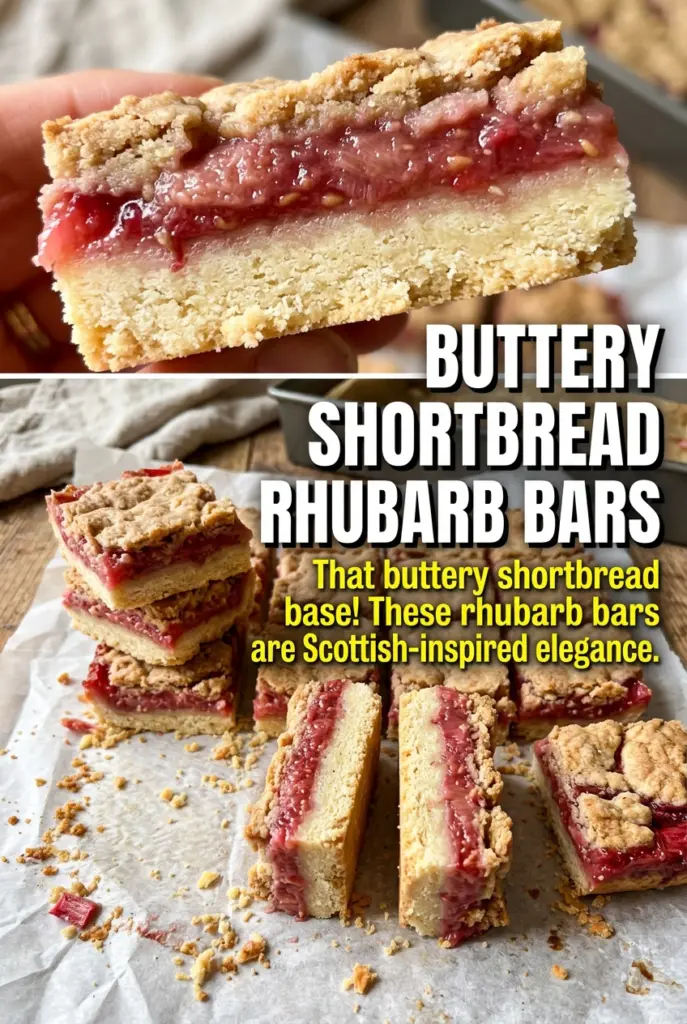
Thick rhubarb jam over a buttery shortbread base gives these bars the kind of clean slice and bright-tart bite that keeps people reaching for a second piece. The crust stays tender but sturdy, the filling sets into a glossy layer that isn’t runny, and the powdered sugar on top takes the edge off the fruit in the best way.
What makes these bars work is the contrast: cold butter for a shortbread that bakes up crumbly and rich, then a cooked rhubarb layer that gets thick enough to cut without oozing. Rhubarb needs that extra simmering time before it goes anywhere near the oven, because undercooked rhubarb turns watery fast and can soak the base. Cornstarch finishes the job and gives the bars that neat, bakery-style slice.
Below, I’ve included the one step that matters most for a clean set, plus a few swaps if you only have frozen rhubarb or want to adjust the sweetness a little.
The filling set up perfectly after chilling, and the shortbread stayed crisp on the bottom instead of getting soggy. I sliced them the next day and the layers were still neat and clean.
These rhubarb shortbread bars slice cleanly after chilling and keep that buttery base under the thick pink filling.
The Trick to Keeping Rhubarb Bars from Going Watery
Rhubarb gives up a lot of juice as it cooks, and that’s where most bars go wrong. If you spoon a loose filling over the crust, the liquid sinks in before the oven has a chance to set it, and you end up with a soft bottom layer and a filling that slides when you cut it. The fix is to cook the rhubarb mixture until it turns visibly thick in the pan, then add the cornstarch and cook it long enough for the bubbles to look slow and glossy instead of thin and noisy.
Another detail that matters here is the hot crust. Spreading the filling over a crust that’s just come out of the oven helps the two layers bond instead of sitting on top of each other like separate pieces. That’s what gives you those tidy bars that hold their shape after chilling.
What the Butter, Rhubarb, and Cornstarch Each Bring to the Pan
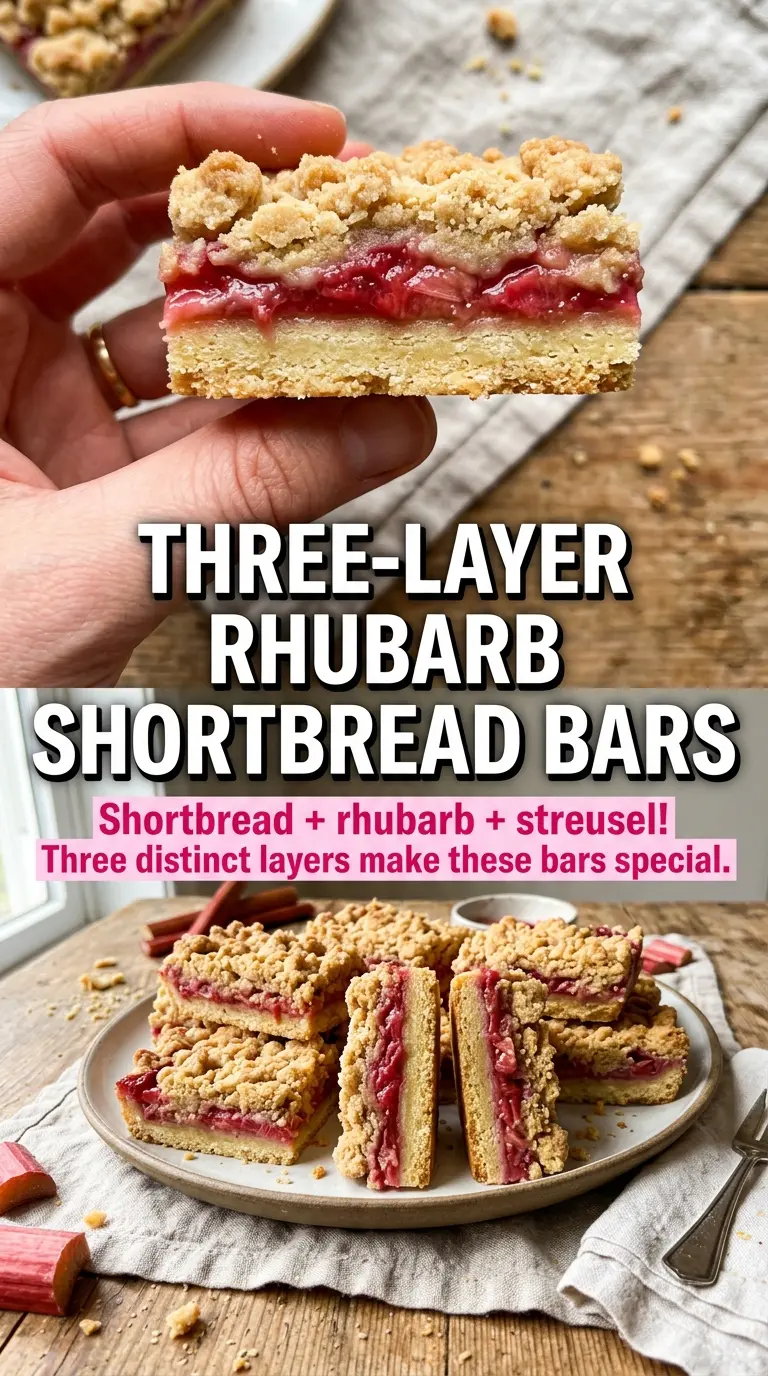
- Cold butter — This is what gives the shortbread its sandy, tender crumb. Room-temperature butter makes a softer, more cookie-like base, which isn’t what you want here because the crust needs to stay structured under the fruit layer.
- Powdered sugar — It dissolves into the dough faster than granulated sugar and keeps the crust fine-textured instead of gritty. In shortbread, that smoothness matters.
- Fresh rhubarb — Fresh rhubarb has the brightest flavor and the best texture for this recipe. Frozen rhubarb works in a pinch, but it needs to be thawed and drained first or the filling can turn loose.
- Cornstarch — This is what turns the cooked rhubarb into a sliceable bar filling instead of a spoonable compote. Stir it in once the fruit is soft and bubbling, then cook just until the mixture goes from cloudy to thick and glossy.
- Sugar — Rhubarb is sharp enough that it needs the full amount here. Reducing it too much sounds tempting, but it can throw off both the flavor and the set.
Building the Crust and Filling in the Right Order
Mixing the Shortbread Base
Start by cutting the cold butter into the flour, powdered sugar, and salt until the mixture looks like coarse crumbs with a few pea-sized bits left. Those little butter pieces melt in the oven and create the tender, crumbly texture that makes shortbread worth eating. Press the mixture firmly and evenly into the pan so it bakes into one cohesive layer instead of a loose sandy crust.
Cooking the Rhubarb Until It Thickens
Simmer the diced rhubarb with sugar and water until it breaks down completely and the pan looks full of soft, pink pulp. If you still see distinct chunks that hold their shape, it needs more time; undercooked rhubarb won’t thicken properly later. Once the cornstarch goes in, keep stirring until the filling turns noticeably heavier and starts to leave tracks on the spoon.
Baking the Layers Together
Spread the hot filling over the hot crust and return the pan to the oven right away. That second bake helps the filling tighten up and keeps the top from staying loose or sticky. When it comes out, the center should still look a little soft, not sloshy; it finishes setting as it cools.
Cooling for a Clean Slice
Let the bars cool completely, then refrigerate them for at least two hours before cutting. If you try to slice them warm, the filling will smear and the crust will crumble at the edges. A sharp knife wiped clean between cuts gives you the neatest squares, and a light dusting of powdered sugar hides any tiny imperfections.
How to Adapt These Rhubarb Bars Without Losing the Clean Set
Frozen rhubarb bars
Use frozen rhubarb straight from the freezer only if you’re ready for extra liquid and a longer cook. Thawing and draining first gives you a filling that sets faster and tastes brighter. If you skip that step, expect to simmer the filling a few minutes longer before adding the cornstarch.
Less-sweet version
You can reduce the sugar a little, but don’t cut it aggressively. Rhubarb needs enough sweetness to balance the tartness and enough sugar to help the filling set with a glossy finish. Too little and the bars taste sharp and can weep a little after chilling.
Gluten-free shortbread base
A good 1:1 gluten-free flour blend can work here, but the crust may bake up a little more delicate. Press it firmly into the pan and chill the cut bars before slicing so they don’t crumble at the edges. The filling stays the same.
Storage and Reheating
- Refrigerator: Store in an airtight container for up to 5 days. The crust stays best when the bars are chilled.
- Freezer: These freeze well. Wrap the cut bars individually and freeze for up to 2 months, then thaw in the refrigerator so the filling doesn’t sweat.
- Reheating: These are best served cold or at cool room temperature, so reheating isn’t needed. If you want to take the chill off, let them sit on the counter for 15 to 20 minutes rather than warming them, which can soften the set and blur the layers.
Answers to the Questions Worth Asking
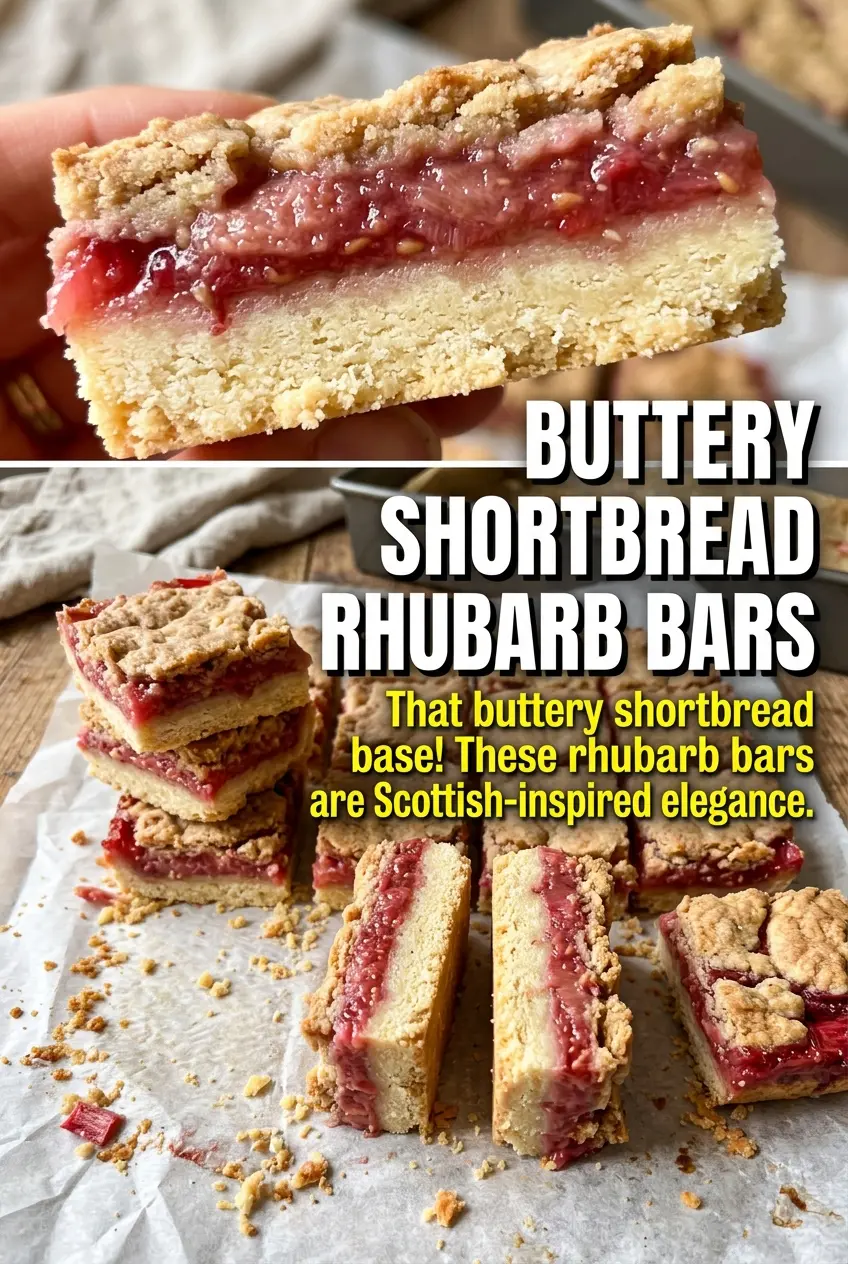
Rhubarb Shortbread Bars
Ingredients
Equipment
Method
- Preheat the oven to 350°F and line a 9x13-inch pan with parchment paper for easy lifting.
- Mix the all-purpose flour, powdered sugar, and salt, then cut in the cold butter until the mixture looks crumbly.
- Press the shortbread mixture firmly into the lined pan to form an even, compact crust.
- Bake for 25 minutes at 350°F until the edges are lightly golden.
- Simmer the diced fresh rhubarb with the sugar and water until the fruit is very soft and the mixture looks very thick, about 15 minutes.
- Stir the cornstarch with a little water to make a smooth slurry.
- Whisk the slurry into the hot rhubarb and cook until very thick, then spread it over the hot shortbread crust.
- Return the pan to the oven and bake for 15–20 minutes at 350°F, until the rhubarb layer is set.
- Cool completely at room temperature before refrigerating so the bars slice cleanly.
- Refrigerate for 2 hours.
- Dust with powdered sugar, then cut into bars and serve.