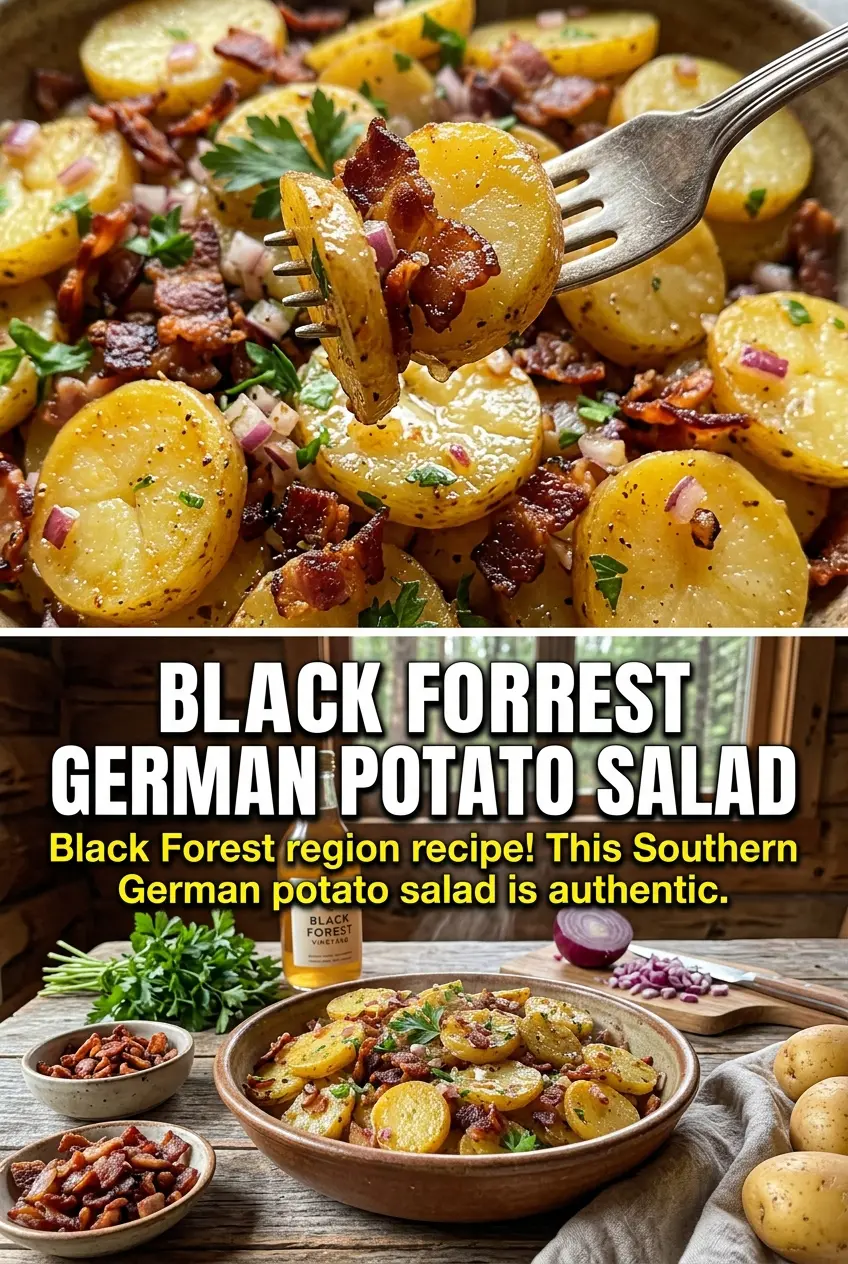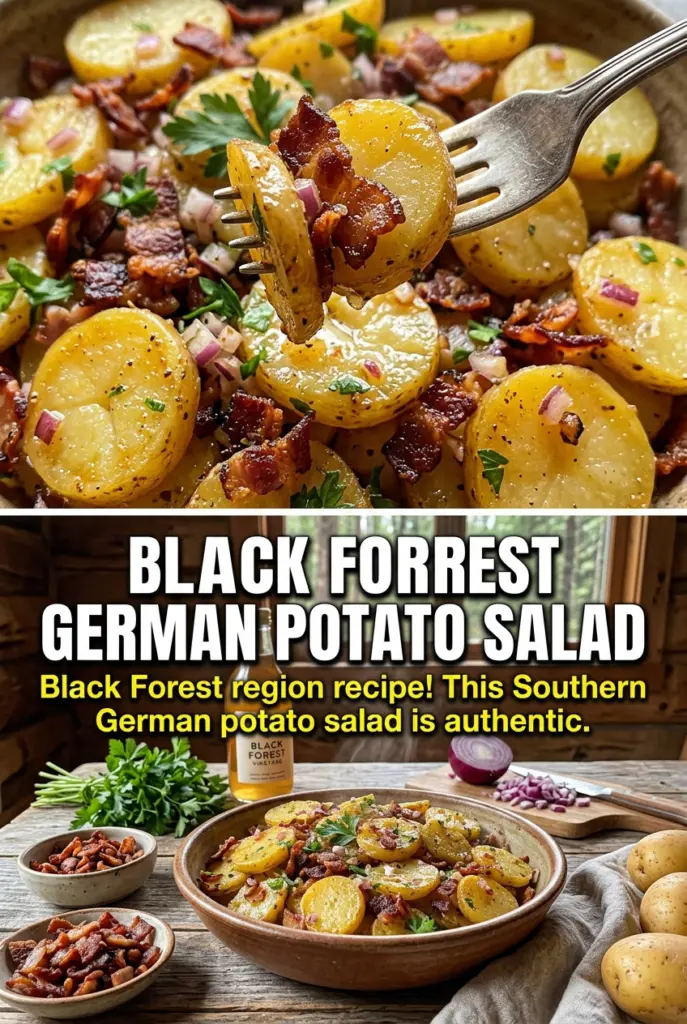
Warm German potato salad lands on the table with soft potatoes that soak up every bit of the tangy bacon dressing, crisp bacon scattered through the bowl, and just enough parsley to keep the whole thing from feeling heavy. It’s the kind of side dish that disappears fast because it tastes bold at room temperature and even better while it’s still a little steamy.
The trick is using potatoes that hold their shape after boiling. Yukon golds stay tender without turning mealy, so they catch the dressing instead of collapsing into mash. The hot vinegar mixture also matters. It needs to hit the potatoes while they’re still warm, which helps them absorb the seasoning instead of letting it sit on top like a glaze.
Below I’m walking through the part that makes this salad work: how hot the dressing should be, when to toss, and why gentle handling keeps the slices intact. There’s also a storage note for the leftovers, because this salad holds up better than most people expect.
The dressing soaked into the potatoes while they were still warm and the flavor was spot on. I liked that the bacon stayed crisp enough to add texture instead of turning soft.
Like this warm German potato salad with bacon dressing? Save it to Pinterest for the nights when you want a tangy, make-ahead side that still tastes fresh.
The Dressing Needs to Hit the Potatoes While They’re Still Warm
The biggest mistake with German potato salad is waiting until everything cools before combining it. Warm potatoes absorb the vinegar dressing from the outside in, which gives you flavor all the way through instead of a bowl of potatoes slicked with dressing on the surface. That’s why this version tastes fuller after a few minutes on the table, even before it’s had time to sit.
Boiled potatoes can also fall apart fast if they’re overhandled. Slice them, boil just until tender, then drain them well so the dressing doesn’t get diluted. Toss gently with a spoon or spatula. If you stir like you’re mixing cake batter, the slices break and the salad turns muddy instead of looking like real potato salad.
What the Bacon Drippings and Vinegar Are Doing Here
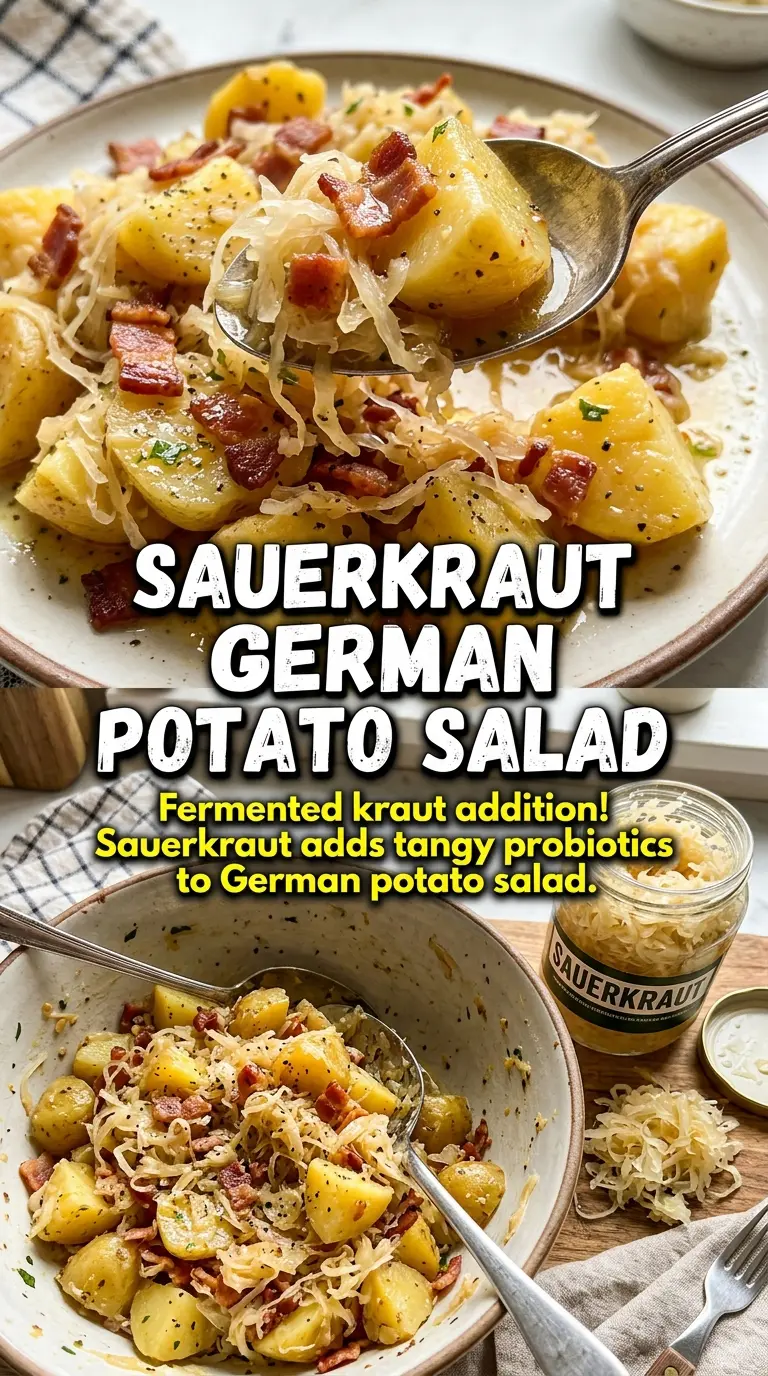
The bacon drippings carry the onion and give the dressing its savory base. You need enough fat to coat the onions and round out the vinegar, but not so much that the salad tastes greasy. If your bacon is very fatty, measure the drippings and leave a little behind instead of pouring in everything.
Chicken broth stretches the dressing and keeps the vinegar from tasting sharp or thin. White vinegar gives the classic clean bite, while Dijon helps the dressing hold together and adds a little depth. Yukon gold potatoes matter here because they stay creamy without shredding, and that texture is half the reason this salad works as a warm side.
- Yukon gold potatoes — These are the best choice because they stay intact after boiling and still turn creamy when they absorb the hot dressing. Russets work if that’s what you have, but they break down more easily and give you a softer, less structured salad.
- Bacon — The bacon isn’t just garnish. It seasons the dressing with its drippings and gives the salad the smoky, salty crunch it needs. Cook it until crisp enough to crumble cleanly; chewy bacon gets lost once it’s tossed through the potatoes.
- White vinegar — This is what gives the salad its signature tang. Apple cider vinegar can stand in if needed, but the result will be a little rounder and less sharp.
- Dijon mustard — This helps the dressing emulsify slightly so it clings to the potatoes instead of running straight to the bottom of the bowl. Yellow mustard will work in a pinch, but the flavor is milder and less balanced.
- Fresh parsley — Add it at the end so it stays bright. Dried parsley won’t give the same fresh finish, and it can make the salad taste dusty instead of clean.
Building the Salad Without Crushing the Potatoes
Boiling the Potatoes to the Right Point
Cook the potato slices until a knife slides through with only a little resistance. They should be tender, not waterlogged. Drain them well and let the steam escape for a minute so the dressing doesn’t get watered down the second it hits the bowl. If the potatoes are falling apart in the colander, they went a little too far.
Cooking the Bacon and Onion in the Right Order
Start with the bacon until it’s crisp, then use the drippings to soften the onion. The onion should turn translucent and sweet, not brown and bitter. If the pan looks dry after the bacon comes out, you probably used a lean cut; add just a spoonful of reserved fat back in so the onion still has enough to cook properly.
Making the Hot Vinegar Dressing
Stir the broth, vinegar, sugar, mustard, salt, and pepper into the hot pan and let it simmer just long enough for the sugar to dissolve. The dressing should smell sharp and savory, not aggressively vinegary. Pull it off the heat once it’s combined. If you boil it hard, the liquid reduces too far and the salad turns overly intense once it’s tossed with the potatoes.
Finishing the Bowl
Crumble the bacon over the potatoes, pour the hot dressing on top, and toss gently from the bottom up. Add the parsley last so it stays green and fresh against the warm potatoes. Serve it right away while the potatoes are still glossy and the bacon still has some bite.
How to Adjust This for Different Tables and Diets
Make It Gluten-Free Without Changing the Texture
This recipe is already naturally gluten-free as written, as long as your chicken broth is certified gluten-free. That matters because broth is the one ingredient most likely to sneak in a hidden wheat-based thickener. The texture and flavor stay exactly the same.
Swap in Apple Cider Vinegar for a Softer Tang
Apple cider vinegar gives the salad a slightly sweeter edge and a less sharp finish. Use the same amount, but expect the dressing to taste a touch rounder. If you want the classic restaurant-style bite, stick with white vinegar.
Use Turkey Bacon When You Need a Lighter Version
Turkey bacon will work, but it won’t give you the same amount of drippings, so the dressing loses some of its savory backbone. If you go this route, add a tablespoon of butter or neutral oil to the skillet before cooking the onion so the base still tastes full. The finished salad will be leaner and a little less smoky.
Storage and Reheating
- Refrigerator: Store leftovers in an airtight container for up to 4 days. The potatoes will firm up a little as they chill, but the flavor stays strong.
- Freezer: I don’t recommend freezing this salad. The potatoes change texture after thawing and the dressing separates.
- Reheating: Warm it gently in a skillet over low heat with a splash of broth if needed. Don’t blast it in the microwave, or the potatoes can split and the bacon goes soft.