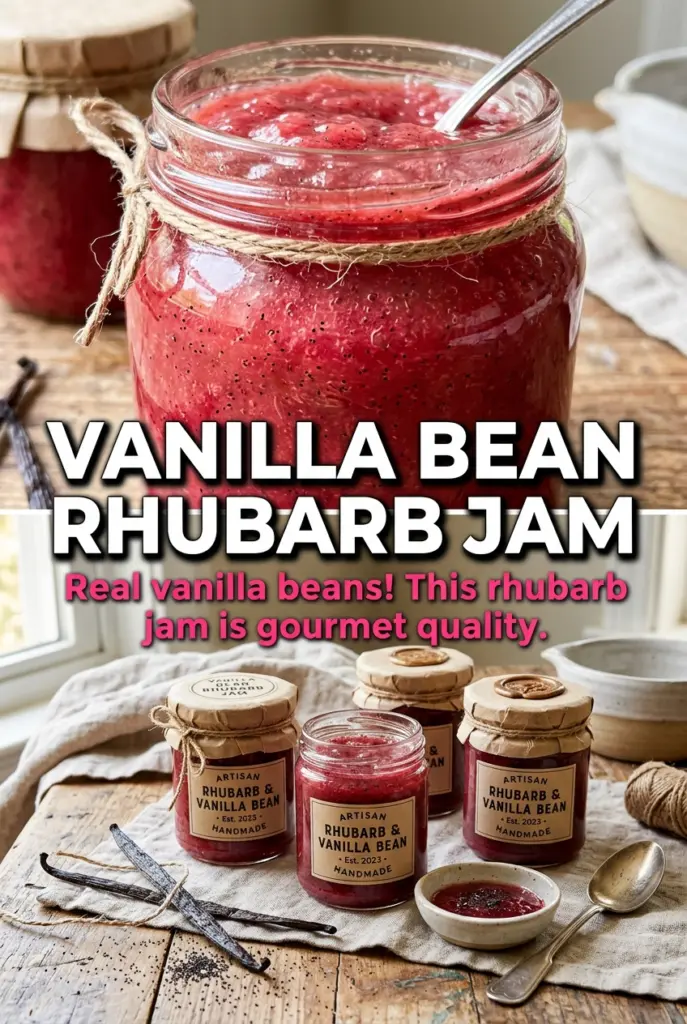
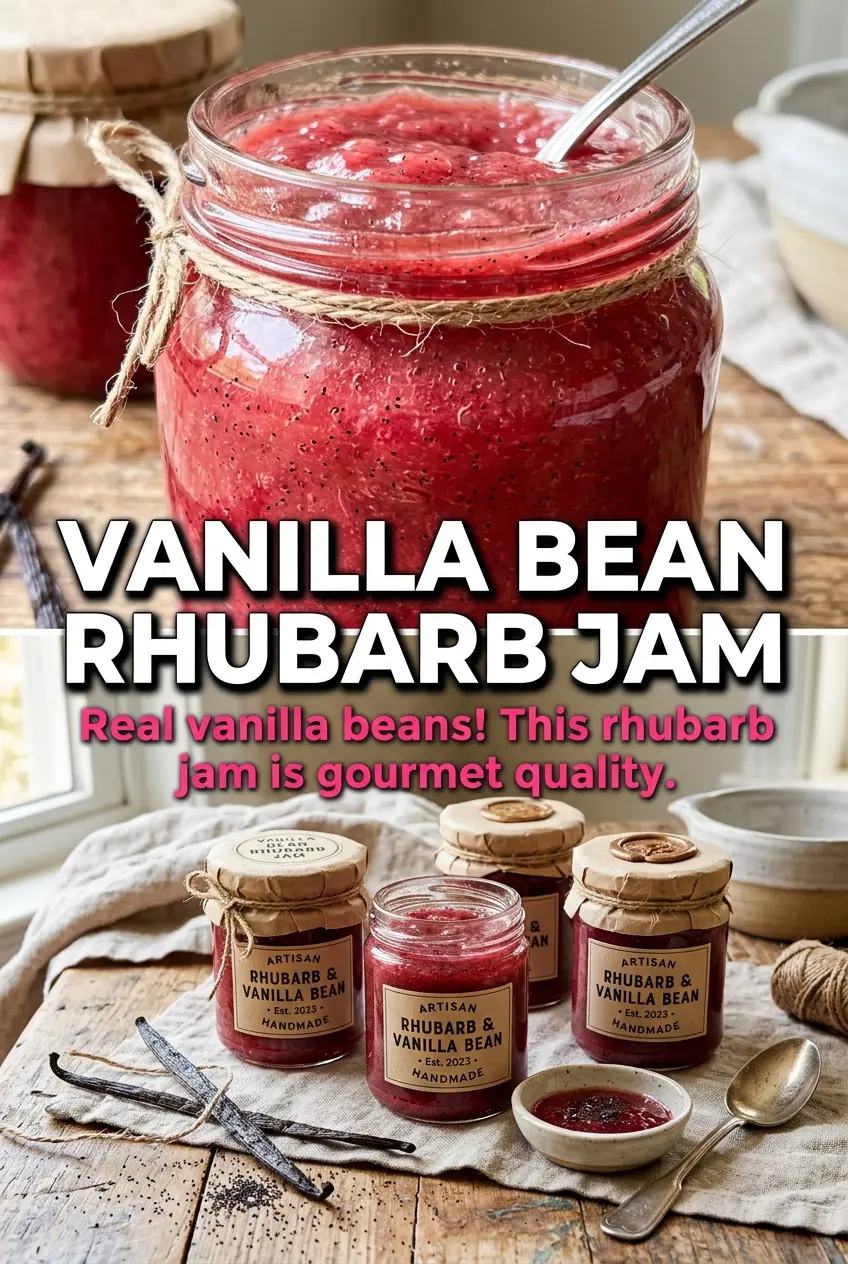
Ruby-pink vanilla-rhubarb jam sets up with a clean spoonable body, bright rhubarb tang, and those little vanilla bean flecks that make each jar feel a little special. It’s the kind of preserve that tastes just as good spread thick on toast as it does swirled into yogurt or spooned over warm biscuits. The color stays lively, the texture stays smooth, and the finish lands somewhere between tart and sweet in the best way.
What makes this version work is the balance. Rhubarb brings the sharp, almost citrusy backbone, while the vanilla rounds it out without turning it heavy. Pectin gives the jam structure quickly, so you don’t have to cook the fruit down until it loses its brightness. The lemon juice helps both the set and the flavor, and the sugar isn’t just for sweetness — it’s part of what helps the jam hold together once it cools.
Below, I’ve included the detail that matters most: the point where the jam has reached a true hard boil and the reason the vanilla bean pod comes out before jarring. If you’ve ever had homemade jam turn loose, gummy, or overly cooked, this method will help you avoid that.
The jam set up beautifully after the full 24 hours, and the vanilla kept the rhubarb from tasting too sharp. I loved the little vanilla specks, and it spread cleanly on toast without running everywhere.
Love the ruby color and vanilla flecks in this Vanilla-Rhubarb Jam? Save it to Pinterest for toast, biscuits, and gifting jars that look as good as they taste.
The Part That Decides Whether It Sets or Stays Loose
With rhubarb jam, the biggest mistake is cooking by the clock instead of by the boil. Rhubarb collapses fast, and if you simmer it gently for too long, you end up with a soft preserve that tastes cooked down instead of bright. The pectin needs a real rolling boil to activate properly, and the sugar has to go in all at once so the mixture can return to that hard boil without dragging out the cooking time.
The other thing that matters here is restraint once the jam hits the right point. One minute at a hard boil after adding the sugar is enough. Go much longer and the rhubarb loses its fresh edge, the vanilla gets buried, and the set can turn stiff instead of glossy and spreadable. If you’ve had jam separate or turn syrupy in the jar, it usually cooked too softly or too long.
What the Vanilla, Pectin, and Lemon Juice Are Each Doing
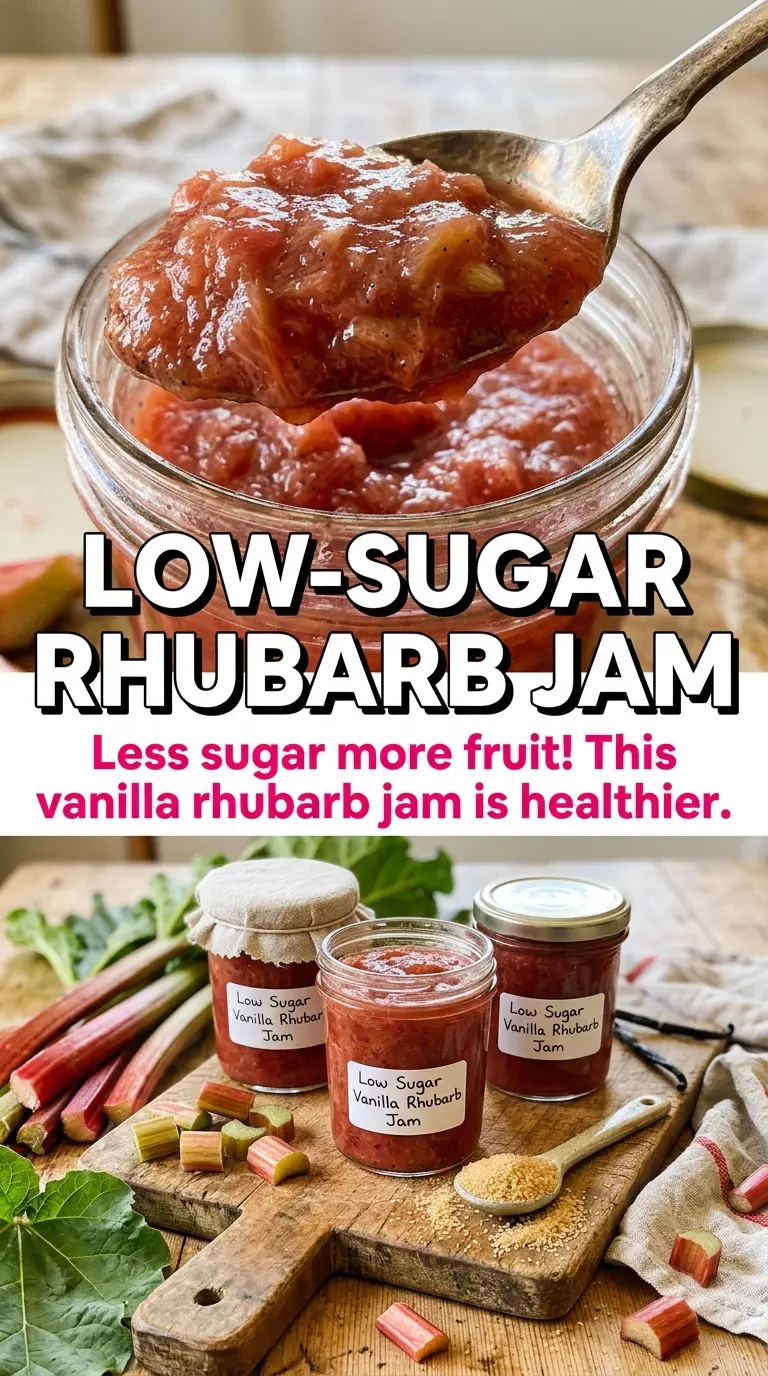
- Rhubarb — This is the whole identity of the jam. Fresh stalks give you tartness, body, and that vivid pink color you can’t fake with substitutions. Frozen rhubarb works if that’s what you have, but thaw and drain it first so you don’t water down the set.
- Vanilla bean — A real vanilla bean brings flecks, aroma, and a roundness that extract can’t fully match. If you need to substitute, use 1 to 1 1/2 teaspoons pure vanilla extract, but stir it in off the heat at the end so the flavor stays noticeable.
- Powdered pectin — This is what lets the jam set quickly without overcooking the fruit. Don’t swap in a low-sugar pectin unless the package specifically tells you how to adjust the sugar, because the boil time and set will change.
- Lemon juice — It sharpens the flavor and helps the pectin do its job. Bottled lemon juice is fine here because this is a canning recipe, and the measured acidity matters more than fresh-squeezed brightness.
- Sugar — Besides sweetness, sugar protects the fruit flavor and gives the jam its finished gloss. Reducing it on a whim can leave you with a runny jar, especially with rhubarb’s high moisture content.
From Raw Rhubarb to Jars on the Counter
Getting the Fruit Going
Start with diced rhubarb in a large, heavy pot so the mixture has room to bubble without boiling over. Add the split vanilla bean, the scraped seeds, and the lemon juice before the pectin goes in. That gives the fruit a head start and spreads the vanilla evenly through the pot instead of leaving it in little pockets.
Building the Set
Stir in the pectin and bring the pot to a full rolling boil, not just a lazy simmer. A true rolling boil is when the surface keeps moving even as you stir. Once it gets there, add all the sugar at once and bring it back to a hard boil for exactly 1 minute, stirring constantly so the bottom doesn’t catch.
Finishing and Jarring
Pull the pot off the heat as soon as the minute is up. Skim the foam if needed, then remove the vanilla bean pod before ladling the jam into sterilized half-pint jars. Leave 1/4-inch headspace so the jars can seal properly in the boiling water bath. After processing, don’t disturb the jars for 24 hours; the set finishes as the jam cools, and moving it early can leave you with a loose center.
How to Tweak This Jam Without Losing the Set
Use vanilla extract instead of a whole bean
If you don’t have a vanilla bean, use pure vanilla extract and add it off the heat after the jam comes off the boil. You’ll lose the little specks and some of the depth, but the flavor still reads clearly as vanilla-rhubarb instead of plain rhubarb.
Make it lower sugar with the right pectin
If you want to cut the sugar, you need a low-sugar pectin formulated for that style of jam. Standard powdered pectin depends on the full amount of sugar for set and texture, so reducing the sugar without changing the pectin usually gives you a loose, underwhelming result.
Make a smaller batch for the fridge
You can halve the recipe for a small-batch version if you’re not canning it. Keep the same boil and stir timing, then store it in clean jars in the refrigerator. The texture may stay a little softer than a fully processed batch, but the flavor will be just as bright.
Skip the canning step for a quick spread
If you’d rather not water-bath process, ladle the hot jam into clean jars and refrigerate once cooled. It won’t keep as long as shelf-stable jam, but it’s the fastest route to a fresh, spoonable spread with the same set and flavor.
Storage and Reheating
- Refrigerator: Once opened, keep the jam refrigerated and use it within 3 weeks for the best flavor and color. An unopened processed jar can be stored in a cool, dark pantry for up to 1 year.
- Freezer: This jam can be frozen only if you leave extra headspace in freezer-safe containers. The texture may loosen a little after thawing, but the flavor stays strong.
- Reheating: Jam doesn’t need reheating for serving, but if it thickens too much in the fridge, let the jar sit at room temperature for 10 to 15 minutes or stir a spoonful into warm toast, oatmeal, or yogurt. Don’t microwave the whole jar.
Questions I Get Asked About This Recipe
Vanilla-Rhubarb Jam
Ingredients
Equipment
Method
- Combine diced rhubarb, vanilla bean pod and seeds, and lemon juice in a large pot, stirring to coat the fruit.
- Stir in the powdered pectin and bring the mixture to a rolling boil over high heat, stirring constantly until it reaches a true boil.
- Add the sugar all at once and return to a hard boil for 1 minute, stirring constantly to prevent sticking.
- Remove the pot from the heat and skim off any foam, then remove the vanilla bean pod from the jam.
- Ladle the hot jam into sterilized half-pint jars, leaving 1/4-inch headspace to allow proper sealing.
- Process the filled jars in a boiling water bath for 10 minutes, keeping the water at a steady boil.
- Let the jars sit undisturbed for 24 hours at room temperature to set completely before checking seals and storing.