Crispy gochujang potato salad lands with the kind of contrast that keeps people coming back for another spoonful: shattering edges, creamy centers, and a spicy-sweet dressing that clings to every ridge instead of sliding off the bowl. It eats like a side dish, but it has enough punch to steal attention from whatever else is on the table.
The trick is giving the potatoes time to cool before they meet the dressing. Hot potatoes turn the mayo loose and mute the gochujang, while warm potatoes hold onto the sauce and let the flavor settle into the cracks. Roasting the potatoes cut-side down on a hot sheet pan also matters. That’s what gives you real crispness instead of soft, steamed edges.
Below, you’ll find the exact texture cues I look for, why the dressing is built the way it is, and a few swaps that still keep the salad balanced and bright.
The potatoes actually stayed crisp after tossing, and the dressing had that perfect spicy-creamy balance. I let them cool for the full 30 minutes and it made all the difference.
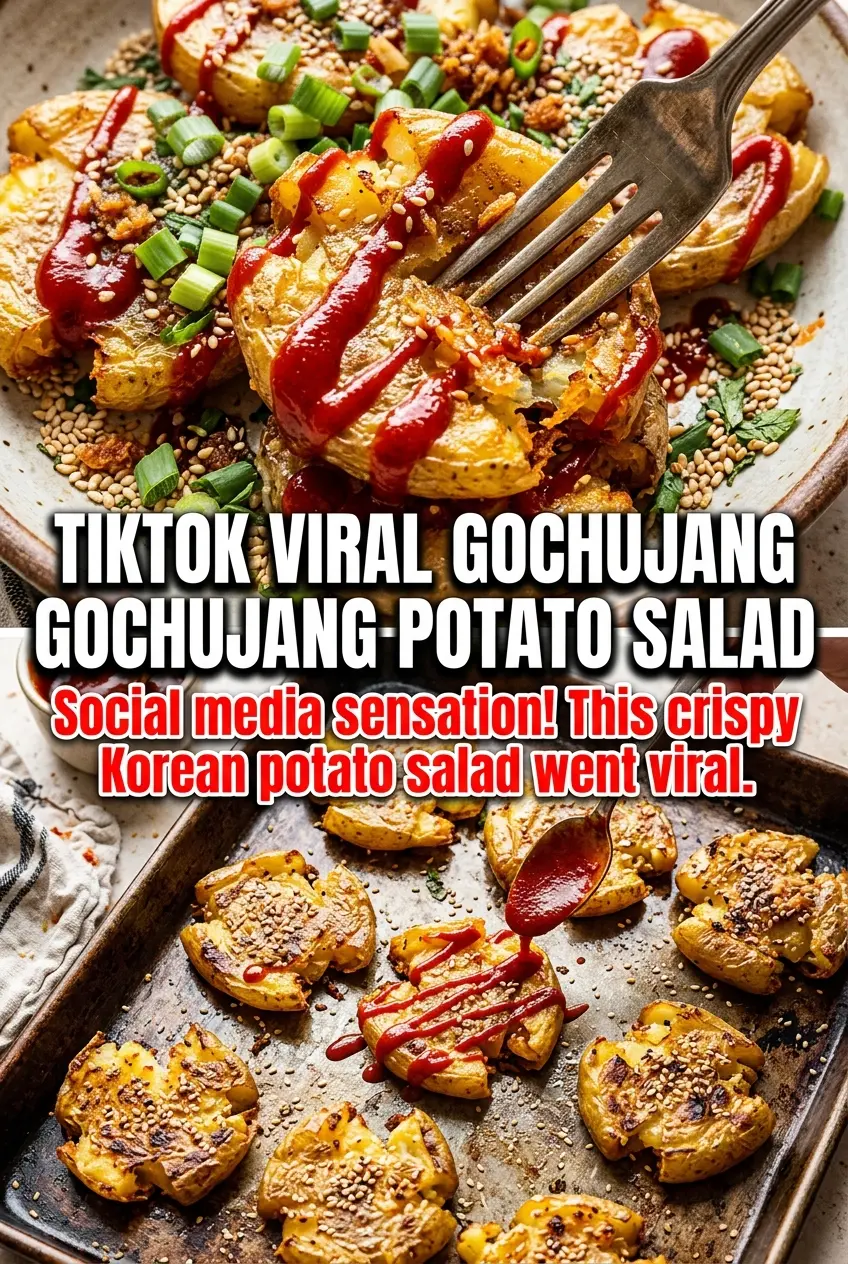
Crispy Gochujang Potato Salad with golden edges, spicy-sweet dressing, and sesame crunch
The Secret to Keeping the Potatoes Crispy After They’re Tossed
The biggest mistake with potato salad like this is dressing the potatoes while they’re still steaming hot. That traps moisture on the surface and turns all those crisp, roasted edges soft in minutes. Letting the potatoes cool for 30 minutes gives the outside time to set, so the dressing clings instead of soaking in and loosening everything up.
Roasting cut-side down on a hot pan is the other half of the equation. The flat sides make direct contact with the sheet pan, which gives you browning instead of pale, uneven potatoes. If the pan feels crowded, split them between two trays. Packed potatoes steam each other, and once that happens, there’s no crisp texture to save.
What Each Ingredient Is Actually Doing in This Salad
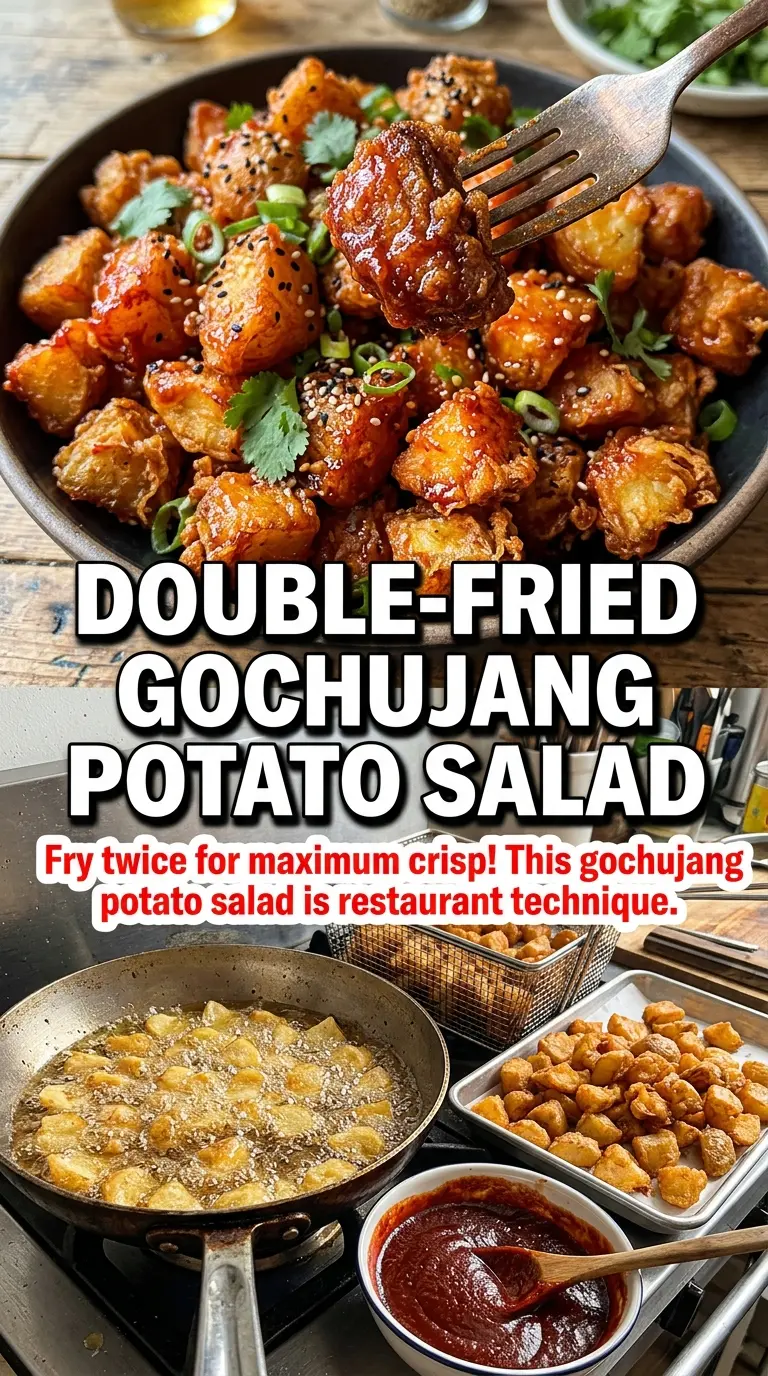
- Baby potatoes — Their waxy, creamy interior holds together after roasting, which matters here because you want defined chunks, not a mashy salad. Halving them gives enough surface area for browning without drying the center.
- Gochujang — This is the backbone of the dressing. It brings heat, sweetness, and fermented depth at once, and no simple hot sauce swap will fully replace that sticky, savory complexity.
- Mayonnaise — It softens the sharp edges of the gochujang and helps the dressing coat the potatoes evenly. If you use all yogurt instead, the dressing turns thinner and tangier; that works, but it won’t cling the same way.
- Rice vinegar — A little acid keeps the salad from tasting heavy. It cuts through the mayo and brightens the roasted potatoes, which need that lift after coming out of a hot oven.
- Honey — This rounds out the heat and gives the dressing a glaze-like finish. Maple syrup can stand in, but honey blends more naturally with gochujang’s savory-sweet profile.
- Sesame oil and sesame seeds — The oil adds fragrance in the dressing, while the seeds bring a toasted finish and a little crunch on top. Use toasted sesame seeds if you have them; the flavor is deeper and shows up immediately.
- Green onions — They add freshness and a clean bite right at the end. Slice them thin so they scatter through the salad instead of overpowering each forkful.
Roasting, Cooling, and Dressing the Potatoes in the Right Order
Getting the Pan Hot First
Set the oven to 425°F before you do anything else. The potatoes need enough heat to brown quickly, or they’ll dry out before the edges ever crisp. Toss them with olive oil, salt, and pepper until every cut surface looks lightly coated, then spread them in a single layer with the cut sides down whenever possible.
Roasting Until the Edges Go Deep Gold
Roast for 30 to 35 minutes, and watch for the edges to turn deeply golden and the bottoms to release from the pan without sticking. If they’re pale, they’re not done. If you try to flip them too early, they’ll tear; let the crust form first, then use a spatula to turn them if needed.
Cooling Before the Dressing Goes On
Give the potatoes a full 30 minutes to cool. They should still be warm, not hot, when they meet the dressing. That’s the sweet spot where the sauce coats instead of splitting, and the potatoes still absorb enough flavor to taste seasoned all the way through.
Building the Gochujang Dressing
Stir the gochujang, mayonnaise, rice vinegar, honey, and sesame oil together until smooth and glossy. If the dressing looks streaky, keep mixing until the mayo fully takes on the red color of the gochujang. The finished dressing should be thick enough to cling to the potatoes, not run off the bottom of the bowl.
Finishing With Crunch and Freshness
Toss the cooled potatoes with the dressing gently so the roasted edges stay intact. Add the sesame seeds and sliced green onions last, then serve the salad at room temperature. Cold potatoes dull the gochujang and make the dressing feel heavier than it should.
Three Ways to Adapt This Gochujang Potato Salad
Make it dairy-free without losing the creamy finish
This salad is already close, but if your mayo contains dairy or you prefer a vegan version, use a plant-based mayonnaise. The texture stays just as clingy, and the gochujang still carries the flavor. Don’t swap in a thin dressing base here; you need that richness to hold onto the roasted potatoes.
Use sour cream or Greek yogurt for a tangier salad
You can replace part or all of the mayonnaise with sour cream or Greek yogurt if you want a sharper, more picnic-style salad. Yogurt lightens the dressing, but it also makes it less stable, so add it after the potatoes have cooled and serve the salad soon after mixing.
Turn it into a warm side for grilled meat or tofu
If you want a softer, more saucy version, toss the potatoes with the dressing while they’re still just barely warm and serve right away. You’ll lose some crispness, but you gain a more coated, restaurant-style side that works well with grilled chicken, salmon, or tofu.
Storage and Reheating
- Refrigerator: Store leftovers in an airtight container for up to 3 days. The potatoes will soften as they sit, but the flavor stays strong.
- Freezer: I don’t recommend freezing this salad. The potatoes turn grainy after thawing, and the mayo-based dressing separates.
- Reheating: This salad is best served at room temperature. If you want to take the chill off leftovers, let them sit out for 20 to 30 minutes rather than microwaving them, which collapses the texture and makes the dressing greasy.
Answers to the Questions Worth Asking
Crispy Gochujang Potato Salad
Ingredients
Equipment
Method
- Preheat oven to 425°F. Heat the oven until fully hot for crisp, golden edges.
- Toss the baby potatoes with olive oil, salt and pepper. Coat all cut sides so they roast rather than steam.
- Spread potatoes on a sheet pan and roast for 30-35 minutes at 425°F. Roast until deep golden and crispy, with browned edges visible.
- Let potatoes cool for 30 minutes. Resting keeps the crisp texture before you dress them.
- Mix gochujang, mayonnaise, rice vinegar, honey, and sesame oil. Stir until smooth and glossy, with the honey fully blended in.
- Toss the cooled potatoes with the dressing. Coat thoroughly so each potato has a red glaze.
- Top with sesame seeds and green onions. Sprinkle on right before serving for visible crunch and bright green color.
- Serve at room temperature. The glaze firms slightly as it sits, improving cling to the potatoes.