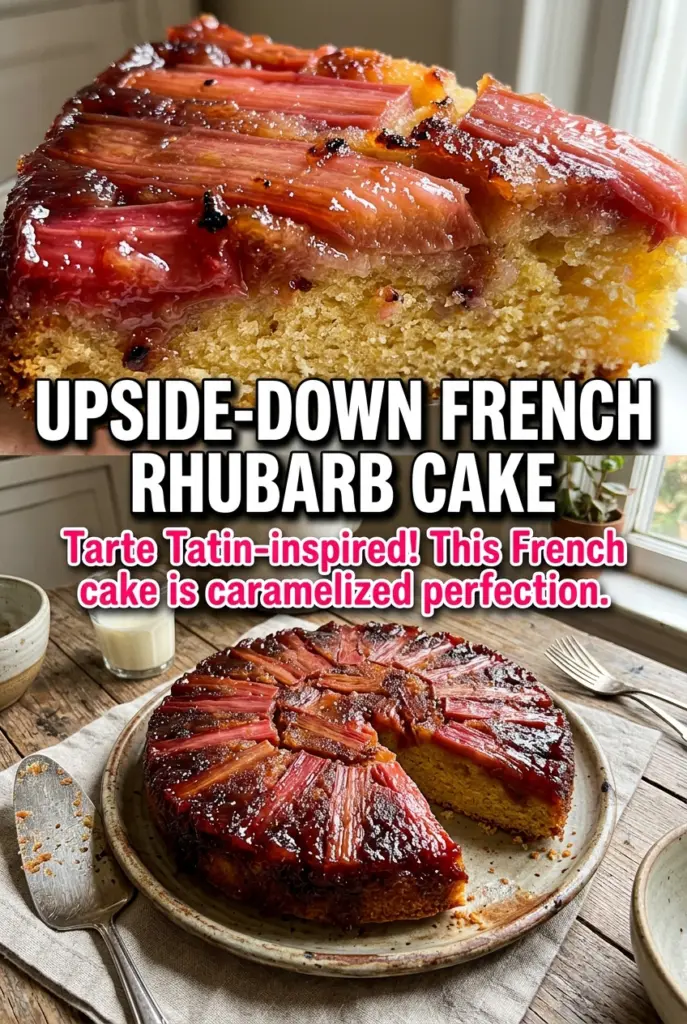
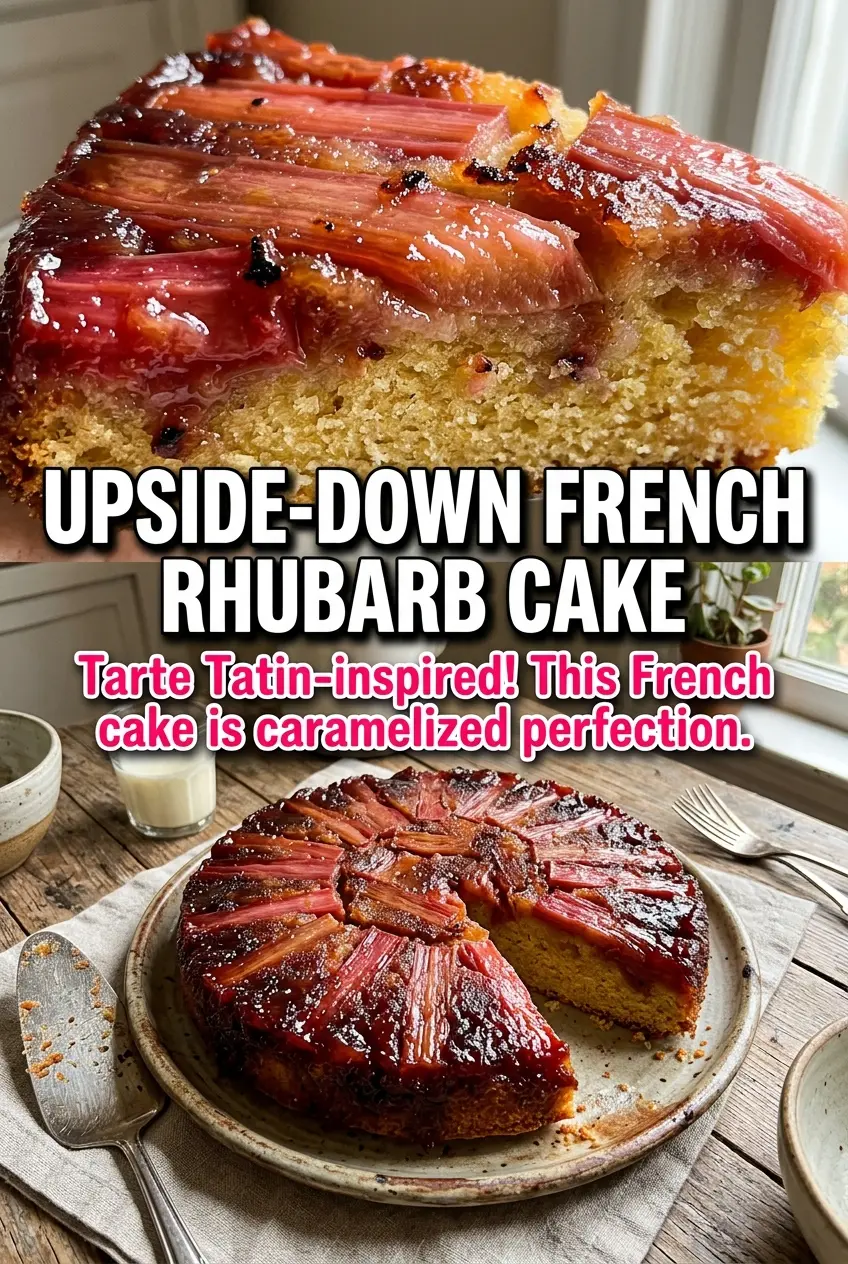
French rhubarb cake bakes into one of those rare desserts that feels both modest and elegant at the same time. The crumb stays soft and buttery, the rhubarb softens just enough to turn juicy without disappearing, and the sugared top gives every slice a little sparkle and a light crackle where the fruit caramelizes. It’s the kind of cake that disappears quietly at the table, then has people asking who got the last piece.
What makes this version work is the balance. The batter is simple and sturdy enough to hold the fruit, but not so heavy that it turns dense under the rhubarb. The pieces go on top instead of being stirred through, which keeps the cake from sinking into a wet center and lets the fruit roast a little on the surface. A dusting of sugar before baking and powdered sugar after cooling finish it with just enough sweetness to match rhubarb’s sharp edge.
Below, I’ll show you how to keep the crumb tender, how to arrange the rhubarb so the top looks as good as it tastes, and what to do if your stalks are especially tart or a little thin.
The rhubarb stayed bright and the cake came out with the softest crumb. I loved that the top wasn’t soggy at all, and the sugared fruit formed this pretty little crust that tasted even better the next day.
Save this French rhubarb cake for the times you want a buttery rustic dessert with a pretty rhubarb top and a clean, tender crumb.
The Trick to Keeping the Rhubarb on Top Instead of Sinking In
The biggest mistake with fruit cakes like this is folding the fruit into the batter. That sounds neat, but it almost always leads to uneven baking and a heavy middle where the juice collects. Keeping the rhubarb on the surface lets the cake bake evenly from the center out while the fruit softens in place.
There’s another small detail that matters: the batter should be just thick enough to hold the fruit when you arrange it. If it’s overmixed, the cake gets tight. If the rhubarb is overly wet, it can weigh down the top, so I like to pat the pieces dry after cutting them. The result is a cake with a clean crumb and rhubarb that looks intentional, not dropped in by accident.
What Each Ingredient Is Doing in This Cake
- Butter — This gives the cake its tender, old-fashioned crumb and that rich flavor you can’t fake with oil. Use softened butter, not melted; melted butter changes the structure and makes the cake less airy.
- Sugar — The sugar does more than sweeten. It helps cream the butter into a fluffy base, which is what gives the cake some lift before the flour goes in.
- Eggs — They bind the batter and add enough structure to support the rhubarb on top. Room-temperature eggs blend in more smoothly and keep the batter from curdling.
- All-purpose flour — This is the right middle ground here: sturdy enough for fruit, but not so strong that the cake turns bready. Cake flour makes it softer, but it can be a little too delicate for the weight of the fruit.
- Milk — Milk loosens the batter just enough so it bakes into a soft, even crumb. Whole milk gives the nicest texture, but 2% will still work.
- Fresh rhubarb — Fresh is the ingredient that really matters. Frozen rhubarb releases too much water and can make the top soggy unless you thaw, drain, and dry it very well.
- Sugar for topping — This helps the rhubarb soften and caramelize on the surface. It also takes the edge off very tart stalks without making the whole cake overly sweet.
Building the Batter and Baking the Fruit Just Right
Creaming the Butter Until It Lifts
Beat the butter and sugar until the mixture looks pale and fluffy, not just blended. That air you whip in here gives the cake its lift, so don’t rush it. When you add the eggs, do it one at a time and let each one disappear before adding the next. If the mixture looks slightly curdled, it usually comes back together once the flour goes in.
Adding the Dry Ingredients Without Toughening the Crumb
Whisk the flour, baking powder, and salt together first, then add them in alternating additions with the milk. That keeps the batter smooth and prevents pockets of dry flour. Stop mixing as soon as the last streak disappears. If you beat it past that point, the cake loses its tender, delicate texture.
Arranging the Rhubarb for Even Baking
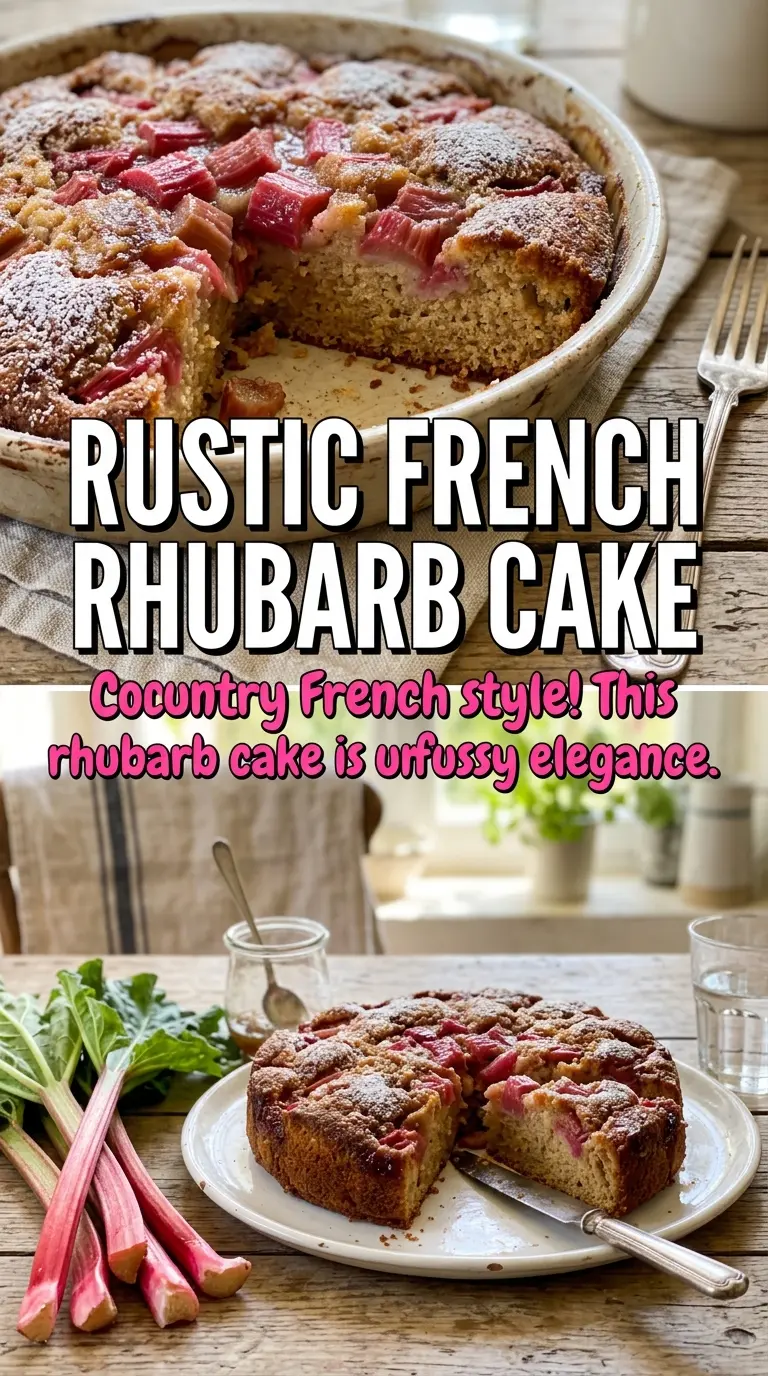
Spread the batter into the prepared springform pan, then lay the rhubarb pieces on top in a circular pattern. Keep the pieces in a fairly even layer so the cake bakes uniformly and looks pretty when sliced. Sprinkle the top with sugar before it goes in the oven. Bake until the top is golden and a toothpick in the center comes out clean; if the fruit is browning too fast, the cake still needs time, but the top can be loosely covered with foil for the last few minutes.
Cooling Before Dusting
Let the cake cool for 30 minutes before you dust it with powdered sugar. If you do it too early, the sugar melts into the surface and disappears. Cooling also gives the crumb time to set so the slices come out clean instead of crumbling at the first cut. A springform pan makes serving easier here because the cake stays neat and the rhubarb topping remains intact.
How to Adjust This Cake for Different Kitchens and Different Rhubarb
If Your Rhubarb Is Extra Tart
Add another tablespoon of sugar over the top before baking, or serve the cake with lightly sweetened whipped cream. That keeps the rhubarb bright without making the cake itself heavy.
Gluten-Free Version
Use a good 1:1 gluten-free baking blend that contains xanthan gum. The cake will still be tender, but it may need a few extra minutes in the oven and should be cooled fully before slicing so it sets properly.
Dairy-Free Version
Swap the butter for a plant-based baking stick and use an unsweetened dairy-free milk with some body, like oat milk. The cake will still be soft, though the flavor loses a little of the classic French-bakery richness.
Storage and Reheating
- Refrigerator: Store covered for up to 4 days. The crumb stays nice, but the rhubarb top softens a little after the first day.
- Freezer: This cake freezes well. Wrap slices tightly and freeze for up to 2 months, then thaw in the refrigerator so the top doesn’t turn soggy.
- Reheating: Warm slices at room temperature or for a few seconds in the microwave. Don’t blast it hot, or the butter in the crumb can go greasy and the rhubarb loses its texture.
Answers to the Questions Worth Asking
French Rhubarb Cake
Ingredients
Equipment
Method
- Preheat oven to 350°F and grease a 9-inch springform pan so the cake releases cleanly after baking.
- Cream butter and sugar until fluffy, then beat in eggs one at a time and mix in vanilla until smooth and slightly lighter in color (about 2–3 minutes).
- Whisk together all-purpose flour, baking powder, and salt until evenly distributed so the rise is consistent throughout the cake.
- Add dry ingredients to the butter mixture alternating with milk, mixing just until combined and stopping as soon as you no longer see dry flour for a tender crumb.
- Pour batter into the prepared springform pan, then arrange rhubarb pieces on top in a circular pattern so the fruit is evenly spread.
- Sprinkle rhubarb with 2 tablespoons sugar so the tops soften and turn lightly golden in the oven.
- Bake for 40–45 minutes at 350°F until golden and a toothpick inserted in the center comes out clean, with rhubarb visibly cooked but still intact.
- Cool for 30 minutes to set the crumb before removing the cake from the pan for clean slices.
- Dust with powdered sugar right before serving so you get a light, rustic finish.