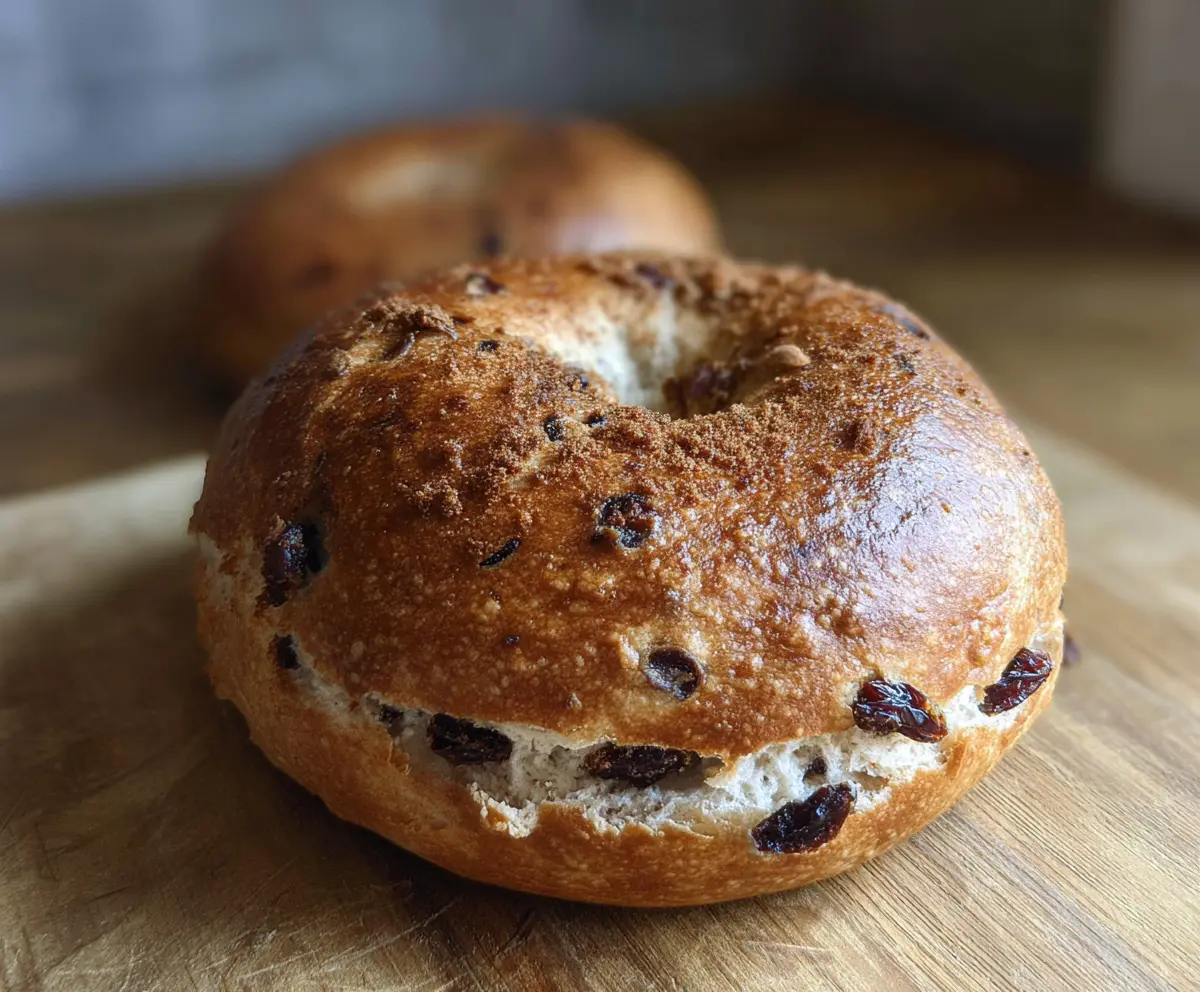
These cinnamon raisin sourdough bagels are a tasty delight, mixing sweet raisins and warm cinnamon into a chewy bagel. They’re perfect for breakfast or a snack!
Honestly, what’s better than a bagel that smells like a bakery? I can’t help but enjoy them toasted with a little butter—it’s like a hug for my taste buds! 🥯✨
Making these bagels is easy once you have the sourdough starter ready. I love how they keep well, making them great for quick breakfasts throughout the week!
Key Ingredients & Substitutions
Sourdough Starter: This is the heart of your bagels! Make sure your starter is active and bubbly for the best rise. If you don’t have sourdough starter, you can use a store-bought yeast starter, but it won’t have the same depth of flavor.
Flour: All-purpose flour works great, but you could also use bread flour for an even chewier texture. If you want to be gluten-free, a gluten-free blend can suffice, but the texture might change a bit.
Raisins: For a different twist, try substituting with dried cranberries or chopped dried apricots. You could also skip the dried fruit altogether if you prefer a plain bagel.
Cinnamon: Ground cinnamon is key here, but you could mix it up with some ground nutmeg or cardamom for a unique flavor. Just remember to keep it balanced!
How Do You Knead Dough Correctly?
Kneading is crucial for developing the gluten in your bagels, giving them that perfect chewy texture. Here’s a simple way to knead:
- Flour your surface lightly. Transfer your shaggy dough onto it.
- Press your palms into the dough to flatten it, then fold it over itself.
- Turn it 90 degrees and repeat. Knead for 8-10 minutes until smooth and elastic.
- If it feels too sticky, sprinkle a little flour as needed, but don’t overdo it!
Listening to the dough is important; it should feel soft yet slightly tacky. When you stretch it, it should hold together without tearing.
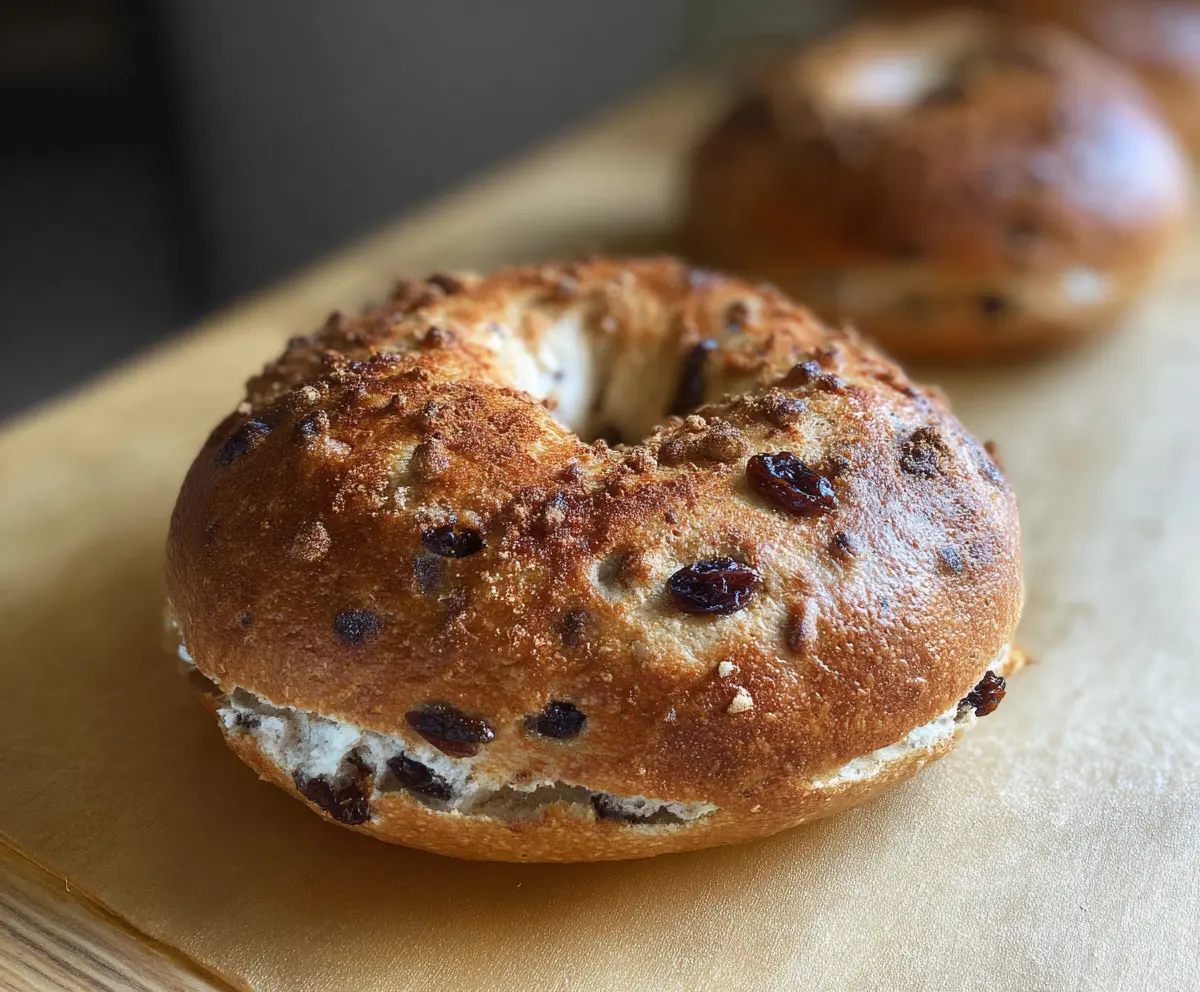
How to Make Cinnamon Raisin Sourdough Bagels
Ingredients You’ll Need:
For the Dough:
- 1 cup (240g) active sourdough starter (100% hydration)
- 1 1/2 cups (360ml) warm water
- 4 cups (480g) all-purpose flour
- 2 tbsp (25g) sugar
- 2 tsp (10g) cinnamon
- 2 tsp (12g) salt
- 1 cup (150g) raisins
For Greasing:
- 1 tbsp (15ml) vegetable oil
Optional Topping:
- Cinnamon sugar for sprinkling
How Much Time Will You Need?
This recipe takes about 20 minutes of active preparation time, plus 4-6 hours for bulk fermentation. If you choose to ferment overnight, you can let the dough sit in the fridge for even more flavor. Baking takes 20-25 more minutes. In total, set aside a good portion of the day to enjoy fresh bagels later!
Step-by-Step Instructions:
1. Prepare the Dough:
Start by grabbing a large mixing bowl. Combine your active sourdough starter with warm water. Use a spoon to stir it together until well mixed. This is the base of your delicious bagel!
2. Mix Dry Ingredients:
In a separate bowl, whisk together the flour, sugar, cinnamon, and salt. This will ensure even distribution of flavors in your dough.
3. Combine:
Slowly add the dry ingredients to your sourdough mixture. Use a spoon or spatula to mix everything until a shaggy dough forms. Don’t worry if it looks a bit messy; that’s perfectly normal!
4. Add Raisins:
Time to fold in those raisins! Gently add them to the dough and use your hands to mix them in evenly. This will distribute those sweet bursts of flavor throughout your bagels.
5. Knead:
Transfer the dough to a lightly floured surface. Knead it for about 8-10 minutes until it feels smooth and elastic. Your dough should be firm but still slightly tacky. If it’s too sticky, sprinkle a tiny bit of flour as you work.
6. Bulk Fermentation:
Place your kneaded dough into a lightly oiled bowl and cover it with a damp cloth or plastic wrap. Let it sit at room temperature for 4-6 hours, or until noticeably risen. If you want a deeper flavor, you can also let it ferment overnight in the fridge.
7. Shape Bagels:
When your dough has fermented, punch it down gently to release the gas. Divide it into 8 equal pieces. Shape each piece into a ball. Then, poke a hole through the center of each ball with your finger and gently stretch it to form the classic bagel shape.
8. Proof:
Place the shaped bagels on a floured board or tray. Cover them with a cloth and let them rest for 30-60 minutes, until they feel a bit puffy.
9. Preheat Water Bath:
Next, bring a large pot of water to a gentle boil. If you like, you can add 1 tablespoon of sugar or baking soda to the water to help the crust develop a nice texture.
10. Boil Bagels:
Carefully add the bagels to the boiling water in batches of 2-3 at a time. Boil them for about 1-2 minutes on each side. Once done, use a slotted spoon to remove them and place them on a baking sheet lined with parchment paper.
11. Optional Topping:
If you want to add some sweetness, sprinkle the bagels lightly with cinnamon sugar while they are still wet from boiling.
12. Bake:
Preheat your oven to 425°F (220°C). Bake the boiled bagels for 20-25 minutes, or until they are golden brown and have that beautiful crusty finish.
13. Cool:
Once baked, remove the bagels from the oven and let them cool on a wire rack before digging in. This helps them set and gives you the best texture.
Enjoy your homemade cinnamon raisin sourdough bagels!
Can I Use Instant Yeast Instead of Sourdough Starter?
While this recipe is designed for sourdough starter, if you’re in a pinch, you can substitute it with about 2 teaspoons of instant yeast mixed with the warm water. However, you might miss out on the unique flavor that sourdough provides.
How Do I Store Leftover Bagels?
Store any leftover bagels in an airtight container at room temperature for up to 2 days. For longer storage, wrap them individually in plastic wrap and freeze. Thaw at room temperature and toast for a fresh taste when you’re ready to enjoy them again!
Can I Add Other Ingredients to the Dough?
Absolutely! You can mix in other goodies like chopped nuts, chocolate chips, or even spices like nutmeg. Just keep in mind that adding too many additional ingredients might alter the dough’s consistency, so adjust the flour slightly if needed.
What Should I Do If My Dough Isn’t Rising?
If your dough isn’t rising, it could be due to the sourdough starter not being active enough. Make sure your starter is bubbly and fed before using it. If you’re in doubt, you can do a float test: drop a small spoonful of the starter in water—if it floats, it’s ready to use!