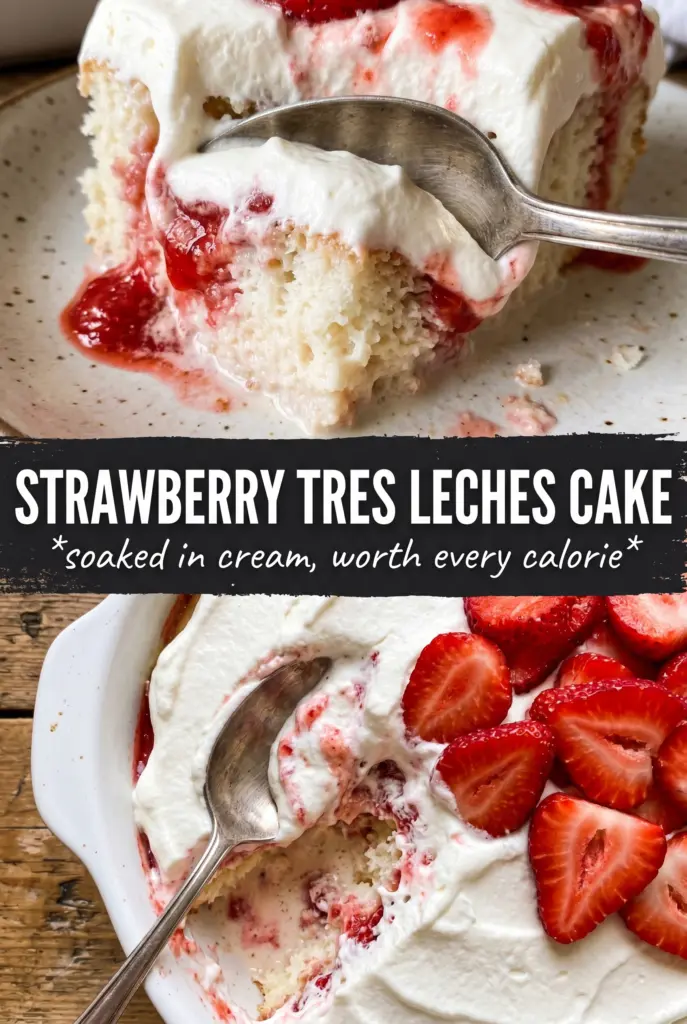
Strawberry tres leches cake lands somewhere between a sponge cake and spoonable custard, with a crumb that stays tender instead of turning soggy. The milk mixture sinks into every fork hole, the whipped cream cools everything down, and the strawberries add a bright finish that keeps each bite from feeling heavy. It’s the kind of dessert people go back for with a smaller slice than they planned, then ask for again anyway.
What makes this version work is the balance. The sponge starts with separated eggs, which gives it enough lift to hold all that milk without collapsing into mush. The three-milk mixture is rich, but the fresh berries cut through the sweetness and bring a clean, juicy contrast on top. If the cake is still warm when the milk goes on, it won’t absorb evenly, so the chilling time matters just as much as the baking time.
Below you’ll find the little details that keep the crumb light, the topping stable, and the strawberries looking fresh instead of watery. There’s also a few smart swaps if you need to work around what’s in your kitchen.
The cake soaked up the milk mixture perfectly, but the crumb still held together when I sliced it. The strawberries on top kept it from tasting too sweet, and my sister asked if I’d made it before because it tasted bakery-level.
Save this strawberry tres leches cake for the kind of dessert that needs a soft soak, a cloud of whipped cream, and fresh berries on top.
The Part That Keeps Tres Leches from Turning Heavy
The mistake most people make with tres leches is treating it like a regular sheet cake and rushing the soak. This batter needs the egg whites folded in gently enough to keep air in the batter, because that lift is what gives the cake structure once the milk mixture goes in. If you beat the whites into stiff peaks but then knock all the air out while mixing, the cake bakes up dense and the finished texture turns pasty instead of plush.
Cooling the cake before adding the milk matters too. A warm cake pulls the mixture in too quickly and unevenly, which can leave the bottom soupy and the top dry. When it’s fully cooled, the crumb absorbs the liquid at a slower pace, and the whole cake settles into that classic soaked texture without falling apart.
- Eggs separated — The yolks build richness, while the whipped whites give the cake enough lift to survive all that milk. Don’t skip the separation if you want the crumb to stay light.
- Fork holes — Pierce the cake all over, not just in a few spots. The milk mixture needs a path through the entire pan, or you’ll get uneven pockets of saturation.
- Chill time — Three hours is the minimum, but longer is fine. The flavor settles and the texture gets cleaner as the cake rests.
What the Strawberries Change in the Milk Soak
The strawberries aren’t just decoration here. They cut the sweetness of the condensed milk, add freshness to a dessert that could otherwise feel one-note, and bring a little acidity that wakes up the cream. That matters because tres leches can turn cloying fast if every layer leans rich and soft with no contrast.
Fresh berries work better than frozen because frozen strawberries shed too much liquid and turn the topping sloppy. If your berries are tart, that’s a good thing here. You want a little bite against the cream. The whipped topping should be sweet, but not so sweet that it smothers the fruit.
- Sweetened condensed milk — This is where the signature tres leches sweetness and body come from. There isn’t a true substitute that gives the same thick, creamy soak.
- Heavy cream, divided — Some goes into the soak for extra richness, and some gets whipped for the topping. Use the real thing here; lower-fat cream won’t whip the same and won’t give the same plush finish.
- Powdered sugar — It sweetens the whipped cream without making it grainy. Granulated sugar works in a pinch, but it won’t dissolve as cleanly.
- Fresh strawberries — Slice them just before serving if you want the cleanest look. If they sit too long, they start to leak juice into the cream.
Building the Soak Without Breaking the Cake
Whipping the Base Batter
Start by beating the egg yolks with the sugar until the mixture turns pale and thick enough to leave a ribbon on the surface. That’s the stage that gives the cake its fine crumb. Fold in the flour mixture in batches, then add the whites carefully so the batter keeps some air. If the batter looks streaky at the end, stop folding; overmixing is what turns this cake compact.
Baking to the Right Set
Pour the batter into a greased 9×13-inch pan and bake until the top springs back lightly and a toothpick comes out clean. The cake should be cooked through but still soft. If it browns too quickly, your oven may run hot, and an overbaked sponge won’t absorb the milk as evenly. Let it cool all the way in the pan before moving on.
Pouring the Milk Mixture
Whisk the condensed milk, evaporated milk, and heavy cream together until smooth, then slowly pour it over the cake. Move across the surface in stages so the liquid has time to sink in instead of pooling in one corner. If you pour too fast, the top can flood while the center stays dry. Use the fork again if any dry spots remain after the first pour.
Finishing with Cream and Berries
Whip the cream with powdered sugar until stiff peaks hold their shape but still look smooth. Spread it over the chilled cake only after the soak has fully settled. Add the sliced strawberries right before serving so they stay bright and don’t bleed into the topping. A cold slice cuts cleanest when the cream has had a few minutes to set on top.
Lighter Whipped Topping
Cut the powdered sugar back a little if you want the strawberries to stand out more. You can also fold a spoonful of the milk soak into the whipped cream for a softer, more custardy top, but don’t add too much or it’ll loosen and slide.
Dairy-Free Version
Use full-fat coconut milk and a dairy-free condensed milk alternative for the soak, then top with a coconut whipping cream. The cake will still be tender, but the flavor shifts toward coconut and the topping won’t taste quite as classic.
Gluten-Free Adaptation
Swap in a 1:1 gluten-free baking blend that includes xanthan gum. The cake will be a little more delicate, so let it cool completely before soaking and serve it straight from the pan to keep the slices intact.
Make-Ahead for a Party
Bake and soak the cake a day ahead, then add the whipped cream and strawberries just before serving. That keeps the topping looking fresh and prevents the berries from softening the cream overnight.
Storage and Reheating
- Refrigerator: Keep covered for up to 4 days. The cake gets softer as it sits, but the flavor stays good.
- Freezer: Freeze the cake without the whipped cream and strawberries for up to 1 month. Thaw in the refrigerator, then add the topping after it’s fully defrosted.
- Reheating: Don’t reheat this cake. It’s meant to be served cold, and heat will melt the cream and make the soaked crumb collapse.
Answers to the Questions Worth Asking
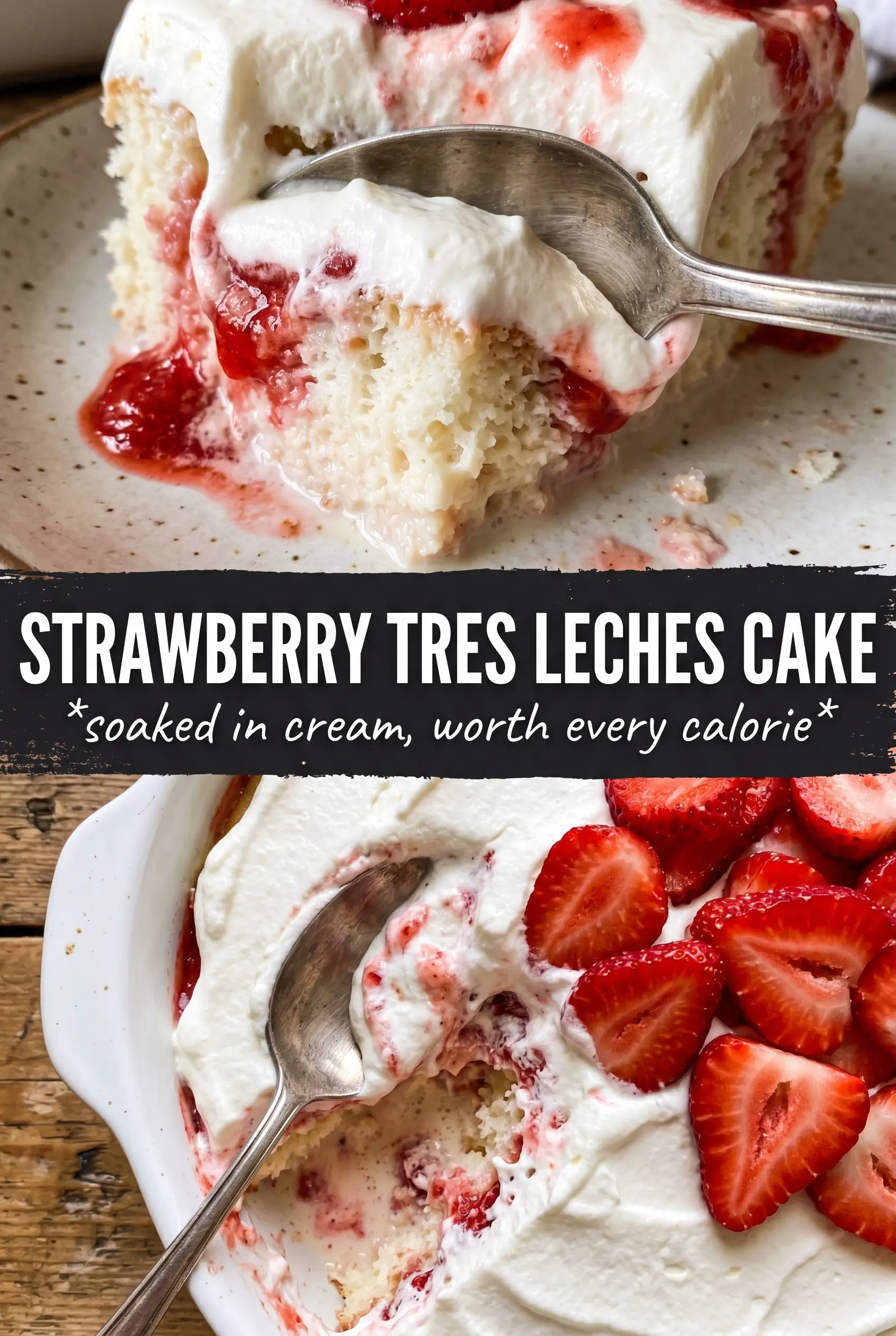
Strawberry Tres Leches Cake
Ingredients
Equipment
Method
- Preheat oven to 350°F and grease a 9x13 baking dish.
- Whisk together all-purpose flour, baking powder, and salt.
- Beat egg yolks with granulated sugar until pale and fluffy, then stir in vanilla extract.
- Alternately fold the flour mixture and stiffly beaten egg whites into the yolk mixture, until no dry streaks remain and the batter looks airy.
- Pour batter into the prepared baking dish and bake for 20-25 minutes, until a toothpick comes out clean and the top springs back lightly.
- Combine sweetened condensed milk, evaporated milk, and 1/2 cup heavy cream in a bowl.
- Pierce the cooled cake all over with a fork so the holes are visible across the surface.
- Pour the milk mixture over the entire surface of the cake so it pools and soaks in evenly.
- Chill for at least 3 hours until fully saturated, with the center looking set and the crumb appearing moist.
- Beat 2 cups heavy cream with powdered sugar until stiff peaks form, so the cream holds firm ridges.
- Top the chilled cake with whipped cream and fresh sliced strawberries before serving for a fresh, bright finish.