Ingredients
Equipment
Method
Cook down the rhubarb
- Combine fresh rhubarb, chopped, sugar, and water in a large pot, then bring to a boil over medium-high heat. You should see steady bubbling across the surface.
- Reduce the heat to a gentle simmer and cook uncovered for 30-40 minutes, stirring occasionally. The mixture should visibly thicken and become darker pink as the volume reduces.
- Use an immersion blender to puree until smooth, pausing as needed so it doesn’t splatter. The texture should turn silky with no visible rhubarb chunks.
- Stir in vanilla extract, cinnamon, and nutmeg, mixing until evenly incorporated. The color will look uniform and slightly deeper.
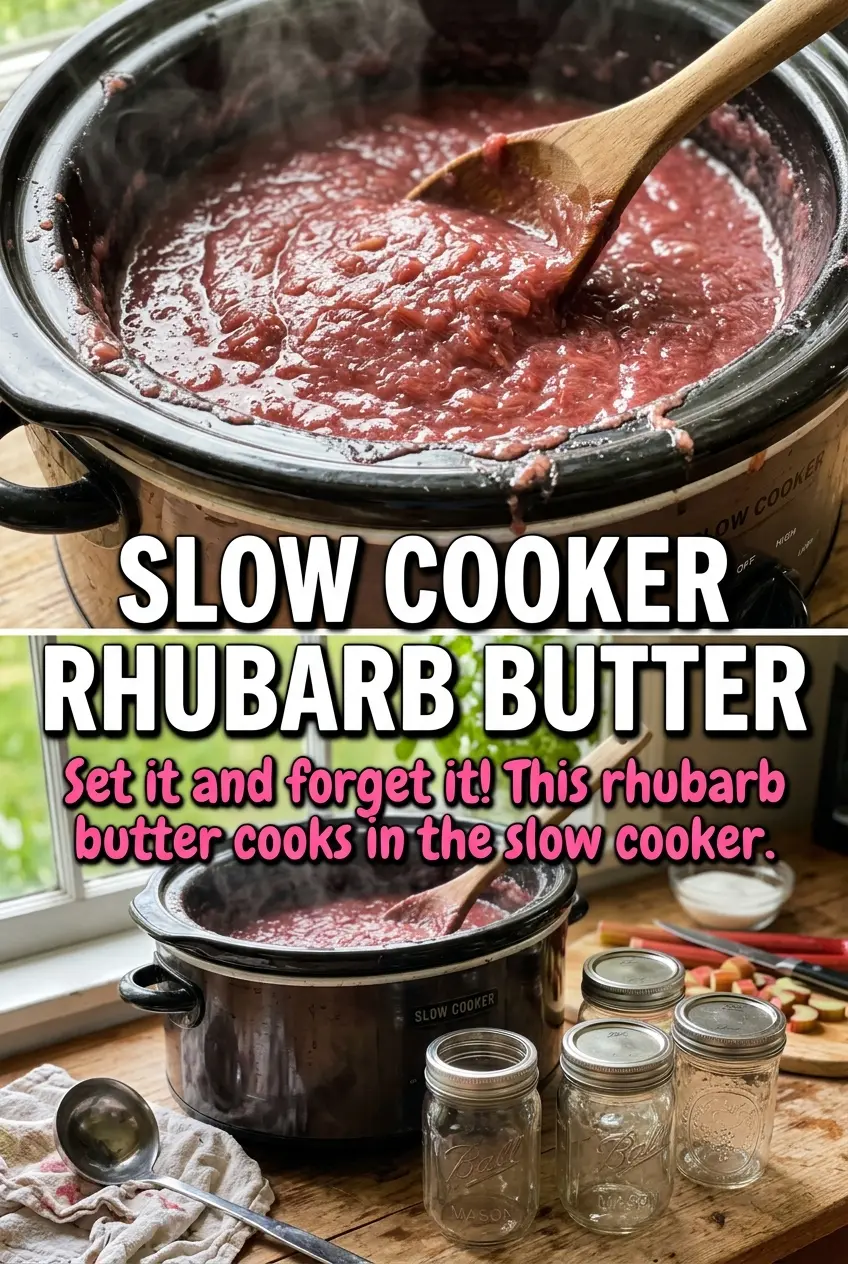
- Continue cooking uncovered for 5-10 minutes more on a gentle simmer until very thick, stirring often. When you drag a spoon through it, the mixture should mound and hold shape.
Jar and store
- Pour the hot rhubarb butter into sterilized jars, leaving headspace and wiping rims if needed. You should see a smooth, spreadable consistency filling the jars.
- Store in the refrigerator for up to 3 weeks, or process jars in a water bath for longer storage. The sealed jars should keep at room temperature only if properly water-bathed.
Notes
For the smoothest texture, blend while the mixture is hot and thick, then cook a few extra minutes only until it mounds—overcooking can get grainy. Refrigerate in a sealed container for up to 3 weeks; freeze is not recommended for best texture. If you want a lower-sugar version, use a sugar substitute formulated for preserves, but start with slightly less and taste after blending.