Ingredients
Equipment
Method
Simmer the rhubarb
- Combine fresh rhubarb, water, and vanilla bean (pod and seeds) in a large pot, then simmer at 100°C for 15 minutes. You should see steady bubbling as the rhubarb softens and releases color.
Strain the juice
- Strain the rhubarb mixture through cheesecloth or a fine mesh strainer, pressing to extract all liquid, to yield about 3 1/2 cups. The strained liquid should look ruby-pink and translucent with no visible fruit chunks.
Boil and set the jelly
- Return the rhubarb juice to the pot and stir in powdered pectin and lemon juice. The mixture should turn evenly mixed and slightly thickened-looking before the boil.
- Bring to a rolling boil at 100°C, add sugar all at once, and stir constantly. The pot should return to a hard boil that you can maintain.
- After adding sugar, boil hard at 100°C for 1 minute while stirring constantly. The jelly mixture should look glossy and actively bubbling.
Jar and process
- Remove the pot from heat, skim off foam, and remove the vanilla bean pod. The surface should look clearer once the foam is gone.
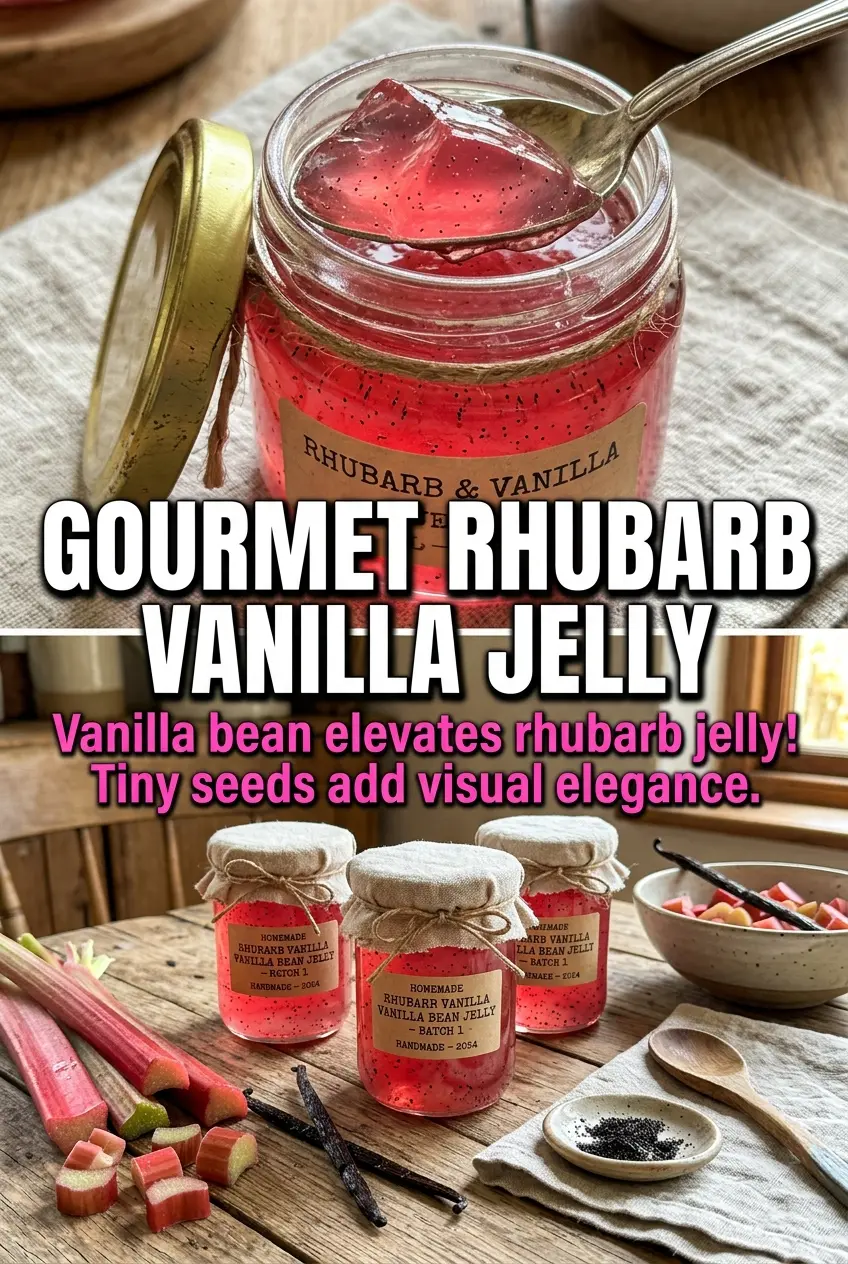
- Ladle the hot jelly into sterilized jars, leaving 1/4-inch headspace. You should see vanilla bean specks suspended through the ruby-pink jelly.
- Process jars in a boiling water bath at 100°C for 10 minutes. The jars should stay fully submerged and upright as the time runs.
Set
- Let jars sit undisturbed to set completely for 24 hours. You’ll notice the jelly has transformed from liquid to a firm, translucent gel.
Notes
Use fresh, evenly chopped rhubarb for consistent flavor and color, and stir the sugar in right after the rolling boil so it dissolves before the boil fades. Store sealed jars in a cool, dark pantry for up to 12 months; refrigerate after opening and use within 3 weeks. Freezing is not recommended for classic canning-style jelly because texture can change after thawing. For a lower-sugar option, consider using a compatible reduced-sugar pectin swap (follow its box directions for the correct sugar amount).