Soft, chewy brown sugar rhubarb cookies bake up with tender centers, lightly crisp edges, and little pockets of tart fruit that keep each bite from leaning too sweet. The brown sugar gives them a caramel warmth that works beautifully with rhubarb’s sharpness, and the texture stays closer to a classic drop cookie than a cakey fruit cookie.
What makes this version work is the balance: enough flour to hold the fruit, enough butter for chew, and rhubarb diced small so it softens in the oven without turning the dough wet. Brown sugar does more than sweeten here; it helps the cookies stay moist and gives the crumb that deeper, almost toffee-like note that plain white sugar just can’t match.
If you’ve only used rhubarb in pies and crisps, these cookies are worth a try. Below, I’ve included the one detail that keeps the cookies from spreading too much, plus a few swaps and storage notes that help if you’re baking ahead.
The cookies stayed soft for days, and the rhubarb pieces baked down just enough that every bite had that little tart pop without making the dough soggy.
Love the soft centers and tart rhubarb bits in these brown sugar rhubarb cookies? Save this batch for the next time you want a chewy spring cookie with real texture.
The Trick to Keeping Rhubarb Cookies Soft Instead of Wet
Rhubarb brings a lot of moisture with it, and that’s the main thing that can throw this cookie off. If the pieces are too large, they steam and leak into the dough before the edges have a chance to set. Dicing the rhubarb finely gives you small tart bursts without turning the cookies gummy.
The other thing that matters is stopping as soon as the flour disappears. Overmixing builds structure, which sounds helpful until you end up with a tougher cookie that fights the soft texture you want. These cookies should look slightly underdone in the center when they come out of the oven; they finish setting on the pan.
What Each Ingredient Is Actually Doing in These Cookies
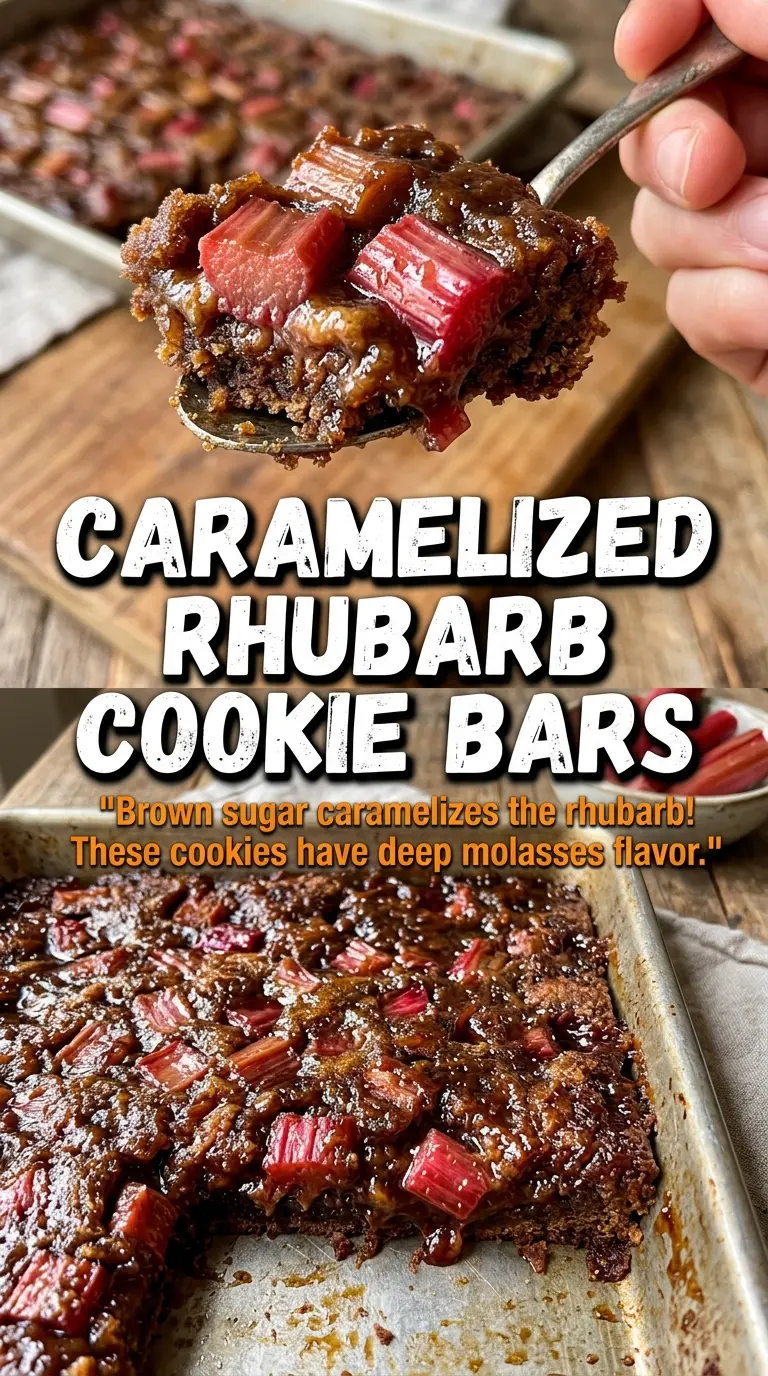
- Brown sugar — This is what gives the cookies their deep caramel sweetness and helps keep the centers soft. Light or dark brown sugar both work; dark brown sugar makes the cookies a little richer and more molasses-forward.
- Butter — Softened butter creams with the sugar to trap air, which gives the cookies a lighter bite. If the butter is too warm and oily, the dough spreads more, so it should press easily but still hold its shape.
- Fresh rhubarb — Fresh is the right choice here because frozen rhubarb releases more water and can make the dough loose. If frozen is all you have, thaw it fully, drain it well, and pat it dry before folding it in.
- Walnuts — Optional, but they add a nice bitterness and crunch that plays well with the sweet dough. Leave them out if you want the rhubarb to stay front and center.
- Vanilla — It rounds out the tartness and makes the brown sugar taste fuller. It won’t hide the rhubarb; it just softens the edges.
How to Mix, Scoop, and Bake Them So the Centers Stay Tender
Creaming the Butter and Sugar
Start by beating the butter and brown sugar until the mixture looks fluffy and a little lighter in color. That step matters because it builds the cookie’s texture before any flour goes in. If the mixture still looks dense and grainy, keep going for another minute or two. Once the eggs and vanilla go in, the dough should look smooth and glossy, not separated.
Bringing the Dough Together
Add the dry ingredients gradually and mix only until the flour streaks disappear. The dough will be thick, and that’s what you want. If you keep beating at this point, the cookies can turn bready instead of soft. Fold in the rhubarb and walnuts by hand so the pieces stay intact and don’t bleed too much juice into the dough.
Baking Until the Edges Just Set
Drop rounded tablespoons onto parchment-lined sheets with space between them so the cookies can spread without merging. Bake until the edges are lightly golden and the centers no longer look wet, usually 10 to 12 minutes. Don’t wait for a deep brown color; by then, they’ve gone too far for this style of cookie. Let them sit on the sheet for 5 minutes before moving them so they finish setting without breaking.
How to Adapt These Brown Sugar Rhubarb Cookies for Different Kitchens
Make Them Without Walnuts
Leave the walnuts out entirely and the cookies will still hold together well. You’ll get a softer bite and a cleaner rhubarb-and-brown-sugar flavor, which is nice if you want the fruit to stand out more.
Use Frozen Rhubarb When Fresh Isn’t Available
Frozen rhubarb works, but it needs extra attention because it carries more moisture. Thaw it completely, drain off any liquid, and pat it dry before chopping and folding it in. The cookies will still bake up nicely, though the fruit pieces may soften a little more.
Swap in a Gluten-Free Flour Blend
A good 1:1 gluten-free baking blend can replace the all-purpose flour here. Choose one that already includes xanthan gum so the cookies keep their shape. The texture will be a little more delicate, but the brown sugar keeps them pleasantly soft.
Make the Cookies a Little More Tart
Increase the rhubarb slightly and keep the dice small so the dough doesn’t get wet. The cookies will taste brighter and less candy-sweet, but they may spread a touch more, so give them room on the pan.
Storage and Reheating
- Refrigerator: Store in an airtight container for up to 5 days. They stay soft, though the rhubarb flavor softens a little after the first day.
- Freezer: These freeze well baked or unbaked. Freeze baked cookies in a single layer, then move them to a bag, or freeze scooped dough balls and bake straight from frozen with an extra minute or two.
- Reheating: Warm baked cookies in a 300°F oven for 3 to 5 minutes. The goal is just to take the chill off; high heat dries them out fast.
Answers to the Questions Worth Asking

Brown Sugar Rhubarb Cookies
Ingredients
Equipment
Method
- Preheat the oven to 350°F and line baking sheets with parchment paper. Set them aside so the dough can be portioned right after mixing.
- Whisk together the all-purpose flour, baking soda, and salt in a bowl until evenly blended. The mixture should look uniform with no visible streaks of baking soda.
- Cream the butter and brown sugar until fluffy, scraping the sides as needed. The mixture should look lighter in color and hold a soft, airy texture.
- Beat in the eggs one at a time, then add the vanilla extract. Stop mixing once the batter looks smooth and glossy.
- Gradually mix in the flour mixture until just combined. Stop as soon as no dry pockets remain to keep the cookies soft.
- Fold in the finely diced rhubarb and chopped walnuts if using. You should see pink rhubarb pieces throughout the dough.
- Drop rounded tablespoons of dough onto the prepared baking sheets, spacing them about 2 inches apart. Keep the mounds fairly rounded so they bake evenly.
- Bake at 350°F for 10-12 minutes until the edges are lightly golden and the centers are set. The cookies should look set in the middle rather than wet.
- Cool on the baking sheet for 5 minutes before transferring to a wire rack. They will finish setting as they cool.