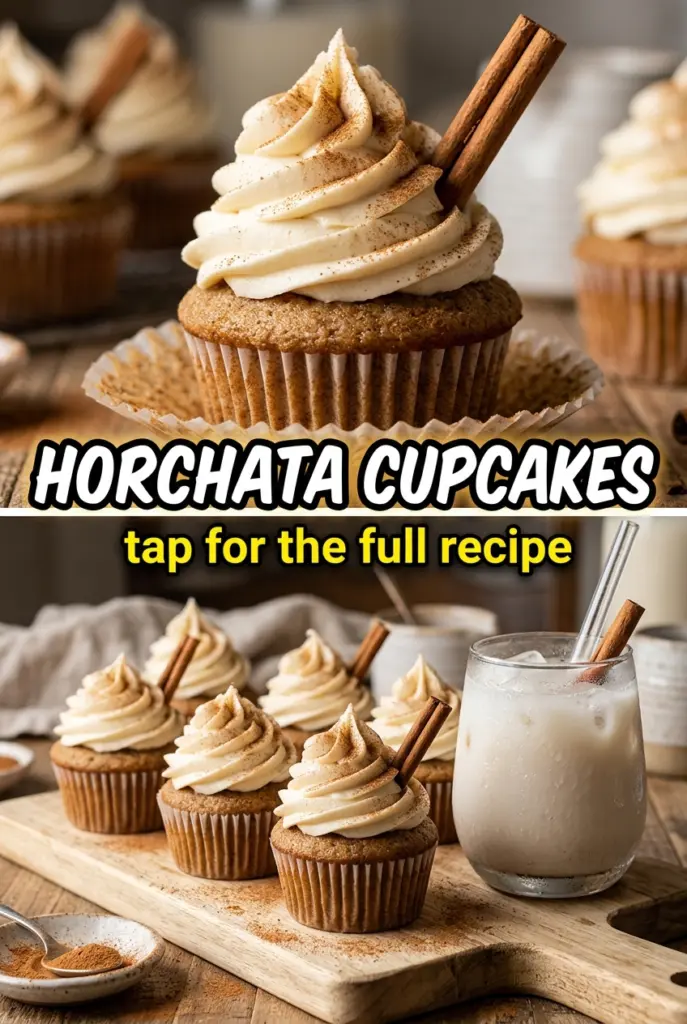
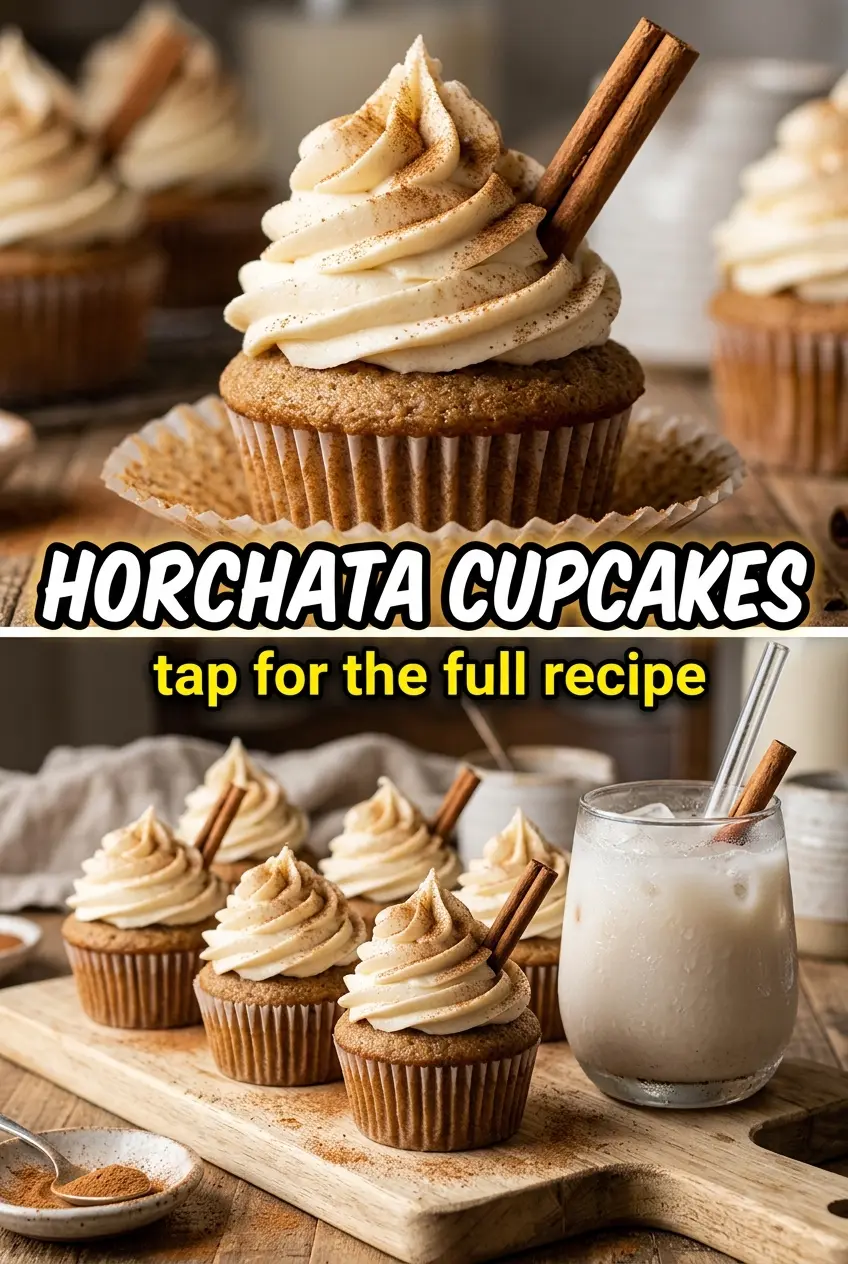
Cinnamon-scented cupcakes with a soft, tender crumb and tangy horchata cream cheese buttercream have a way of disappearing fast. The cake itself stays plush instead of dry, with warm spice running through every bite, and the frosting brings that creamy rice-milk sweetness people expect from horchata without turning heavy or overly sugary. The cinnamon sugar rim and white chocolate drizzle add just enough contrast to make each cupcake feel finished, not fussy.
What makes this version work is the balance. Horchata adds moisture and a subtle grain-sweet flavor, while the combination of vanilla and almond extract gives the batter that familiar horchata character without needing a long ingredient list. The cake batter uses the classic creaming method, then the liquid and dry ingredients are added alternately so the crumb stays even and light. The frosting follows the same idea: cream cheese for tang, butter for structure, and horchata added gradually so it stays fluffy instead of loose.
Below, you’ll find the small details that matter most here — how to keep the cupcakes from baking up dense, how to get the frosting smooth and pipeable, and the one topping step that makes them taste like the real thing from the first bite.
The cupcakes stayed soft for two days and the horchata frosting set up beautifully. I was worried the cinnamon sugar would get messy, but it gave every bite a little crunch and made them taste just like the drink.
Horchata cupcakes with cream cheese buttercream are the kind of dessert that tastes even better after the cinnamon sugar rim goes on.
The Trick Is Keeping the Horchata Flavor in the Cake, Not Just the Frosting
With cupcakes like these, the biggest mistake is putting all the horchata character in the topping and leaving the cake bland. That gives you a cupcake that tastes like vanilla cake with sweet frosting on top, which misses the point. Here, the batter gets horchata plus vanilla and almond extract, so the flavor starts in the crumb and carries through the whole bite.
The other thing that matters is texture. Horchata adds liquid, but it doesn’t behave exactly like milk because it already carries some rice starch and sweetness. Alternate it with the dry ingredients so the batter stays smooth instead of overworked, and stop mixing as soon as the flour disappears. Overmixing turns these cupcakes tight and springy instead of soft and tender.
What Each Ingredient Is Actually Doing in These Cupcakes
- Horchata — This is the flavor anchor. Use a cold, well-stirred horchata so the liquid is even before it goes into the batter and frosting. If yours is especially sweet, the cupcakes will lean a little richer, which is fine because the cream cheese frosting balances it out.
- Mexican vanilla extract — This adds that deeper, rounder vanilla note that makes the cupcakes taste more like horchata instead of plain spice cake. If you only have regular vanilla, use it, but don’t skip the vanilla entirely.
- Almond extract — A small amount goes a long way here. It gives the cupcakes that recognizable horchata-like aroma, but too much will take over and taste perfumey, so measure carefully.
- Cream cheese — This is what keeps the frosting from becoming one-note sweet. Full-fat cream cheese gives the best texture and tang. Low-fat versions soften too much and can make the frosting slack.
- Cinnamon sugar — The rim isn’t just decoration. It adds a little crunch and reinforces the spice already in the cake. Freshly mixed cinnamon sugar clings better than a blend that’s been sitting for months.
- White chocolate — Use it for a thin drizzle, not a thick layer. It adds sweetness and a little visual contrast without making the cupcake heavier. If you skip it, the cupcake still works; the drizzle is there for finish, not structure.
Building the Batter and Frosting Without Losing the Texture
Start with the dry ingredients
Whisk the flour, baking powder, salt, cinnamon, and cloves together before anything else. That keeps the spice from clumping in one bite and helps the leavening distribute evenly. If you dump everything in at once, the cupcakes can bake with uneven pockets of spice and a slightly lopsided rise.
Cream the butter and sugar until it turns pale
Beat the butter and sugar until the mixture looks lighter in color and fluffier in texture. That step traps air, which is what gives the cupcakes lift before they ever hit the oven. If the butter is too cold, it won’t cream properly; if it’s melted, the batter will bake up dense.
Alternate the flour mixture and horchata
Add the flour mixture in three additions, alternating with the horchata, and begin and end with flour. That pattern keeps the batter emulsified and prevents the gluten from tightening too quickly. Stop mixing as soon as the batter looks smooth; beating it longer is the fastest way to lose the soft crumb you want.
Beat the frosting until it holds a peak
Start with the cream cheese and butter alone so the frosting turns completely smooth before the sugar goes in. Add the powdered sugar gradually, then drizzle in the horchata a little at a time. If you pour it in all at once, the frosting can go loose and grainy; when it’s right, it should look airy, thick, and easy to pipe.
How to Adapt These Cupcakes for Different Needs
Dairy-Free Version
Use a plant-based butter that works well for baking and a dairy-free cream cheese for the frosting. The texture will be a little softer and the frosting may be less tangy, but the horchata flavor still comes through clearly. Choose a dairy-free horchata you already like to drink, since that flavor carries the whole dessert.
Gluten-Free Swaps
A 1:1 gluten-free baking flour blend can work here if it contains xanthan gum. The cupcakes may need an extra minute or two in the oven, and the crumb will be slightly more delicate, but the recipe holds up because the batter isn’t heavily mixed. Let them cool fully before frosting so they don’t break.
Turning Them Into Mini Cupcakes
Mini cupcakes work well if you want a party tray or a smaller dessert. Fill the liners about two-thirds full and start checking them around 10 to 12 minutes. They bake fast, and overbaking even by a couple of minutes will dry out the edges before the centers are set.
Storage and Reheating
- Refrigerator: Store frosted cupcakes in an airtight container for up to 4 days. The cake stays moist, and the frosting firms up a little in the fridge.
- Freezer: Freeze the unfrosted cupcakes for up to 2 months. Wrap each one tightly, then thaw at room temperature before frosting. The frosting itself is better made fresh because cream cheese frosting can separate after freezing.
- Reheating: These cupcakes are best served at cool room temperature, not warmed. If they’ve been chilled, let them sit out for 20 to 30 minutes so the frosting softens and the cake loses that fridge-cold texture.
Questions I Get Asked About This Recipe
Horchata Cupcakes with Horchata Cream Cheese Buttercream
Ingredients
Equipment
Method
- Preheat the oven to 350°F and line a muffin tin with cupcake liners.
- Whisk together flour, baking powder, salt, cinnamon, and ground cloves until evenly combined.
- Beat the softened butter and granulated sugar until light and fluffy.
- Add the eggs one at a time, mixing well after each addition.
- Alternate adding the flour mixture and horchata, beginning and ending with the flour mixture, mixing just until incorporated.
- Stir in the Mexican vanilla extract and almond extract until smooth.
- Divide the batter evenly among the liners.
- Bake at 350°F for 18-20 minutes, until a toothpick comes out clean.
- Cool completely before frosting.
- Beat the softened cream cheese and softened butter until smooth.
- Gradually add powdered sugar and beat until thick and lump-free.
- Beat in the horchata until the frosting turns light and fluffy with a pipeable texture.
- Rest the frosting for 30 minutes to firm up slightly for easier piping.
- Pipe the frosting onto the cooled cupcakes, forming a tall peak in the center.
- Dip or roll the cupcake tops in the cinnamon sugar for rim so the frosting edge is coated.
- Drizzle with white chocolate for a glossy finishing stripe across the tops.