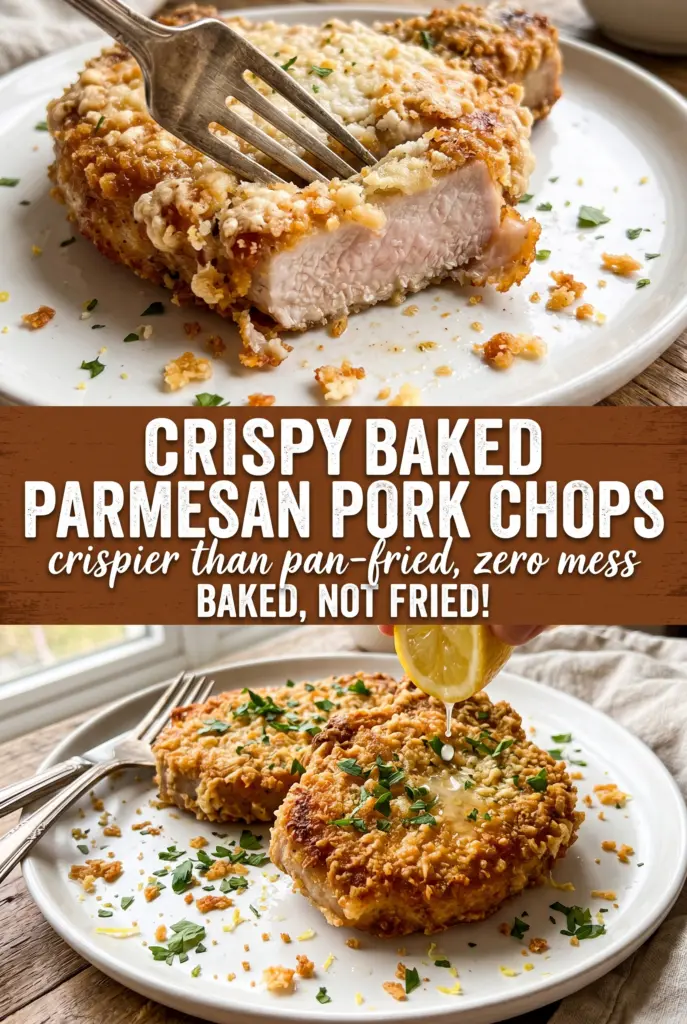
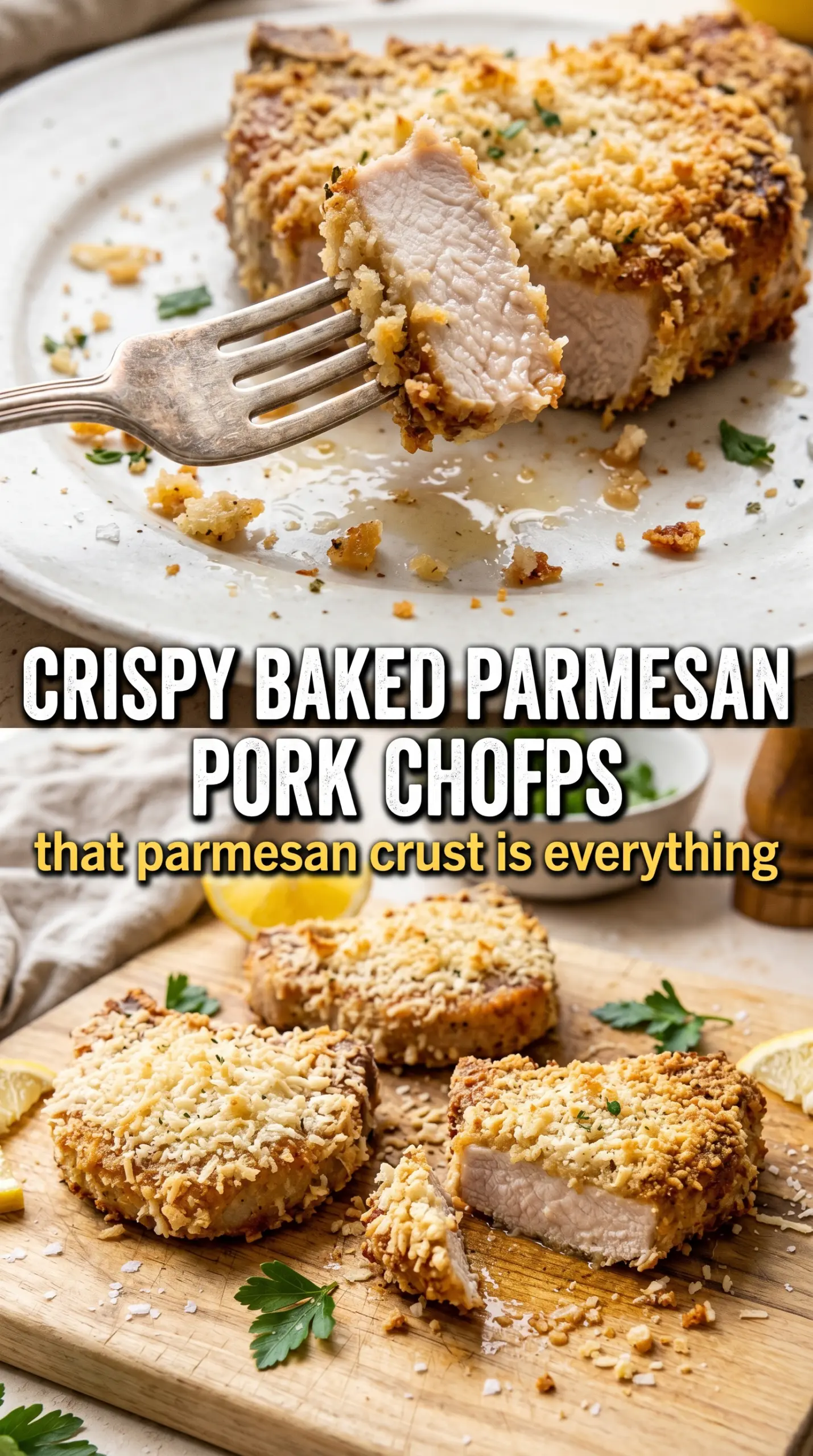
These crispy baked parmesan pork chops come out with a crust that actually stays crunchy, not soggy, and the pork inside stays juicy instead of drying out in the oven. The parmesan and panko bake into a shattering shell with a salty, nutty edge, while the thin coating underneath helps the crumbs cling without turning heavy. It’s the kind of dinner that looks like you put in far more effort than you did.
What makes this version work is the Dijon-mayonnaise layer. Dijon adds sharpness and a little bite, while mayonnaise gives the coating something rich to grab onto so the crumbs adhere in a thick, even layer. A quick spray of olive oil over the top is the other small detail that matters — it helps the crust toast instead of just drying out. Use boneless chops that are about 3/4 inch thick so they cook through in the same window the coating turns deep golden.
Below you’ll find the one technique that keeps the crust from falling off, a few smart ingredient notes, and a handful of ways to adapt these chops without losing that crunchy finish.
The coating baked up crisp and stayed on the chops instead of sliding off, and the Dijon-mayo layer gave the crust a little tang that everyone noticed. I served it with lemon like you suggested and my husband said it tasted like something from a restaurant.
Like these crunchy baked parmesan pork chops? Save them to Pinterest for the nights when you want a golden crust, juicy center, and almost no cleanup.
The Reason the Crust Stays Crispy Instead of Sliding Off
The coating on baked pork chops usually fails in one of two ways: it either falls off before it hits the plate, or it bakes into a soft, patchy layer that never really crisps. This recipe avoids both problems by using a thin, sticky base of Dijon and mayonnaise, then pressing the panko-parmesan mixture on firmly so it actually bonds to the meat. That firm press matters more than people think. Loose crumbs look fine going into the oven and then end up scattered on the pan.
The other thing that keeps the crust crisp is heat. Four hundred twenty-five degrees gives the panko enough direct heat to brown before the pork dries out, especially when the chops are only about 3/4 inch thick. If the crust is pale at the end, the pork probably needed a little more oven time — but if you leave them in until the coating looks dark and the center still reads below 145°F, the chops will overcook before the crust is done.
What Each Ingredient Is Actually Doing in This Dish
- Boneless pork chops — Three-quarter-inch chops are the sweet spot here. Thin-cut chops cook too fast and dry out before the crust browns; much thicker chops need a longer bake and can overbrown on top. If your chops are uneven, gently pound the thicker end so they cook at the same rate.
- Dijon mustard — This brings sharpness and helps the coating cling. It doesn’t make the chops taste mustardy in the finished dish; it just gives the crust a little backbone. Yellow mustard can work in a pinch, but it tastes flatter and a little sweeter.
- Mayonnaise — This is the glue and the moisture insurance. It helps the crumbs stick in an even layer and keeps the surface from drying out before the pork reaches temperature. Sour cream can substitute, but the crust won’t brown quite as evenly.
- Panko breadcrumbs — Panko gives the chop that airy, crackly crunch regular breadcrumbs can’t match. Standard breadcrumbs make a denser crust, which is fine if that’s all you have, but you’ll lose some of the shattery texture. If you want the crispiest result, keep the panko coarse and dry.
- Parmesan cheese — Use finely grated parmesan so it melts into the crumbs and browns with them. The shelf-stable shaker stuff works in a pinch, but a real wedge grated fine gives a cleaner, saltier finish. Avoid large shreds here; they can scorch before the crust is fully crisp.
- Olive oil spray — A light spray on top helps the crust toast instead of baking dry and pale. You don’t need to drench it, just mist the surface so the crumbs get a little extra fat for browning.
Getting the Coating On So It Bakes Up Gold, Not Patchy
Mix the Crumb Layer First
Stir the panko, parmesan, garlic powder, Italian seasoning, salt, and pepper together before you touch the pork. That keeps the seasoning evenly distributed, which matters because the coating is thin and every bite should taste like the same dish. If the mixture clumps, break it up with your fingers so the parmesan doesn’t sit in little pockets and burn.
Spread, Then Press
Season the pork chops first, then spread the Dijon-mayo mixture over both sides in a thin layer. Once that’s on, press the crumb mixture firmly onto the surface with your hand. Don’t just sprinkle it. You want the crumbs to look packed onto the meat, and that pressure is what keeps the crust intact when the chops move from counter to pan.
Bake Until the Crust Turns Deep Gold
Set the chops on a parchment-lined baking sheet and spray the tops lightly with olive oil. Bake them until the crust is a deep golden color and the pork reaches 145°F at the thickest point. Pull them at that temperature, not after they sit around and dry out in the oven, then let them rest for 3 minutes so the juices settle back into the meat.
Three Practical Ways to Change These Pork Chops Without Ruining the Crust
Make It Gluten-Free with Crushed Gluten-Free Crackers
Swap the panko for crushed gluten-free crackers or gluten-free panko. The texture will be a little finer and less airy, but it still gets crisp if you press it on well and use the olive oil spray. Just watch the browning a little earlier, since some gluten-free crumbs color faster.
Skip the Mayo and Use Thick Plain Yogurt
Thick plain Greek yogurt can stand in for the mayonnaise if that’s what you have. It still gives you a sticky base for the crumbs, though the finished crust comes out a touch tangier and a little less rich. Keep the layer thin so the coating doesn’t turn pasty.
Use Bone-In Chops for a Bigger Dinner
Bone-in chops work, but they usually need a few extra minutes in the oven and can be thicker at the center, so use a thermometer instead of relying on the clock. The bone adds a little more flavor and helps the meat stay juicy, though the crust around the edges may brown unevenly if the chops are very bulky.
Lean Into the Italian-American Flavor
Add a pinch of red pepper flakes or a little dried oregano to the crumb mixture if you want more bite. The pork still tastes familiar and comforting, but the crust reads a little closer to classic Italian-American breaded cutlets. Keep the parmesan as the main salt source so the seasoning doesn’t get muddy.
Storage and Reheating
- Refrigerator: Store leftovers in an airtight container for up to 3 days. The crust will soften a bit in the fridge, but the flavor holds up well.
- Freezer: These freeze better after baking than before. Wrap tightly and freeze for up to 2 months, then thaw in the fridge before reheating so the coating doesn’t steam off.
- Reheating: Rewarm on a baking sheet in a 375°F oven until heated through and the coating crisps back up. The mistake to avoid is microwaving them, which turns the crust soft and can push the pork from juicy to dry in a hurry.
Answers to the Questions Worth Asking
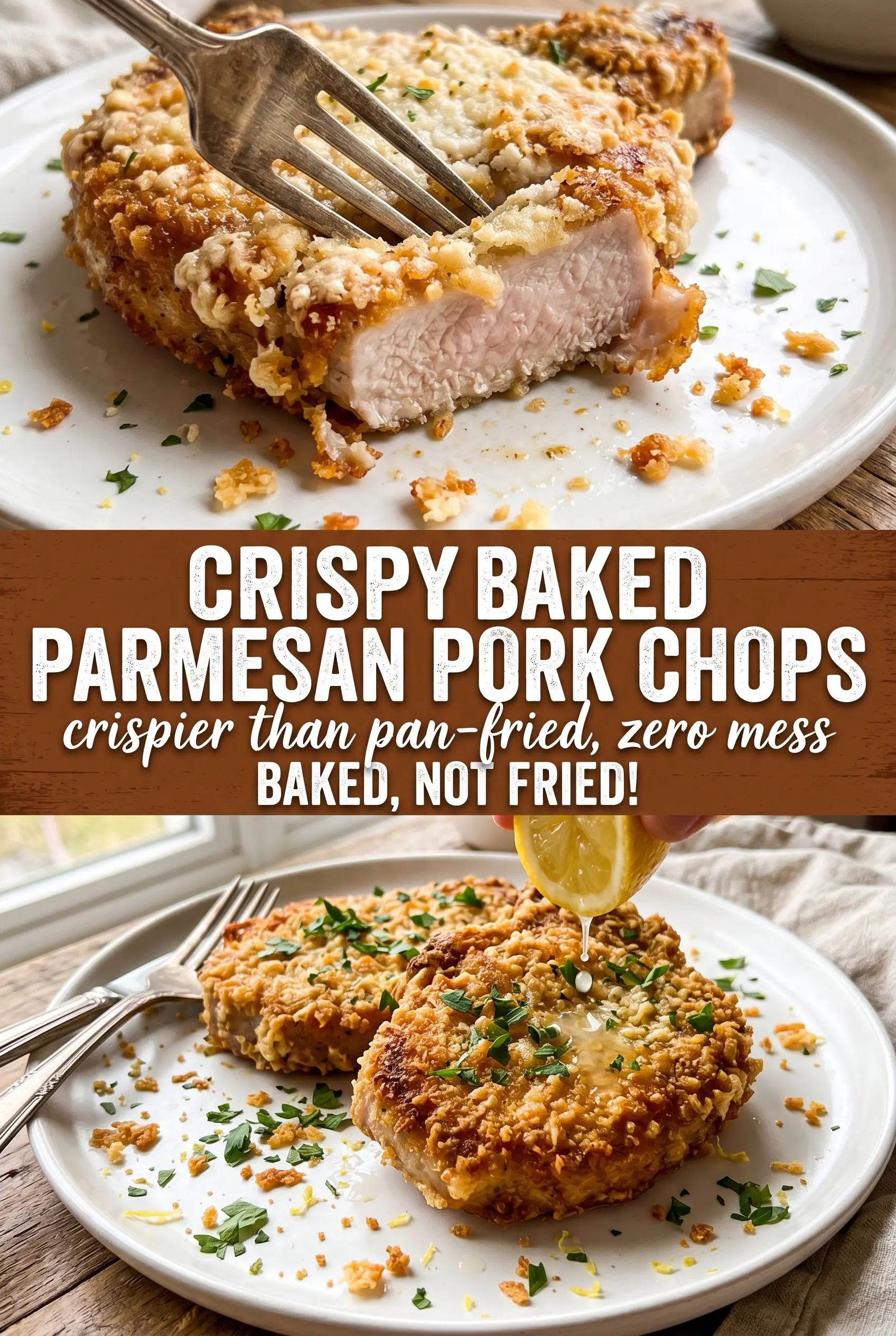
Crispy Baked Parmesan Pork Chops
Ingredients
Equipment
Method
- Preheat the oven to 425°F and line a baking sheet with parchment so the chops bake evenly with minimal sticking.
- Mix the Dijon mustard and mayonnaise together until smooth.
- In a second bowl, combine the panko breadcrumbs, parmesan, garlic powder, Italian seasoning, salt, and pepper.
- Season the pork chops with salt and pepper, then spread the mustard-mayo mixture over both sides.
- Press the panko-parmesan mixture firmly onto both sides so it adheres and forms a thick, crunchy crust.
- Place the chops on the baking sheet, spray lightly with olive oil spray, then bake for 18–20 minutes at 425°F until the crust is deep golden and the pork reaches 145°F.
- Rest the pork chops for 3 minutes, so the juices redistribute and the crust firms up.
- Serve with lemon wedges and fresh parsley.