Puffed pastry, melted brie, and ripe peach slices make a tart that lands right between elegant and effortless. The pastry bakes up crisp and shattery at the edges, the brie turns soft and creamy in the center, and the honey brings everything together with a peppery rosemary note that keeps the sweetness in check. It tastes like something you’d set out for guests and then quietly keep nibbling at once the tray comes back empty.
What makes these work is the balance. Brie needs enough heat to melt into the pastry, but not so much that it runs all over the pan, so the scored border gives it structure. The rosemary honey is warmed just long enough to pull the herb flavor into the honey without turning bitter, and the black pepper gives the whole thing a little edge. A splash of lemon at the end keeps the drizzle bright instead of sticky-sweet.
Below you’ll find the small details that matter here: how to keep puff pastry crisp under juicy peaches, why the cheese rind stays on, and the best way to serve these so the centers are still molten when they hit the table.
The pastry stayed crisp under the peaches and the brie melted into the corners just like you said. That rosemary honey made them taste a lot fancier than the effort involved.
These peach brie pastry tarts with peppered rosemary honey are the kind of appetizer you pull out when you want crisp pastry, melty cheese, and a glossy finish that looks straight from a bakery case.
The Secret to Keeping Puff Pastry Crisp Under Juicy Peaches
The biggest mistake with fruit tarts like these is assuming the pastry will handle moisture on its own. It won’t. Peaches release juice as they heat, and if the pastry isn’t scored and baked hot enough, the middle softens before the edges have a chance to lift. That little border you score around each square gives the tart a frame, which helps the center stay slightly contained while the edges rise tall and golden.
Brie can also turn this into a puddle if it’s cut too thin or baked too long. A single slice in the center is enough. The rind stays on because it helps the cheese hold together as it melts, and the result is creamier than if you trimmed it away. The honey goes on after baking, not before, so it glazes the tart instead of soaking into the pastry.
- Hot oven, cold pastry: Keep the puff pastry cold until it goes into the oven. Warm pastry won’t puff with the same lift, and you lose the crisp layers that make these tarts worth making.
- Scored border: Cut just through the top layer, not all the way through. That gives you a raised edge without splitting the square apart.
- Peach slices: Slice them thin enough to soften in 20 minutes, but not so thin that they disappear into the cheese.
- Honey at the end: Drizzle after baking so the pastry stays crisp and the rosemary flavor stays bright.
What Each Ingredient Is Actually Doing in These Tarts

Puff pastry is the foundation and there isn’t a real substitute if you want those crisp, layered edges. Thaw it in the fridge so it stays cold and easy to cut cleanly. If the sheet gets sticky or soft, chill it for a few minutes before assembling.
Brie brings the creamy center and the mild richness that keeps this appetizer from feeling like dessert. A wheel with the rind still on works best because it softens without collapsing. You can swap in Camembert if that’s what you have, but avoid a super-aged or dry cheese here.
Peaches should be ripe but still a little firm. Overripe fruit turns watery in the oven, and the tart loses definition. If peaches aren’t in season, nectarines work the same way and keep the peel on for a little extra structure.
Honey, rosemary, black pepper, and lemon juice make the finish. The rosemary infuses the honey, the pepper adds heat, and the lemon keeps it from reading flat. Don’t skip the black pepper — it makes the whole tart taste more balanced, not spicy.
Scoring the Pastry Before Anything Goes On
Lay the pastry squares on a parchment-lined baking sheet and score a border about 1/4 inch from the edge. The cut should be shallow enough that the square stays intact. This is what gives you a lifted rim and a center that holds the cheese and peach instead of letting everything run together. If you cut all the way through, the pastry won’t rise as cleanly.
Building the Tart Center
Brush the border with egg wash so it bakes shiny and deep gold. Set the brie in the middle first, then top it with the peach slice so the fruit softens over the cheese instead of slipping around on the pan. Don’t overload each square. Too much fruit and cheese will flatten the pastry before it has time to puff.
Making the Rosemary Honey
Warm the honey with rosemary and black pepper over low heat just until it loosens and smells herbal. Three minutes is enough. If the heat climbs too high, the honey can taste harsh and the rosemary can overpower the peaches. Pull out the rosemary sprigs before adding the lemon juice so the drizzle stays smooth and glossy.
Finishing While They’re Still Hot
These tarts are at their best right out of the oven, when the pastry is crisp and the brie is molten. Drizzle the honey while the cheese is still soft so it spreads into the corners and catches on the peach. A final pinch of flaky salt sharpens the sweetness and makes the whole thing taste more complete.
Three Ways to Adapt These Tarts Without Losing the Good Part
Swap in Nectarines for a Firmer Slice
Nectarines work exactly like peaches here and bring a little more structure because there’s no fuzz and the flesh tends to hold its shape. Use the same amount and slice them thinly. The result is a cleaner-looking tart with the same sweet-tart finish.
Make It Vegetarian-Friendly Without Change
This recipe is already vegetarian, which is part of why it works so well for a mixed crowd. The cheese carries the savory element, so nothing has to be added or replaced. If you’re serving it alongside other appetizers, keep that contrast in mind and pair it with something salty or crunchy.
Use Goat Cheese for a Tangier Bite
Goat cheese gives you a sharper, more tangy center than brie. It won’t melt as silkily, so the texture will be a little more crumbly, but it pairs beautifully with the peaches and rosemary honey. Use a small amount so the tart doesn’t lose its balance.
Storage and Reheating
- Refrigerator: Store leftovers in an airtight container for up to 2 days. The pastry softens as it sits, and the peaches release more juice.
- Freezer: These don’t freeze well once baked because the fruit turns mushy and the pastry loses its lift. Freeze the unbaked pastry squares instead if you want to prep ahead.
- Reheating: Warm in a 350F oven for 5 to 8 minutes. The microwave will make the pastry limp, which is the fastest way to lose what makes these tarts good.
Answers to the Questions Worth Asking
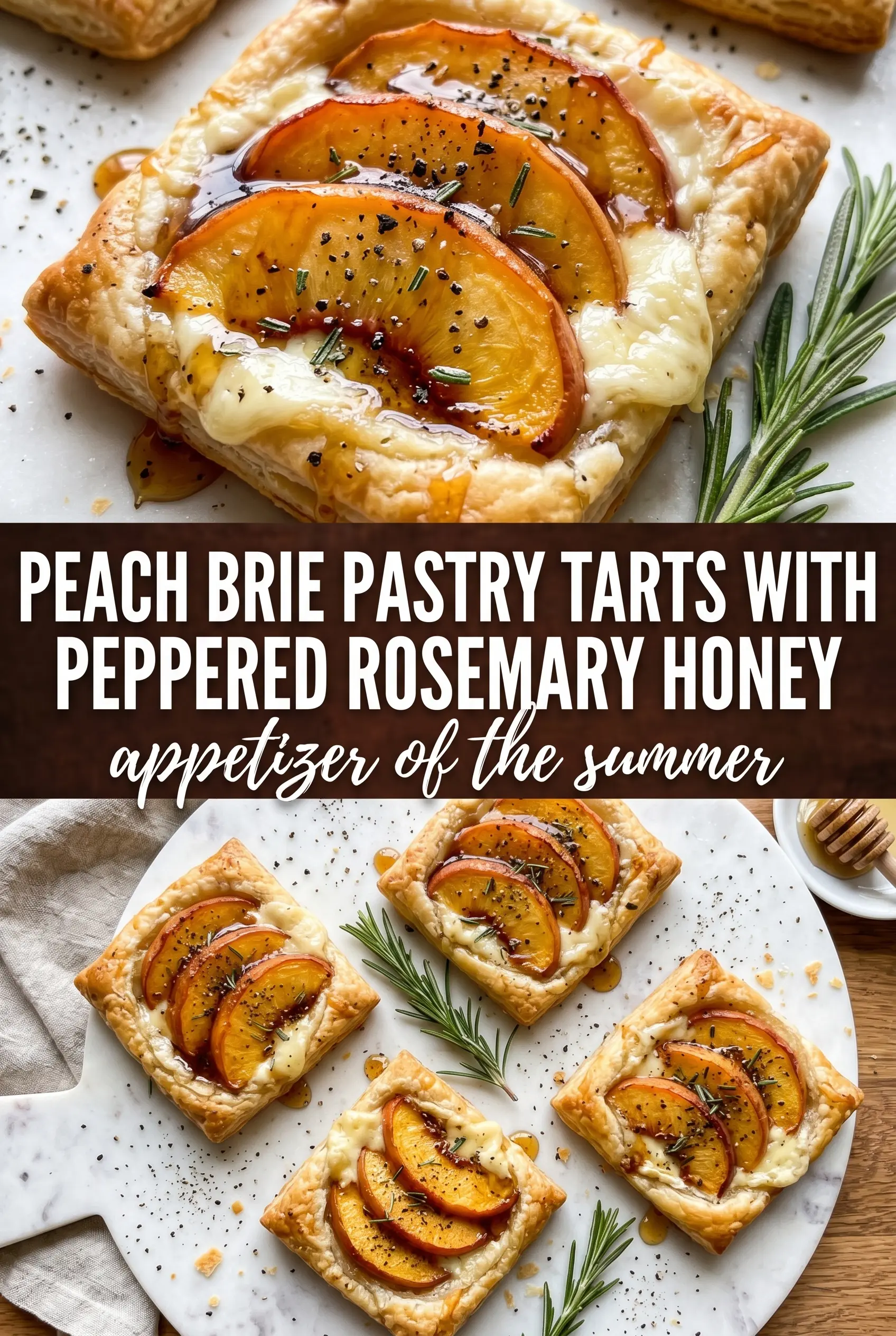
Peach Brie Pastry Tarts with Peppered Rosemary Honey
Ingredients
Equipment
Method
- Preheat oven to 400F and line a sheet pan with parchment.
- Score a 1/4-inch border around each pastry square without cutting through, then brush the border with egg wash.
- Place a slice of brie in the center of each square and top with a peach slice.
- Bake for 18-20 minutes until the pastry is puffed and deeply golden and the brie is melted.
- While tarts bake, heat honey, rosemary, and black pepper in a small saucepan over low heat for 3 minutes, then remove rosemary.
- Stir in lemon juice and keep the honey warm.
- Drizzle peppered rosemary honey over the hot tarts and finish with flaky salt.
- Serve immediately while the brie is still molten.