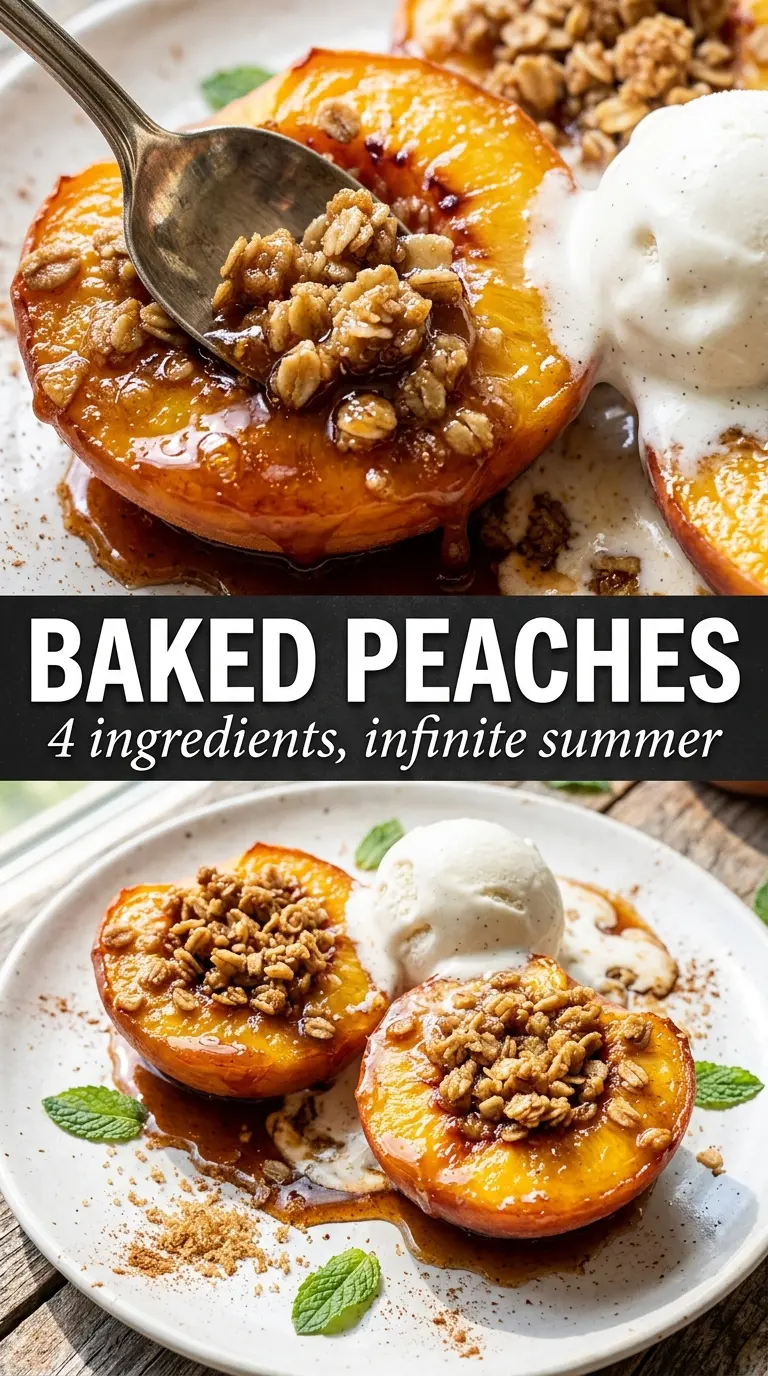
Warm baked peaches turn soft and jewel-like in the oven, with edges that slump into a spoonable texture and centers that hold onto just enough shape. The oat crumble melts into the fruit as it bakes, making every bite taste like peach cobbler in its simplest form. A scoop of vanilla ice cream on top seals the deal, catching the peach juices as they pool in the dish.
What makes this version work is the balance: ripe peaches for flavor, a little brown sugar for caramel notes, and enough butter to help the oat filling turn golden instead of sandy. The lemon juice matters too. It keeps the peaches tasting bright and keeps the sweetness from flattening out while the fruit softens in the oven.
Below you’ll find the small details that matter most, including how to tell when the peaches are tender enough and how to adjust the topping if your fruit is extra juicy. If you’ve ever had baked fruit turn mushy before the topping was done, this method keeps both parts in the right place.
The peaches turned soft and jammy without falling apart, and the oat filling got that perfect caramelized top in just 25 minutes. My husband kept spooning the juices from the pan over his ice cream.
Save these baked peaches with their buttery oat topping for the nights when you want a fast dessert that tastes like it took much longer.
The Secret to Keeping Baked Peaches Tender, Not Watery
Peaches have a narrow window between pleasantly soft and collapsed into mush. The trick is starting with ripe fruit that still holds its shape when you press the skin, then baking just long enough for the flesh to relax at the edges while the centers stay intact. If the peaches are underripe, they stay firm and taste flat. If they’re overripe, they’ll flood the pan before the topping has time to caramelize.
The other thing people miss is the cut side. Setting the peaches cut-side up keeps the juices in the fruit and gives the topping a chance to brown instead of dissolve. A generous filling is good here, but it should sit in the cavity, not spill over the sides. That way the butter, sugar, and oats bake into a crisp, golden lid instead of disappearing into the dish.
What Each Ingredient Is Actually Doing in This Dish
- Peaches — Use ripe peaches that still feel firm enough to halve cleanly. Freestone peaches are easier to pit, but any ripe peach works. If yours are a little hard, let them sit on the counter for a day or two before baking.
- Brown sugar — This gives the topping its caramel note and helps create that glossy, slightly sticky finish. Light brown sugar is fine. Dark brown sugar gives a deeper molasses flavor and a darker topping.
- Butter — Softened butter binds the oats and sugar so the filling bakes up crumbly instead of dry. Cold butter won’t mix evenly here, and melted butter makes the topping greasy instead of sandy and crisp.
- Rolled oats — These give the filling structure and a little chew. Quick oats work in a pinch, but the texture is softer and less defined. Skip steel-cut oats; they won’t soften enough in the bake time.
- Lemon juice — A small squeeze keeps the peaches tasting bright and balances the sweetness. It also helps the fruit juices taste cleaner in the finished dish.
- Cinnamon and nutmeg — This is the warm spice layer that makes the peaches taste fuller. Nutmeg should stay as a pinch; too much can take over fast.
How to Bake the Peaches So the Filling Turns Golden
Setting Up the Fruit
Arrange the peach halves cut-side up in a baking dish with enough room for the juices to collect around them. If they wobble, trim a thin slice from the rounded bottom so they sit flat. A snug dish helps the juices pool and caramelize instead of spreading thin and drying out.
Mixing the Crumble
Stir the softened butter, brown sugar, oats, cinnamon, and nutmeg until the mixture looks evenly damp and clumps when pressed. If the butter is too cold, the sugar won’t blend and you’ll get dry pockets. If it is too warm, the topping will melt off the peaches instead of staying in place.
Filling and Baking
Pack the oat mixture into each cavity generously, then drizzle the lemon juice over the peaches. Bake at 375F until the fruit gives easily at the center and the topping has turned deep golden at the edges, about 20 to 25 minutes. If the topping browns too fast before the peaches soften, lay a loose piece of foil over the dish for the last few minutes.
Serving at the Right Moment
Let the peaches sit for 5 minutes after baking so the juices settle slightly. They should be hot, tender, and still hold enough shape to lift with a spoon. Add vanilla ice cream or whipped cream while the fruit is still warm so it melts into the caramelized juices.
Three Ways to Make These Baked Peaches Work in Your Kitchen
Dairy-Free Baked Peaches
Swap the butter for a plant-based butter that behaves like real butter when softened. Coconut oil works too, but it adds its own flavor and the topping sets a little firmer as it cools. The result is still rich and caramelized, just with a different finish.
Gluten-Free Version
Use certified gluten-free oats and keep everything else the same. The texture stays close to the original because oats are doing the bulk of the work here, not flour. This is the easiest swap in the whole recipe.
Extra-Crumbly Topping
Add another tablespoon of oats if you want a drier, crisper topping that sits on top of the peaches instead of sinking into the fruit. This works best when the peaches are very juicy. The topping won’t be as buttery-soft, but it will stay more distinct after baking.
Storage and Reheating
- Refrigerator: Store leftovers covered for up to 3 days. The peaches will soften more, and the topping loses some crispness.
- Freezer: Not my first choice. The texture turns mushy after thawing, so these are best made and eaten fresh.
- Reheating: Warm in a 325F oven for 10 to 12 minutes, uncovered, until hot. The oven keeps the topping from turning soggy the way the microwave does.
Answers to the Questions Worth Asking

Baked Peaches
Ingredients
Equipment
Method
- Preheat oven to 375F, then place peach halves cut-side up in a baking dish.
- Mix softened butter, brown sugar, oats, cinnamon, and nutmeg until combined, using a crumbly, evenly coated texture as the visual cue.
- Fill each peach cavity generously with the oat mixture, mounding it slightly above the peach surface for even caramelization.
- Squeeze lemon juice over all the peaches so juices wet the fruit and help brighten the flavor as they bake.
- Bake for 20-25 minutes at 375F until peaches are tender and the filling is golden and caramelized, with pooled juices around the cavities as the visual cue.
- Serve warm with vanilla ice cream or whipped cream, letting the topping begin to melt on contact.