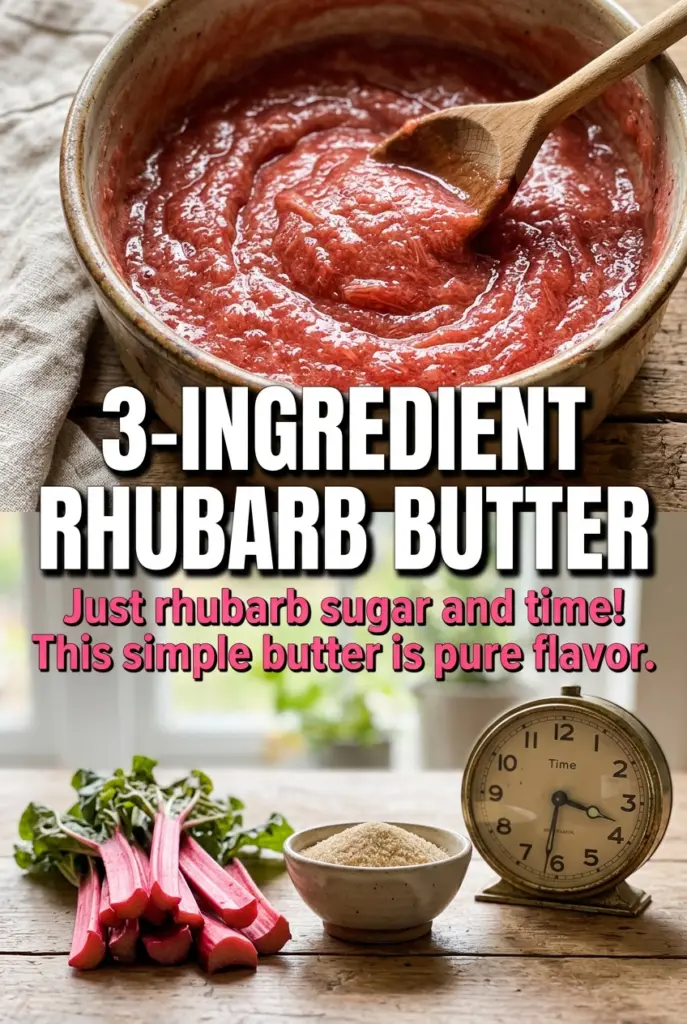
Silky, tangy, and spoonable, rhubarb butter turns a pile of sharp stalks into a smooth pink spread that belongs on toast, biscuits, pancakes, and anything else that needs a bright, concentrated fruit layer. The flavor lands somewhere between jam and applesauce, but with a cleaner rhubarb edge and a texture that spreads easily straight from the fridge.
What makes this version work is the long, uncovered simmer. Rhubarb releases a lot of water at the beginning, and if you rush it, you end up with a loose puree instead of a thick fruit butter. Cooking it down slowly gives the sugar time to melt into the fruit and helps the mixture reduce into something glossy and dense. The vanilla goes in at the end so it stays round and warm instead of fading in the heat.
Below, I’ve included the exact cues I watch for when the butter is ready, plus a few simple ways to adjust the sweetness or make the texture even smoother. If you’ve ever had fruit spread turn out runny, this one is worth a closer look.
I was expecting this to need pectin, but it cooked down into the smoothest spread. The vanilla at the end was perfect and it thickened up exactly like the photo after chilling.
Like this smooth rhubarb butter? Save it to Pinterest for toast mornings, biscuit baskets, and easy homemade gifting.
The Part That Keeps Rhubarb Butter from Turning Thin
The biggest mistake with rhubarb butter is stopping when the fruit looks collapsed. At that point, it still holds a lot of water, and the mixture will seem thick in the pot but turn loose again once it cools. You want a slow reduction until the bubbles look heavier, the spoon leaves a trail across the bottom for a second or two, and the color deepens from pale pink to a richer rosy shade.
Using an uncovered pan matters here because steam has to escape. If you cover it, the fruit can’t reduce properly and you end up chasing thickness at the end. The immersion blender also changes the final result in a big way. It breaks down any stringy bits from the rhubarb and gives you that smooth, jar-ready texture instead of a rustic compote.
What the Sugar, Water, and Vanilla Are Each Doing
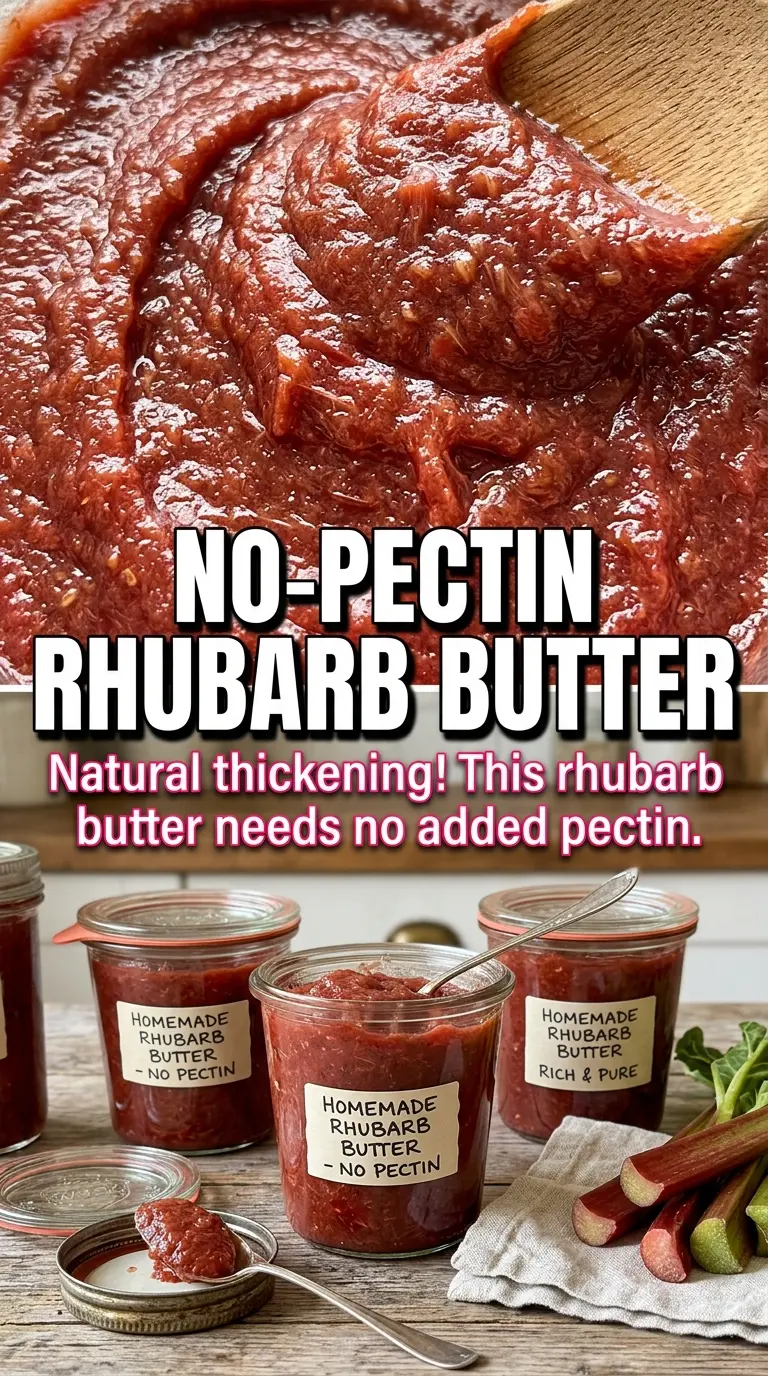
- Rhubarb — This is the whole point of the recipe. Fresh stalks break down into a bright, tangy puree, and that sharp flavor is what keeps the finished butter from tasting flat. Older, thicker stalks work fine, but trim away any tough ends and use the freshest rhubarb you have for the cleanest color and taste.
- Sugar — Sugar does more than sweeten here. It softens the edges of rhubarb’s tartness and helps the mixture thicken as it cooks. Cutting it much lower changes the balance enough that the butter can taste harsh, so if you reduce the sugar, expect a more tart result and a looser finish.
- Water — The small amount of water just gets the pot moving so the sugar dissolves before the rhubarb starts releasing its own liquid. Once the fruit breaks down, the water becomes less important because the pan is uncovered and the excess moisture cooks off.
- Vanilla extract — Vanilla rounds out the sharpness and gives the butter a softer, more bakery-style finish. Add it after pureeing so the flavor stays fresh and doesn’t cook away. If you want a cleaner fruit taste, use less; if you want a warmer spread, use the full teaspoon.
Cooking It Down Until It Spreads Cleanly
Starting the Pot
Combine the rhubarb, sugar, and water in a large pot and bring it to a boil over medium-high heat. Stir often at the start so the sugar dissolves before the fruit scorches on the bottom. Once the rhubarb starts giving off liquid, the mixture will loosen fast and look like a pink stew before it begins to tighten again.
Reducing the Fruit
Lower the heat and simmer uncovered for 25 to 30 minutes, stirring occasionally. You’re looking for a thick, jammy consistency where the bubbles look slow and heavy instead of fast and watery. If the mixture is still splashy and loose when time’s up, keep cooking; rhubarb needs reduction more than it needs strict timing.
Making It Silky
Use an immersion blender to puree the hot mixture until completely smooth. This step removes the last fibrous bits and gives the butter its glossy finish. If you don’t have an immersion blender, cool it slightly and use a regular blender in batches, but don’t fill the blender too full or hot fruit can force the lid open.
Finishing the Texture
Stir in the vanilla extract, then cook for about 5 minutes more if the butter still seems loose. The goal is a spread that mounds softly on a spoon and doesn’t immediately run back into the pan. If it thickens too much in the pot, that’s fine; it will loosen a little as it cools, then set up nicely in the refrigerator.
Ways to Adjust the Jar Without Losing the Point
Lower-Sugar Rhubarb Butter
You can cut the sugar a bit if you want a sharper, tarter spread, but don’t slash it too far or the texture will stay loose and the finished butter can taste aggressively sour. Start by reducing it by 1/4 cup and cook the mixture down a little longer to compensate.
Lemon or Orange Twist
A little citrus zest gives the butter a brighter top note without changing the body of the recipe. Add the zest near the end so it stays fragrant, not bitter. Orange makes the spread taste softer and rounder; lemon keeps it sharper.
Vegan and Gluten-Free by Default
This recipe already fits both diets without any changes, which is one reason it’s such a good pantry staple. Just check that your vanilla extract is pure and that your jars are clean before filling them. The texture and flavor stay the same as the standard version.
Storage and Reheating
- Refrigerator: Store in clean jars for up to 3 weeks. The butter will thicken as it chills, then soften again at room temperature.
- Freezer: It freezes well in small airtight containers for up to 3 months. Leave a little headspace so the spread can expand as it freezes.
- Reheating: This doesn’t need traditional reheating, but if you want it looser for serving, let the jar sit at room temperature for 15 to 20 minutes or warm a spoonful briefly. Don’t microwave the whole jar.
Questions I Get Asked About This Recipe
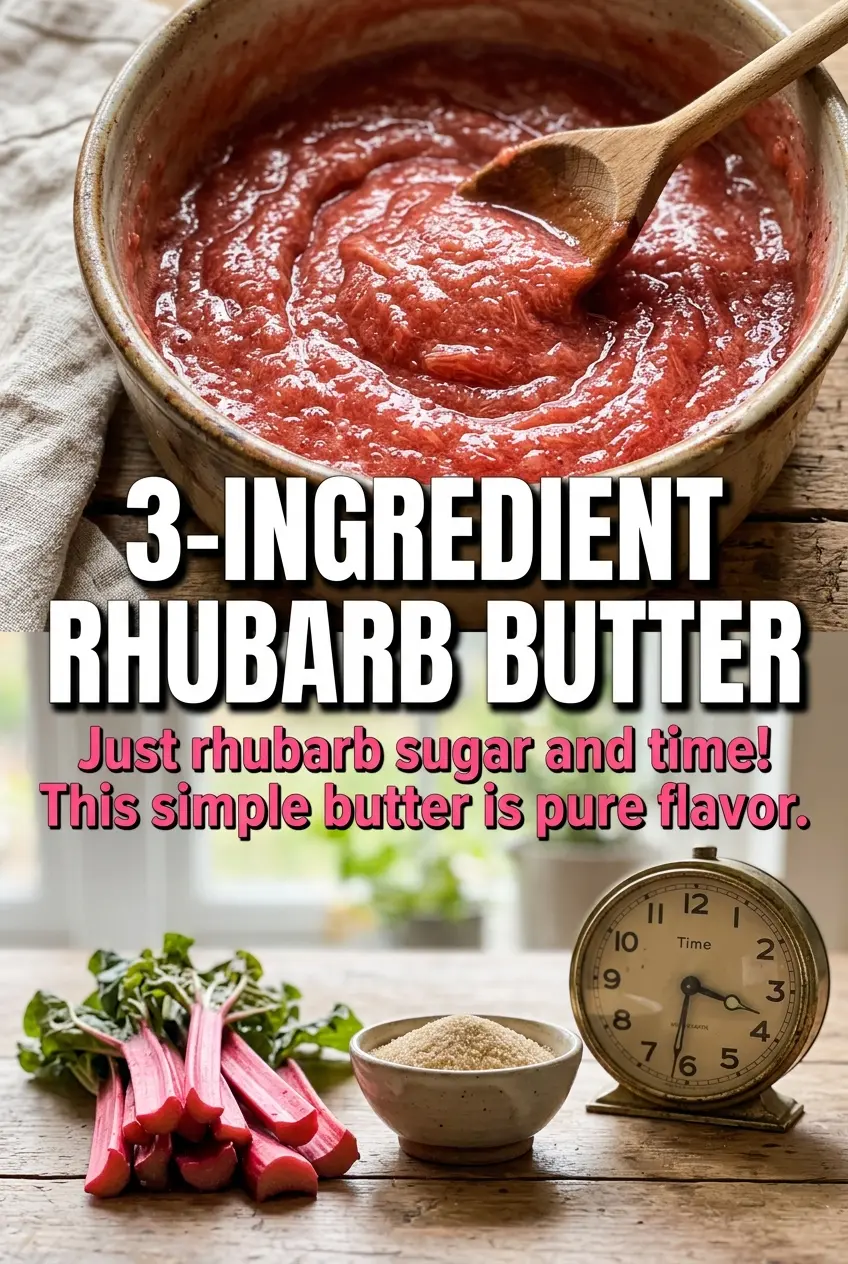
Simple Rhubarb Butter
Ingredients
Equipment
Method
- Combine fresh rhubarb, sugar, and water in a large pot, then bring to a boil over medium-high heat. You should see active bubbling across the surface as it reaches a full boil.
- Reduce the heat to a gentle simmer and cook uncovered for 25-30 minutes, stirring occasionally. Look for the mixture to become very thick enough to mound slightly on the spoon.
- Use an immersion blender to puree the hot rhubarb mixture until completely smooth. The texture should be glossy and uniform with no visible chunks.
- Stir in vanilla extract and cook for 5 minutes more if needed to reach your desired thickness. You should see the butter thicken slightly as you stir.
- Pour the rhubarb butter into clean jars and refrigerate. Store in the fridge for up to 3 weeks, keeping jars tightly covered between uses.