Flaky crescent dough and syrupy peaches are a combination that never lasts long once this cobbler comes out of the oven. The top bakes up like a rough puff pastry, with buttery layers that shatter a little at the edges and soak up just enough of the cinnamon-scented peach syrup to stay tender underneath. It tastes like a shortcut dessert, but it eats like something that took more effort than it did.
The trick is using crescent dough in two layers, so you get a soft base and a golden lid instead of one soggy middle. Draining the peaches keeps the filling from turning watery, while reserving some syrup gives the butter mixture enough sweetness and moisture to soak into the top as it bakes. That’s what gives this cobbler its jammy center and crisp, bakery-style finish.
Below, I’ll walk through the one step people usually rush, plus a few smart swaps if you only have fresh peaches or want to make the filling a little less sweet.
The crescent layers baked up golden and crisp on top, and the peach filling stayed thick instead of runny. I served it warm with vanilla ice cream and my family scraped the dish clean.
Crescent Roll Peach Cobbler is the kind of dessert that bakes up bubbly, buttery, and impossible to leave alone while it’s still warm.
Why the Top Turns Flaky Instead of Doughy
The biggest mistake with crescent roll cobbler is packing the dough too tightly or letting too much syrup pool underneath it. Crescent dough needs heat and space to puff, so the seams should be pinched just enough to hold together without turning into one dense sheet. If the peaches are too wet, the bottom layer steams instead of baking, and you lose that soft-under-crisp contrast that makes this dessert worth serving warm.
The butter-sugar mixture matters just as much. It doesn’t just sweeten the top; it melts down through the dough and helps the surface brown into a glossy, golden crust. If your cobbler ever comes out pale, the pan probably wasn’t hot enough in the center or the syrup mixture wasn’t spread all the way to the edges.
What Each Ingredient Is Actually Doing in This Cobbler
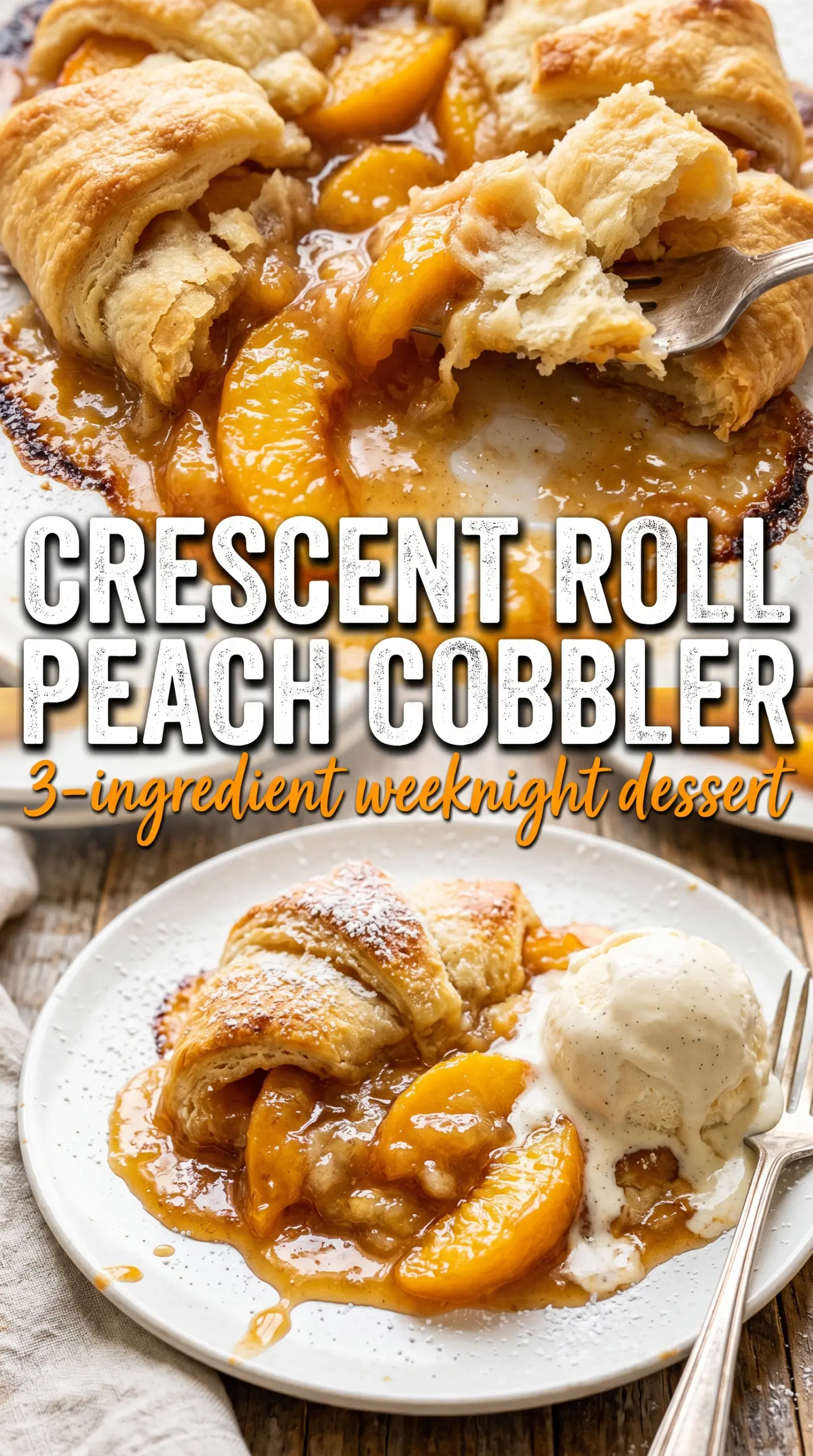
The crescent roll dough is the shortcut, but it also carries the whole texture of the dessert. Canned dough bakes into light, layered pockets that mimic a biscuit topping without any mixing or cutting in butter. Refrigerated dough works better than homemade pastry here because it’s designed to puff in a moist filling and still brown well.
Use canned sliced peaches in syrup, not peaches packed in juice, if you want the filling to taste like old-fashioned cobbler. The syrup adds body and sweetness to the butter mixture, which helps the top bake into a sticky, caramelized layer. If you only have peaches in juice, add an extra tablespoon or two of sugar and expect a thinner filling.
Butter should be melted, not browned. You want it to flow through the sugar and cinnamon mixture so it soaks evenly into the top layer. Vanilla is small, but it rounds out the peach flavor and keeps the cobbler from tasting flat.
Building the Layers So the Cobbler Bakes Up Cleanly
Pressing in the First Layer
Start with a greased 9×13 dish and press the first sheet of crescent dough into the bottom, sealing the seams as you go. Don’t stretch it too thin or it can tear when the peaches go on top. You want a complete base, but not one so compact that it turns bready after baking.
Layering the Peaches
Spoon the drained peaches over the dough in an even layer. If they’re clumped in the middle, the center gets mushy while the edges dry out. A little overlap is fine; the goal is a full layer with no bare patches. Reserve the syrup before draining so you can use it in the butter mixture.
Finishing With the Butter Mixture
Cover the peaches with the second sheet of crescent dough, sealing the seams again, then pour the melted butter mixture over the top. Try to get the liquid across the whole surface, especially the corners, because dry spots stay blond and pale. Bake until the top is deeply golden and you see bubbling around the edges; that bubbling is your cue that the peach layer has heated through and thickened.
Make It Less Sweet
Cut the sugar to 1/2 cup if your peaches are packed in very sweet syrup or if you’re serving the cobbler with ice cream. The filling will still taste rich, but the peach flavor comes through more clearly and the top won’t lean quite so candy-sweet.
Use Fresh Peaches in Peak Season
Swap in about 4 cups peeled, sliced peaches and toss them with 3 to 4 tablespoons sugar plus the cinnamon and vanilla. Fresh peaches release less liquid than canned fruit, so the filling bakes a little cleaner and the texture stays brighter and more fruity.
A Dairy-Free Version That Still Bakes Well
Use a dairy-free crescent dough and replace the butter with a neutral plant-based baking stick. You’ll lose a little of the classic buttery aroma, but the top still browns well and the peaches stay the star.
Storage and Reheating
- Refrigerator: Store covered for up to 4 days. The top softens a bit as it sits, but the flavor stays good.
- Freezer: It freezes, though the dough loses some of its flakiness. Wrap tightly and freeze for up to 2 months; thaw overnight in the fridge before reheating.
- Reheating: Warm individual slices in a 325F oven or toaster oven until the top crisps back up and the filling is hot. Microwaving works in a pinch, but it softens the layers and makes the crust chewy.
Answers to the Questions Worth Asking

Crescent Roll Peach Cobbler
Ingredients
Equipment
Method
- Preheat the oven to 350F and grease a 9x13 baking dish.
- Unroll one can of crescent roll dough and press it into the bottom of the dish, pinching seams together to seal.
- Layer the drained sliced peaches evenly over the dough in a single, even layer.
- Unroll the second can of crescent roll dough over the peaches and pinch seams together to cover as evenly as possible.
- Mix the melted butter, granulated sugar, cinnamon, vanilla extract, and reserved peach syrup until glossy and pourable.
- Pour the topping mixture evenly over the top so it runs into edges and between layers.
- Bake for 30-35 minutes at 350F until the top is deeply golden and the filling is bubbling around the edges (visual cue: golden browned layers and active bubbling at the perimeter).
- Let the cobbler cool for 10 minutes before cutting so the layers set slightly.
- Serve warm with ice cream or whipped cream.